Description
<![CDATA[
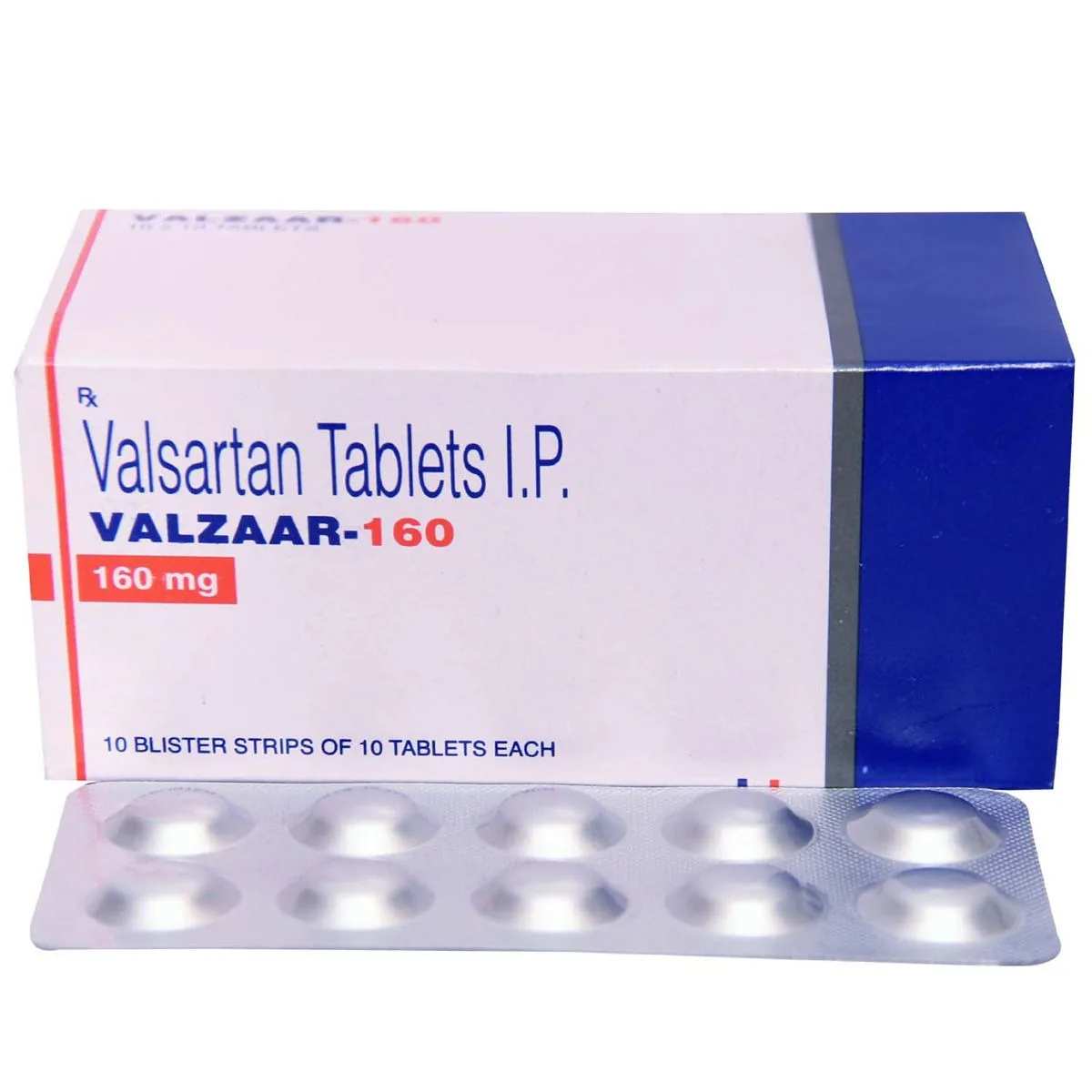
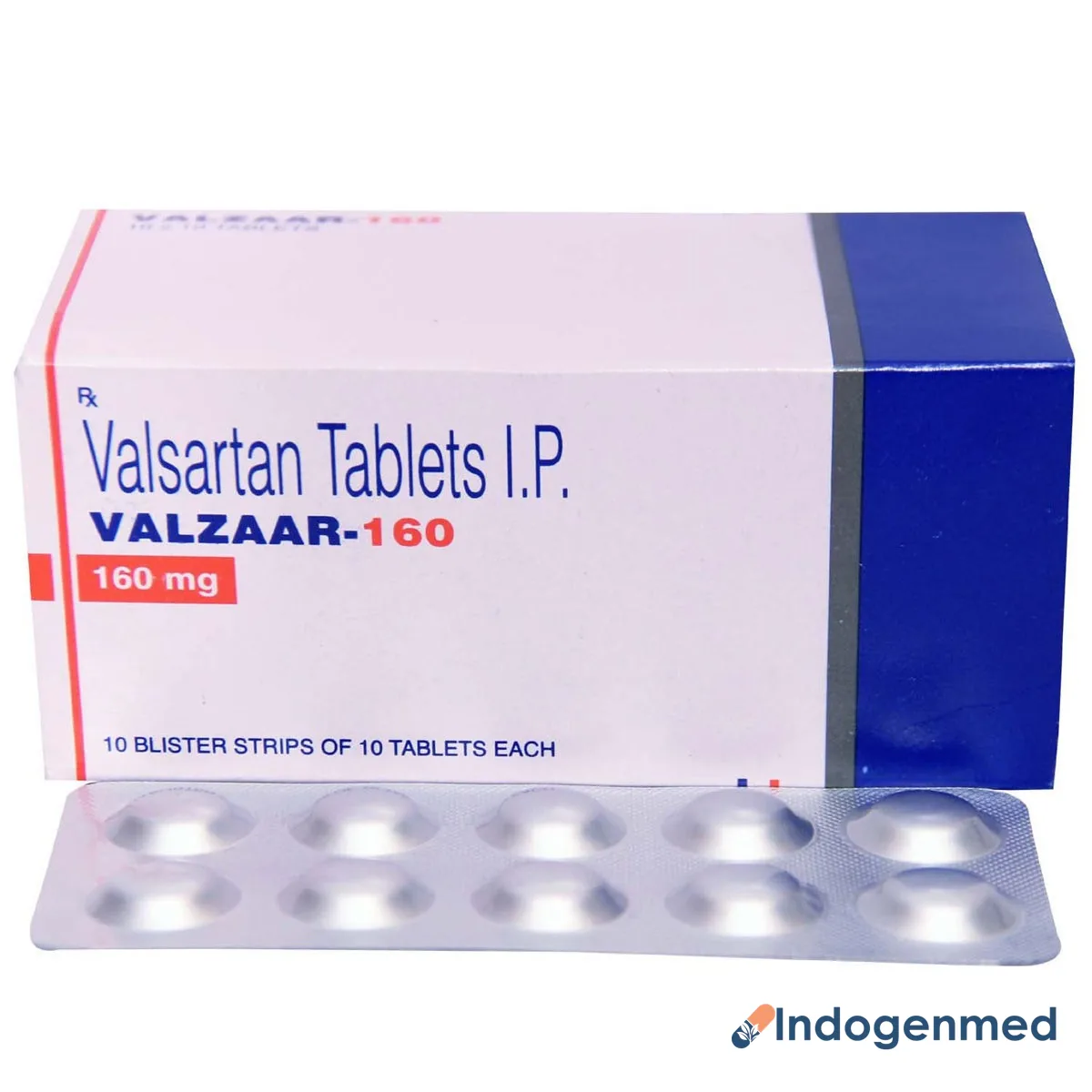
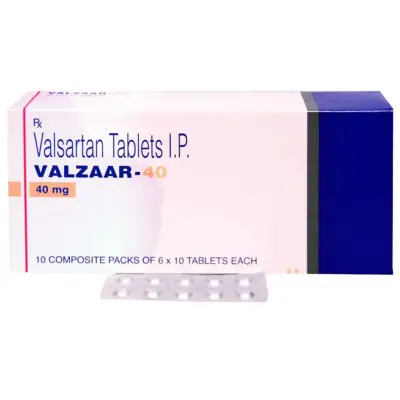
Valzaar 160 Mg Tablets
Valzaar 160 Mg Tablets contain valsartan 160 mg, an angiotensin II receptor blocker (ARB) used for the treatment of hypertension, heart failure, and left ventricular dysfunction following myocardial infarction. Valsartan selectively blocks the AT1 receptor subtype, preventing the vasoconstrictor and aldosterone-secreting effects of angiotensin II without affecting bradykinin metabolism, which makes it generally better tolerated than ACE inhibitors (less cough). Landmark clinical trials (Val-HeFT, VALIANT) have established valsartan as an effective mortality-reducing treatment in heart failure and post-MI settings.
Composition
| Active Ingredient | Strength |
|---|---|
| Valsartan | 160 mg per tablet |
About the Manufacturer
Valzaar is manufactured by Torrent Pharmaceuticals Limited, a leading Indian pharmaceutical company headquartered in Ahmedabad, Gujarat. Torrent has a strong cardiovascular medicines portfolio and distributes to over 40 countries, including regulated markets in Europe and the United States.
Mechanism of Action
Valsartan is a highly selective, orally active, non-peptide angiotensin II receptor antagonist that acts on the AT1 receptor subtype. By competitively blocking angiotensin II binding to the AT1 receptor, valsartan prevents angiotensin II-mediated vasoconstriction, aldosterone secretion, sodium and water retention, and cellular growth promotion. Unlike ACE inhibitors, valsartan does not inhibit kinase II (bradykinin pathway), which is why it does not cause the dry cough commonly associated with ACE inhibitors.
Indications
- Hypertension — as monotherapy or in combination with other antihypertensive agents
- Heart failure (NYHA Class II–IV) in patients not tolerating ACE inhibitors, or in combination with an ACE inhibitor when beta-blockers are not tolerated
- Post-myocardial infarction with left ventricular dysfunction or heart failure — to reduce cardiovascular mortality
Dosage & Administration
- Swallow tablets whole with water, with or without food
- Hypertension: Starting dose 80 mg once daily; may be increased to 160 mg once daily; maximum 320 mg once daily
- Heart failure: Starting dose 40 mg twice daily; titrate at 2-week intervals up to 160 mg twice daily as tolerated
- Post-MI (heart failure/LV dysfunction): Start 20 mg twice daily within 12 hours of MI; titrate up to 160 mg twice daily over several weeks
- Monitor renal function, blood pressure, and electrolytes during up-titration
Special Populations
- Renal impairment: No dose adjustment required for mild to moderate impairment; use with caution in severe renal impairment
- Hepatic impairment: Maximum 80 mg per day in mild to moderate hepatic impairment; avoid in severe hepatic impairment
- Elderly: No dose adjustment required; monitor blood pressure and renal function
- Pregnancy (all trimesters): Contraindicated — ARBs cause foetal renal dysplasia, oligohydramnios, neonatal hypotension, and skull hypoplasia in second and third trimesters; discontinue as soon as pregnancy is confirmed
- Breastfeeding: Not recommended
Precautions
- Hyperkalaemia: ARBs increase serum potassium; use with caution in patients with renal impairment, those on potassium-sparing diuretics, or potassium supplements
- Renal impairment: ARBs reduce glomerular filtration pressure, particularly in bilateral renal artery stenosis or single-kidney stenosis; renal function should be monitored
- Volume depletion: correct dehydration or hypovolaemia before initiating therapy to reduce risk of excessive hypotension
- Dual renin-angiotensin-aldosterone system (RAAS) blockade: combination of ARB with ACE inhibitor or aliskiren increases risk of hyperkalaemia, hypotension, and renal impairment; generally avoid
- Primary hyperaldosteronism: not expected to respond to valsartan
Contraindications
- Pregnancy — all trimesters (absolute contraindication)
- Known hypersensitivity to valsartan or any excipient
- Severe hepatic impairment, biliary cirrhosis, or cholestasis
- Concurrent use with aliskiren in patients with diabetes or renal impairment (eGFR <60 mL/min/1.73 m²)
Side Effects
- Common: Hypotension (especially on initiation), dizziness, headache, fatigue
- Less common: Hyperkalaemia, elevated serum creatinine, cough (less frequent than with ACE inhibitors), diarrhoea, nausea
- Rare: Angioedema (less common than with ACE inhibitors), renal impairment, neutropenia, elevated liver enzymes
Drug Interactions
- Potassium-sparing diuretics (spironolactone, amiloride, triamterene), potassium supplements: Risk of hyperkalaemia; monitor serum potassium
- ACE inhibitors and aliskiren: Dual RAAS blockade; increased risk of hypotension, hyperkalaemia, and renal impairment; avoid in most patients
- NSAIDs: May reduce antihypertensive effect and increase risk of renal impairment; monitor
- Lithium: ARBs may increase lithium levels; monitor lithium levels closely
- Diuretics: Additive blood-pressure-lowering effect; risk of excessive hypotension if volume-depleted
- CYP2C9 inducers (rifampicin): May modestly reduce valsartan exposure
Storage
Store below 30°C in a dry place, protected from light and moisture. Keep tablets in the original packaging. Keep out of reach of children. Do not use after the expiry date printed on the pack.
Related Products
- Cardivas 25 Mg Tablets – carvedilol 25 mg for heart failure and hypertension
- Corbis 5 Mg Tablets – bisoprolol 5 mg for heart failure and hypertension
- Metolar XR 25 Mg Tablets – metoprolol extended-release 25 mg
- Calaptin 80 Mg Tablets – verapamil 80 mg calcium channel blocker
Frequently Asked Questions
- What is Valzaar 160 Mg used for?
- Valzaar 160 Mg is used to treat high blood pressure (hypertension), heart failure, and to reduce the risk of death and hospitalisation following a heart attack in patients with left ventricular dysfunction or heart failure. It works by blocking the effects of angiotensin II, a hormone that narrows blood vessels and increases blood pressure.
- What is the difference between valsartan and an ACE inhibitor?
- Both valsartan (an ARB) and ACE inhibitors block the renin-angiotensin-aldosterone system (RAAS) but at different points. ACE inhibitors block the production of angiotensin II, while valsartan blocks angiotensin II from binding to its receptor. A key practical difference is that ARBs do not affect the bradykinin pathway, which is why the dry cough that affects around 10–15% of people on ACE inhibitors is much less common with valsartan.
- Is Valzaar 160 Mg safe to take during pregnancy?
- No. Valsartan and all angiotensin II receptor blockers are absolutely contraindicated during pregnancy. They can cause serious foetal kidney damage, low amniotic fluid, neonatal hypotension, and skull malformations, particularly in the second and third trimesters. If you become pregnant while taking Valzaar, stop the medicine immediately and contact your doctor.
- Can Valzaar 160 Mg raise potassium levels?
- Yes. By blocking aldosterone secretion, valsartan can increase serum potassium (hyperkalaemia). This is especially relevant in patients with kidney disease, those taking potassium-sparing diuretics (such as spironolactone), or those taking potassium supplements. Regular blood tests to monitor potassium and kidney function are recommended during treatment.
- How long does it take for Valzaar 160 Mg to lower blood pressure?
- The blood-pressure-lowering effect of valsartan begins within 2 hours of the first dose and reaches its maximum at approximately 4–6 hours. With daily use, blood pressure continues to stabilise over 2–4 weeks as the full effect is established. Regular blood pressure monitoring is recommended during this period.
References
- NHS – Valsartan
- MedlinePlus – Valsartan
- FDA – Diovan (Valsartan) Prescribing Information
- EMA – Diovan (Valsartan) EPAR
Disclaimer: This page is for informational purposes only and does not constitute medical advice. Valzaar 160 Mg Tablets must be prescribed and monitored by a qualified healthcare professional. This medicine is absolutely contraindicated in pregnancy — seek immediate medical advice if you become pregnant while taking valsartan.
]]>





Reviews
There are no reviews yet.