Description
What are Cipril H 5+12.5 Mg Tablets?
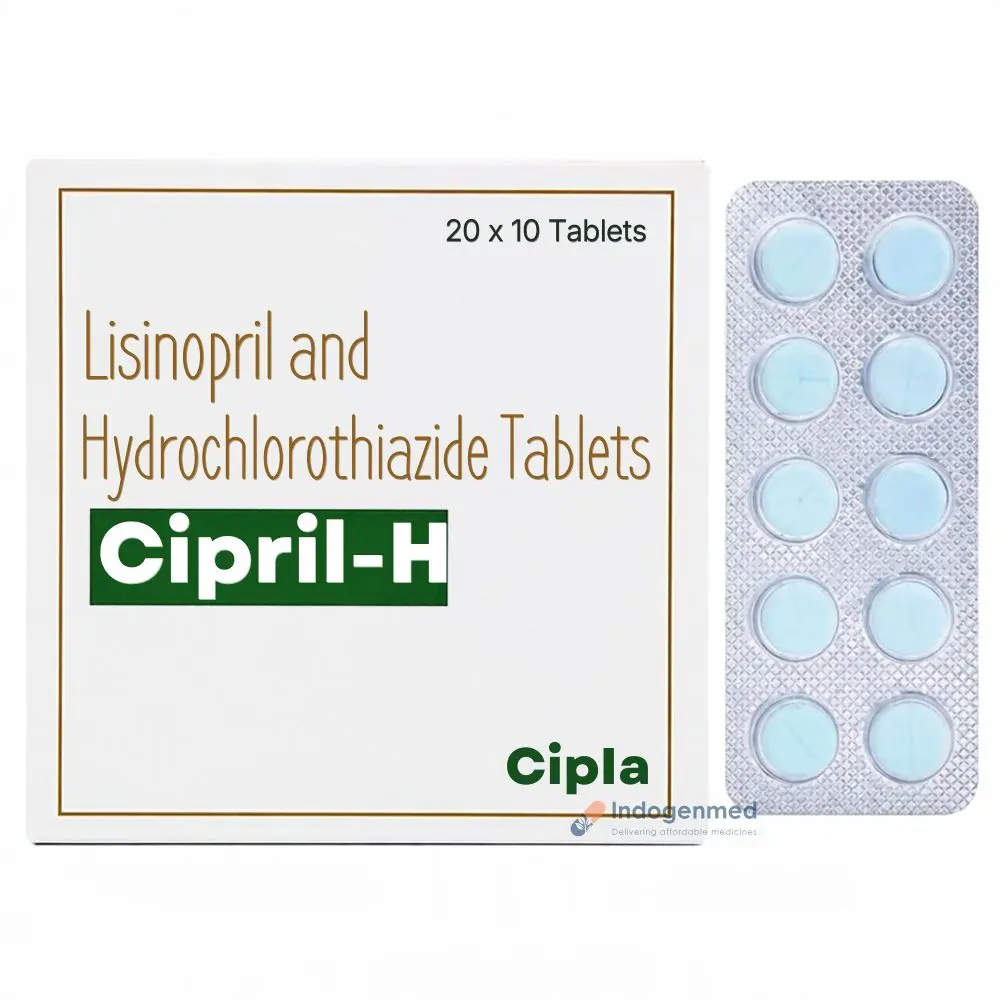
Cipril H 5+12.5 Mg Tablets are a fixed-dose combination of two antihypertensive medicines: Lisinopril 5 mg (an ACE inhibitor) and Hydrochlorothiazide 12.5 mg (a thiazide diuretic). The “H” in Cipril H stands for Hydrochlorothiazide. Together, these two medicines work through complementary mechanisms to lower blood pressure more effectively than either agent alone, making this combination well established in the management of hypertension that is not adequately controlled by a single medicine.
Cipril H 5+12.5 Mg Tablets are manufactured by Cipla Ltd., one of India’s most internationally recognised pharmaceutical companies. Each strip contains 10 tablets.
Prescription only (Rx). Use Cipril H only under a doctor’s supervision. Do not adjust your dose or stop taking this medicine without medical advice.
Composition
| Component | Detail |
|---|---|
| Active ingredient 1 | Lisinopril 5 mg (ACE inhibitor) |
| Active ingredient 2 | Hydrochlorothiazide 12.5 mg (thiazide diuretic) |
| Formulation type | Immediate-release oral tablet (fixed-dose combination) |
| Pack size | 10 tablets per strip |
| Manufacturer | Cipla Ltd., India |
| Medicine type | Generic (Rx — prescription required) |
About Cipla Ltd.
Cipla Ltd. is one of India’s largest and most internationally recognised pharmaceutical companies, founded in 1935 in Mumbai. With manufacturing facilities approved by the US FDA, the UK MHRA, the EU, and the WHO, Cipla supplies essential medicines to more than 80 countries and is listed on the BSE and NSE.
How Cipril H Works: The Two-Mechanism Approach
Cipril H 5+12.5 combines two medicines with different but complementary actions. Each tackles blood pressure via a separate pathway, and together they produce a blood-pressure-lowering effect that exceeds what either medicine can achieve alone.
Lisinopril — ACE Inhibitor (Component 1)
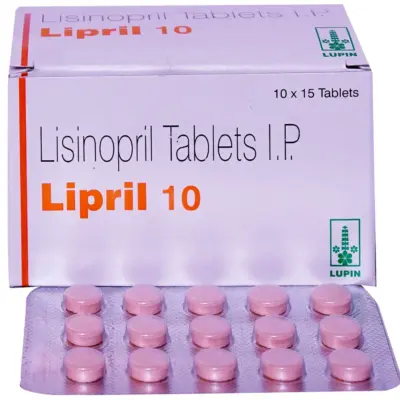
Lisinopril inhibits angiotensin-converting enzyme (ACE), the enzyme responsible for converting angiotensin I to angiotensin II. Angiotensin II is a potent vasoconstrictor that also stimulates aldosterone secretion (which promotes sodium and water retention). By blocking ACE:
- Angiotensin II levels fall → blood vessels relax (vasodilation) → blood pressure decreases.
- Aldosterone secretion falls → the kidneys retain less sodium and water, and excrete less potassium → reduced fluid volume.
- Bradykinin is broken down more slowly → additional vasodilation (but also the cause of the ACE inhibitor dry cough in some patients).
Unlike enalapril, lisinopril is not a prodrug — it is active as administered and does not require hepatic conversion, which simplifies its use in patients with liver disease.
Hydrochlorothiazide (HCTZ) — Thiazide Diuretic (Component 2)
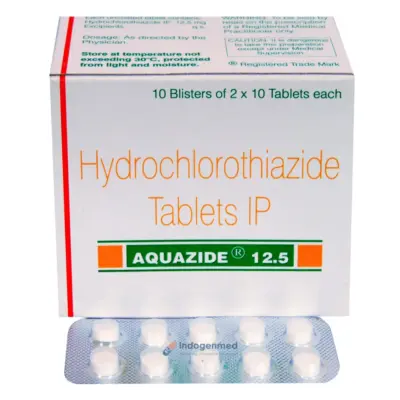
Hydrochlorothiazide inhibits the sodium-chloride (Na-Cl) cotransporter in the early distal convoluted tubule of the kidney, reducing reabsorption of sodium and water. This lowers plasma volume, cardiac output, and ultimately blood pressure. Thiazide diuretics also reduce peripheral vascular resistance with long-term use.
Why the Combination Works Better Than Either Alone
Thiazide diuretics can activate the renin-angiotensin-aldosterone system (RAAS) as a compensatory response to the volume reduction they cause, which limits their antihypertensive effect over time. Lisinopril directly blocks this RAAS activation, preventing the compensatory response and sustaining the blood-pressure-lowering effect. In turn, HCTZ partially counteracts the potassium-retaining effect of lisinopril and provides additive volume reduction. The result is a synergistic reduction in blood pressure with a more favourable electrolyte balance than either agent used at higher doses alone.
Indications: When Is Cipril H 5+12.5 Prescribed?
- Hypertension (high blood pressure): The primary indication — used when blood pressure is not adequately controlled with a single antihypertensive medicine, or when a combination is chosen as first-line therapy because blood pressure is significantly elevated and two-agent control is anticipated. Reduces the long-term risk of stroke, heart attack, and kidney damage.
- Hypertension with coexisting diabetes or chronic kidney disease: Lisinopril (the ACE inhibitor component) has proven renoprotective effects in diabetic nephropathy — slowing progression of proteinuria and kidney function decline — making this combination particularly valuable when hypertension coexists with diabetes or proteinuric kidney disease.
- Hypertension with prior heart failure (selected patients): The lisinopril component has established benefits in heart failure with reduced ejection fraction (HFrEF). Use of this combination in heart failure is at the discretion of the cardiologist, as HCTZ may be preferred over or added to loop diuretics depending on the clinical picture.
The indication and dose will be tailored by your doctor to your blood pressure readings, kidney function, electrolytes, and other medical conditions.
Dosage and Administration
Cipril H 5+12.5 Mg is taken once daily, typically in the morning (to avoid nocturia from the diuretic effect). It can be taken with or without food. Swallow the tablet whole with water. Consistent timing each day helps maintain stable blood levels.
| Indication | Typical Dose | Notes |
|---|---|---|
| Hypertension (initial / step-up) | 1 tablet (Lisinopril 5 mg + HCTZ 12.5 mg) once daily | May be titrated to Lisinopril 10 or 20 mg + HCTZ 25 mg if BP remains above target after 2–4 weeks |
| Hypertension with diabetic nephropathy | Once daily, dose adjusted to kidney function and blood pressure target | Monitor serum creatinine and potassium closely; reduce dose in moderate renal impairment |
Your doctor will adjust the dose based on your blood pressure response, kidney function tests (eGFR, creatinine), and electrolyte levels (potassium, sodium). Take the tablet at the same time each day.
Do not stop Cipril H suddenly without consulting your doctor. Stopping blood pressure medicines abruptly can cause a sharp rebound rise in blood pressure.
Special Populations
Renal Impairment
Lisinopril is eliminated renally; dose reduction is required in moderate-to-severe renal impairment (creatinine clearance <30 mL/min). Hydrochlorothiazide is ineffective as a diuretic in severe renal impairment (eGFR <30 mL/min) and should not be used. In such patients, the combination tablet is contraindicated; lisinopril alone (at a renally adjusted dose) with a loop diuretic if needed is preferred. Renal function and electrolytes must be monitored regularly throughout treatment.
Hepatic (Liver) Impairment
Minor hepatic impairment generally does not affect lisinopril (not hepatically metabolised). HCTZ can precipitate hepatic encephalopathy in patients with severe liver disease (cirrhosis) due to electrolyte disturbances. Use the combination with caution in liver disease; avoid in severe hepatic impairment.
Elderly Patients
Elderly patients are more sensitive to the first-dose hypotensive effect of lisinopril and to volume depletion from HCTZ. Start at the lowest dose, titrate slowly, and monitor blood pressure, renal function, and electrolytes regularly. Increased falls risk due to dizziness should be assessed.
Pregnancy — ABSOLUTE CONTRAINDICATION
ACE inhibitors including lisinopril are absolutely contraindicated throughout pregnancy. Exposure during the second and third trimester has been associated with fetal renal tubular dysplasia, oligohydramnios (low amniotic fluid), fetal growth restriction, neonatal renal failure, limb contractures, and skull hypoplasia, which can be fatal. First-trimester exposure is also linked to congenital cardiovascular malformations. If pregnancy is detected while taking Cipril H, discontinue immediately and contact your doctor. Women of childbearing potential must use effective contraception while taking this medicine.
Breastfeeding
Both lisinopril and hydrochlorothiazide pass into breast milk. Cipril H is not recommended during breastfeeding. Discuss safer alternatives with your doctor if you wish to breastfeed.
Precautions and Warnings
- ACE inhibitor cough: A persistent dry cough is a class effect of ACE inhibitors, affecting approximately 10–20% of patients. It is not an allergic reaction and typically resolves within weeks of stopping the medicine. If the cough is intolerable, your doctor may switch you to an angiotensin receptor blocker (ARB)-based combination.
- Angioedema: Rarely, ACE inhibitors can cause angioedema (swelling of the face, lips, tongue, throat, or limbs). Throat or tongue swelling can obstruct breathing and is a medical emergency — seek immediate emergency care. Patients with a previous history of ACE inhibitor-associated angioedema or hereditary angioedema must not use Cipril H.
- First-dose hypotension: Blood pressure can fall sharply after the first dose, particularly in patients who are volume-depleted (e.g., on high-dose diuretics, low-salt diet, or vomiting/diarrhoea). The first dose should ideally be taken lying down, and blood pressure should be monitored when starting treatment.
- Electrolyte monitoring: HCTZ can cause hypokalemia (low potassium), hyponatremia (low sodium), hypomagnesemia, and hypercalcemia. Lisinopril can cause hyperkalemia (high potassium). Regular blood tests are needed to monitor electrolyte balance, especially in the elderly, those with kidney disease, and those on other medicines affecting electrolytes.
- Renal function monitoring: ACE inhibitors can cause an initial, usually modest rise in serum creatinine. A rise of up to 30% from baseline is acceptable; a greater rise suggests haemodynamically significant renal artery stenosis or severe pre-existing kidney disease. Monitor renal function within 1–2 weeks of starting and after any dose change.
- Bilateral renal artery stenosis: ACE inhibitors are contraindicated in bilateral renal artery stenosis (or unilateral stenosis with a single functioning kidney) because they can precipitate acute renal failure.
- Diabetes: HCTZ can impair glucose tolerance and worsen glycaemic control; monitor blood glucose more closely. Lisinopril has neutral or modestly beneficial effects on glucose metabolism and may help protect kidney function in diabetes.
- Gout: HCTZ raises serum uric acid and can precipitate gout attacks. Use with caution in patients with a history of gout; check uric acid levels.
- Photosensitivity: HCTZ can increase sensitivity to sunlight. Avoid prolonged sun exposure, use high-SPF sunscreen, and wear protective clothing.
- Surgery and anaesthesia: Inform your anaesthetist and surgeon that you are taking an ACE inhibitor. Hypotension under general anaesthesia can be more pronounced. Guidelines vary on whether to withhold ACE inhibitors on the day of surgery — follow your surgical team’s advice.
Contraindications
Cipril H 5+12.5 Mg Tablets must not be used in patients with:
- Known hypersensitivity to lisinopril, hydrochlorothiazide, sulfonamide derivatives, or any excipient
- History of ACE inhibitor-associated angioedema
- Hereditary or idiopathic angioedema
- Pregnancy (all trimesters — absolute contraindication)
- Bilateral renal artery stenosis or unilateral stenosis with a single functioning kidney
- Severe renal impairment (anuric; eGFR <30 mL/min for the HCTZ component)
- Severe hepatic impairment
- Refractory hypokalemia or hyponatraemia
- Hypercalcaemia (HCTZ reduces calcium excretion)
- Symptomatic hyperuricaemia or gout (with caution)
- Concomitant use of aliskiren in patients with diabetes mellitus or renal impairment (eGFR <60 mL/min)
- Concomitant use with sacubitril/valsartan (Entresto) — increased angioedema risk; a 36-hour washout is required before switching to an ACE inhibitor
Side Effects
Like all medicines, Cipril H can cause side effects, though not all people experience them.
Common Side Effects (may affect up to 1 in 10 people)
- Dry, persistent cough (ACE inhibitor class effect — most common reason for switching treatment)
- Dizziness or light-headedness, especially on standing (hypotension)
- Headache
- Fatigue or weakness
- Increased frequency of urination (diuretic effect of HCTZ — most noticeable initially)
- Nausea or stomach discomfort
Less Common Side Effects (may affect up to 1 in 100 people)
- Low potassium levels (hypokalemia) — muscle weakness, cramps, abnormal heart rhythm
- Low sodium levels (hyponatremia) — confusion, headache, nausea
- Elevated blood urea or creatinine (renal function changes)
- Elevated uric acid (hyperuricaemia) — may trigger gout
- Elevated blood glucose
- Elevated blood calcium (hypercalcaemia)
- Skin rash or itching
- Taste disturbance (dysgeusia) — metallic or reduced taste sensation
- Photosensitivity reactions
Rare but Serious — Seek Immediate Medical Help
- Angioedema — swelling of face, lips, tongue, throat, or limbs; throat/tongue swelling is life-threatening
- Severe hypotension or syncope (fainting), particularly after first dose
- Acute kidney injury (sharp rise in creatinine, reduced urine output)
- Severe hypokalaemia causing dangerous arrhythmias
- Severe allergic or anaphylactic reaction
- Cholestatic jaundice / hepatic necrosis (rare ACE inhibitor-associated)
- Neutropenia or agranulocytosis (rare, primarily in patients with collagen vascular disease or renal impairment)
Report any unexpected or worsening symptoms to your doctor or pharmacist promptly.
Drug Interactions
Always tell your doctor and pharmacist about all medicines, supplements, and herbal products you are taking before starting Cipril H. Important interactions include:
- NSAIDs (ibuprofen, naproxen, diclofenac): Reduce the antihypertensive effect of both lisinopril and HCTZ, and can impair renal function. Regular NSAID use in patients on ACE inhibitors and diuretics significantly increases the risk of acute kidney injury. Paracetamol is a safer analgesic alternative for most patients.
- Potassium supplements and potassium-sparing diuretics (spironolactone, eplerenone, amiloride, triamterene): Significantly increase hyperkalemia risk with the lisinopril component. Avoid combination unless under close specialist monitoring with regular potassium testing.
- Lithium: Both ACE inhibitors and HCTZ increase lithium plasma levels by reducing its renal excretion. This can cause lithium toxicity. Monitor lithium levels closely if combination is clinically necessary.
- Antidiabetic medicines (insulin, sulphonylureas): HCTZ can impair glucose tolerance, and dosage adjustments may be needed. Monitor blood glucose closely when starting or adjusting Cipril H.
- Digoxin: HCTZ-induced hypokalemia increases sensitivity to digoxin toxicity (arrhythmias). Maintain potassium in the normal range and monitor digoxin levels.
- Allopurinol: Combination with ACE inhibitors increases the risk of serious hypersensitivity reactions (including Stevens-Johnson syndrome). Use with caution and monitor closely.
- Aliskiren (direct renin inhibitor): Combined use with ACE inhibitors (dual RAAS blockade) is contraindicated in patients with diabetes or renal impairment (eGFR <60 mL/min). Avoid in other patients unless under specialist supervision.
- ARBs (valsartan, losartan, irbesartan): Dual RAAS blockade (ACE inhibitor + ARB) is not generally recommended due to increased risk of hypotension, hyperkalemia, and renal impairment without additional cardiovascular benefit.
- Colestyramine / colestipol: These bile acid sequestrants reduce the absorption of HCTZ. Take Cipril H at least 1 hour before or 4–6 hours after colestyramine or colestipol.
- Other antihypertensives, vasodilators, alpha-blockers, or nitrates: Additive blood-pressure-lowering effects. First-dose hypotension is more likely. Introduce and titrate carefully.
- Sympathomimetics (e.g., adrenaline/epinephrine, pseudoephedrine in decongestants): Can reduce the antihypertensive effect. Caution with over-the-counter cold remedies containing sympathomimetics.
Storage Instructions
- Store below 30°C (86°F) in a cool, dry place away from heat and humidity.
- Protect from light. Do not store in a bathroom or near a kitchen sink.
- Keep in the original strip until use.
- Keep out of the sight and reach of children.
- Do not use after the expiry date printed on the strip or outer carton.
- Dispose of unused medicines safely — ask your pharmacist about local disposal procedures.
Related Products
Patients managing hypertension alongside other cardiovascular or metabolic conditions may find the following products relevant:
- Ciplar 20 Mg Tablets (Propranolol) — a non-selective beta-blocker used for hypertension, arrhythmias, angina, migraine prevention, and anxiety; often used alongside ACE inhibitors in complex cardiovascular management.
- Bigomet 500 Mg Tablets (Metformin) — first-line medicine for type 2 diabetes, which commonly coexists with hypertension; note that HCTZ can impair glycaemic control in diabetic patients.
- Cardivas CR 40 Mg Tablets (Carvedilol CR) — dual alpha/beta-blocker used in heart failure and hypertension; an option when beta-blockade is additionally required alongside ACE inhibitor therapy.
Frequently Asked Questions (FAQs)
1. What is the “H” in Cipril H — does it mean something different from plain Cipril?
Yes. “Cipril” on its own refers to Lisinopril alone (the ACE inhibitor). “Cipril H” means the tablet also contains Hydrochlorothiazide (HCTZ) — a thiazide diuretic — alongside Lisinopril. The two medicines work through different mechanisms to lower blood pressure, and the combination is more effective than either alone in many patients. If your doctor prescribed “Cipril H”, they intend both components; if they prescribed plain “Cipril”, they intend only the Lisinopril.
2. I developed a persistent dry cough after starting Cipril H. What should I do?
A dry, non-productive cough is a well-known side effect of the Lisinopril component — it affects approximately 10–20% of patients taking ACE inhibitors and is caused by bradykinin accumulation. It is not an allergic reaction and is not dangerous, but it can be very troublesome. If the cough significantly affects your quality of life, speak to your doctor: they can switch the ACE inhibitor to an angiotensin receptor blocker (ARB) such as losartan or valsartan, which provides similar blood-pressure-lowering benefits without the cough, and can be combined with HCTZ in an equivalent combination tablet. Do not stop Cipril H on your own without discussing this.
3. Can I take ibuprofen or anti-inflammatory painkillers with Cipril H?
Regular or high-dose use of NSAIDs (ibuprofen, naproxen, diclofenac) with Cipril H is not recommended. NSAIDs reduce the blood-pressure-lowering effect and — when combined with an ACE inhibitor and a diuretic — significantly increase the risk of acute kidney injury (known as the “triple whammy” combination in nephrology). For pain and fever, paracetamol (acetaminophen) is a safer first choice for most patients. If you need stronger pain relief, discuss alternatives with your doctor.
4. I am planning to become pregnant. Can I continue Cipril H?
No — you must not take Cipril H (or any ACE inhibitor) during pregnancy. ACE inhibitors are absolutely contraindicated throughout all trimesters of pregnancy due to severe risks to the fetus, including renal failure, skull hypoplasia, limb contractures, and death. If you are planning to conceive, speak to your doctor urgently before stopping Cipril H — your blood pressure must still be controlled during pregnancy, but with a medicine that is safe in pregnancy (such as methyldopa, labetalol, or nifedipine). Do not stop your blood pressure medicine unilaterally.
5. My doctor is monitoring my potassium levels while I take Cipril H. Why?
The two components of Cipril H have opposing effects on potassium: HCTZ causes potassium to be lost in the urine (risking low potassium — hypokalemia), while Lisinopril promotes potassium retention by reducing aldosterone (risking high potassium — hyperkalemia). In most patients, these effects partially offset each other, resulting in relatively stable potassium levels — one advantage of the combination over either agent alone. However, in patients with kidney disease, those also taking other medicines affecting potassium, or those with poor dietary intake, potassium can still shift significantly in either direction. Both hypokalemia and hyperkalemia can cause dangerous heart rhythm disturbances, so regular blood tests are an important part of safe treatment with Cipril H.
References
- National Health Service (NHS). ACE inhibitors. Available at: https://www.nhs.uk/conditions/ace-inhibitors/ [Accessed November 2026].
- MedlinePlus (US National Library of Medicine). Lisinopril. Available at: https://medlineplus.gov/druginfo/meds/a692051.html [Accessed November 2026].
- MedlinePlus (US National Library of Medicine). Hydrochlorothiazide. Available at: https://medlineplus.gov/druginfo/meds/a682571.html [Accessed November 2026].
- US Food and Drug Administration (FDA). Lisinopril and Hydrochlorothiazide Tablets — Prescribing Information. Available at: FDA Prescribing Information [Accessed November 2026].
- European Medicines Agency (EMA). Lisinopril/Hydrochlorothiazide — Summary of Product Characteristics. Available at: https://www.ema.europa.eu/ [Accessed November 2026].
Disclaimer: This information is provided for educational purposes only. It does not replace professional medical advice, diagnosis, or treatment. Always consult your doctor, cardiologist, or pharmacist before starting, stopping, or changing any medicine. If you experience a medical emergency, contact emergency services immediately.


Reviews
There are no reviews yet.