Description
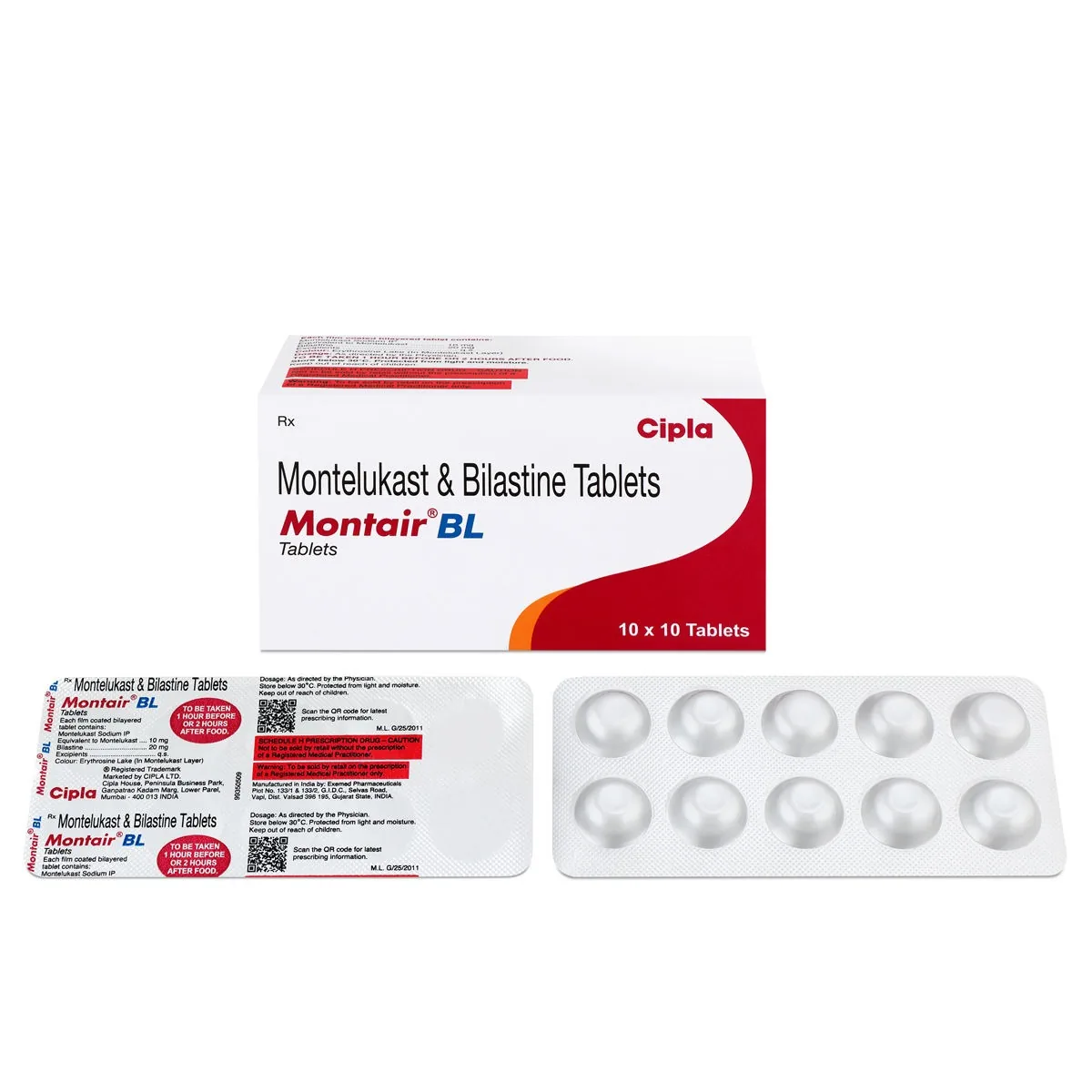
Montair 10 Mg Tablets
Montair 10 Mg Tablets contain montelukast 10 mg, a leukotriene receptor antagonist. Montelukast blocks the action of leukotrienes, chemicals in the airways that cause swelling, mucus production and narrowing of the airways. It is prescribed as a preventer for asthma, to reduce asthma symptoms and attacks over time, and for allergic rhinitis (hay fever and other allergic nasal symptoms). It is taken once daily, usually in the evening, and is not a rescue medicine for an acute asthma attack.
Composition
| Ingredient | Strength |
|---|---|
| Montelukast (as montelukast sodium) | 10 mg per film-coated tablet |
| Excipients | As listed on the pack insert |
Product Details
Montair 10 Mg Tablets are oral film-coated tablets for adults and adolescents aged 15 years and over. Montelukast is a prescription-only medicine in most countries, and a valid prescription and the advice of a qualified doctor or pharmacist are needed before use. Important safety information about neuropsychiatric effects applies to all montelukast products (see Precautions).
Mechanism of Action
Montelukast selectively and competitively blocks the cysteinyl leukotriene CysLT1 receptor. Leukotrienes are released by inflammatory cells in the airways and nose. When they bind to CysLT1 receptors they cause bronchoconstriction, increased airway mucus, oedema and recruitment of inflammatory cells. Blocking these receptors reduces airway inflammation and narrowing, which is why montelukast helps to prevent asthma symptoms and to relieve allergic nasal symptoms. It does not act immediately, so its benefit builds over days to weeks of regular use.
Indications
- Prophylaxis and long-term management of asthma in adults and adolescents
- Prevention of exercise-induced bronchoconstriction
- Relief of symptoms of seasonal and perennial allergic rhinitis
Montelukast is not recommended as first-line treatment for mild asthma where inhaled corticosteroids are the standard option, and the prescriber will decide where it fits in the treatment plan.
Dosage and Administration
The usual adult and adolescent dose (15 years and over) is one 10 mg tablet once daily, taken in the evening. It can be taken with or without food. Do not use it to treat a sudden asthma attack; keep a rescue inhaler for that purpose. Do not stop the tablets because you feel well, as asthma symptoms may return. Review with the prescriber regularly to check whether the medicine is still needed.
Special Populations
Children under 15 years: the 10 mg tablet is not for this age group. Smaller strengths, including chewable tablets, are used for children as directed by the prescriber.
Older adults: no routine dose change is needed.
Kidney and liver impairment: no dose adjustment is usually needed for mild impairment, but the prescriber should review use in moderate to severe liver disease.
Pregnancy and breastfeeding: use only if clearly needed, after discussing risks and benefits with a doctor.
Precautions
- Neuropsychiatric events: montelukast can cause mood and behaviour changes, including agitation, aggression, sleep disturbance, depression, suicidal thoughts and actions, and vivid dreams. Stop the medicine and contact a doctor promptly if any of these develop.
- Do not stop an inhaled corticosteroid or other asthma treatment when starting montelukast. Montelukast is an add-on, not a replacement, unless the prescriber decides otherwise.
- Asthma that is getting worse, needing more rescue inhaler use, or causing breathlessness at rest requires urgent medical review.
- Aspirin-sensitive asthma: some patients may react to aspirin or NSAIDs. Tell your doctor if this applies.
- Tell your doctor if you have phenylketonuria, because some chewable forms contain phenylalanine. The 10 mg tablet should be checked against the pack insert.
Contraindications
- Known hypersensitivity to montelukast or any excipient in the product
Side Effects
Common: headache, abdominal pain, diarrhoea, nausea, upper respiratory infection, cough, dizziness, tiredness, thirst.
Uncommon: sleep disturbance, agitation, anxiety, irritability, tremor, palpitations, rash, nosebleed, fever.
Rare: depression, hallucinations, suicidal thoughts and actions, liver enzyme changes, allergic reactions including swelling of the face or throat, bruising and bleeding tendency, pins and needles or numbness.
Seek urgent medical help for breathing difficulty, swelling of the face, lips or throat, hives, or any mood or behaviour change that is severe or worrying.
Drug Interactions
- Phenobarbital, phenytoin and rifampicin: may reduce montelukast levels; the prescriber may need to review the dose.
- Gemfibrozil: increases montelukast levels; the combination should be used with caution.
- Strong CYP3A4 inducers and inhibitors: may affect montelukast levels, so check with the prescriber.
- Aspirin and NSAIDs: some asthma patients may react to them, and the reaction may affect asthma control.
- Other asthma medicines, including inhaled corticosteroids and bronchodilators: continue as prescribed unless the doctor advises a change.
Tell your doctor or pharmacist about every medicine, herbal product and supplement you take.
Storage
Store below 30 degrees Celsius in the original blister or package, protected from moisture and light. Keep out of the reach of children. Do not use after the expiry date on the pack.
Related Products
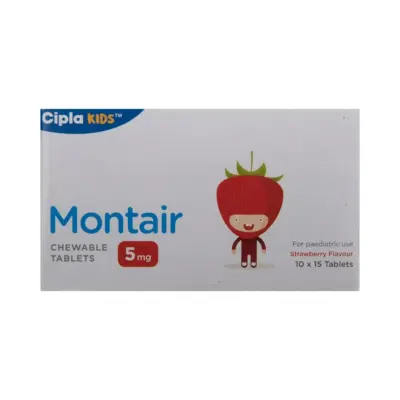
- Montair Chewable 5 Mg Tablets: a smaller strength used for children as directed by the prescriber.
- Montair Chewable Tablets 4 Mg Tablets: the youngest-age strength, prescribed only under medical advice.
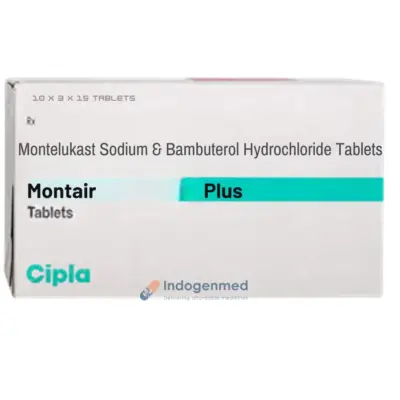
- Montair Plus Tablet 15: a different product; check the prescription before switching.
Frequently Asked Questions
Should I take Montair in the morning or evening?
The usual instruction is once daily in the evening. Take it at about the same time each day.
How long before it works?
Benefit usually builds over several days to weeks of regular use, so it is not a rescue treatment.
What should I do if I miss a dose?
Take it as soon as you remember, unless it is almost time for the next dose. Do not take two doses together.
Can I stop it when my symptoms improve?
Do not stop without speaking to your doctor, because symptoms may come back.
References
- NHS: Montelukast. https://www.nhs.uk/medicines/montelukast/
- electronic Medicines Compendium (emc): Montelukast summary of product characteristics. https://www.medicines.org.uk/emc
- U.S. National Library of Medicine, DailyMed: Montelukast labelling and boxed warning. https://dailymed.nlm.nih.gov
Disclaimer
This information is for general education and does not replace advice from a qualified doctor or pharmacist. Check dosing, contraindications and warnings against the pack insert and the prescriber’s instructions. Do not start, stop or change this medicine without medical advice.




Reviews
There are no reviews yet.