Description
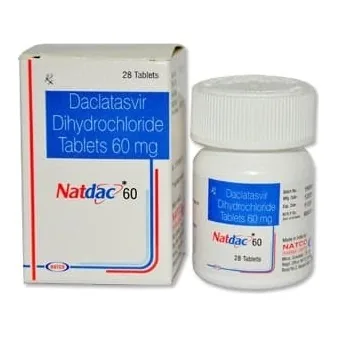
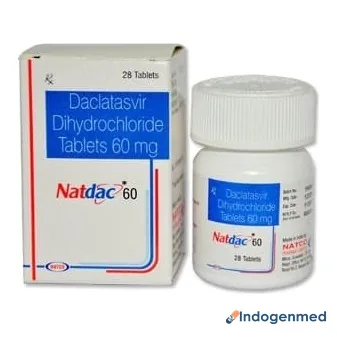
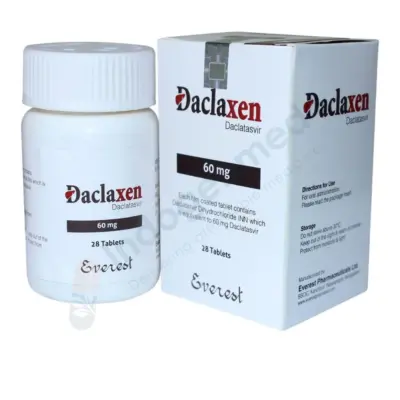
Natdac 60 mg Tablet — Daclatasvir 60 mg
Natdac 60 mg Tablet contains daclatasvir 60 mg, a first-in-class NS5A replication complex inhibitor and direct-acting antiviral (DAA) used in the treatment of chronic hepatitis C virus (HCV) infection. Daclatasvir is always used in combination with sofosbuvir (and sometimes ribavirin), forming one of the most accessible, effective, and well-tolerated oral regimens for HCV available in India and other resource-limited settings. Daclatasvir acts at a unique mechanism distinct from sofosbuvir’s NS5B polymerase inhibition: it blocks the multifunctional HCV NS5A protein, which is essential for viral RNA replication and assembly. The combination sofosbuvir + daclatasvir achieves sustained virological response (SVR12 — undetectable HCV RNA 12 weeks after completing treatment) rates of 95–98% across HCV genotypes 1, 2, 3, and 4 in treatment-naïve patients without cirrhosis. Natdac is manufactured by Natco Pharma (India), which also makes Hepcinat (sofosbuvir 400 mg), making Natco’s Hepcinat + Natdac one of the most widely used sofosbuvir-daclatasvir combination pairs for HCV in India and Southeast Asia. The low-cost availability of this generic pair has enabled millions of patients to access curative HCV therapy who could not previously afford originator daclatasvir (Daklinza, Bristol-Myers Squibb).
Composition
- Daclatasvir dihydrochloride equivalent to daclatasvir 60 mg per tablet
- Excipients: anhydrous lactose, microcrystalline cellulose, croscarmellose sodium, silicon dioxide, magnesium stearate, and film-coating (HPMC, TiO₂, iron oxides)
Daclatasvir is chemically dimethyl N,N′-([1,1′-biphenyl]-4,4′-diylbis{1H-imidazole-5,2-diyl-(S)-pyrrolidine-2,1-diyl[(2S)-1-oxo-1-propane-3,1-diyl]})bis(L-valinato); molecular weight 738.88 Da (free base). The dihydrochloride salt improves solubility. Available as a light pink, square, film-coated tablet debossed with “BMS” and the dose strength.
Mechanism of Action
- NS5A inhibition — multiple mechanisms: Daclatasvir binds to Domain I of the HCV NS5A protein with picomolar affinity (EC₅₀ approximately 9–50 pM against genotype 1a). NS5A is a multifunctional non-structural protein with no enzymatic activity; it functions as a scaffold for the viral replication complex, facilitates RNA replication, and is essential for assembly and release of new viral particles. Daclatasvir disrupts all three major functions:
- Interferes with NS5A hyperphosphorylation, which is required for replication complex assembly on the endoplasmic reticulum membrane
- Blocks NS5A-mediated delivery of HCV RNA to the replication site
- Prevents NS5A’s role in viral particle assembly and secretion
- Low barrier to resistance: Unlike sofosbuvir, daclatasvir has a relatively low barrier to resistance. NS5A resistance-associated substitutions (RASs) — particularly L31M/V and Y93H/N — exist as naturally occurring polymorphisms in some patients (especially genotype 1a) and can compromise daclatasvir efficacy if present at high levels. This is why the sofosbuvir + daclatasvir combination is used rather than daclatasvir alone: sofosbuvir provides a high-barrier backbone
- Genotypic activity: Daclatasvir has in-vitro activity across all HCV genotypes 1–6, though the clinical efficacy data vary by genotype. It has lower activity against genotype 3 baseline polymorphisms (Y93H present in ~8–10% of genotype 3 patients naturally), which is part of why genotype 3 treatments are of longer duration
- Synergy with sofosbuvir: Combining NS5B (sofosbuvir) and NS5A (daclatasvir) inhibition provides dual attack on viral replication at different steps, dramatically reducing the probability of resistance emergence and achieving very high SVR rates
Pharmacokinetics
| Parameter | Detail |
|---|---|
| Oral bioavailability | ~67%; absorption not significantly affected by food (can take with or without food) |
| Time to peak (Tmax) | 2 hours |
| Protein binding | ~99% (to albumin and alpha-1-acid glycoprotein) |
| Volume of distribution | 47 L |
| Metabolism | Primarily hepatic via CYP3A4 (~88%); also minor glucuronidation. Daclatasvir is a substrate of CYP3A4 and P-gp — both strong inducers (rifampicin) and inhibitors (atazanavir, ketoconazole) affect its plasma levels significantly |
| Half-life | ~12–15 hours; supports once-daily dosing |
| Excretion | Faecal: ~88% (53% unchanged); urine: ~6.6% (unchanged) |
| Renal impairment | No dose adjustment required; daclatasvir and its metabolites are minimally renally excreted; can be used in all stages of renal impairment including ESRD/dialysis without dose adjustment |
| Hepatic impairment | Mild-moderate hepatic impairment: no dose adjustment. Severe (Child-Pugh C): AUC increases ~50%; use with caution — no formal dose recommendation, monitor for adverse effects |
| CYP3A4 interactions | Strong CYP3A4 inhibitors (atazanavir, ketoconazole) → increase daclatasvir AUC → reduce daclatasvir to 30 mg once daily. Strong CYP3A4 inducers (rifampicin, efavirenz) → reduce daclatasvir AUC → increase daclatasvir to 90 mg once daily (or 60 mg with moderate inducers) |
Uses of Natdac 60 mg Tablet
- HCV genotype 1 (1a and 1b) + sofosbuvir × 12 weeks: SVR12 rates >96% in treatment-naïve patients without cirrhosis; 24 weeks for cirrhotic or prior treatment-experienced patients in some guidelines
- HCV genotype 2 + sofosbuvir × 12 weeks: High SVR rates (~96%); preferred regimen in settings where sofosbuvir/velpatasvir is not available; avoids ribavirin
- HCV genotype 3 + sofosbuvir × 12 weeks (non-cirrhotic, treatment-naïve): SVR ~89–90%; 24 weeks for cirrhotic patients or treatment-experienced patients; consider adding ribavirin for genotype 3 with cirrhosis in some protocols. Genotype 3 remains the most challenging and daclatasvir-based regimens require the longest treatment
- HCV genotype 4 + sofosbuvir × 12 weeks: Limited but supportive data; effective and widely used in countries where genotype 4 is prevalent (Egypt, Africa, Middle East)
- HIV/HCV co-infection: Sofosbuvir + daclatasvir is effective and widely used in HIV/HCV co-infected patients; antiretroviral interactions must be checked (efavirenz is a CYP3A4 inducer — increase daclatasvir to 90 mg; atazanavir is a CYP3A4 inhibitor — reduce daclatasvir to 30 mg)
- Chronic hepatitis C with advanced liver disease (cirrhosis): Sofosbuvir + daclatasvir is used in compensated and decompensated cirrhosis; decompensated Child-Pugh B/C patients may need ribavirin addition and 24 weeks; specialist hepatology management required
Dosage and Administration
| Indication / Setting | Daclatasvir Dose | Partner Drug and Duration |
|---|---|---|
| Standard dose (most patients) | 60 mg once daily | Sofosbuvir 400 mg once daily × 12 weeks (GT 1, 2, 4); 24 weeks (GT 3 cirrhotic or treatment-experienced) |
| With strong CYP3A4 inhibitors (atazanavir, ketoconazole, clarithromycin, itraconazole) | Reduce to 30 mg once daily | Same partner drug and duration |
| With moderate CYP3A4 inducers (efavirenz, nevirapine, etravirine, rifabutin, bosentan) | Increase to 90 mg once daily | Same partner drug and duration |
| Renal impairment (any stage) | 60 mg once daily (no adjustment) | Renal impairment does not affect daclatasvir dosing |
Side Effects
- Fatigue (~14–21%) — most common; mild to moderate in intensity
- Headache (~14–17%)
- Nausea (~8–13%)
- Diarrhoea (~9%)
- Bradycardia (serious — FDA warning, shared with sofosbuvir): Severe symptomatic bradycardia has been reported when sofosbuvir-based regimens (including sofosbuvir + daclatasvir) are co-administered with amiodarone. This is a class warning for the combination, not specific to daclatasvir alone
- Hepatitis B reactivation (FDA warning 2016): Applies to all DAA-based HCV regimens; screen all patients for HBV co-infection before starting treatment
- Elevated transaminases: Mild transient ALT/AST elevations may occur; monitor LFTs during therapy
- QT prolongation: Daclatasvir has a minor effect on QT interval at supratherapeutic doses; clinically relevant QT prolongation has not been reported at standard doses in clinical trials
Precautions and Warnings
- HBV screening (mandatory before starting): All patients should be tested for HBsAg, anti-HBc, and anti-HBs. HBV reactivation during HCV DAA therapy can cause severe hepatitis and liver failure. Initiate appropriate antiviral therapy or prophylaxis for HBV if indicated
- CYP3A4 drug interactions (critical dose adjustment required): Always review all medications for CYP3A4 inhibitors (reduce daclatasvir to 30 mg) and inducers (increase to 90 mg) before prescribing. This is clinically essential in HIV-HCV co-infected patients on complex antiretroviral regimens
- NS5A resistance testing: Pre-treatment NS5A resistance testing is not routinely recommended in most resource-limited settings, but may be considered in genotype 1a patients with cirrhosis where NS5A RASs (Y93H, L31M) predict reduced SVR
- Genotype 3 with cirrhosis: This combination has lower SVR rates in this subgroup; consider extending to 24 weeks and adding ribavirin per local guidelines
- Pregnancy: No adequate human data; use only if the potential benefit outweighs the risk; insulin preferred for gestational diabetes co-morbidity
Drug Interactions
| Drug / Class | Interaction | Clinical Action |
|---|---|---|
| Atazanavir, ketoconazole, itraconazole, clarithromycin (strong CYP3A4 inhibitors) | Increase daclatasvir AUC ~2–3 fold → potential adverse effect accumulation | Reduce daclatasvir to 30 mg once daily |
| Efavirenz, nevirapine, etravirine (moderate CYP3A4 inducers) | Reduce daclatasvir AUC ~40–60% → risk of subtherapeutic levels → treatment failure/resistance | Increase daclatasvir to 90 mg once daily |
| Rifampicin, carbamazepine, phenytoin, St John’s wort (strong CYP3A4 inducers) | Reduce daclatasvir AUC by >80% → treatment failure | Contraindicated; switch to safer anticonvulsant or rifabutin-based regimen before starting HCV treatment |
| Amiodarone (with sofosbuvir in combination) | Severe symptomatic bradycardia risk (class effect for sofosbuvir-based regimens) | Avoid; if unavoidable, inpatient cardiac monitoring ×48h; then outpatient ECG monitoring ×2 weeks |
| Digoxin (P-gp substrate) | Daclatasvir is a P-gp inhibitor; may modestly increase digoxin levels | Monitor digoxin levels and symptoms of toxicity |
| HMG-CoA reductase inhibitors (statins — CYP3A4 and OATP substrates) | Daclatasvir may increase simvastatin, lovastatin, atorvastatin levels → myopathy risk | Use statin at lowest effective dose; avoid high-dose simvastatin or lovastatin during daclatasvir treatment |
Contraindications
- Hypersensitivity to daclatasvir or any excipient
- Use with strong CYP3A4 inducers (rifampicin, carbamazepine, phenytoin, phenobarbitone, St John’s wort) — treatment failure risk
- Monotherapy — daclatasvir must never be used without sofosbuvir; resistance emerges rapidly with NS5A inhibitor monotherapy
- Amiodarone combination (with sofosbuvir) — risk of fatal bradycardia
Storage Instructions
- Store below 30°C in a dry place, protected from moisture and light
- Keep in original blister packaging until use
- Keep out of reach of children
- Do not use after the expiry date printed on the pack
Related Products
The following medicines on IndoGenMed are frequently prescribed alongside or in similar clinical contexts to Natdac 60 mg (Daclatasvir) in HCV treatment and related infectious disease management:
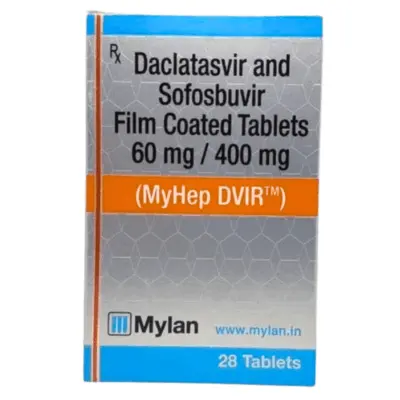
- Hepcinat 400 mg Tablet (Sofosbuvir 400 mg) — the NS5B inhibitor combination partner for daclatasvir; Hepcinat + Natdac together form the complete sofosbuvir + daclatasvir oral HCV regimen
- Dalacin C 300 mg Capsule (Clindamycin 300 mg) — antibiotic relevant in HIV/HCV co-infected patients who require antimicrobial therapy for opportunistic infections
- Zo-400 Tablet (Fluconazole 400 mg) — antifungal used in HCV patients with HIV co-infection; important to review CYP drug interactions before combining with daclatasvir
- Omez 40 mg Injection (Omeprazole 40 mg IV) — acid suppression for gastroprotection; some NS5A inhibitors (ledipasvir, velpatasvir in other combinations) have interactions with high-dose PPIs, warranting awareness
References
- DailyMed (FDA). Daklinza (Daclatasvir) Tablets — Full Prescribing Information. Available at: https://dailymed.nlm.nih.gov/dailymed/search.cfm?labeltype=all&query=daclatasvir+daklinza
- MedlinePlus (U.S. National Library of Medicine). Daclatasvir. Available at: https://medlineplus.gov/druginfo/meds/a615015.html
- Poordad F, Schiff ER, Vierling JM, et al. Daclatasvir with sofosbuvir and ribavirin for hepatitis C virus infection with advanced cirrhosis or post-liver transplantation recurrence. Hepatology. 2016;63(5):1493–1505. PubMed PMID: 26754432. Available via: https://pubmed.ncbi.nlm.nih.gov/26754432/
- Nelson DR, Cooper JN, Lalezari JP, et al. All-oral 12-week treatment with daclatasvir plus sofosbuvir in patients with hepatitis C virus genotype 3 infection: ALLY-3 phase III study. Hepatology. 2015;61(4):1127–1135. PubMed PMID: 25614962. Available via: https://pubmed.ncbi.nlm.nih.gov/25614962/
- Mayo Clinic. Daclatasvir (Oral Route) — Description and Brand Names, Before Using, Proper Use, Precautions, Side Effects. Available at: https://www.mayoclinic.org/drugs-supplements/daclatasvir-oral-route/description/drg-20134637
Reviews
There are no reviews yet.