Description
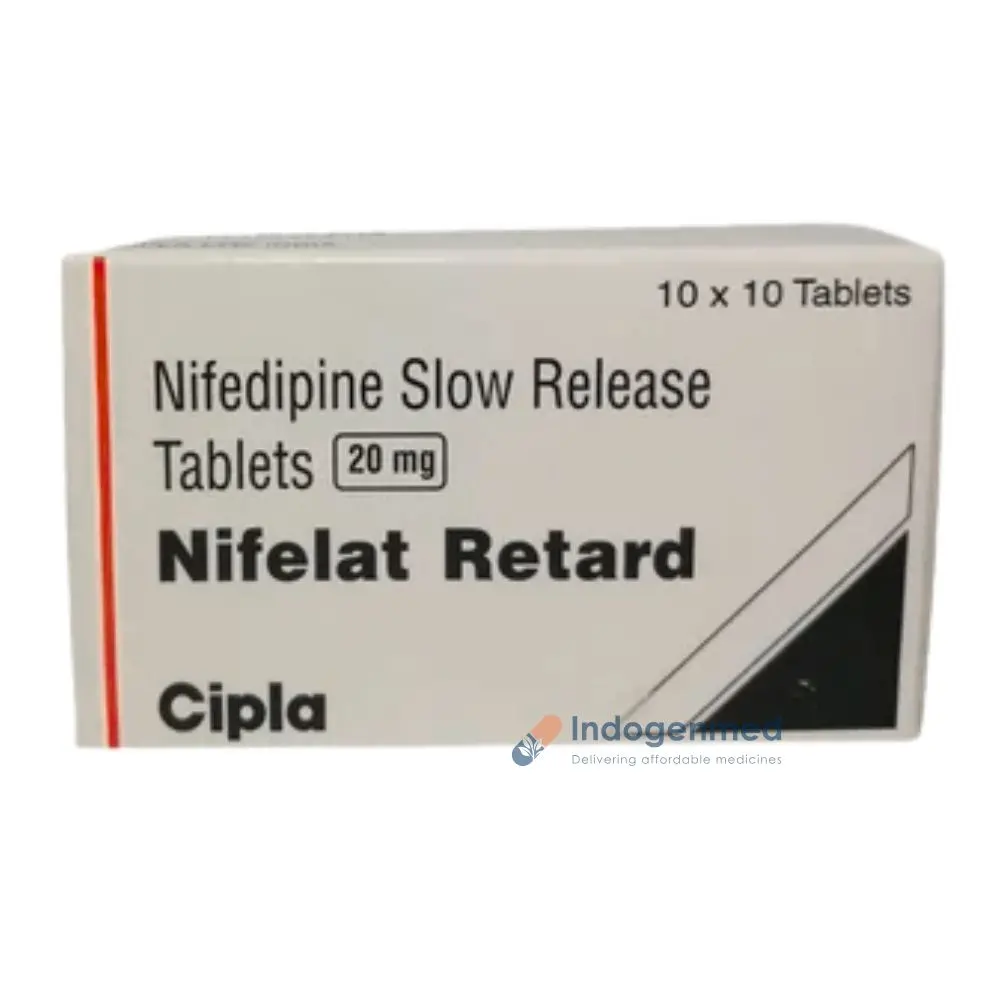
Nifelat 10 Mg Tablets – Nifedipine 10 mg
Nifelat 10 Mg Tablets contain nifedipine 10 mg as a standard-release oral formulation. Nifedipine is a 1,4-dihydropyridine calcium channel blocker used in the management of hypertension and the prevention of angina pectoris. The 10 mg conventional formulation is typically used at the lower end of the dosing range, making it suitable for initiation of nifedipine therapy, for elderly patients who require a cautious starting dose, and for situations where a lower dose provides adequate cardiovascular control. Nifelat 10 is manufactured by Sun Pharmaceutical Industries Ltd. and provides effective arterial vasodilation to reduce blood pressure and improve coronary blood flow.
Composition
Each Nifelat 10 Mg tablet contains:
- Active ingredient: Nifedipine 10 mg
- Inactive ingredients: Microcrystalline cellulose, lactose monohydrate, maize starch, sodium lauryl sulphate, magnesium stearate, and a standard film coating.
Unlike modified-release and controlled-delivery formulations, the standard 10 mg tablet releases nifedipine more rapidly after ingestion, reaching peak plasma concentrations within 30–60 minutes and providing a shorter duration of action of approximately 6–8 hours. For this reason, it is typically dosed two to three times daily when used for sustained blood pressure or angina control.
How Nifelat 10 Works
Nifedipine exerts its therapeutic effect by blocking L-type voltage-gated calcium channels in the smooth muscle cells of arterial walls. The mechanism of action proceeds as follows:
- Inhibition of calcium entry: Calcium ions drive contraction of vascular smooth muscle. By preventing their entry through L-type channels, nifedipine causes arterial smooth muscle to relax and dilate.
- Peripheral vasodilation and blood pressure reduction: Relaxation of systemic arterioles reduces total peripheral vascular resistance. The resulting decrease in afterload lowers systolic and diastolic blood pressure, bringing hypertension under control.
- Coronary vasodilation for angina relief: Dilation of coronary arteries and arterioles improves blood flow and oxygen delivery to cardiac muscle. This relieves the myocardial ischaemia responsible for anginal symptoms and reduces their frequency when nifedipine is taken regularly.
At standard doses, nifedipine acts predominantly on arterial smooth muscle with minimal direct effect on cardiac conduction (sinoatrial and atrioventricular nodes). Heart rate may reflexively increase due to the baroreceptor response to rapid blood pressure lowering, particularly with the standard-release formulation where peak plasma levels rise more sharply than with modified-release preparations. This reflex tachycardia is generally mild and well tolerated.
Nifedipine is extensively metabolised by CYP3A4 in the gut wall and liver to inactive oxidative metabolites, which are excreted primarily in urine. Its plasma half-life with the conventional-release formulation is approximately 1.7 to 3.4 hours, necessitating multiple daily doses to maintain therapeutic concentrations.
Therapeutic Uses
Nifelat 10 Mg Tablets are indicated for:
- Hypertension: Management of mild-to-moderate and severe high blood pressure, either as monotherapy or combined with other antihypertensive agents. The 10 mg dose is used for initiation of therapy or for patients in whom a full 20 mg dose would pose an increased hypotension risk (e.g., elderly patients, patients with low baseline blood pressure).
- Prophylaxis of chronic stable angina pectoris: Regular dosing with nifedipine 10 mg reduces the frequency of anginal episodes in patients with stable coronary artery disease. It acts as a prophylactic agent rather than a treatment for acute chest pain.
Nifelat 10 is not intended for:
- Acute or unstable angina
- Immediate relief of an ongoing anginal attack
- Secondary prevention following a myocardial infarction
- Use within four weeks of an acute myocardial infarction
Dosage and Administration
Dosing must be individualised under medical supervision:
- Adults — Hypertension or stable angina: The usual starting dose is 10 mg two to three times daily. Based on response and tolerability, the dose may be gradually increased to 20 mg two to three times daily. The maximum recommended daily dose is typically 60–80 mg per day for the conventional formulation, taken as divided doses.
- Elderly patients: Begin at the lower end of the dose range (10 mg twice daily). Elderly patients are more susceptible to hypotension and adverse effects; the therapeutic dose may be lower than in younger adults.
- Renal impairment: No dose reduction is generally required. Nifedipine is hepatically metabolised and its pharmacokinetics are largely unaffected by renal impairment.
- Hepatic impairment: Use with caution. Significant hepatic impairment reduces nifedipine clearance, increasing exposure. Consider starting at a lower dose and titrating carefully with close blood pressure monitoring.
- Children under 18 years: Safety and efficacy have not been established; nifedipine is not routinely recommended in this age group.
How to take Nifelat 10: Swallow the tablet whole with a glass of water. It may be taken with or without food, though food may slightly delay the onset of action. Take at evenly spaced intervals throughout the day to maintain consistent blood pressure control. Do not take with grapefruit juice — grapefruit inhibits CYP3A4 in the gut wall, increasing nifedipine absorption and plasma levels unpredictably, with risk of excessive blood pressure lowering. The effect of grapefruit persists for several days after regular consumption ceases.
Side Effects
Nifedipine is generally well tolerated at therapeutic doses. Side effects are mostly related to its vasodilatory pharmacology and are more pronounced with the standard-release formulation due to the more rapid rise in plasma levels:
Common side effects (affect up to 1 in 10 people):
- Peripheral oedema (ankle and leg swelling) — the most frequently reported side effect; caused by arteriolar dilation without corresponding venodilation
- Headache — often worse at the start of treatment; usually resolves as the body adjusts
- Flushing (warmth or redness of the face and chest) — a direct vasodilatory effect
- Constipation
- General fatigue or feeling unwell
Uncommon side effects (affect up to 1 in 100 people):
- Dizziness or light-headedness, especially on standing (orthostatic hypotension)
- Palpitations and reflex tachycardia (more pronounced with this conventional-release formulation compared to modified-release versions)
- Hypotension (blood pressure dropping too low), including syncope in susceptible patients
- Nausea, dyspepsia, abdominal discomfort, flatulence, or dry mouth
- Nasal congestion or nosebleeds
- Allergic skin reactions: rash, pruritus, or urticaria
- Angioedema (swelling of face, lips, tongue, or throat)
- Anxiety, sleep disturbance, or migraine
- Transient elevation of hepatic enzymes (ALT, AST)
- Erectile dysfunction
- Changes in urinary frequency
- Visual disturbances
- Muscle cramps or joint swelling
Rare or very rare side effects:
- Gingival hyperplasia (overgrowth of gum tissue) — with prolonged use; regular brushing and dental reviews are important to minimise this
- Severe skin reactions: toxic epidermal necrolysis or Stevens-Johnson syndrome — seek emergency care if extensive blistering or skin shedding occurs
- Blood dyscrasias: agranulocytosis or leucopenia
- Severe anaphylactic reaction
- Jaundice or cholestatic hepatitis
- Pulmonary oedema or severe hypotension
Report any persistent, unexpected, or severe side effects to your doctor promptly. For chest pain, severe allergic reactions, or extreme blood pressure drops, seek emergency medical attention immediately.
Precautions and Warnings
- Hypotension: Do not initiate Nifelat 10 in patients with systolic blood pressure below 90 mmHg. Sudden hypotension can impair myocardial and cerebral perfusion.
- Unstable angina and recent myocardial infarction: Contraindicated in unstable angina and within four weeks of an acute MI. Conventional nifedipine can worsen outcomes in these conditions due to reflex tachycardia and sympathetic activation.
- Aortic stenosis: Contraindicated in clinically significant aortic stenosis due to risk of severe hypotension and myocardial ischaemia.
- Heart failure: Use with caution in patients with poor cardiac reserve or decompensated heart failure. Nifedipine may worsen fluid retention.
- Pregnancy: Nifedipine is used in pregnancy only when strictly necessary, typically for severe hypertension unresponsive to first-line agents. It inhibits uterine contractions and may prolong labour when used near term. Use only under specialist supervision.
- Breastfeeding: Nifedipine passes into breast milk in small amounts. The benefits and risks should be discussed with a healthcare professional.
- Elderly: Enhanced blood pressure lowering and increased sensitivity to side effects; use the lowest effective dose and monitor closely.
- Diabetes: Nifedipine may modestly impair glucose tolerance. Monitor blood glucose at initiation of therapy and adjust antidiabetic treatment if required.
- Dialysis: In hypovolaemic patients on haemodialysis, there is a risk of pronounced blood pressure drop. Use with caution and close monitoring.
- Lactose content: Nifelat 10 tablets contain lactose monohydrate. Not suitable for patients with galactose intolerance, Lapp lactase deficiency, or glucose-galactose malabsorption syndrome.
- Driving and machinery: Nifedipine can cause dizziness, fatigue, or hypotension, particularly when starting treatment. Patients should assess their individual response before driving or using machines.
Drug Interactions
Nifedipine is a substrate of CYP3A4 and is subject to clinically important pharmacokinetic and pharmacodynamic interactions:
Drugs that increase nifedipine exposure (CYP3A4 inhibitors) — enhanced blood pressure lowering, risk of toxicity:
- Azole antifungals: ketoconazole, fluconazole, itraconazole, voriconazole
- Macrolide antibiotics: erythromycin, clarithromycin, telithromycin
- HIV protease inhibitors: ritonavir, indinavir, nelfinavir, saquinavir, lopinavir
- Non-nucleoside reverse transcriptase inhibitors: delavirdine
- Antidepressants: nefazodone, fluoxetine, fluvoxamine
- Cimetidine (H2 receptor antagonist)
- Diltiazem (combination calcium channel blocker)
- Valproic acid
- Grapefruit juice (avoid throughout treatment)
Drugs that reduce nifedipine exposure (CYP3A4 inducers) — reduced antihypertensive and antianginal effect:
- Rifampicin — contraindicated (renders nifedipine largely ineffective)
- Antiepileptics: phenytoin, carbamazepine, phenobarbital, primidone
- St John’s Wort (Hypericum perforatum) — avoid concurrent use
Additive blood pressure effects (monitor for hypotension):
- Beta-blockers, diuretics, ACE inhibitors, ARBs, other calcium channel blockers
- Antipsychotics (particularly phenothiazines)
- General anaesthetics
- Aldesleukin (interleukin-2)
- IV magnesium sulphate — profound hypotension risk particularly in obstetric use
Effects on other drugs:
- Digoxin: Nifedipine can increase digoxin plasma concentrations; monitor digoxin levels when starting or adjusting nifedipine
- Tacrolimus: Nifedipine inhibits CYP3A4-mediated tacrolimus metabolism; tacrolimus levels should be monitored with possible dose reduction
- Quinidine: Nifedipine can reduce quinidine plasma levels; monitor when nifedipine is started or stopped
Contraindications
Nifelat 10 must not be used in:
- Hypersensitivity to nifedipine, other dihydropyridines (e.g., amlodipine, felodipine, lacidipine), or any excipient in the formulation
- Cardiogenic shock
- Clinically significant aortic stenosis
- Unstable angina pectoris
- Acute myocardial infarction (within the last 4 weeks)
- For secondary prevention of myocardial infarction
- Concomitant use of rifampicin
- Inflammatory bowel disease (Crohn’s disease, ulcerative colitis)
- Kock pouch (ileostomy following total proctocolectomy)
- Gastrointestinal obstruction or pathologically narrowed oesophagus or gut lumen
Storage Instructions
- Store below 25°C in a cool, dry place away from direct heat and moisture
- Keep in the original packaging to protect from light
- Store out of the reach and sight of children
- Do not use after the expiry date printed on the packaging
- Dispose of unused medication safely; do not flush down the sink or discard in household waste
Related Products
Patients using Nifelat 10 for hypertension or angina may also find the following products useful on IndoGenMed:
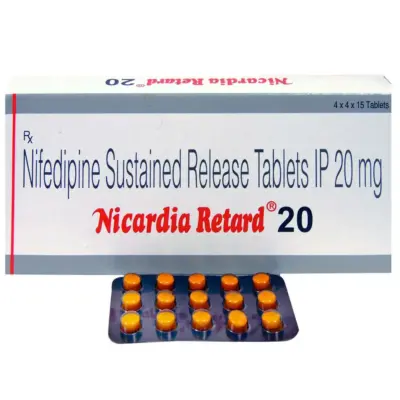
- Nicardia 20 Mg Tablets – Nifedipine 20 mg modified-release, twice-daily for maintenance therapy
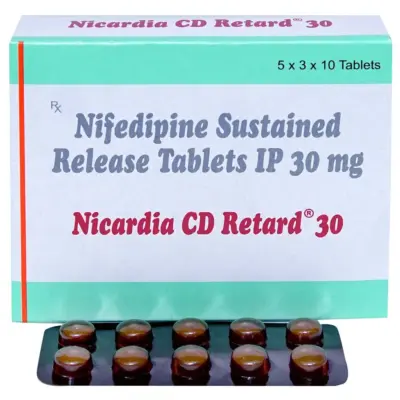
- Nicardia CD 30 Mg Tablets – Nifedipine 30 mg controlled-delivery, once-daily for improved adherence
- Amlopres 5 Mg Tablets – Amlodipine 5 mg, a long-acting dihydropyridine CCB alternative to nifedipine
- Concor 5 Mg Tablets – Bisoprolol 5 mg, beta-blocker used alongside nifedipine in stable angina
- Telma 40 Mg Tablets – Telmisartan 40 mg, ARB for combination antihypertensive therapy
References
- Tillomed Laboratories Ltd. Valni 20 Retard (Nifedipine 20 mg Modified-Release Tablets) – Summary of Product Characteristics. UK Electronic Medicines Compendium (EMC). Last updated 10 September 2025. Available at: https://www.medicines.org.uk/emc/product/11473/smpc
- Dexcel Pharma Ltd. Nifedipress MR 20 / Dexipress MR 20 Modified-Release Tablets – Summary of Product Characteristics. UK Electronic Medicines Compendium (EMC). Available at: https://www.medicines.org.uk/emc/product/658/smpc
- U.S. National Library of Medicine. Nifedipine – LiverTox: Clinical and Research Information on Drug-Induced Liver Injury. Bethesda (MD): National Institutes of Health. Available at: https://www.ncbi.nlm.nih.gov/books/NBK547894/
- Abernethy DR, Schwartz JB. Calcium-antagonist drugs. New England Journal of Medicine. 1999;341(19):1447–1457. Available via PubMed: https://pubmed.ncbi.nlm.nih.gov/10547409/
Reviews
There are no reviews yet.