
Description
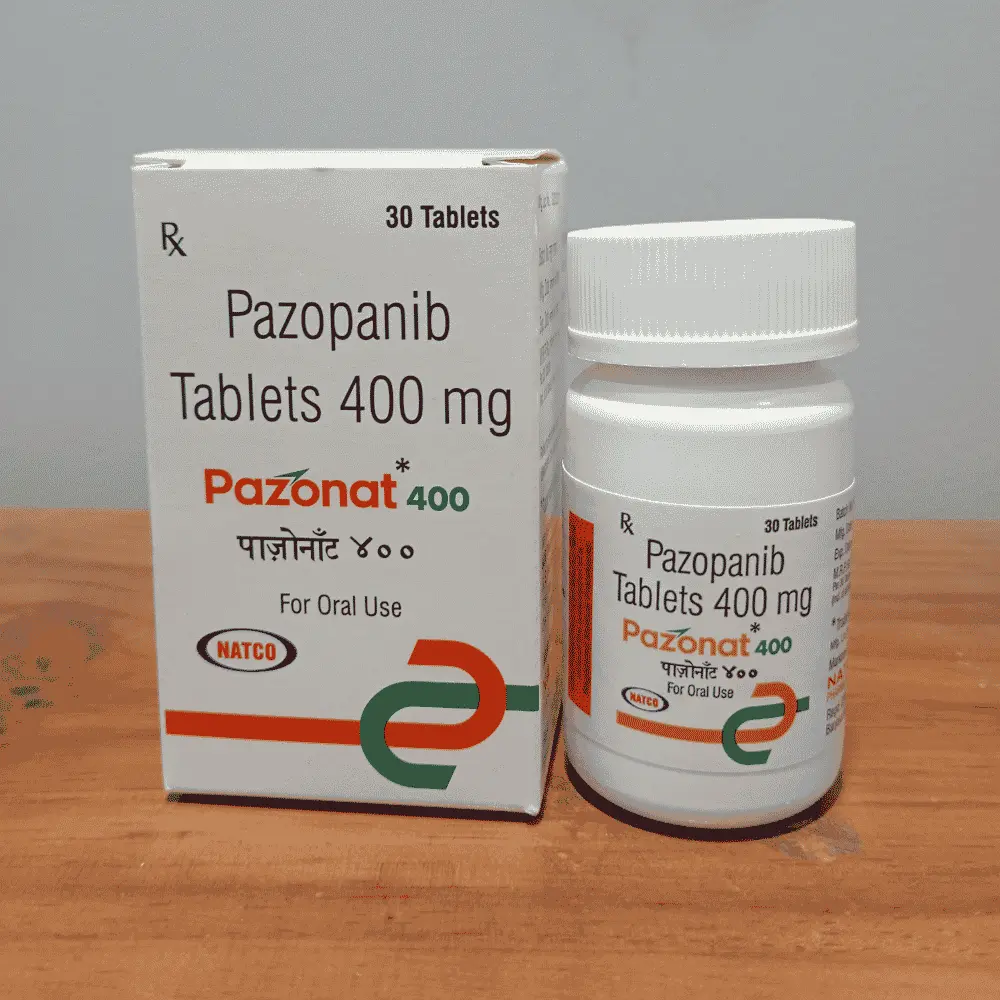
Comprehensive Patient & Clinician Guide to Pazonat 400 mg Tablet (Pazopanib Hydrochloride)
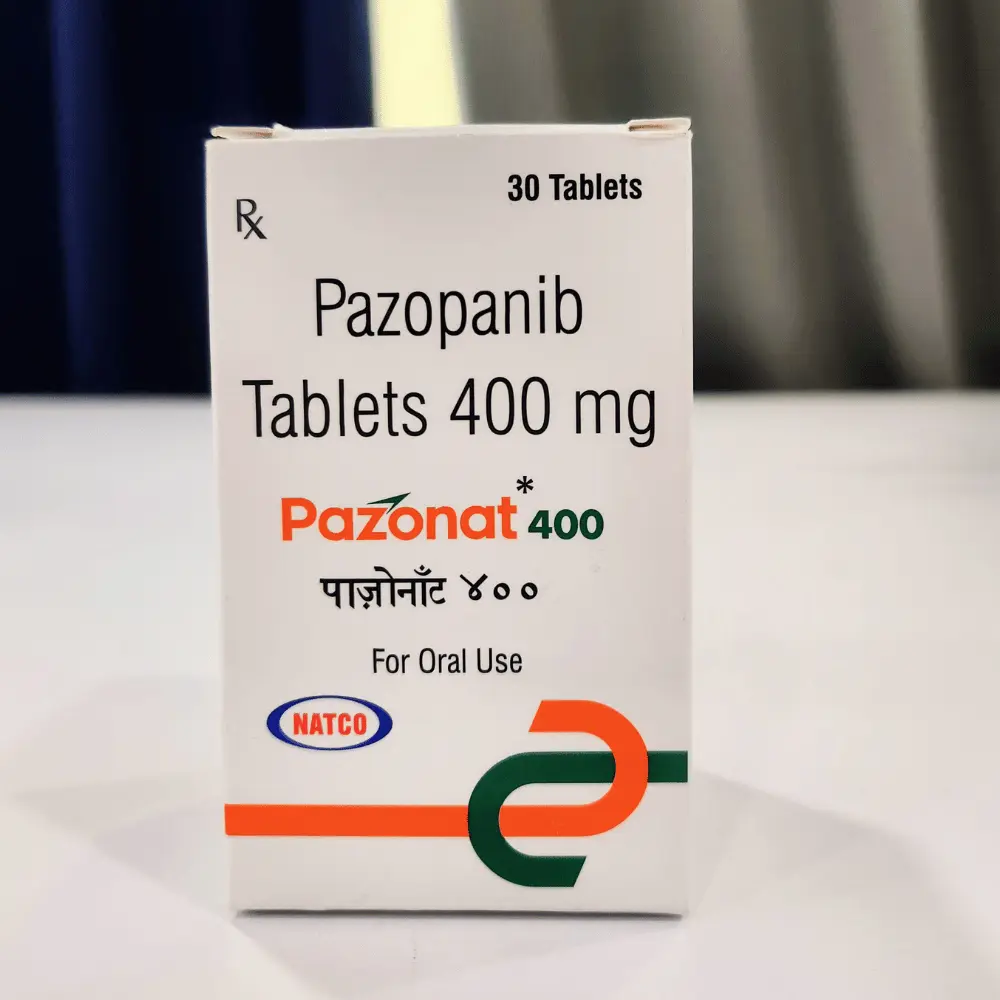
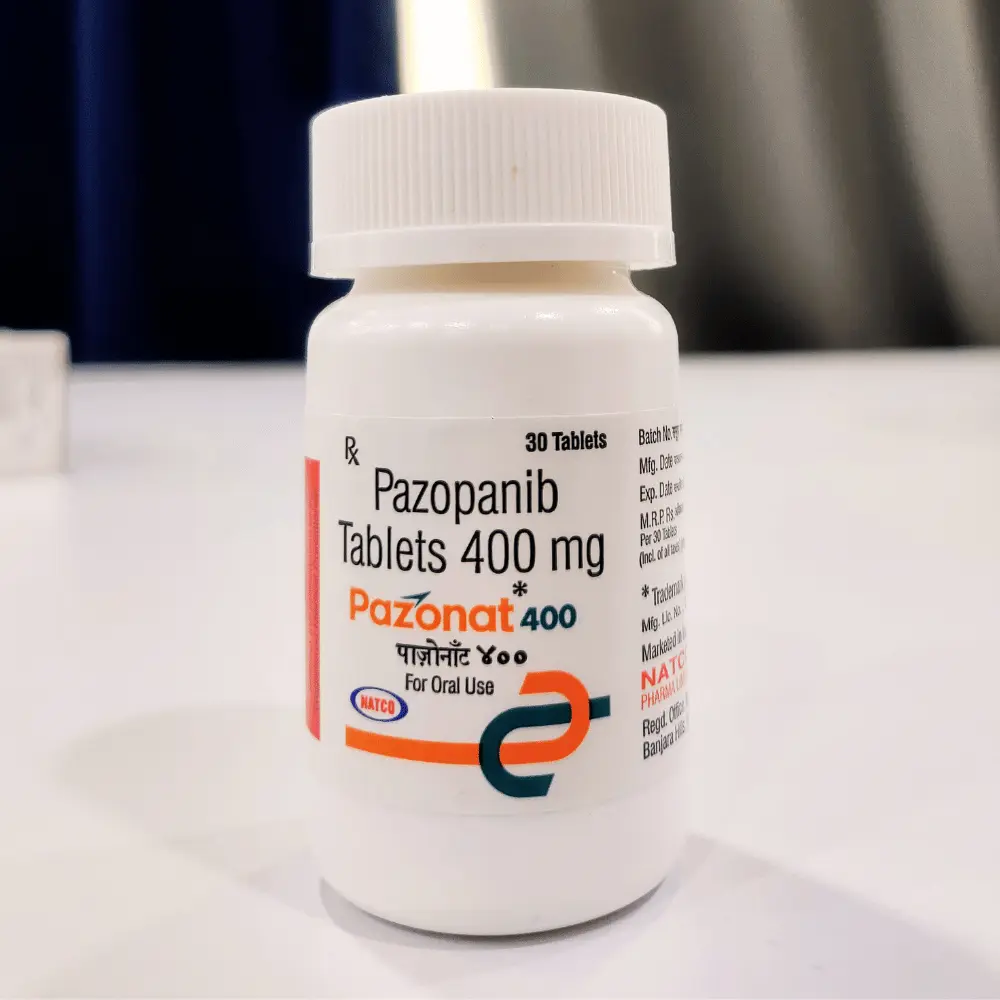
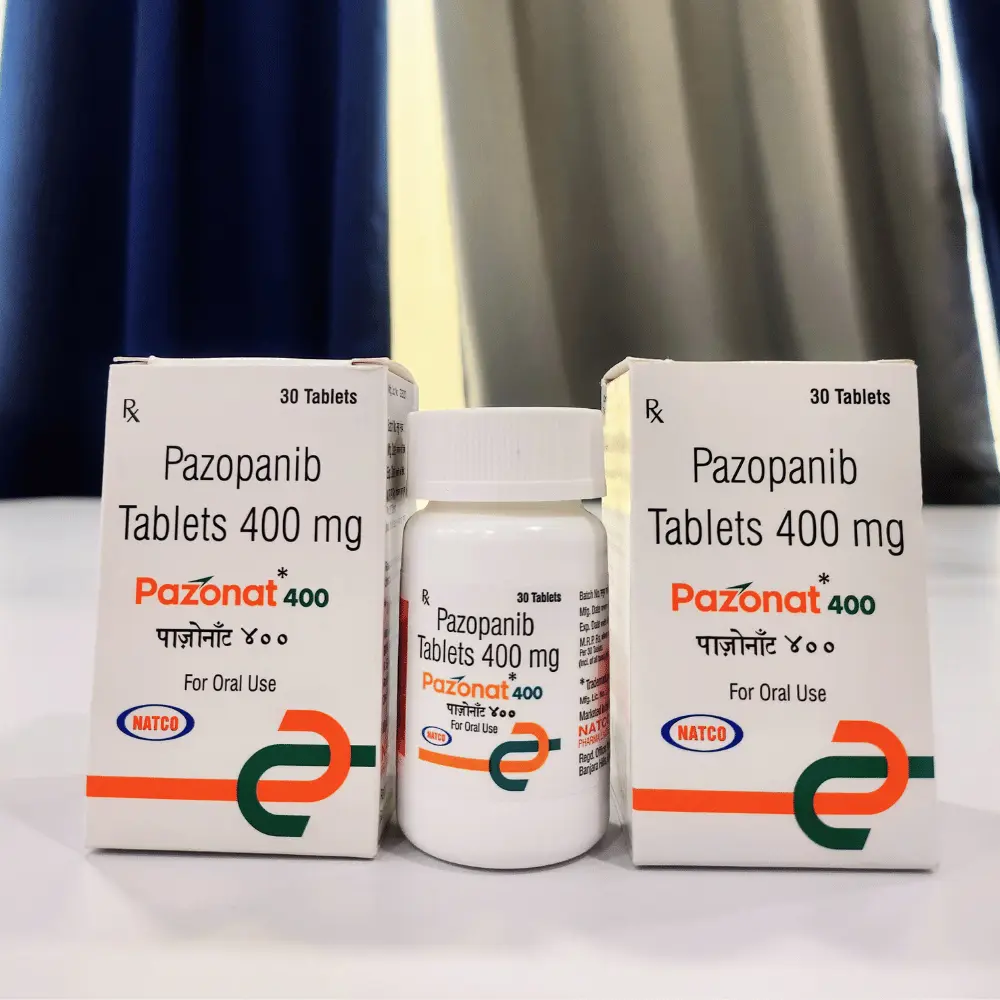
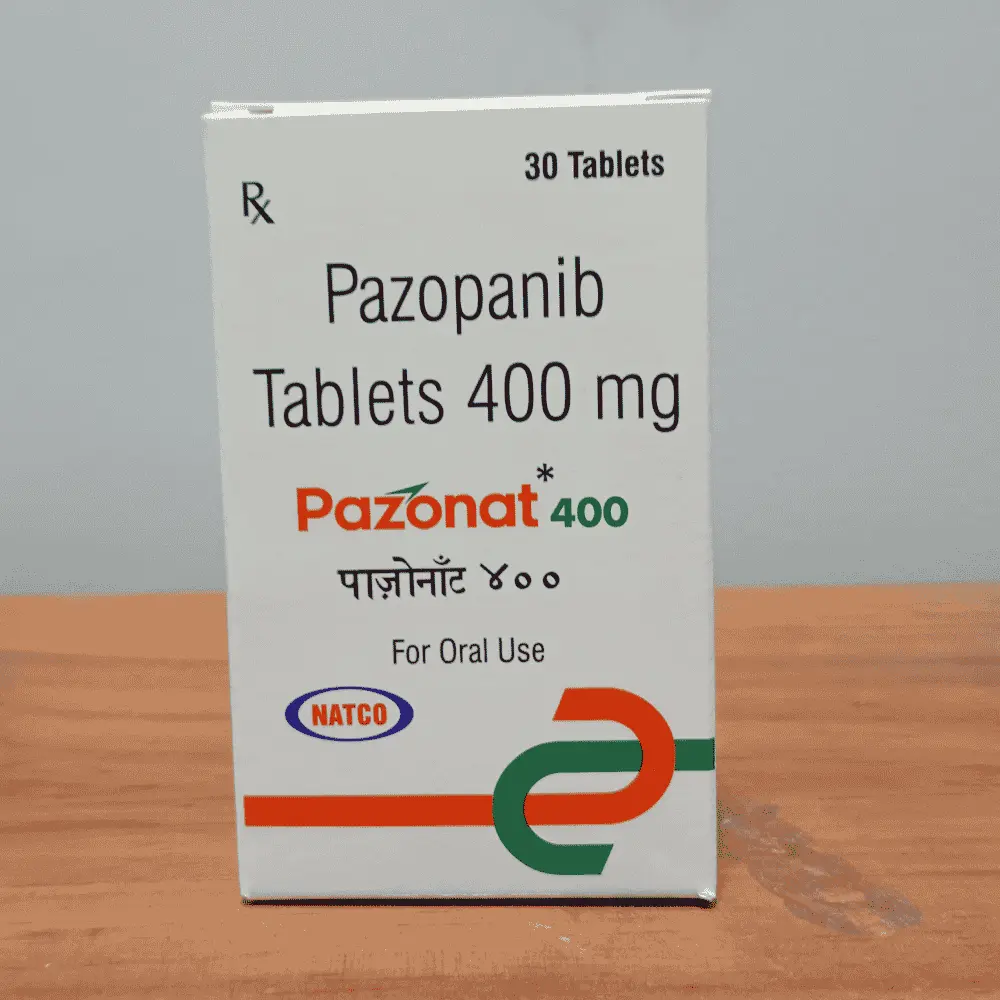
Pazonat 400mg Tablet is an advanced, targeted anti-cancer medication classified as a multi-targeted receptor tyrosine kinase (RTK) inhibitor.
Formulated and manufactured by Natco Pharma Ltd., each film-coated tablet contains 400 mg of pazopanib (equivalent to pazopanib hydrochloride).
Pazonat is prescribed under specialist oncology supervision for the treatment of advanced renal cell carcinoma (a primary form of kidney cancer) and advanced soft tissue sarcomas.
Unlike conventional cytotoxic chemotherapeutic drugs, which kill both the cancerous cells and the fast-growing normal cells, the Pazonat treatment works on the principle of anti-angiogenesis and signaling inhibition.
The treatment cuts off the blood supply to the tumor because of its requirement for oxygen, nutrients, and waste removal.
Molecular Pharmacology & Mechanism of Action
- Understanding how Pazonat functions requires knowledge about the survival of solid tumors and their metastasis.
- As the solid tumor grows past a certain point (size of 1 to 2 millimeters), hypoxia takes place within the center of the tumor due to a lack of oxygen supply.
- The tumor then releases signaling molecules in the tissue surrounding it.
- The molecules bind to certain receptors in the neighboring blood vessels, leading to the formation of capillary networks in the tumor.
Multitargeted Receptor Inhibition
Pazopanib 400 mg is a potent, cell-permeable small molecule that selectively inhibits the intracellular tyrosine kinase domains of multiple cell-surface receptors.
By occupying the ATP-binding pocket of these enzymes, Pazonat 400 mg blocks downstream enzymatic phosphorylation and prevents the activation of cascade pathways critical for cellular proliferation, endothelial migration, and vascular survival.
Key targets of Pazonat include:
-
Vascular Endothelial Growth Factor Receptors (VEGFR-1, VEGFR-2, VEGFR-3): Essential for signaling endothelial cell proliferation, migration, capillary tube formation, and vessel permeability.
-
Platelet-Derived Growth Factor Receptors (PDGFRalpha and PDGFRbeta): Crucial for recruiting pericytes and smooth muscle cells that stabilize newly formed tumor blood vessels.
-
Stem Cell Factor Receptor (c-KIT): Regulates cell survival, growth, and hematopoiesis in various tissues.
-
Fibroblast Growth Factor Receptors (FGFR-1 and FGFR-3): Involved in secondary pathways of resistance and vascular growth.
-
Colony-Stimulating Factor 1 Receptor (CSF-1R): Regulates macrophage differentiation and tumor microenvironment remodeling.
By simultaneously targeting these complementary pathways, Pazonat disrupts both the initial sprouting of new blood vessels and the stabilization of established tumor vasculature, leading to tumor regression and apoptosis.
Approved Clinical Indications & Usage
Pazonat 400mg Tablet is indicated for adult patients in specific oncological settings:
1. Advanced or Metastatic Renal Cell Carcinoma (aRCC)
Renal cell carcinoma accounts for the vast majority of kidney cancers in adults. A significant proportion of clear-cell RCC tumors exhibit mutations or inactivation of the von Hippel-Lindau (VHL) tumor suppressor gene, leading to overproduction of VEGF and PDGF proteins.
Pazonat is approved as:
-
First-line treatment: In patients with new-onset advanced or metastatic RCC cancers and no previous systemic anti-tumor treatment.
-
Second-line treatment: In patients with progression of their disease after previous use of cytokine therapy (e.g., interleukin-2 and interferon alpha).
It has been demonstrated in clinical trials that Pazonat improves the PFS of advanced kidney cancer patients while having an excellent quality-of-life profile compared to other previously existing treatments.
2. Advanced Soft Tissue Sarcoma (aSTS)
Soft tissue sarcomas represent a group of rare, heterogeneous malignancies originating from mesenchymal tissues, including muscle, fat, nerves, blood vessels, and deep fibrous tissue.
Pazonat is indicated for:
-
Adult patients with advanced soft tissue sarcoma who have previously received anthracycline-based chemotherapy, or who were unsuited for such treatments.
Clinical Subtype Contraindications: Efficacy and safety have not been established for use in patients with either gastrointestinal stromal tumors or liposarcomas (adipocytic soft tissue sarcomas). As a result, Pazonat should only be used in those suffering from non-adipocytic soft tissue sarcomas (e.g., leiomyosarcoma, synovial sarcoma, and malignant peripheral nerve
Standard Dosage and Administration Guidelines
Pazonat 400mg Tablet must be taken strictly as prescribed by a qualified oncologist. Improper dosing or taking the medication with food can alter its blood levels and increase the risk of serious toxicity.
Standard Adult Dosing Regimen
-
Recommended Starting Dose: The standard adult dose is 800 mg taken orally once daily. This requires taking two 400mg tablets together at the same time every day.
-
Dose Modifications: Depending on individual patient tolerance, laboratory findings, or hepatic function, the oncologist may lower the daily dose in steps of 200 mg (e.g., reduced to 600 mg, 400 mg, or 200 mg daily).
The Strict Empty-Stomach Requirement
Pazonat must be taken on an empty stomach.
-
Take your dose at least 1 hour before a meal, OR
-
Wait at least 2 hours after a meal before taking the tablets.
Why is this strict timing required?
Pazopanib’s bioavailability increases when taken with food. Consuming Pazonat with a meal—especially one high in fat or calories—can double or triple the amount of drug absorbed into your bloodstream.
Unpredictable spikes in blood concentrations can trigger severe, life-threatening toxicities, including acute liver injury, dangerously high blood pressure, and heart rhythm disturbances.
Administration Rules
-
Swallow Whole: Swallow the tablets whole with a full glass of water. Do not crush, chew, split, or dissolve the tablets. Crushing the tablet breaks its protective coating, changing how quickly it dissolves and spiking absorption to unsafe levels.
-
Missed Dose Instructions: If you miss a dose, take it as soon as you remember, provided it is more than 12 hours before your next scheduled dose. If your next dose is due in less than 12 hours, skip the missed dose entirely and resume your normal schedule the following day. Never take two doses at the same time to make up for a missed dose.
Potential Side Effects & Clinical Management Strategies
Because Pazonat inhibits blood vessel creation and cell growth signaling throughout the body, it can cause systemic side effects. Regular clinical monitoring helps detect and manage these symptoms early.
Common Adverse Reactions
| System Organ Class | Frequent Symptoms | Self-Management & Clinical Interventions |
| Gastrointestinal | Diarrhea, nausea, vomiting, abdominal pain, loss of appetite, dysgeusia (altered taste). | Maintain hydration with electrolyte solutions. Eat small, frequent meals. Antidiarrheal agents (e.g., loperamide) may be prescribed. |
| Dermatological | Hair depigmentation (lightening/whitening), skin lightening, dry skin, hand-foot skin reaction (palmar-plantar erythrodysesthesia), skin rash. | Use mild, fragrance-free moisturizers and soft footwear. Hair color changes are temporary and typically reverse after stopping therapy. |
| Cardiovascular | Hypertension (high blood pressure). | Monitor blood pressure at home weekly. Oral antihypertensive drugs (e.g., ACE inhibitors or CCBs) are often co-prescribed. |
| Systemic & Metabolic | Fatigue, weakness, weight loss, headache. | Rest as needed, maintain light activity if cleared by your doctor, and track weekly body weight. |
Serious Adverse Reactions (Require Immediate Medical Attention)
1. Severe Hepatotoxicity (Boxed Warning)
Pazopanib can cause severe, potentially fatal liver injury.
-
Symptoms: Yellowing of the skin or eyes (jaundice), dark brown or tea-colored urine, light-colored stools, deep pain in the upper right side of the abdomen, severe nausea, or unexplained fatigue.
-
Clinical Action: Requires immediate blood tests to evaluate liver enzymes. Severe transaminase elevations require pausing or permanently stopping the medication.
2. Cardiovascular Toxicities & QT Prolongation
Pazonat can alter cardiac electrical conduction, leading to QT interval prolongation on an electrocardiogram (ECG), which increases the risk of ventricular arrhythmias (including Torsades de Pointes).
-
Symptoms: Dizziness, lightheadedness, palpitations, chest pain, shortness of breath, sudden leg swelling, or fainting.
3. Hemorrhage & Bleeding Events
Inhibiting VEGF pathways can weaken vascular structure, increasing the risk of internal or mucosal bleeding.
-
Symptoms: Coughing up blood (hemoptysis), blood in vomit, dark or tarry stools, heavy nasal bleeding, or unusual vaginal bleeding.
4. Gastrointestinal Perforation & Fistulas
Rarely, Pazonat can cause tears (perforations) or abnormal passages (fistulas) in the wall of the stomach or intestines.
-
Symptoms: Severe, sudden abdominal pain accompanied by high fever, nausea, and vomiting.
5. Arterial & Venous Thromboembolism
Pazonat increases the risk of blood clots, including deep vein thrombosis (DVT), pulmonary embolism (PE), myocardial infarction (heart attack), and stroke.
-
Symptoms: Pain, swelling, or warmth in one leg, sudden shortness of breath, sharp chest pain, facial drooping, or weakness on one side of the body.
Precautions & Mandatory Laboratory Safety Monitoring
Due to its toxicity profile, therapy with Pazonat requires a structured schedule of baseline tests and ongoing monitoring.
Recommended Laboratory Monitoring Protocol
| Monitoring Parameter | Testing Schedule | Clinical Purpose |
| Liver Function Tests (ALT, AST, Bilirubin) | Baseline, then every 2 weeks for the first 9 weeks, then monthly thereafter | Detects early elevations in serum liver enzymes to prevent progressive hepatotoxicity or liver failure. |
| Blood Pressure Checks | Baseline, weekly for the first 6 weeks, then at every clinic visit | Ensures blood pressure remains below 140/90 mmHg. Hypertension should be controlled before starting therapy. |
| Thyroid Function (TSH & Free T4) | Baseline, then every 4 to 6 weeks | Monitors for secondary hypothyroidism, which can cause or worsen fatigue, weight gain, and cold sensitivity. |
| ECG & Serum Electrolytes (K+, Mg2+, Ca2+) | Baseline, then periodically | Evaluates the QT interval and ensures normal electrolyte levels to lower the risk of heart rhythm disorders. |
| Urinalysis (Proteinuria) | Baseline, then every 4 to 8 weeks | Checks for protein leakage in urine caused by drug-induced damage to kidney blood vessels. |
Major Health Precautions & Warnings
-
Surgical Warning & Wound Healing: Because Pazonat blocks new blood vessel creation, it significantly impairs normal wound healing and tissue repair. Pazonat therapy must be stopped at least 7 days before elective surgery and should not be restarted for at least 2 weeks after major surgery, once the incision has completely healed.
-
Pre-Existing Heart Disease: Use with caution in patients with a history of heart failure, recent heart attack, stroke, angina, or congenital long QT syndrome.
-
Grapefruit & Food Interactions: Do not eat grapefruit, drink grapefruit juice, or consume Seville oranges while taking Pazonat. These fruits block the CYP3A4 liver enzyme, preventing Pazonat from breaking down normally and causing drug levels in your body to spike to dangerous levels.
Drug Interactions & Special Population Protocols
Pazonat is metabolized primarily by the liver enzyme CYP3A4, with minor contributions from CYP1A2 and CYP2C8. It is also a substrate for P-glycoprotein (P-gp) and Breast Cancer Resistance Protein (BCRP) transport pumps.
Key Drug Interactions
-
Strong CYP3A4 Inducers: Drugs like rifampin, phenytoin, carbamazepine, and St. John’s Wort accelerate the breakdown of pazopanib, lowering its levels in the body and making the cancer treatment less effective. Combined use should be avoided.
-
Stomach Acid Reducers (PPIs & H2-Blockers): Pazopanib requires an acidic stomach environment to dissolve and absorb properly. Drugs that raise stomach pH—such as proton pump inhibitors (omeprazole, pantoprazole) and H2-receptor antagonists (famotidine, ranitidine)—significantly reduce the solubility and absorption of Pazonat.
-
Management Strategy: Avoid PPIs and H2-blockers when taking Pazonat. If an acid-neutralizing medication is necessary, use short-acting antacids and space them at least 2 hours before or 2 hours after taking your Pazonat dose.
-
-
Simvastatin Interaction: Co-administering Pazonat with simvastatin increases the risk of elevated liver enzymes (ALT/AST). Use caution, and consider alternative cholesterol-lowering agents.
Special Population Safety Guidelines
-
Pregnancy (Strictly Unsafe): Pazonat causes fetal harm and pregnancy loss when administered during pregnancy due to its mechanism of action.
-
Female Patients: Females of childbearing potential must undergo a negative pregnancy test before starting treatment and use effective contraception during therapy and for at least 2 weeks after the final dose.
-
Male Patients: Male patients with female partners of reproductive potential must use effective condoms during treatment and for at least 2 weeks after the last dose.
-
-
Lactation: It is unknown whether pazopanib passes into human breast milk. Because of the risk of severe adverse reactions in nursing infants, breastfeeding is strictly contraindicated during treatment and for at least 2 weeks after the final dose.
-
Pediatric Use: Safety and effectiveness in children under 18 years of age have not been established. In animal studies, pazopanib caused severe disruption to bone growth and tooth development.
Storage, Handling, and Quality Compliance
-
Storage Conditions: Store Pazonat 400mg Tablets at room temperature between 20°C and 25°C (68°F to 77°F). Keep the container tightly closed in a dry place to protect the tablets from moisture and light.
-
Safe Handling: Keep out of reach of children and pets. Caregivers should wash their hands after handling the tablets.
-
Manufacturing Quality Standards: Manufactured by Natco Pharma Ltd., Pazonat 400mg is produced in advanced pharmaceutical facilities that comply with stringent WHO-GMP (World Health Organization Good Manufacturing Practices) guidelines and international ISO standards, ensuring chemical purity and uniform dosing quality.
Frequently Asked Questions (FAQs)
Q1: Why has my hair turned white or lost its color while taking Pazonat?
Hair depigmentation (lightening or whitening of the hair) is a known, non-harmful side effect of Pazonat. It occurs because pazopanib blocks specific receptor signaling pathways (like c-KIT and VEGFR) involved in melanin pigment production in hair follicles. This change is temporary and typically reverses after treatment is completed.
Q2: Can I drink coffee, tea, or juice when I take my Pazonat tablet in the morning?
You can swallow your tablet with plain water. However, you must avoid taking Pazonat with fruit juices (especially grapefruit juice or orange juice) or food. To ensure proper absorption, take your tablet with plain water at least 1 hour before or 2 hours after having any food or beverage other than water.
Q3: What should I do if I develop high blood pressure while taking Pazonat?
Elevated blood pressure is a common effect of anti-angiogenic medications like Pazonat. You should monitor your blood pressure at home weekly. If your readings rise above normal levels, notify your oncologist. In most cases, high blood pressure can be managed with standard oral antihypertensive medications without having to stop your cancer treatment.
Q4: What should I do if I accidentally take my dose right after a meal?
If you accidentally take your Pazonat dose with or immediately after a meal, notify your oncology team for guidance. Monitor yourself closely for signs of increased side effects, such as severe nausea, sudden dizziness, or a spike in blood pressure. Resume your strict empty-stomach dosing schedule for your next dose the following day.
Medical Disclaimer
This clinical guide is strictly for educational and informational purposes and should not replace professional medical advice, diagnosis, or treatment. Always consult a qualified oncologist or healthcare provider before initiating, modifying, or halting any cancer therapy or prescription medication schedule.
References
-
National Center for Biotechnology Information (NCBI):
-
StatPearls Review: Pazopanib Pharmacology, Indications, and Clinical Applications. https://www.ncbi.nlm.nih.gov/books/NBK557622/
-
PMC Clinical Studies: Pazopanib in Advanced Renal Cell Carcinoma and Soft Tissue Sarcoma Management. https://pmc.ncbi.nlm.nih.gov/articles/PMC3234149/
-
-
U.S. Food and Drug Administration (FDA):
-
VOTRIENT (pazopanib) Prescribing Information & Black Box Warnings. https://www.accessdata.fda.gov/scripts/cder/daf/index.cfm?event=overview.process&ApplNo=022465
-
-
MedlinePlus Drug Information (US National Library of Medicine):
-
Pazopanib Monograph & Patient Safety Guidelines. https://medlineplus.gov/druginfo/meds/a610013.html
-
-
Electronic Medicines Compendium (EMC):
-
Pazopanib Film-Coated Tablets Summary of Product Characteristics (SmPC). https://www.medicines.org.uk/emc/product/572/smpc
-




Reviews
There are no reviews yet.