
Description
What Is Ritomune 100mg Tablet?
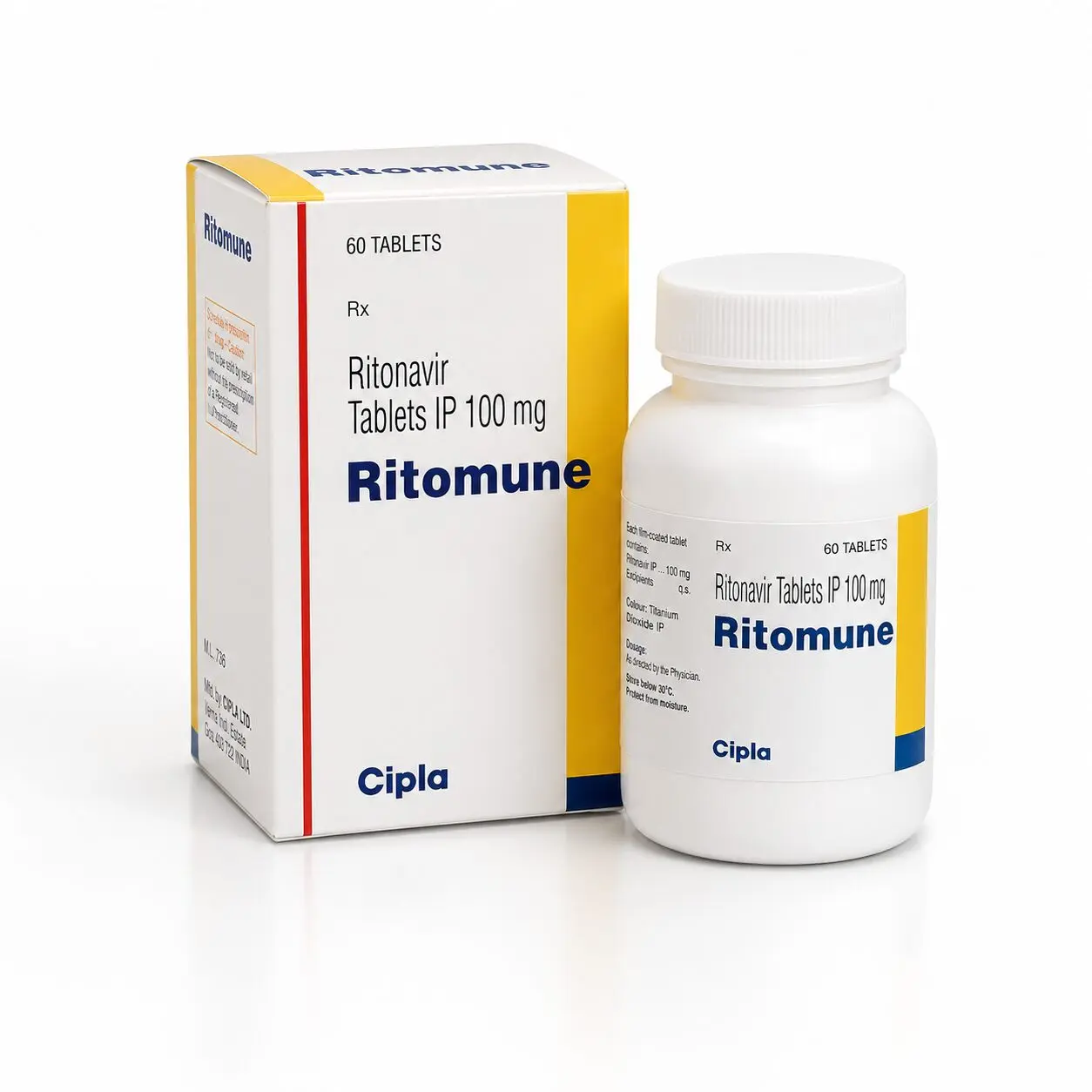
Ritomune 100mg Tablet is an oral prescription antiretroviral medication manufactured by Cipla Ltd. Each film-coated tablet contains Ritonavir 100 mg.
While ritonavir was originally developed as an active HIV-1 protease inhibitor, modern clinical medicine uses it in a very specific, specialized way: as a pharmacokinetic enhancer (or “booster”). Rather than serving as the main drug attacking the virus on its own, low-dose Ritomune is paired with other primary HIV medicines to help them stay in your bloodstream at strong, steady levels throughout the day.
Ritomune is prescribed under the supervision of HIV specialists and infectious disease physicians as a core supporting component of combination antiretroviral therapy (cART) for adults and children living with HIV-1.
Quick Product Fact Sheet
- Brand Name: Ritomune 100mg Tablet
- Active Ingredient: Ritonavir (100 mg)
- Manufacturer: Cipla Ltd.
- Therapeutic Class: Antiretroviral agent
- Pharmacological Class: Cytochrome P450 3A4 (CYP3A4) inhibitor / HIV Protease Inhibitor
- Primary Clinical Role: Pharmacokinetic booster for other HIV protease inhibitors
- Dosage Form: Film-coated oral tablet
- Dietary Instruction: Must always be taken with food
- Packaging: Bottle or pack of 30 or 60 tablets
How Ritomune Works
To understand Ritomune, it helps to look at how the body processes medicines. When you take a medication, liver enzymes immediately begin breaking it down so it can be cleared out of your system.
The most important enzyme responsible for clearing HIV protease inhibitors (such as atazanavir, darunavir, or lopinavir) is called cytochrome P450 3A4 (CYP3A4).
The Boosting Mechanism Explained:
- Enzyme Inhibition: Ritonavir acts as a mechanism-based inhibitor of CYP3A4. Even at low doses like 100 mg, it deactivates this enzyme in the gut wall and liver.
- Elevated Blood Levels: Because CYP3A4 is temporarily slowed down, the companion HIV medicine is not broken down too quickly. Its concentration in the bloodstream rises significantly.
- Simpler Dosing Schedules: Without Ritomune, many protease inhibitors would need to be taken three or four times every day in large quantities. With Ritomune boosting them, patients can take their medications once or twice daily with fewer pills.
- Preventing Resistance: Keeping drug concentrations high and steady prevents the virus from finding a low-drug window where it could mutate and become resistant.
Approved Clinical Uses
Ritomune 100mg Tablet is indicated for:
- Pharmacokinetic Booster in HIV-1 Treatment: Prescribed at low doses (typically 100 mg once or twice daily) alongside other protease inhibitors—such as darunavir or atazanavir—plus two nucleoside reverse transcriptase inhibitors (NRTIs) for adults and children.
- Component of Antiretroviral Regimens: Used in both newly diagnosed individuals starting treatment for the first time and treatment-experienced individuals whose viral strains need strong drug pressure to stay suppressed.
Important Clarification: Ritomune 100mg is rarely, if ever, prescribed alone at full antiviral strength today (which historically required 600 mg twice daily and caused severe gastrointestinal distress). In modern care, it serves as a booster for other medications. It does not cure HIV, but consistent daily use keeps the virus suppressed to undetectable levels.
Standard Dosage and How to Take
Because Ritomune is taken alongside other antiretroviral medicines, your exact schedule will match the requirements of your primary medications.
Common Adult Dosing Regimens
- Once-Daily Regimen (e.g., with Darunavir 800mg or Atazanavir 300mg): Take one Ritomune 100mg tablet once daily, at the exact same time as your companion medicines.
- Twice-Daily Regimen (e.g., with Darunavir 600mg): Take one Ritomune 100mg tablet twice daily (spaced roughly 12 hours apart), taken together with your companion protease inhibitor.
The Mandatory Food Rule
Ritomune must always be taken with food:
- Taking Ritomune with a meal or substantial snack improves how well your body absorbs it and ensures smooth delivery into your bloodstream.
- Taking it on an empty stomach can cause significant stomach upset, nausea, and lower drug absorption.
Practical Tips for Taking Ritomune
- Swallow Whole: Swallow the tablet whole with a glass of water. Do not chew, crush, break, or dissolve the tablet, as this can affect how it is absorbed and leave a bitter taste.
- Keep to a Routine: Link your doses to daily habits, like breakfast and dinner, to help you take them at the same time every day.
- Missed Dose Protocol: If you forget a dose, take it with food as soon as you remember. If it is almost time for your next scheduled dose, skip the missed tablet and stay on your normal schedule. Never take two tablets at once to make up for a missed dose.
Potential Side Effects & Practical Management
Because Ritomune is prescribed at a low boosting dose (100 mg to 200 mg daily), severe side effects are far less common than they were with older, high-dose regimens. Still, some side effects can occur.
Common Side Effects
- Digestive Symptoms: Mild nausea, diarrhea, stomach cramping, vomiting, or indigestion. These symptoms are most common when starting treatment and generally ease over the first two to four weeks.
- Taste Changes: A temporary metallic or bitter taste in the mouth.
- Nervous System: Mild dizziness, fatigue, or headache.
- Tingling Sensations (Paresthesia): Mild numbness or a “pins-and-needles” feeling around the mouth, hands, or feet.
Serious Warnings (When to Contact Your Doctor Immediately)
- Liver Stress (Hepatotoxicity): Ritonavir is processed by the liver. In rare cases, it can cause elevated liver enzymes or liver inflammation, especially in people who also have Hepatitis B or Hepatitis C. Watch for yellowing of the skin or eyes (jaundice), dark tea-colored urine, pale stools, or pain in the upper right side of your stomach.
- Pancreas Inflammation (Pancreatitis): Marked elevations in blood triglycerides can irritate the pancreas. Seek urgent medical care if you experience severe, persistent stomach pain that radiates into your back, often accompanied by vomiting.
- Allergic Skin Reactions: Mild rashes can appear early on. However, if a rash spreads quickly, begins blistering, or comes with fever, mouth sores, or facial swelling, stop taking the medication and seek emergency care immediately.
- Heart Rhythm Changes: Ritonavir can slightly alter the electrical signals of the heart (PR interval prolongation). Let your doctor know if you experience unexpected dizziness, lightheadedness, or fainting.
Precautions & Medical Monitoring
Your medical team will schedule routine lab visits to make sure your regimen is working well and keeping your body healthy:
- HIV-1 Viral Load & CD4 Count: Baseline, then every 3 to 6 months to confirm that your overall drug combination is keeping the virus undetectable and your immune system strong.
- Liver Function Tests (ALT, AST, Bilirubin): Baseline, then periodic checks to monitor liver enzymes to catch any irritation or drug-induced strain early.
- Fasting Lipid Panel (Cholesterol & Triglycerides): Baseline, then every 6 to 12 months. Ritonavir can raise blood fats; tracking them helps protect your long-term heart health.
- Fasting Blood Sugar / HbA1c: Baseline and periodic checks for changes in blood sugar or signs of insulin resistance.
- Kidney Function Tests: Baseline and periodic to evaluate kidney clearance, especially since companion drugs like tenofovir are cleared through the kidneys.
Drug Interactions: Why You Must Tell Your Doctor Everything
Because Ritomune intentionally slows down the liver’s CYP3A4 enzyme, it also slows down the clearance of many other everyday medicines. This can cause those other drugs to build up to dangerous levels in your body. Always share an up-to-date list of every prescription, over-the-counter medicine, inhaler, and herbal supplement you take.
Key Medications That Interact Strongly with Ritomune
- Certain Cholesterol Statins: Simvastatin and lovastatin must never be taken with Ritomune because high levels can cause severe muscle breakdown (rhabdomyolysis). Your doctor can prescribe safer options like atorvastatin or rosuvastatin at adjusted doses.
- Steroid Inhalers, Injections, or Creams: Fluticasone, budesonide, and triamcinolone can build up in your body when combined with ritonavir, leading to Cushing’s syndrome (facial swelling, weight gain, high blood pressure) and adrenal gland suppression. Beclomethasone is usually the safer alternative.
- Erectile Dysfunction Medicines: Sildenafil, tadalafil, and vardenafil stay in your blood much longer. Doses must be kept very low to prevent sudden, dangerous drops in blood pressure.
- Sedatives and Sleep Aids: Medications like oral midazolam and triazolam can cause extreme, prolonged sleepiness and breathing difficulties when combined with Ritomune.
- St. John’s Wort & Rifampin: These herbal and antibiotic treatments do the opposite—they speed up the liver enzymes, causing ritonavir and your primary HIV medicines to clear out too fast, leading to treatment failure.
- Birth Control Pills: Ritonavir can lower the levels of hormones in oral contraceptive pills, making them less reliable. Use barrier methods (such as condoms) or non-hormonal alternatives.
Special Population Guidance
- Pregnancy: Ritonavir-boosted regimens (such as boosted darunavir or atazanavir) are widely studied and frequently used during pregnancy to keep maternal virus undetectable and protect the baby.
- Breastfeeding: Where safe drinking water and infant formula are readily accessible, mothers living with HIV are advised to formula-feed to avoid any chance of passing the virus through breast milk.
- Liver Impairment: Used with care in mild to moderate liver disease. It is not recommended for individuals with severe liver impairment (Child-Pugh Class C).
- Kidney Disease: Because less than 10% of ritonavir is cleared by the kidneys, no dosage adjustments are needed for individuals with kidney disease or those on dialysis.
- Children: Approved for pediatric use in children older than one month when using weight-appropriate dosing under specialist guidance.
Storage and Handling Protocols
- Store tablets at room temperature between 20°C and 25°C (68°F to 77°F).
- Keep the bottle tightly closed in a dry place away from steam, humidity, and direct sunlight (avoid storing in damp bathroom medicine cabinets).
- Leave the moisture-absorbing packet (desiccant) inside the bottle until all tablets are finished.
- Keep strictly out of reach of children and household pets.
Frequently Asked Questions (FAQs)
Q1: Can I take Ritomune 100mg all by itself to treat HIV?
No. At the 100mg strength, Ritomune does not have enough antiviral strength on its own to control HIV. Its job is to act as a helper or “booster” for other antiretroviral medicines. It must always be taken as part of a complete prescribed combination.
Q2: Why do I always have to take Ritomune with a meal or snack?
Taking Ritomune with food helps your body absorb the medicine properly and reduces the chance of experiencing nausea, an upset stomach, or diarrhea.
Q3: What should I do if I get an upset stomach or loose stools after starting Ritomune?
Mild stomach upset is common during the first couple of weeks. Make sure you are taking your dose with a balanced meal rather than just water or a tiny bite. Staying hydrated with water and broths helps. If diarrhea or nausea continues past a few weeks, let your clinic know so they can suggest safe solutions.
Q4: Does Ritomune interact with everyday vitamins or pain relievers?
Most common over-the-counter pain relievers like paracetamol (acetaminophen) are generally fine for occasional use, but always check with your pharmacist or doctor before taking herbal supplements (especially St. John’s Wort) or new prescription medicines.
Medical Disclaimer: This guide is provided strictly for educational and informational purposes and does not replace professional medical advice, clinical diagnosis, or individualized treatment plans. Always consult your treating physician, infectious disease specialist, or pharmacist before starting, changing, or stopping any medication.
References
- U.S. Food and Drug Administration (FDA): Norvir (ritonavir) Tablets and Oral Solution Full Prescribing Information. View Source
- National Center for Biotechnology Information (NCBI): StatPearls Review: Ritonavir Pharmacology, Mechanism of Action, and Pharmacokinetic Boosting. View Source
- Clinical Info HIV.gov (U.S. Department of Health and Human Services): Guidelines for the Use of Antiretroviral Agents in Adults and Adolescents with HIV. View Source
- World Health Organization (WHO): Consolidated Guidelines on the Use of Antiretroviral Drugs for Treating and Preventing HIV Infection. View Source
- MedlinePlus (U.S. National Library of Medicine): Ritonavir Monograph and Patient Safety Guidelines. View Source





Reviews
There are no reviews yet.