Description
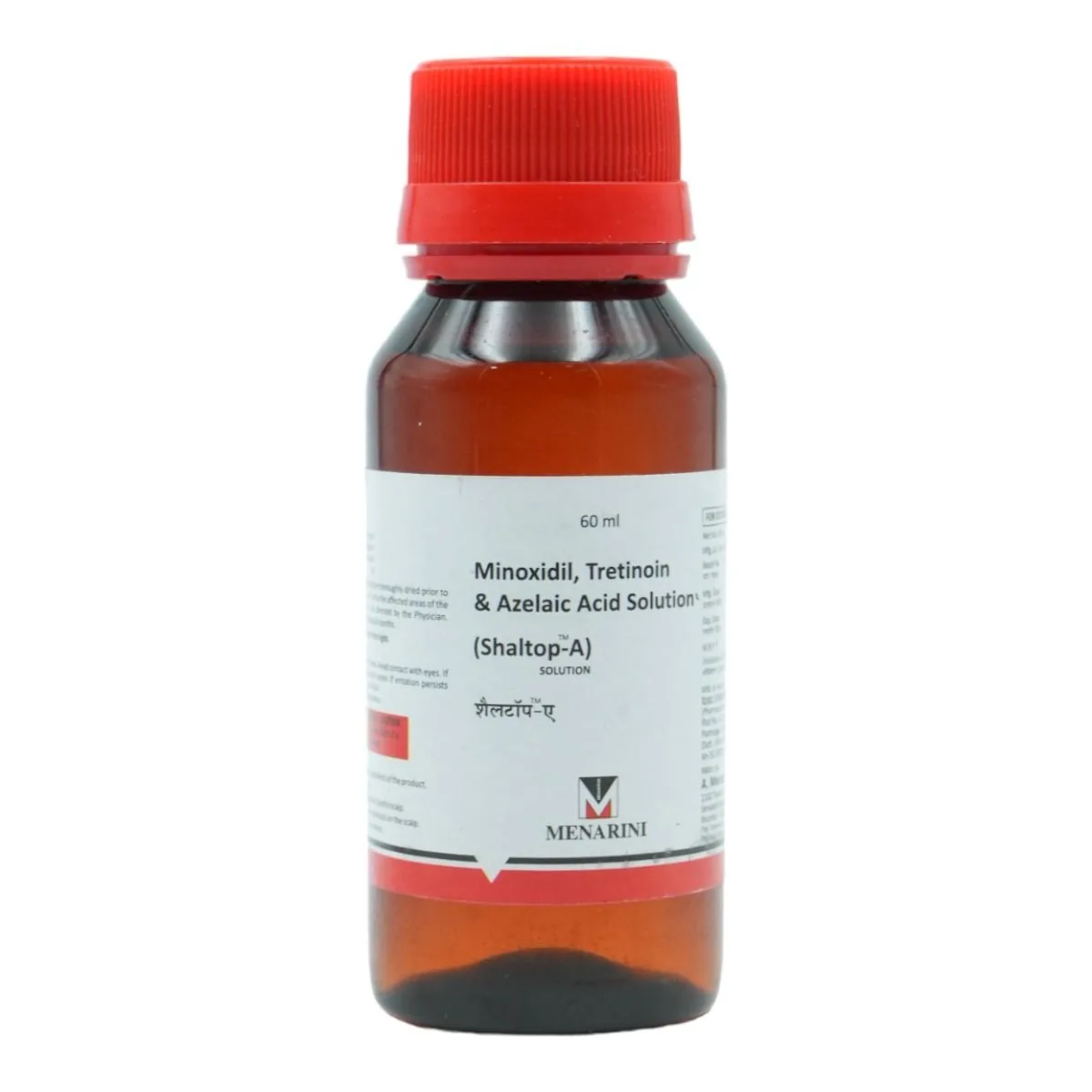
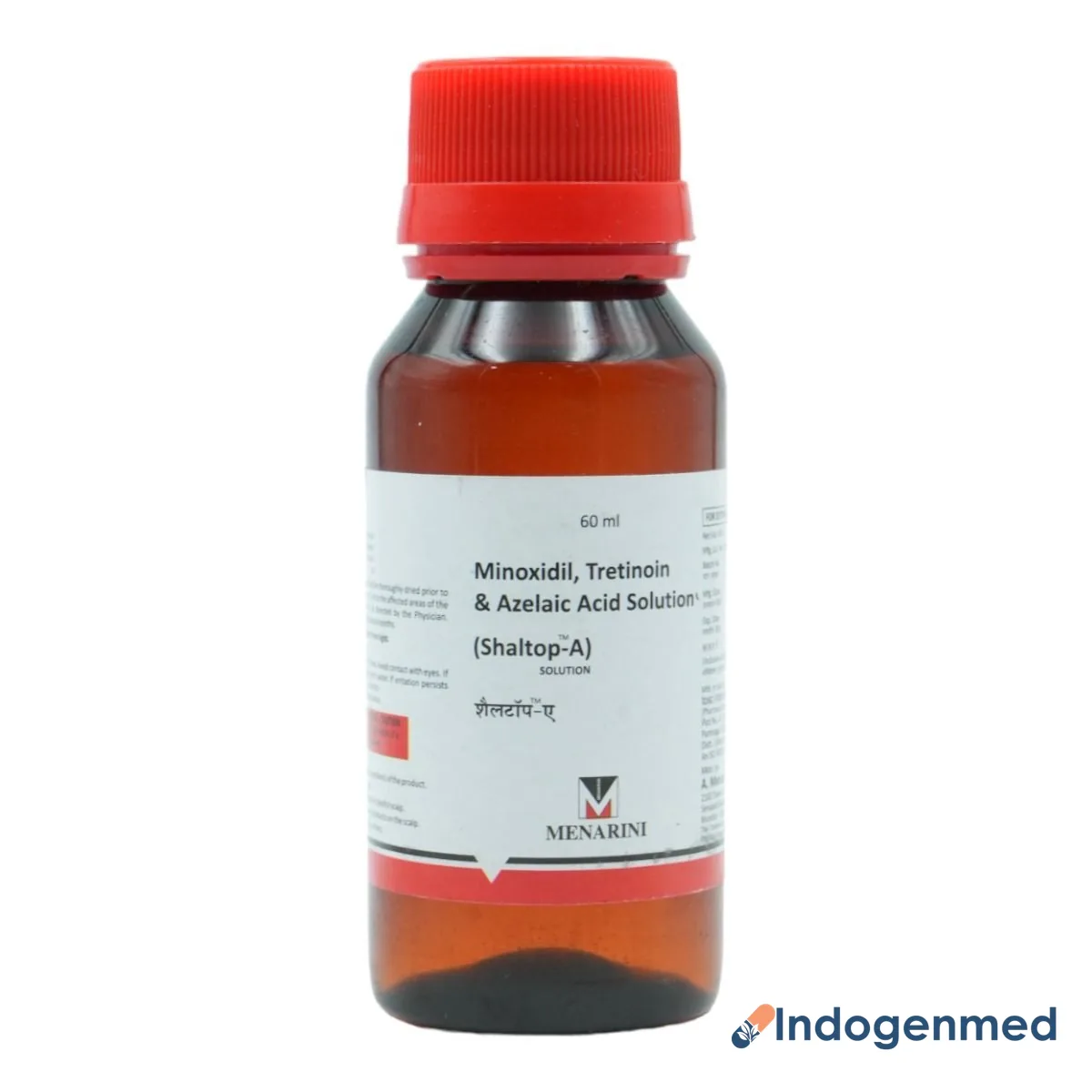
What Is Shaltop-A Solution 60 mL?
Shaltop-A Solution 60 mL is a topical scalp treatment combining minoxidil (a vasodilator and hair growth stimulant) with tretinoin (a first-generation retinoic acid), manufactured by Menarini India. This fixed combination is designed for the treatment of androgenetic alopecia (male and female pattern baldness) and other forms of hair loss responsive to minoxidil. The two active ingredients work synergistically: minoxidil stimulates hair follicle growth and prolongs the anagen (growth) phase of the hair cycle, while tretinoin enhances the cutaneous penetration and bioavailability of minoxidil through its effects on epidermal barrier function and follicular epithelium.
Androgenetic alopecia is the most common cause of hair loss in both men and women, affecting up to 50% of men by age 50 and 25–40% of women by age 70. It is driven by the androgen dihydrotestosterone (DHT), which causes progressive miniaturisation of hair follicles in genetically predisposed individuals. Topical minoxidil is one of only two FDA-approved treatments for androgenetic alopecia (alongside oral finasteride in men), and the addition of tretinoin at low concentrations has been shown in clinical studies to improve response rates compared with minoxidil alone.
Mechanism of Action
Minoxidil — Hair Follicle Stimulation
Minoxidil is a potassium channel opener. Its active sulphate metabolite (minoxidil sulphate), produced by sulphotransferase enzymes in the follicular outer root sheath, opens ATP-sensitive potassium (KATP) channels in vascular smooth muscle and hair follicle dermal papilla cells. Opening these channels causes hyperpolarisation of the cell membrane, reducing intracellular calcium influx and resulting in smooth muscle relaxation and vasodilation. In the scalp, this vasodilation increases blood flow to the follicular papilla, delivering more oxygen and nutrients to the metabolically active follicle.
Beyond vasodilation, minoxidil has direct effects on the hair follicle biology. It prolongs the anagen (active growth) phase of the hair cycle, delays the onset of catagen (regression), and may directly stimulate follicular keratinocyte proliferation via upregulation of vascular endothelial growth factor (VEGF) in the dermal papilla. Miniaturised follicles recover diameter and shaft thickness progressively with continued treatment, with the most visible results typically appearing at 4–6 months of consistent twice-daily application.
Tretinoin — Penetration Enhancement and Follicular Effects
Tretinoin (all-trans retinoic acid) is a retinoic acid receptor (RAR) agonist that modulates gene transcription in epidermal and follicular cells. At the low concentrations used in topical scalp formulations (typically 0.01–0.025%), tretinoin acts principally as an absorption enhancer for minoxidil by reducing the barrier properties of the stratum corneum and opening follicular channels. Studies comparing 2% minoxidil alone with 2% minoxidil + 0.025% tretinoin have demonstrated significantly higher minoxidil sulphate levels in the dermis with the combination, translating to greater clinical efficacy.
Tretinoin also has independent effects on the follicular epithelium, including promotion of keratinocyte proliferation in the follicular isthmus and sebaceous duct area, which may help maintain follicular patency and prevent follicular plugging that contributes to miniaturisation in androgenetic alopecia.
Indications
Androgenetic Alopecia (Male and Female Pattern Baldness)
Shaltop-A is indicated for androgenetic alopecia in men (vertex and anterior mid-scalp) and women (diffuse crown thinning). The minoxidil + tretinoin combination is particularly useful in patients who have had a suboptimal response to minoxidil monotherapy, as the tretinoin component may rescue non-responders by improving follicular drug delivery. Clinical evidence supports the use of this combination in Norwood Hamilton grades II–V in men and Ludwig grades I–II in women.
Telogen Effluvium
Telogen effluvium — diffuse shedding of hair triggered by physiological stress (post-partum, post-febrile illness, nutritional deficiency, thyroid dysfunction) — may benefit from topical minoxidil to accelerate follicular re-entry into the anagen phase and reduce the duration of excessive shedding.
Dosage and Administration
Apply 1 mL (using the applicator provided) to the affected scalp area twice daily — once in the morning and once at night. The solution should be applied to a dry scalp; washing hair within 4 hours of application reduces drug delivery. Massage gently to distribute over the thinning area and allow to dry before applying other hair products or sleeping.
Wash hands thoroughly after each application to avoid inadvertent transfer to the face, forehead, or other body areas. Treatment response is gradual: initial hair shedding (shedding effluvium from forced anagen entry) may occur in the first 2–8 weeks and should not be misinterpreted as treatment failure. Visible improvement typically occurs at 4–6 months; continued use is required to maintain benefit — hair regained during treatment is lost within 3–4 months of discontinuation.
Contraindications
- Known hypersensitivity to minoxidil, tretinoin, propylene glycol (a common excipient), or any other component of the formulation.
- Application to broken, inflamed, infected, or sunburned scalp skin.
- Pregnancy or breastfeeding — tretinoin is a known teratogen; although systemic absorption from topical scalp application is minimal, use during pregnancy is contraindicated on a precautionary basis.
- Children under 18 years — safety in paediatric alopecia is not established for this combination.
Warnings and Precautions
Systemic minoxidil absorption: Although topical minoxidil produces substantially lower plasma levels than oral minoxidil, systemic absorption can occur, particularly if applied to abraded skin or used at higher than recommended doses. Cardiovascular effects including tachycardia, oedema, and hypotension have been reported with high-dose topical application. Patients with known cardiovascular disease should use with caution under medical supervision.
Scalp irritation: Both minoxidil and tretinoin can cause scalp irritation, dryness, scaling, and erythema, particularly at the start of treatment. Use as directed; do not increase frequency of application to accelerate results.
Eye irritation: The solution must not contact the eyes. If accidental contact occurs, flush thoroughly with water.
Non-androgenetic alopecia: This product is specifically for androgenetic alopecia. Hair loss due to alopecia areata (immune-mediated), scarring alopecia, drug-induced alopecia, or thyroid disorders will not respond to this combination and requires specific diagnosis and treatment.
Adverse Effects
- Common (≥1/100): Scalp dryness, itching, scaling, irritant contact dermatitis, initial increase in hair shedding (first 2–8 weeks)
- Uncommon (≥1/1000): Allergic contact dermatitis, facial hair growth (hypertrichosis), headache, scalp erythema
- Rare (≥1/10,000): Tachycardia, palpitations, oedema (from systemic minoxidil absorption at excessive doses), severe allergic reaction
Drug Interactions
- Other topical scalp products (corticosteroids, coal tar, salicylic acid): Concomitant application may increase skin absorption of minoxidil by further disrupting barrier function; use with caution and separate application times where possible.
- Oral antihypertensive drugs: Although systemic absorption from topical minoxidil is low at standard doses, additive hypotensive effects cannot be excluded in patients on antihypertensive therapy; monitor blood pressure.
- Other retinoids (oral isotretinoin, oral acitretin): Additive retinoid toxicity if used concurrently; avoid topical tretinoin products (including Shaltop-A) during oral retinoid therapy.
Storage
Store below 25°C, away from heat and open flame (propylene glycol-based solutions are flammable). Keep tightly closed. Keep out of reach of children.
Related Products
For scalp fungal infections (tinea capitis, seborrhoeic dermatitis) that may coexist with or mimic androgenetic alopecia, Grisovin FP 250 mg Tablets (griseofulvin) provide systemic antifungal therapy. For acne and inflammatory skin conditions on the face associated with the sebaceous activity that also affects the scalp, Retino-AC Gel (tretinoin + clindamycin) offers similar retinoid-based topical treatment. For patients who experience increased seborrhoea or scalp inflammation as part of their androgenetic alopecia, Roxid Kidtab 50 mg addresses any bacterial secondary infection.
References
- U.S. Food and Drug Administration. Minoxidil Topical Solution — Prescribing Information (Rogaine). DailyMed, National Library of Medicine. Available at: https://dailymed.nlm.nih.gov
- National Library of Medicine. MedlinePlus Drug Information: Minoxidil Topical. Available at: https://medlineplus.gov
- Mayo Clinic. Minoxidil (Topical Route) — Side Effects. Available at: https://www.mayoclinic.org
- Shin HS, Won CH, Lee SH, Kwon OS, Kim KH, Eun HC. Efficacy of 5% minoxidil versus combined 5% minoxidil and 0.01% tretinoin for male pattern hair loss: a randomized, double-blind, comparative clinical trial. Am J Clin Dermatol. 2007;8(5):285-290. PubMed PMID: 17902731
- Electronic Medicines Compendium (EMC). Regaine for Men Extra Strength Scalp Solution — Summary of Product Characteristics. Available at: https://www.medicines.org.uk/emc
Reviews
There are no reviews yet.