Description
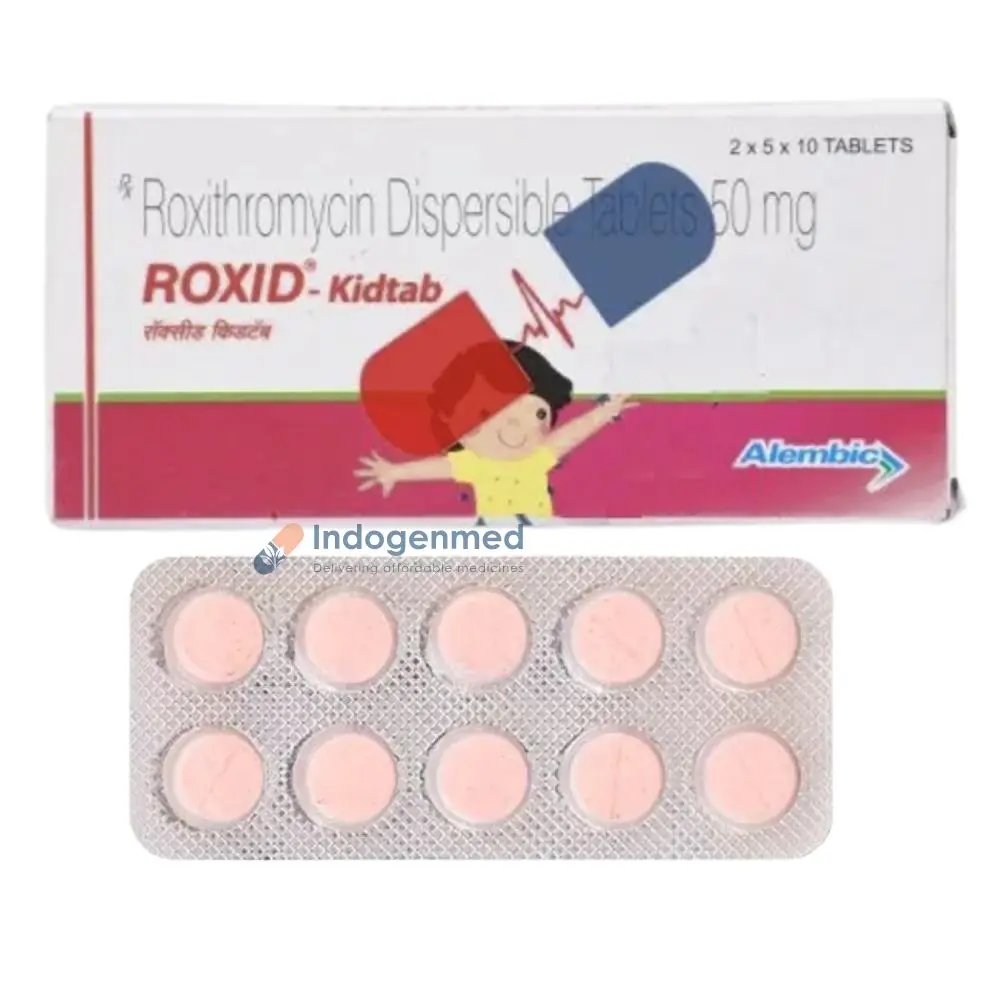
What Is Roxid Kidtab 50 mg?
Roxid Kidtab 50 mg Tablets contain roxithromycin 50 mg in a paediatric tablet formulation designed for children who require macrolide antibiotic therapy. Roxithromycin is a semi-synthetic macrolide antibiotic derived from erythromycin, with improved pharmacokinetic properties: greater acid stability, superior oral bioavailability, a substantially longer half-life than erythromycin, and better tissue penetration. The paediatric tablet formulation allows weight-based dosing in children too young or too small for adult-dose preparations, with the tablet crushable or dispersible in liquid for young children who cannot swallow whole tablets. Roxithromycin is active against a range of Gram-positive bacteria, atypical pathogens (Mycoplasma, Chlamydophila, Legionella), and certain Gram-negative organisms, making it valuable for respiratory, skin, and soft tissue infections in the paediatric population.
Mechanism of Action
Roxithromycin exerts its antibacterial effect by binding to the 50S ribosomal subunit of susceptible bacteria, specifically to the 23S rRNA at the peptidyl transferase centre. This binding reversibly inhibits translocation — the movement of peptidyl-tRNA from the acceptor (A) site to the donor (P) site on the ribosome — thereby inhibiting elongation of the growing peptide chain and arresting bacterial protein synthesis. The result is a bacteriostatic effect at standard therapeutic concentrations, though bactericidal activity may occur against some highly susceptible organisms at higher concentrations.
The 50S ribosomal target is unique to bacteria (not present in eukaryotic 80S ribosomes), which underlies the selective toxicity of macrolides. The key pharmacological advantages of roxithromycin over erythromycin include:
- Greater chemical stability at gastric pH, reducing degradation in the stomach and improving oral bioavailability
- Higher and more sustained tissue concentrations — roxithromycin achieves particularly high concentrations in respiratory mucosa, tonsillar tissue, and alveolar macrophages, which are the target sites for the most common paediatric respiratory infections
- Longer half-life (8–12 hours vs 1.5–2 hours for erythromycin), enabling twice-daily dosing
- Fewer gastrointestinal side effects, as roxithromycin has less stimulatory effect on motilin receptors compared to erythromycin
Spectrum of Activity
Roxithromycin is active against:
- Gram-positive cocci: Streptococcus pyogenes (Group A streptococcus), Streptococcus pneumoniae (most strains), Streptococcus agalactiae; Staphylococcus aureus (methicillin-sensitive strains, MSSA)
- Atypical/intracellular pathogens: Mycoplasma pneumoniae, Chlamydophila pneumoniae (formerly Chlamydia pneumoniae), Chlamydophila psittaci, Legionella pneumophila — the most important targets in paediatric community-acquired pneumonia not responding to beta-lactams
- Other organisms: Bordetella pertussis (whooping cough — macrolides are the treatment of choice), Moraxella catarrhalis, Haemophilus influenzae (limited activity — less reliable than azithromycin), Helicobacter pylori (as part of eradication regimens), Toxoplasma gondii (limited)
- Not active against: Enterobacteriaceae (E. coli, Klebsiella), Pseudomonas, methicillin-resistant Staphylococcus aureus (MRSA)
Indications
- Upper respiratory tract infections: Pharyngitis and tonsillitis caused by Group A streptococcus (alternative to amoxicillin in penicillin-allergic children); otitis media; sinusitis (second-line)
- Lower respiratory tract infections: Community-acquired pneumonia (atypical pneumonia component — Mycoplasma, Chlamydophila); acute bronchitis; pertussis (whooping cough — macrolides are first-line to reduce infectivity and severity early in illness)
- Skin and soft tissue infections: Impetigo, cellulitis caused by susceptible streptococci and staphylococci
- Other: Chlamydial infections where appropriate age-based therapy is indicated; Helicobacter pylori eradication (combination regimen)
Dosage and Administration
Paediatric Dosing (Weight-Based)
- Standard dose: 2.5–4 mg/kg twice daily (morning and evening), or 5–8 mg/kg once daily in some protocols; maximum 150 mg per dose
- Practical weight-based guide:
- Up to 10 kg: 25–50 mg (½ to 1 × 50 mg tablet) twice daily
- 10–20 kg: 50 mg (1 × 50 mg tablet) twice daily
- 20–40 kg: 50–100 mg (1–2 × 50 mg tablets) twice daily; prescribe 100 mg adult tablets once weight exceeds 30–40 kg
- Over 40 kg: use adult dose (150 mg twice daily)
- Duration: Typically 5–10 days depending on infection type; Group A streptococcal pharyngitis requires at least 10 days to prevent rheumatic fever
- Administration: Give before or with food; tablets may be crushed and dispersed in a small amount of water or juice for young children; give at approximately 12-hourly intervals for twice-daily dosing
Renal/Hepatic Impairment
- Renal impairment: No dose adjustment required; roxithromycin is predominantly hepatically metabolised
- Hepatic impairment: Use with caution in severe hepatic impairment; monitor for toxicity; consider dose reduction
Pharmacokinetics
- Absorption: Well absorbed orally; bioavailability approximately 50–72% — significantly better than erythromycin; food has minimal effect on absorption
- Distribution: Widely distributed in body tissues; volume of distribution 31–51 L/kg; achieves high concentrations in respiratory mucosa, tonsillar tissue, lung, skin, and liver; protein binding approximately 96% (mainly to alpha-1 acid glycoprotein)
- Metabolism: Hepatic; partly metabolised by CYP3A4 to several metabolites with modest antibacterial activity; does not undergo extensive first-pass metabolism
- Elimination: Excreted predominantly in bile/faeces (60–80%); renal excretion approximately 7%; terminal half-life 8–12 hours in adults (may be shorter in children due to faster hepatic metabolism)
Contraindications
- Hypersensitivity to roxithromycin, erythromycin, or any macrolide antibiotic
- Concomitant use with ergotamine or dihydroergotamine — macrolide inhibition of CYP3A4 increases ergot alkaloid exposure with risk of severe peripheral vasospasm and ischaemia
- Concomitant use with pimozide or other class IA/III antiarrhythmics in patients with QTc prolongation risk — QTc-prolonging drug interaction
- Severe hepatic impairment (relative contraindication)
Warnings and Precautions
- Hepatotoxicity: Macrolides including roxithromycin have been associated with cholestatic jaundice and hepatic dysfunction; monitor liver function in prolonged use or in patients with pre-existing hepatic disease
- QTc prolongation: Roxithromycin can prolong the QTc interval; caution in patients with known QT prolongation, electrolyte disturbances (hypokalaemia, hypomagnesaemia), or concomitant QT-prolonging drugs
- Clostridium difficile-associated diarrhoea (CDAD): As with all antibiotics, roxithromycin may alter bowel flora and cause CDAD (antibiotic-associated colitis); consider this diagnosis in any child who develops persistent diarrhoea during or after antibiotic therapy
- Resistance and appropriate prescribing: Macrolide resistance in Streptococcus pneumoniae and Staphylococcus aureus is increasing; roxithromycin should not be used for infections where the causative organism is known or likely to be resistant
- Superinfection: Prolonged use may allow overgrowth of non-susceptible organisms including Candida
- Myasthenia gravis: Macrolides may aggravate myasthenia gravis; use with extreme caution if at all
Adverse Effects
- Common (≥1%): Nausea; diarrhoea; abdominal pain; vomiting; headache — incidence notably lower than erythromycin
- Uncommon (0.1–1%): Rash; urticaria; elevated liver enzymes (ALT, AST, alkaline phosphatase); dizziness
- Rare: Hepatitis; cholestatic jaundice; QTc prolongation; anaphylaxis; Stevens-Johnson syndrome; toxic epidermal necrolysis; CDAD; superinfection; taste disturbances; paraesthesia
Drug Interactions
- Ergot alkaloids (ergotamine, dihydroergotamine): Contraindicated — macrolide CYP3A4 inhibition raises ergotamine levels, causing severe vasospasm and peripheral ischaemia
- Warfarin and other oral anticoagulants: Macrolides may potentiate anticoagulant effect by suppressing intestinal microbiota that produce vitamin K, and by CYP interaction; monitor INR closely
- Ciclosporin: Macrolides increase ciclosporin exposure via CYP3A4 inhibition; monitor levels closely
- Digoxin: Macrolides can increase digoxin levels (by reducing gut bacterial metabolism of digoxin); monitor digoxin levels and signs of toxicity
- QT-prolonging drugs (pimozide, amiodarone, sotalol, some antihistamines, methadone): Additive QTc prolongation risk; avoid combinations where possible
- Antacids: Aluminium/magnesium antacids modestly reduce roxithromycin absorption; separate doses by at least 2 hours
- Theophylline: Macrolides can increase theophylline levels via CYP1A2 inhibition; monitor theophylline concentrations
Storage
Store Roxid Kidtab Tablets below 25°C in a dry place, away from direct sunlight and moisture. Keep in the original blister pack until ready to use. Keep all medicines out of reach and sight of children. Do not use after the expiry date printed on the pack. If a tablet needs to be crushed for administration, crush immediately before giving and do not store the crushed tablet.
Related Products
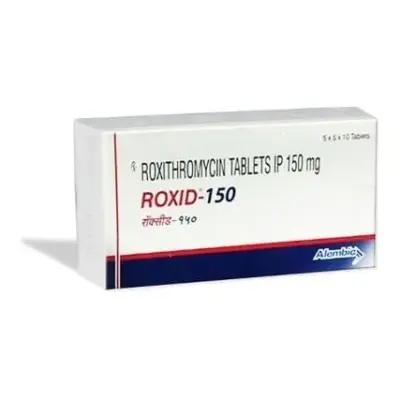
- Roxid 150 mg Tablets (roxithromycin 150 mg — adult-strength macrolide; same molecule as Roxid Kidtab, used in adolescents over 40 kg and adults)
- Razo-D 30/20 mg Tablets (rabeprazole 20 mg + domperidone 30 mg — antibiotic-associated nausea and gastroprotection during prolonged antibiotic courses)
References
- Electronic Medicines Compendium (EMC). Roxithromycin 150 mg Tablets — Summary of Product Characteristics. Available at: https://www.medicines.org.uk/emc/
- MedlinePlus. Roxithromycin. U.S. National Library of Medicine. Available at: https://medlineplus.gov/druginfo/meds/
- DailyMed. Macrolide antibiotics — roxithromycin drug class information. U.S. National Library of Medicine. Available at: https://dailymed.nlm.nih.gov/dailymed/
- Mayo Clinic. Erythromycin (Oral Route) — macrolide antibiotic class prescribing information. Available at: https://www.mayoclinic.org/
- World Health Organization. WHO Model Formulary for Children — Macrolide antibiotics section. World Health Organization Press. Available at: https://www.who.int/
Reviews
There are no reviews yet.