Description
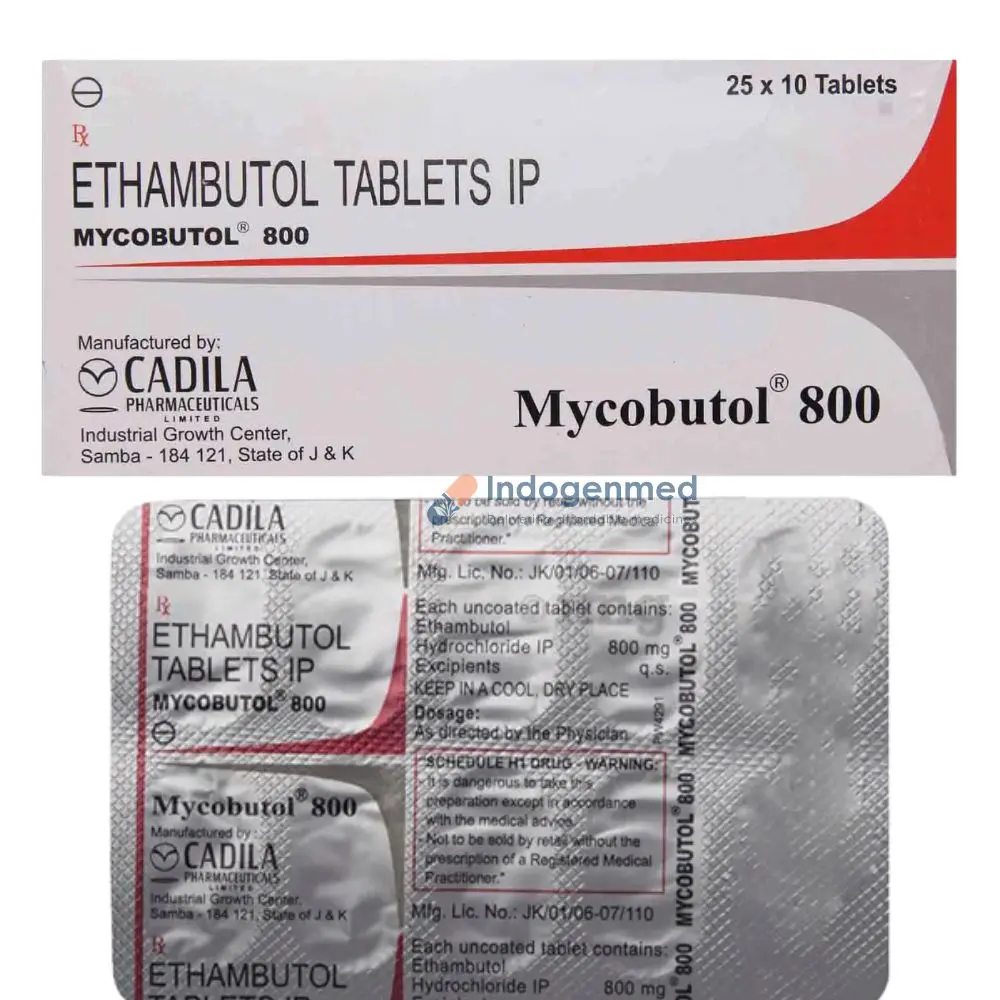
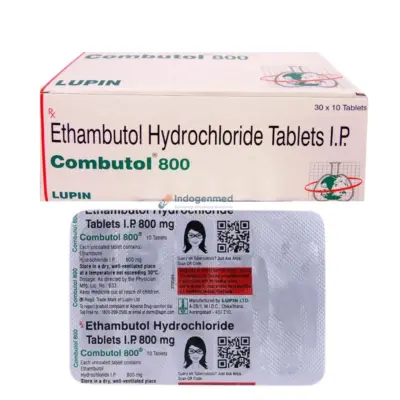
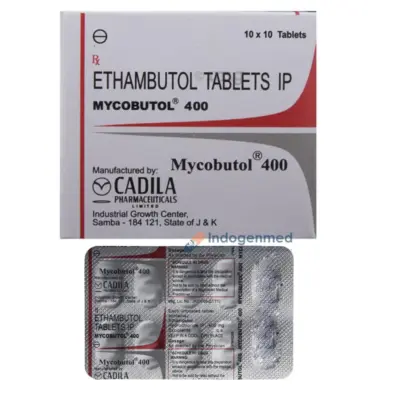
Mycobutol 800 mg Tablet — Ethambutol HCl 800 mg
Mycobutol 800 mg Tablet contains ethambutol hydrochloride 800 mg, a bacteriostatic antimycobacterial drug used as a core component of combination anti-tuberculosis (anti-TB) therapy. Ethambutol acts by inhibiting arabinosyl transferases — enzymes essential for the synthesis of arabinogalactan, a critical component of the mycobacterial cell wall. It is used in combination with isoniazid, rifampicin, and pyrazinamide (the HRZE regimen) during the intensive phase of tuberculosis treatment, and in combination with other agents for the treatment of non-tuberculous mycobacterial (NTM) infections. Ethambutol is classified as a second-line agent in some regimens but forms part of the WHO-recommended first-line four-drug intensive phase for newly diagnosed pulmonary tuberculosis. Mycobutol 800 mg is a higher-strength tablet suited for patients in whom the weight-based dose (15–25 mg/kg/day) corresponds to a daily dose of 800 mg. Mycobutol 800 mg Tablet is manufactured by Lupin Ltd. The 800 mg strength (along with 400 mg and 1000 mg tablets) allows flexible weight-based dosing to optimise efficacy while minimising toxicity, particularly optic neuritis, which is dose-dependent and the most feared adverse effect of ethambutol.
Composition
- Ethambutol hydrochloride 800 mg per tablet
- Excipients: microcrystalline cellulose, lactose, starch, hypromellose, polyethylene glycol, titanium dioxide, talc, magnesium stearate
Ethambutol hydrochloride has the molecular formula C10H24N2O2·2HCl and molecular weight 277.23 Da. Only the dextrorotatory isomer (d-ethambutol) has antimycobacterial activity; commercial preparations contain the pure (+) isomer. It is freely soluble in water and ethanol.
Mechanism of Action
- Arabinosyl transferase inhibition: Ethambutol inhibits the enzyme complex arabinosyl transferase (encoded by the embABC operon in mycobacteria), which catalyses the polymerisation of arabinose into arabinogalactan and lipoarabinomannan — two essential structural components of the mycobacterial cell wall. Inhibition of these enzymes disrupts cell wall synthesis, leading to accumulation of toxic arabinose intermediates and inhibition of mycobacterial growth
- Bacteriostatic action: At recommended doses, ethambutol is predominantly bacteriostatic against Mycobacterium tuberculosis. Its principal role in combination therapy is to prevent the emergence of resistance to companion drugs (particularly rifampicin and isoniazid) rather than direct mycobacterial killing
- Role in combination therapy: Ethambutol reduces the likelihood of selecting ethambutol-resistant mutants in the population and suppresses the outgrowth of rifampicin-resistant mutants that may be present at low frequency in an untreated bacterial load. This additive resistance-preventing effect is why ethambutol is included in the first two months of the standard TB regimen even when INH resistance is not suspected
- Activity spectrum: Active against Mycobacterium tuberculosis complex (M. tuberculosis, M. bovis, M. africanum) and many non-tuberculous mycobacteria including M. kansasii and M. avium complex (MAC)
Pharmacokinetics
| Parameter | Detail |
|---|---|
| Oral bioavailability | ~75–80%; relatively good absorption; food does not significantly reduce absorption |
| Time to peak (Tmax) | 2–4 hours after oral dosing |
| Plasma protein binding | ~20–30% |
| Distribution | Widely distributed; penetrates into erythrocytes, CSF (20–50% of plasma levels in inflamed meninges), and lung tissue; Vd ~3.7 L/kg |
| Metabolism | Partially hepatic (~15%) — oxidation to an aldehyde intermediate then to dicarboxylic acid; most of the dose is excreted unchanged |
| Excretion | Primarily renal: ~50% excreted unchanged in urine; ~15% as metabolites; ~20–22% in faeces (unabsorbed drug) |
| Half-life | 3–4 hours in normal renal function; significantly prolonged in renal impairment |
| Renal impairment | CRITICAL: ethambutol accumulates in renal failure, dramatically increasing optic neuritis risk. Dose interval must be extended: CrCl 10–50 mL/min → every 24–36 hours; CrCl <10 mL/min → every 48 hours or avoid if possible. Consult specialist |
Uses of Mycobutol 800 mg Tablet
- Pulmonary tuberculosis (new cases): Part of the WHO-recommended first-line 4-drug intensive phase (HRZE): isoniazid (H) + rifampicin (R) + pyrazinamide (Z) + ethambutol (E) for 2 months, followed by isoniazid + rifampicin (HR) for 4 months. Ethambutol protects against acquired drug resistance. The 800 mg strength is used for patients whose weight-based dose (15 mg/kg) is approximately 800 mg/day
- Retreatment tuberculosis: Used in HRZES regimens (5-drug regimens) in patients who have failed first-line treatment or who have relapsed, with higher dose ethambutol (25 mg/kg during intensive phase)
- Drug-resistant tuberculosis (MDR-TB): Ethambutol may be used as a companion drug in MDR-TB regimens when susceptibility is documented, though longer-acting drugs such as bedaquiline, linezolid, and moxifloxacin have become more central in WHO 2022 guidelines
- Non-tuberculous mycobacterial (NTM) infection: Ethambutol 800–1200 mg daily is used as part of combination therapy for MAC lung disease (ATS/IDSA guidelines: clarithromycin or azithromycin + rifampicin + ethambutol), and for M. kansasii infection
Dosage and Administration
| Indication | Dose | Notes |
|---|---|---|
| New TB (intensive phase, 2 months) | 15–20 mg/kg/day once daily; usual range 800–1200 mg/day | 800 mg for 55–75 kg patients at 15 mg/kg; always use in 4-drug combination (HRZE) |
| Retreatment TB (intensive phase) | 25 mg/kg/day once daily for 2 months, then 15 mg/kg/day | Use in HRZES or HRZE regimen; always under DOTS or specialist supervision |
| NTM (MAC lung disease) | 15 mg/kg/day once daily (typically 800–1200 mg/day) | Long-term therapy (minimum 12 months post-culture conversion); combine with clarithromycin/azithromycin + rifampicin |
| Renal impairment (CrCl 10–50 mL/min) | Extend dosing interval to every 36 hours | Monitor for optic neuritis; check vision monthly |
| Severe renal impairment (CrCl <10 mL/min) | Extend to every 48 hours; consider avoiding if possible | High optic neuritis risk; specialist consultation essential |
Administration: Take Mycobutol 800 mg once daily at the same time each day, with or without food. Ethambutol should always be used as part of a multi-drug anti-TB regimen to prevent resistance development and must never be used as monotherapy.
Side Effects
- Optic neuritis (most important adverse effect): Dose-dependent retrobulbar optic neuritis leading to decreased visual acuity, colour vision loss (especially red-green discrimination), visual field defects, or even blindness. Onset usually after weeks to months of therapy. Risk is rare at 15 mg/kg/day but increases significantly at 25 mg/kg/day and in renal impairment. Generally reversible if ethambutol is stopped promptly but can be permanent with delayed recognition
- Peripheral neuropathy: Sensory neuropathy in extremities (less common than optic neuritis); usually reversible
- Hyperuricaemia and gout: Ethambutol reduces renal urate clearance; combined with pyrazinamide (also hyperuricaemic) in TB regimens → significant gout risk in susceptible patients
- Gastrointestinal: Nausea, vomiting, abdominal discomfort; generally mild
- Hepatotoxicity: Mild, transient liver enzyme elevations; serious hepatotoxicity is rare with ethambutol alone but risk increases in combination with other hepatotoxic anti-TB drugs (isoniazid, rifampicin, pyrazinamide)
- Hypersensitivity reactions: Rash, pruritus, fever; rare
Precautions and Warnings
- Visual monitoring — MANDATORY: Baseline and monthly visual acuity and colour vision testing (Ishihara colour plates) is essential for all patients on ethambutol. Patients must be instructed to report any visual changes immediately. Ethambutol must be stopped immediately if any visual deterioration occurs
- Renal impairment: Adjust dose interval as above; risk of optic neuritis is substantially increased with drug accumulation in renal failure
- Children under 5 years: Ethambutol is generally avoided in young children who cannot reliably report visual symptoms; WHO guidelines include EMB in childhood TB regimens but with careful monitoring
- Pregnancy: Ethambutol crosses the placenta; available evidence suggests it is safe for use in pregnancy (WHO recommends standard TB regimens including ethambutol during pregnancy). Monitor mother’s vision
- Hyperuricaemia: Monitor serum uric acid; manage acute gout appropriately if it develops; consider prophylactic allopurinol in high-risk patients
Drug Interactions
| Drug / Class | Interaction | Clinical Action |
|---|---|---|
| Pyrazinamide | Additive hyperuricaemia (both drugs reduce urate clearance) | Monitor uric acid; both are used together in TB regimens; manage gout if it develops |
| Antacids (aluminium hydroxide) | Aluminium-containing antacids reduce ethambutol absorption by chelation | Separate administration by ≥4 hours; take ethambutol first |
| Isoniazid | Additive peripheral neuropathy risk (both can cause neuropathy) | Pyridoxine (vitamin B6) supplementation recommended during TB therapy to reduce isoniazid neuropathy |
| Rifampicin | No significant pharmacokinetic interaction; combined use is standard | Standard TB combination partner; no dose adjustment needed |
| Other drugs causing optic neuritis (linezolid, chloroquine, digitalis) | Additive risk of optic neuropathy | Enhanced visual monitoring required when combining with other potentially optic-nerve-toxic drugs |
Contraindications
- Known optic neuritis from any cause
- Hypersensitivity to ethambutol or any component
- Inability to report visual symptoms (young children unable to cooperate with eye testing without specialist monitoring)
- Severe renal impairment without dose adjustment and close monitoring
Storage Instructions
- Store below 30°C in a dry place, away from direct light and moisture
- Keep in original packaging
- Keep out of reach of children
- Do not use after the expiry date printed on the pack
Related Products
The following products on IndoGenMed are frequently used together with or in related contexts to Mycobutol 800 mg Tablet:
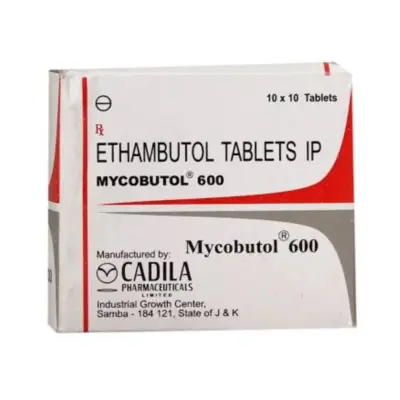
- Mycobutol 600 mg Tablet (Ethambutol 600 mg) — lower-strength ethambutol for weight-based dosing in patients <55 kg; same drug, different strength for dose titration in TB treatment
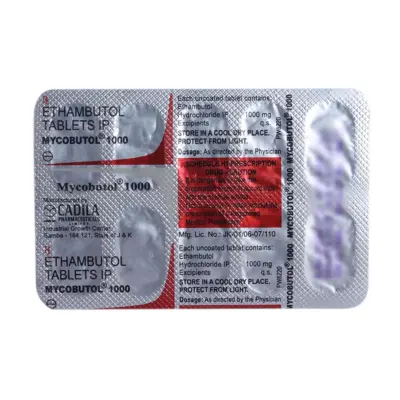
- Mycobutol 1000 mg Tablet (Ethambutol 1000 mg) — higher-strength ethambutol for heavier patients or retreatment-phase dosing; part of the same Mycobutol product range
- Mucinac 600 mg Tablet (N-Acetylcysteine) — antioxidant adjunct investigated in TB management to reduce lung inflammation and anti-TB drug-related oxidative toxicity
- Omesec 20 Capsule (Omeprazole 20 mg) — commonly co-prescribed for GI protection in patients on multi-drug anti-TB regimens, which frequently cause gastric irritation
- Perinorm Tablet (Metoclopramide 10 mg) — anti-emetic used to manage nausea and vomiting caused by anti-TB combination therapy, particularly during the intensive phase
References
- DailyMed (FDA). Ethambutol Hydrochloride Tablets — Prescribing Information. Available at: https://dailymed.nlm.nih.gov/dailymed/search.cfm?labeltype=all&query=ethambutol
- MedlinePlus (U.S. National Library of Medicine). Ethambutol. Available at: https://medlineplus.gov/druginfo/meds/a682560.html
- World Health Organization. WHO consolidated guidelines on tuberculosis: Module 4: Treatment. WHO Press; 2022. Available at: https://www.who.int/publications/i/item/9789240048126
- Griffith DE, Aksamit T, Brown-Elliott BA, et al. An official ATS/IDSA statement: diagnosis, treatment, and prevention of nontuberculous mycobacterial diseases. Am J Respir Crit Care Med. 2007;175(4):367–416. PubMed PMID: 17277290. Available via: https://pubmed.ncbi.nlm.nih.gov/17277290/
- Mayo Clinic. Ethambutol (Oral Route) — Description and Brand Names. Available at: https://www.mayoclinic.org/drugs-supplements/ethambutol-oral-route/description/drg-20064091
Reviews
There are no reviews yet.