Description
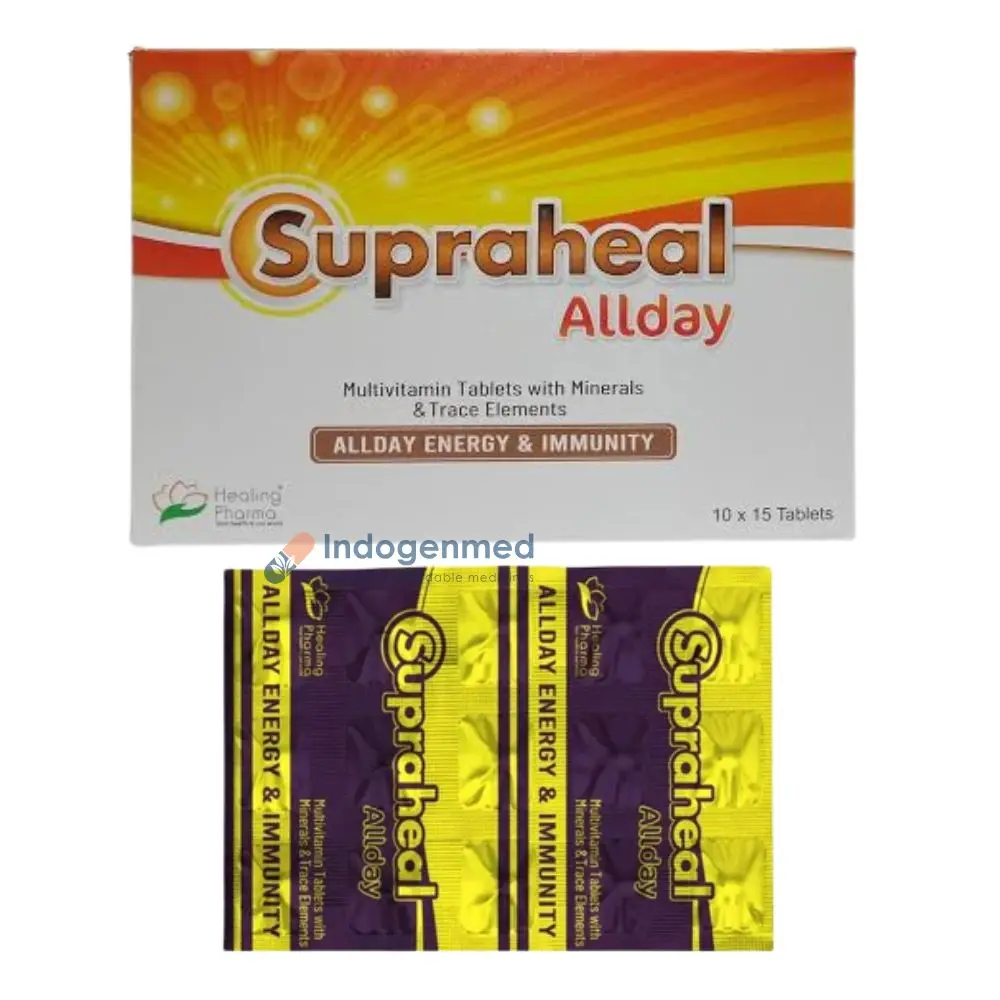
Supraheal Tulle — Paraffin-Impregnated Wound Contact Dressing
Supraheal Tulle is a sterile, non-medicated wound contact layer made from an open-weave gauze fabric uniformly impregnated with soft white paraffin. Each dressing is supplied in an individually sealed, sterile pack designed for single use on acute and chronic wounds where a low-adherent, moisture-retentive interface is required between the wound bed and the outer absorbent dressing layers. The paraffin coating prevents the fabric from sticking to the healing tissue, allowing painless removal and dressing changes without disturbing the delicate new epithelial cells that form at the wound surface.
Wound Dressing Classification and Design
Supraheal Tulle belongs to the category of impregnated gauze dressings, also called tulle gras or greasy gauze in clinical documentation. These dressings are classified as passive wound contact layers — they do not actively deliver antimicrobial agents, growth factors or enzymatic debriders. Their principal function is mechanical: to form a smooth, low-friction, non-adherent interface between the wound and the overlying secondary dressing, permitting exudate to pass through the mesh into an absorbent pad while keeping the wound surface moist and protected.
The fabric substrate is a leno-weave gauze — a structure in which pairs of warp threads cross each other to lock the weft threads in place, producing a stable open mesh that resists fraying when cut to shape. This architecture provides strength while maintaining adequate porosity for drainage. The soft white paraffin impregnant fills the interstices of the mesh without completely occluding them, creating a surface that is smooth and low-adherent yet still permeable to wound exudate.
Mechanism of Action
When placed directly on a wound, the paraffin layer prevents the fibrin strands and new granulation tissue from weaving into the dressing fabric. Without this protection, gauze dressings bond physically to the wound surface as it dries, and removal tears away the fragile neoepithelium — a process that is painful, bleeds, and sets healing back by days. Paraffin creates a hydrophobic physical barrier that stops this bonding while still allowing the wound to breathe and drain.
The moist microenvironment maintained under the tulle layer also supports epidermal cell migration across the wound surface. Research published in wound care literature and summarised in National Health Service clinical guidelines has consistently shown that wounds healing in a moist environment re-epithelialise significantly faster than those allowed to dry out and form an eschar. The eschar, while appearing protective, actually forces newly dividing keratinocytes to tunnel beneath it rather than moving freely across the wound surface, increasing the time and metabolic energy required for closure.
Indications for Use
Supraheal Tulle is suitable as a primary wound contact layer in a wide range of clinical and domestic wound-care situations. Appropriate wound types include:
- Superficial and partial-thickness burns — first and second-degree burns benefit from a non-adherent contact layer that protects the tender wound bed and allows serial inspection without traumatic dressing removal.
- Skin donor sites — split-thickness graft harvest sites are shallow, painful and highly adherent wounds; tulle gras has been used as a primary dressing for donor sites in plastic surgery for decades.
- Abrasions and superficial lacerations — road rash and mechanical abrasions contain foreign material and uneven surfaces; the open mesh allows the wound to drain while protecting it from secondary trauma.
- Leg ulcers and pressure sores — as a contact layer under foam or alginate secondary dressings in wounds with low to moderate exudate.
- Post-surgical wounds healing by secondary intention — cavity wounds, dehisced surgical sites or wounds left open to granulate benefit from a stable, non-reactive contact surface.
- Minor cuts and lacerations — in community and home settings where a simple, non-adherent cover is needed over a sutured or steri-stripped wound.
Directions for Use
Wound preparation is the most important determinant of dressing performance. Before applying Supraheal Tulle, the wound should be gently cleansed with normal saline or a wound irrigation solution to remove loose debris, dried exudate and surface contamination. Aggressive scrubbing is unnecessary and harmful; gentle irrigation is preferred. If the wound requires debridement of necrotic tissue or significant infection management, the clinical team should address these issues before applying a passive contact layer.
Peel open the sterile packaging without touching the inner surface of the dressing. Using sterile gloves or forceps, lay the tulle directly onto the wound surface, ensuring it lies flat against the wound bed without overlapping edges that might create pressure ridges. The dressing should cover the wound and extend 1–2 cm beyond the wound margins onto the surrounding intact skin to ensure complete coverage. If the wound is larger than a single piece, pieces may be butted together — do not overlap them, as the resulting double layer impedes drainage.
Cover the tulle with an appropriate secondary absorbent dressing — a non-woven pad, foam dressing or simple gauze — secured with hypoallergenic tape or a bandage. The secondary dressing should be sized to absorb the expected level of exudate between changes. In heavily exuding wounds, more frequent changes may be required to prevent strikethrough (visible exudate reaching the outer surface), which compromises the dressing’s barrier function.
Dressing Change Frequency
The frequency of dressing changes depends on wound type, exudate volume and clinical assessment rather than a fixed schedule. For clean, low-exudate wounds such as minor burns or small abrasions, the dressing may remain in place for two to five days. For more heavily exuding wounds or wounds showing signs of inflammation, daily or alternate-day changes are more appropriate. At each change, the wound should be assessed for signs of healing — reducing size, granulation tissue formation, epithelial bridging at wound margins — or for signs of complication such as increased redness, warmth, purulent discharge or malodour.
When removing the old dressing, moisten it first with normal saline if there is any resistance; do not pull forcefully. Even with paraffin-impregnated dressings, adhesion can occasionally occur at wound edges where the dressing extends onto dry intact skin. Gentle, deliberate removal directed parallel to the skin surface minimises trauma.
Contraindications and Precautions
Supraheal Tulle is contraindicated in patients with known hypersensitivity to paraffin or any of its components. It is not suitable as a standalone treatment for infected wounds — the dressing has no antimicrobial properties and an infected wound requires systemic or topical antimicrobial therapy directed by a healthcare professional before or alongside passive dressing management. Similarly, dry necrotic wounds covered with hard black eschar are not appropriate for tulle gras; debridement is required first.
The dressing is designed for external use only. It should not be used in deep cavity wounds or sinus tracts without specialist wound care advice, as the loose mesh material carries a theoretical risk of retained dressing material if pieces become separated within a wound. For cavity wounds, purpose-designed ribbon gauze or ribbon-form wound fillers are more appropriate.
In patients with peripheral vascular disease or diabetes, wound care should always involve clinical supervision. Impaired circulation significantly slows healing and increases infection risk, and what appears to be a simple wound may require more complex management than a contact dressing alone can provide.
Storage, Handling and Sterility
Supraheal Tulle should be stored at room temperature, away from direct heat, moisture and sunlight. Each dressing is individually sterilised and the sterile barrier is maintained by the sealed packaging. Do not use any dressing if the packaging is damaged, torn, previously opened or shows signs of moisture ingress. Check the expiry date printed on the outer packaging before use; expired dressings should be discarded.
The dressing is intended for single patient use only and should not be reused or reprocessed. Used dressings contain body fluids and should be disposed of according to applicable local clinical waste or household waste guidelines.
Role in Modern Wound Care Pathways
Despite the introduction of many advanced wound care products — hydrocolloids, hydrogels, alginates, foam dressings, silver-impregnated dressings and negative pressure wound therapy — simple paraffin tulle dressings remain a first-line choice in several clinical guidelines. The NHS National Wound Care Strategy Programme and wound care formularies published by NHS integrated care boards regularly list tulle gras products as standard contact layers for burns, grafts and donor sites. Their low cost, wide availability, ease of application, good tolerance profile and predictable performance make them valuable across both specialist wound care centres and community nursing practice.
Supraheal Tulle represents this established clinical category in a reliable, single-use sterile format suitable for use by healthcare professionals and trained carers managing wound care in community, hospital and home settings.
References
- National Institute for Health and Care Excellence (NICE). Wound care products: selection and use. NICE evidence review. Available at: nice.org.uk
- NHS England. National Wound Care Strategy Programme: Lower Limb Wound Care Recommendations. 2023.
- Wounds UK. Best Practice Statement: Wound management in community settings. Wounds UK, London, 2019.
- Queen’s Nursing Institute. Wound Care in the Community: A QNI Guide. QNI, London, 2022.
- MedlinePlus (US National Library of Medicine). Wound care – bandages. Available at: medlineplus.gov
Reviews
There are no reviews yet.