Description
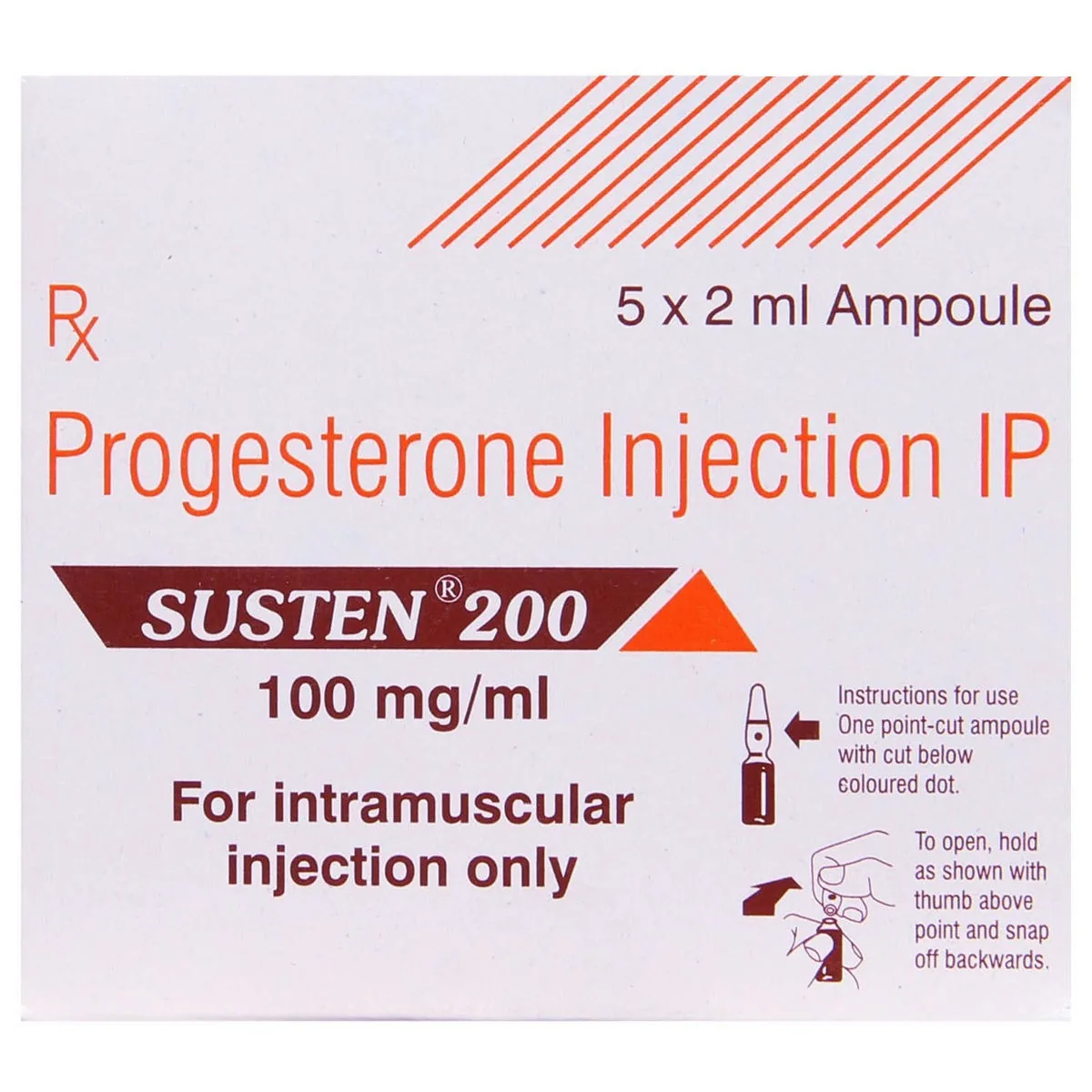
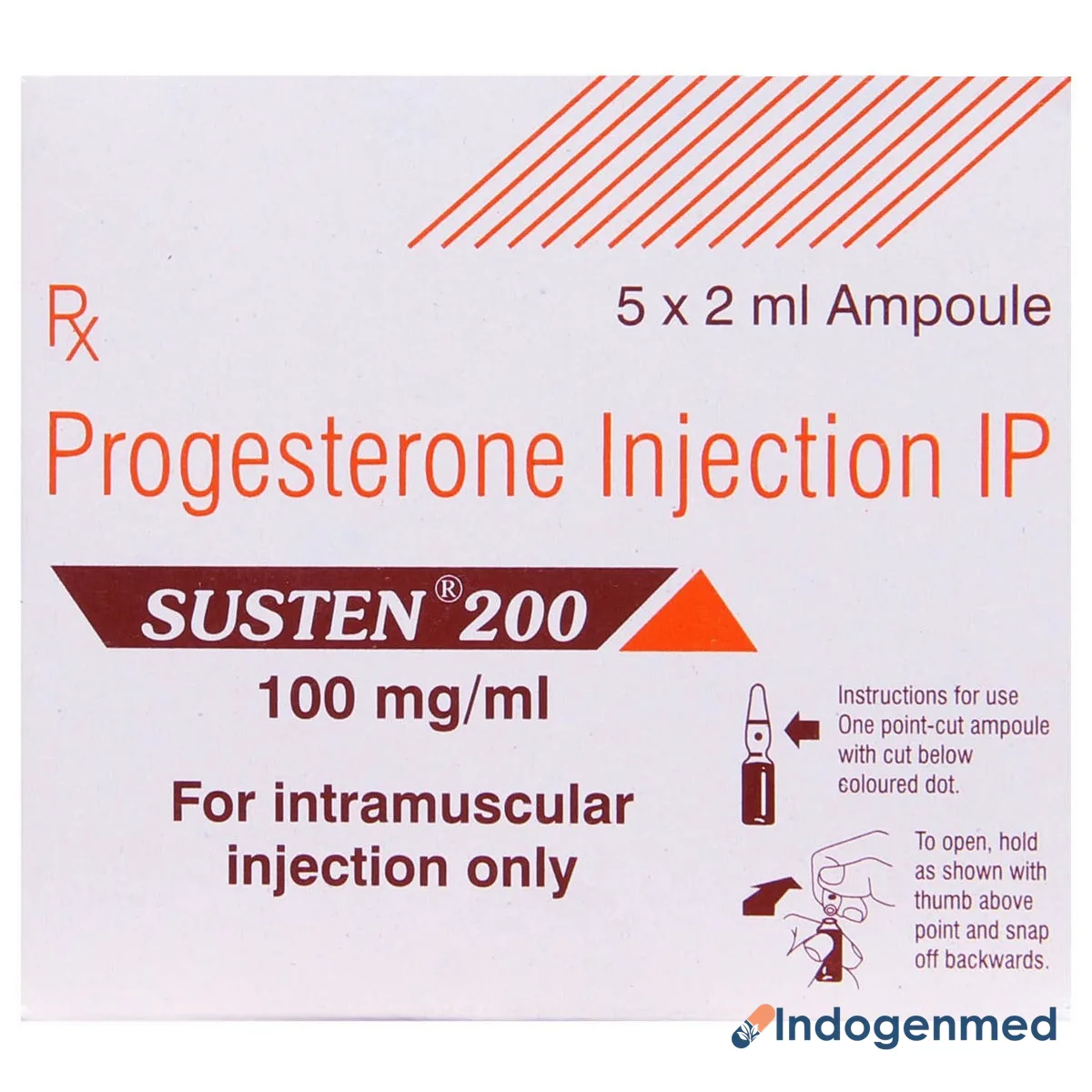
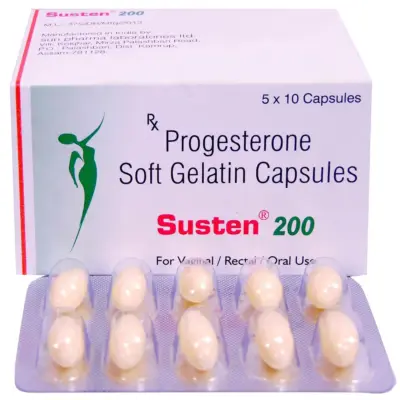
Susten 200 Mg/2 Ml Injection – Micronised Progesterone 200 mg
Susten 200 Mg/2 Ml Injection contains micronised progesterone 200 mg in 2 mL of an oil-based vehicle, formulated for intramuscular (IM) injection. Micronised progesterone is identical to endogenous human progesterone (bioidentical progesterone), produced from plant precursors and micronised (particle-size reduced) to achieve superior bioavailability compared to conventional crystalline progesterone.
Unlike synthetic progestogens (progestins) such as norethisterone or medroxyprogesterone acetate, micronised progesterone does not alter the lipid profile adversely, does not exhibit androgenic or glucocorticoid side effects, and is structurally identical to the corpus luteum’s own hormone. These properties make it preferred in luteal-phase support and in progesterone replacement during assisted reproduction and early pregnancy.
Mechanism of Action
Progesterone exerts its effects by binding to intracellular progesterone receptors (PR-A and PR-B), which are ligand-activated transcription factors. Following receptor binding, the progesterone-receptor complex modulates the expression of genes governing uterine physiology, endometrial function, and implantation:
- Endometrial transformation: Progesterone induces secretory transformation of the oestrogen-primed proliferative endometrium, preparing it for embryo implantation by stimulating the production of implantation-promoting factors including leukemia inhibitory factor (LIF), insulin-like growth factor binding proteins, and glycodelin
- Uterine quiescence: Progesterone suppresses myometrial contractility by reducing the expression of contraction-associated proteins including connexin-43 gap junctions, oxytocin receptors, and prostaglandin receptors, maintaining uterine relaxation during early and mid-pregnancy
- Cervical stabilisation: Progesterone maintains cervical stroma integrity by reducing the inflammatory mediators and matrix metalloproteinases that promote premature cervical remodelling and softening
- Immunotolerance: Progesterone modulates maternal immune responses at the decidua-trophoblast interface, promoting a Th2-dominant immunological environment that supports tolerance of the semi-allogeneic fetus
- Hypothalamic-pituitary suppression: Progesterone provides negative feedback on the hypothalamus and pituitary to suppress LH secretion, contributing to its contraceptive effect in pharmacological doses
Indications
- Luteal phase support in assisted reproduction (ART): Susten 200 Mg Injection is used to supplement progesterone during the luteal phase in IVF/ICSI cycles, particularly in cycles where the corpus luteum is absent or deficient (down-regulated cycles, ovum donation cycles, frozen embryo transfer cycles)
- Threatened miscarriage (threatened abortion): To provide hormonal support and maintain uterine quiescence in women with early pregnancy bleeding and suspected or confirmed progesterone deficiency
- Recurrent miscarriage: As adjunctive progesterone support in the first trimester of women with a history of recurrent early pregnancy loss associated with luteal phase deficiency
- Corpus luteum insufficiency: To replace deficient endogenous progesterone production and support the secretory endometrium in women with documented luteal phase defect
- Premenstrual syndrome (PMS): Adjunctive support in selected cases of PMS associated with luteal phase insufficiency
- Menopausal hormone replacement therapy (HRT): As the progestogen component of combined HRT in postmenopausal women with an intact uterus, to protect against oestrogen-induced endometrial hyperplasia
- Secondary amenorrhoea: To induce a withdrawal bleed in women with secondary amenorrhoea caused by progesterone deficiency
Dosage and Administration
- Luteal phase support in IVF/ART: 25–100 mg IM daily starting on the day of oocyte retrieval (or on the day of embryo transfer in frozen-thaw cycles), continued until confirmation of a viable pregnancy (typically 10–12 weeks of gestation), after which the dose is tapered gradually under medical supervision
- Threatened and recurrent miscarriage: 25–100 mg IM daily or on alternate days, as directed by the treating physician; duration adjusted to clinical response and gestational age
- Secondary amenorrhoea / withdrawal bleed: 100–200 mg IM daily for 5–7 days
- HRT (endometrial protection): As directed; oral or vaginal micronised progesterone is typically preferred for HRT; IM use is for special clinical circumstances
Administration notes:
- For deep intramuscular injection only — not for intravenous administration
- Inject into a large muscle (upper outer quadrant of the gluteus maximus); rotate injection sites at each dose to minimise local tissue reactions
- Warm the vial to body temperature before drawing to reduce viscosity of the oily vehicle and facilitate injection
- Use a needle of appropriate length and gauge for deep IM injection in oily vehicles; a 21–23G, 2.5–4 cm needle is typically appropriate depending on the patient’s body mass
Pharmacokinetics
After IM injection, micronised progesterone in an oily vehicle is slowly absorbed from the injection site. The bioavailability following IM injection is significantly higher than that of oral progesterone, which undergoes extensive first-pass hepatic metabolism (reducing bioavailability to approximately 10%).
Peak serum progesterone concentrations after IM injection are achieved within 2–8 hours, with levels remaining elevated for 24–48 hours. This supports the daily injection schedule typically used in ART luteal support. Progesterone is extensively bound to serum proteins (>99%), predominantly to albumin and corticosteroid-binding globulin (CBG). It is metabolised in the liver and peripheral tissues to pregnanediol and pregnanolone glucuronides, which are excreted in the urine. The plasma half-life following IM injection is approximately 5–20 hours.
Susten Injection in Assisted Reproduction — Key Evidence
Progesterone luteal phase support is essential in ART cycles. Following controlled ovarian hyperstimulation and oocyte retrieval, the corpus luteum is functionally deficient due to the aspiration of granulosa-lutein cells during oocyte collection and the suppressive effects of GnRH agonist/antagonist protocols on the hypothalamic-pituitary axis. Without exogenous progesterone supplementation, the luteal phase is shortened and implantation rates fall significantly.
Multiple randomised trials and systematic reviews have confirmed that progesterone luteal phase support significantly improves clinical pregnancy rates and live birth rates in IVF/ICSI cycles compared to no supplementation. IM progesterone achieves higher, more consistent serum progesterone levels than vaginal progesterone preparations and was historically considered the reference standard for luteal support in many ART programmes.
More recent data suggest that vaginal progesterone is as effective as IM progesterone for luteal support when used at appropriate doses, and vaginal preparations are preferred by many patients due to fewer injection-site reactions. However, IM progesterone remains clinically important in donor-egg cycles and when patient factors favour its use.
Contraindications
- Known hypersensitivity to progesterone or to any component of the formulation (including the oily vehicle excipients)
- Active arterial or venous thromboembolic disease (deep vein thrombosis, pulmonary embolism, stroke)
- Severe hepatic disease or liver tumours (benign or malignant)
- Known or suspected progesterone-dependent malignancy (breast cancer, uterine cancer)
- Undiagnosed abnormal vaginal or uterine bleeding
- Missed abortion confirmed by imaging (use in a non-viable pregnancy should be avoided)
- Porphyria
Precautions and Warnings
- CNS effects: As a neurosteroid, progesterone and its metabolite allopregnanolone modulate GABA-A receptors and may cause sedation, dizziness, or mood changes; patients should be advised not to drive or operate machinery if affected
- Depression: Progesterone can influence mood; monitor patients with a personal or family history of depression
- Fluid retention: May occur; use with caution in cardiac or renal disease, epilepsy, or migraine
- Diabetes mellitus: May reduce glucose tolerance; monitor blood glucose in diabetic patients
- Injection-site reactions: Pain, induration, and nodule formation at IM injection sites are common with repeated daily injections; rotating sites is mandatory to prevent fibrosis
- Vehicle allergy: The oily vehicle may cause hypersensitivity reactions; monitor after the first injection
Adverse Effects
- Very common: Injection-site reactions (pain, induration, pruritus, bruising, swelling), particularly with repeated daily IM injections over weeks
- Common: Drowsiness or sedation (particularly in higher doses), dizziness, headache, nausea, breast tenderness, spotting or breakthrough bleeding, mood changes
- Uncommon: Depression, oedema, weight changes, reduced libido, insomnia, skin reactions
- Rare: Thromboembolic events, allergic or anaphylactic reactions, cholestatic jaundice
Storage Instructions
- Store at 15–30°C; check the product label for specific storage requirements
- Protect from light; store in the outer carton until use
- Do not freeze
- Keep out of reach of children
- Use promptly after opening; do not store opened vials
Frequently Asked Questions
Why is Susten 200 Mg Injection prescribed during IVF treatment?
During IVF cycles, the corpus luteum — the structure in the ovary that produces progesterone after ovulation — does not function normally because granulosa cells are removed during egg collection and because the medications used for ovarian stimulation suppress the pituitary. Without sufficient progesterone, the uterine lining cannot support implantation and early pregnancy. Susten Injection supplements progesterone to ensure the endometrium is adequately prepared and maintained for the implanted embryo.
Is micronised progesterone (Susten) safer than synthetic progestins?
Micronised progesterone is structurally identical to the body’s own progesterone (bioidentical) and does not carry the androgenic side effects, adverse lipid effects, or cardiovascular risks associated with some synthetic progestins (such as norethisterone or levonorgestrel). For HRT use, the cardiovascular and breast cancer risk profile of micronised progesterone is considered more favourable than that of synthetic progestins, based on evidence from observational studies and clinical trials. For luteal support in ART, micronised progesterone is widely used and well-tolerated.
How long will I need Susten injections during pregnancy support?
For IVF luteal support, Susten injections are typically continued until approximately 10–12 weeks of gestation, after which the placenta produces sufficient progesterone to maintain the pregnancy (the luteo-placental shift). Your fertility specialist will guide you on the tapering and discontinuation schedule specific to your clinical situation.
References
- Electronic Medicines Compendium (eMC). Progesterone 25 mg/mL solution for injection — summary of product characteristics. Available at: https://www.medicines.org.uk/emc/
- National Library of Medicine – DailyMed. Progesterone injection. Available at: https://dailymed.nlm.nih.gov/dailymed/search.cfm?labeltype=all&query=progesterone+injection
- MedlinePlus (U.S. National Library of Medicine). Progesterone injection. Available at: https://medlineplus.gov/druginfo/meds/a612013.html
- van der Linden M, et al. Luteal phase support for assisted reproduction cycles. Cochrane Database Syst Rev. 2015;(7):CD009154.
- Mayo Clinic. Progesterone (Intramuscular route) — Description and Brand Names. Available at: https://www.mayoclinic.org/drugs-supplements/progesterone-intramuscular-route/description/drg-20072679
Reviews
There are no reviews yet.