Description
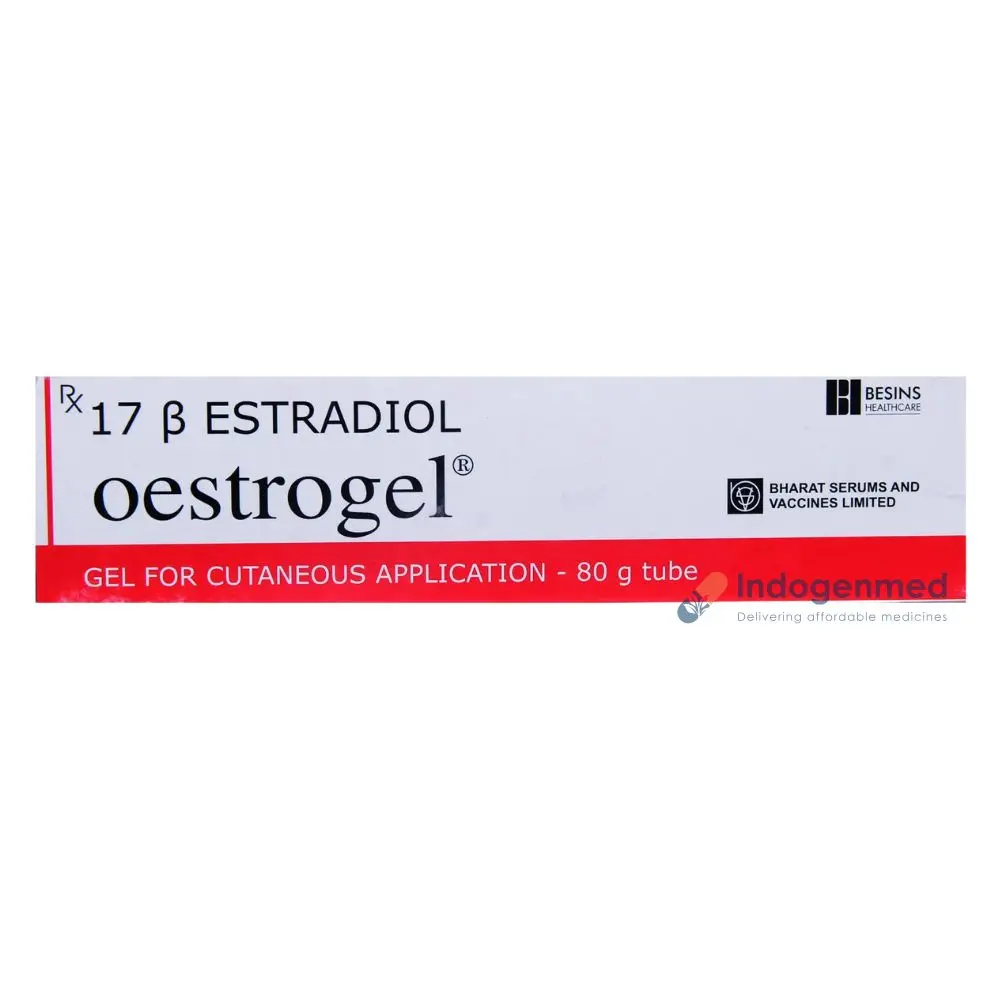
What Is Oestrogel 5 gm Gel?
Oestrogel 5 gm Gel contains estradiol 0.06% w/w in a transdermal hydroalcoholic gel formulation. Each 5 g application (measured using the pump dispenser) delivers 3 mg of estradiol, which is absorbed through the skin to provide systemic estrogen replacement. Oestrogel is used for hormone replacement therapy (HRT) in women experiencing menopausal symptoms caused by estrogen deficiency — either following natural menopause, surgical menopause (bilateral oophorectomy), or premature ovarian insufficiency (POI).
Transdermal estradiol is considered the most physiologically natural route of HRT. It delivers estradiol — the principal endogenous human estrogen — directly into the bloodstream without first-pass hepatic metabolism, thereby avoiding the hepatic protein synthesis effects (including increases in clotting factors, C-reactive protein, sex hormone-binding globulin, and triglycerides) associated with oral estrogen. This pharmacokinetic advantage gives transdermal estradiol a potentially more favourable safety profile compared to oral conjugated equine estrogen or oral estradiol, particularly regarding venous thromboembolism (VTE), cardiovascular risk, and triglyceride elevation. The gel formulation provides easy dose adjustment and allows flexible application.
Mechanism of Action
Estrogen Receptor Activation
Estradiol is the most potent and predominant endogenous estrogen in premenopausal women. It binds with high affinity to estrogen receptors ERα and ERβ — nuclear hormone receptors present in numerous tissues including the hypothalamus, pituitary, uterus, vagina, breast, bone, cardiovascular system, liver, skin, and central nervous system. Upon binding, the estradiol–receptor complex acts as a transcription factor, regulating the expression of estrogen-responsive genes that control cell proliferation, differentiation, and function in target tissues.
Menopausal Symptom Relief
During menopause, ovarian estrogen production falls sharply as follicular activity ceases. The resulting estrogen deficiency in the hypothalamus and anterior pituitary causes dysregulation of thermoregulation, producing vasomotor symptoms (hot flushes, night sweats). Estrogen replacement restores the negative feedback on gonadotropin release and stabilises the thermoregulatory centre, abolishing or substantially reducing vasomotor symptoms. In the genitourinary system, estrogen deficiency causes vulvovaginal atrophy, dryness, dyspareunia, and urinary urgency — systemic HRT with transdermal estradiol restores vaginal epithelial thickness and lubrication.
Bone Protection
Estrogen is a critical regulator of bone turnover. It inhibits osteoclast activity (bone resorption) and supports osteoblast function (bone formation), maintaining bone mineral density (BMD). Postmenopausal estrogen deficiency accelerates bone loss, increasing fracture risk. HRT with estradiol preserves BMD and reduces the risk of osteoporotic fractures, particularly at the spine and hip.
Indications
Menopausal Vasomotor Symptoms
Oestrogel is primarily indicated for the treatment of moderate-to-severe vasomotor symptoms (hot flushes, night sweats, palpitations, diaphoresis) associated with natural or surgical menopause. HRT is the most effective treatment for vasomotor symptoms and significantly improves quality of life, sleep, and daytime function in symptomatic women.
Genitourinary Syndrome of Menopause
Systemic estradiol from Oestrogel treats genitourinary symptoms including vaginal dryness, atrophy, dyspareunia (painful intercourse), vulvar discomfort, and urinary symptoms related to hypoestrogenism. For isolated vaginal symptoms, low-dose local vaginal estrogen may be preferred, but systemic HRT is appropriate when both vasomotor and genitourinary symptoms coexist.
Prevention of Postmenopausal Osteoporosis
Oestrogel is indicated for the prevention of osteoporosis in postmenopausal women at increased risk of fracture who are intolerant of or have contraindications to other osteoporosis treatments. HRT is not the first-line treatment for established osteoporosis but is appropriate for prevention in recently menopausal women, particularly when vasomotor symptoms also benefit from treatment.
Premature Ovarian Insufficiency
Women with premature ovarian insufficiency (POI, menopause before age 40) have an extended period of hypoestrogenism, conferring substantially increased risks of cardiovascular disease, osteoporosis, cognitive decline, and urogenital atrophy compared with women experiencing normal-age menopause. HRT is recommended until the natural age of menopause (~51 years) in women with POI to minimise these long-term health risks.
Dosage and Administration
Standard starting dose: 2.5 g gel (1.5 mg estradiol) to 5 g gel (3 mg estradiol) once daily.
Application: Apply to clean, dry, intact skin of the lower abdomen, thighs, or upper arms. Avoid application to the breasts or face. Allow to dry for a few minutes before covering. Do not rub vigorously — spread gently over a large area. Rotate the application site within the recommended areas.
Dose titration: Adjust the dose to the minimum effective dose for symptom control, starting at the lower end and increasing if symptoms are inadequately controlled. The dose can be varied using the metered pump (1 pump actuation = 2.5 g gel = 1.5 mg estradiol).
Progestogen co-administration: Women with an intact uterus must take a progestogen alongside estrogen HRT to prevent endometrial hyperplasia and carcinoma. Oestrogel (estrogen only) is not appropriate as sole HRT in women who have not undergone hysterectomy. A progestogen should be added for at least 12–14 days per 28-day cycle (sequential HRT) or continuously.
Post-hysterectomy: Women who have undergone hysterectomy may use estrogen-only HRT with Oestrogel without progestogen.
Duration: Use the lowest effective dose for the shortest duration consistent with treatment goals. Benefit-risk should be reassessed annually.
Contraindications
- Known or suspected estrogen-dependent malignancies (breast cancer, endometrial cancer).
- Undiagnosed vaginal or uterine bleeding.
- Active or recent arterial thromboembolic disease (angina, myocardial infarction, stroke).
- Active or previous venous thromboembolism (deep vein thrombosis, pulmonary embolism).
- Active liver disease or history of liver disease where liver function tests have failed to return to normal.
- Porphyria.
- Known hypersensitivity to estradiol or any excipient.
- Pregnancy and breastfeeding.
Warnings and Precautions
Breast cancer risk: HRT with combined estrogen-progestogen is associated with a small but real increase in breast cancer risk that increases with duration of use. Estrogen-only HRT in hysterectomised women has a less clear risk. All women should undergo regular breast examination and mammographic screening. The balance of risk and benefit should be discussed with each patient.
Endometrial protection: Estrogen alone stimulates endometrial proliferation; unopposed estrogen in women with an intact uterus significantly increases the risk of endometrial hyperplasia and endometrial carcinoma. A progestogen must be co-administered.
Cardiovascular disease: HRT is not cardioprotective in older women or those initiating HRT many years after menopause. However, in healthy women under 60 or within 10 years of menopause onset (the “timing hypothesis”), HRT may be associated with a neutral or slightly reduced cardiovascular risk. The risk-benefit discussion should be individualised.
VTE: Transdermal estradiol appears to have a significantly lower risk of VTE than oral estrogen — this is a key reason it is preferred in women with elevated VTE risk (obesity, personal or family history of VTE, thrombophilia). Nonetheless, all HRT use requires individual VTE risk assessment.
Adverse Effects
- Common: Breast tenderness or pain, spotting or breakthrough bleeding (especially in early treatment), fluid retention, nausea, headache, mood changes, libido changes.
- Application site reactions: Skin irritation, erythema, pruritus at the application site (mild and usually transient).
- Uncommon: Migraine, leg cramps, bloating.
- Serious (rare): VTE, stroke, myocardial infarction, endometrial hyperplasia (without progestogen), gallbladder disease, breast cancer (with prolonged use).
Drug Interactions
- CYP3A4 inducers (rifampicin, carbamazepine, phenytoin, St John’s Wort): May substantially reduce plasma estradiol levels, reducing efficacy of HRT.
- CYP3A4 inhibitors (itraconazole, erythromycin, grapefruit juice): May increase estradiol plasma levels.
- Thyroid replacement therapy: Estrogen increases thyroid-binding globulin (TBG) — transdermal estradiol causes a much smaller TBG increase than oral estrogen, but thyroid function should be monitored in women on thyroxine.
- Anticoagulants: HRT may alter anticoagulant requirements — monitor INR in women on warfarin starting or stopping HRT.
Storage
Store below 25°C. Do not refrigerate or freeze. Keep in original container. Flammable — keep away from naked flames while applying. Keep out of reach of children. Do not use after the expiry date.
Related Products
Women using Oestrogel for HRT who have an intact uterus will require a progestogen to protect the endometrium — speak with your doctor about appropriate combined HRT options. For women managing menopausal genitourinary symptoms alongside osteoporosis prevention, see the full range of products in our Women’s Health category. Patients with associated menopausal musculoskeletal discomfort may also benefit from Nucoxia 60 mg Tablets for pain management where clinically appropriate.
References
- Electronic Medicines Compendium (EMC). Oestrogel 0.06% Gel — Summary of Product Characteristics. Available at: https://www.medicines.org.uk/emc
- National Library of Medicine MedlinePlus. Estradiol Topical. Available at: https://medlineplus.gov
- Mayo Clinic. Estradiol (Topical Application Route). Available at: https://www.mayoclinic.org
- Stevenson JC, et al. Transdermal versus oral HRT for the management of hot flushes in postmenopausal women. Climacteric. 2013;16(Suppl 1):2–8. PubMed PMID: 23651281
- Canonico M, et al. Hormone therapy and venous thromboembolism among postmenopausal women: impact of the route of estrogen administration and progestogens — the ESTHER study. Circulation. 2007;115(7):840–845. PubMed PMID: 17309934
Reviews
There are no reviews yet.