Description
<![CDATA[
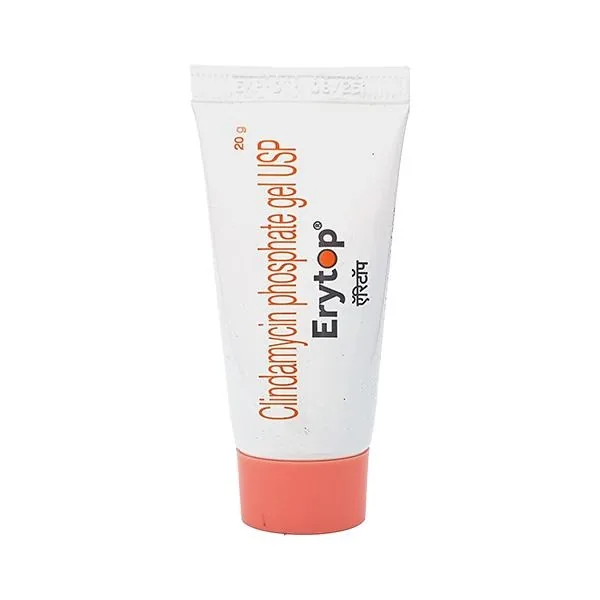
Erytop 1% 20 Gm Gel
Erytop 1% 20 Gm Gel contains erythromycin 1% (10 mg per gram) in a topical gel formulation indicated for the treatment of acne vulgaris. Erythromycin is a macrolide antibiotic that reduces the population of Cutibacterium acnes (formerly Propionibacterium acnes) on the skin, an anaerobic bacterium that plays a central role in the inflammatory cascade of acne. Topical erythromycin is effective in reducing both inflammatory (papules, pustules) and non-inflammatory (comedonal) acne lesions, and is widely recommended in dermatological guidelines as a component of combination acne therapy.
Composition
| Active Ingredient | Strength |
|---|---|
| Erythromycin | 1% w/w (10 mg/g) in a topical gel base |
About the Manufacturer
Erytop Gel is manufactured by Cipla Limited, one of India’s largest and most respected pharmaceutical companies, headquartered in Mumbai. Cipla has an extensive dermatology portfolio and operates manufacturing facilities approved by the US FDA, UK MHRA, and WHO. Cipla is known globally for making high-quality, affordable medicines accessible to patients across all markets.
Mechanism of Action
Erythromycin binds reversibly to the 50S ribosomal subunit of susceptible bacteria and inhibits RNA-dependent protein synthesis by blocking translocation of peptidyl-tRNA from the acceptor site (A-site) to the donor site (P-site). In the context of acne, topical erythromycin reduces the density of C. acnes on the skin surface and within the sebaceous follicle. C. acnes proliferates in the anaerobic, lipid-rich environment of the pilosebaceous unit and produces lipases and other inflammatory mediators that break down sebum triglycerides into free fatty acids, trigger pro-inflammatory cytokines, and cause the follicular disruption characteristic of acne. By reducing bacterial load, erythromycin also decreases the production of these inflammatory mediators, leading to resolution of inflammatory acne lesions. The gel vehicle allows the drug to penetrate effectively into the sebaceous follicle.
Indications
- Acne vulgaris — both inflammatory (papulopustular) acne and non-inflammatory (comedonal) acne
- Used as monotherapy or in combination with topical retinoids or benzoyl peroxide
Dosage & Administration
- For topical use only — do not ingest
- Wash the affected area with a mild cleanser and pat dry before applying
- Apply a thin layer to the entire affected area (not just individual spots) once or twice daily, as directed by a dermatologist
- Use clean fingertips or a cotton pad to apply — wash hands before and after application
- Avoid contact with eyes, nose, mouth, and mucous membranes; if contact occurs, rinse thoroughly with water
- Allow the gel to dry before applying other topical products or sunscreen
- Use consistently for a minimum of 6–8 weeks to see meaningful improvement; full effects may take 2–3 months
Special Populations
- Adolescents: Suitable for use in adolescents (12 years and over) with acne under dermatological supervision
- Children under 12: Not recommended — limited safety data
- Pregnancy: Topical erythromycin is generally considered low-risk during pregnancy; systemic absorption from topical application is minimal; however, consult a physician before use
- Breastfeeding: Systemic absorption is minimal; topical use is generally considered safe, but avoid application to the breast area and nipple
Precautions
- For external use only — keep away from eyes and mucous membranes
- Antibiotic resistance: C. acnes resistance to erythromycin is increasing. Use topical erythromycin in combination with benzoyl peroxide (BPO) wherever possible, as BPO reduces the development of resistance and enhances efficacy; avoid topical antibiotic monotherapy for prolonged periods
- Discontinue if severe local irritation, allergic contact dermatitis, or signs of secondary infection develop
- If significant systemic absorption occurs (unlikely with topical use), pseudomembranous colitis has been reported with systemic erythromycin; seek medical advice if severe diarrhoea occurs
Contraindications
- Known hypersensitivity to erythromycin or other macrolide antibiotics, or to any excipient in the formulation
- Not for ophthalmic use
Side Effects
- Common: Local skin reactions — dryness, irritation, stinging, burning, peeling, and erythema at the site of application; these are usually mild and transient
- Less common: Oiliness or acne flare-up at the start of treatment (purging effect)
- Rare: Allergic contact dermatitis; pseudomembranous colitis (if significant systemic absorption occurs — extremely rare with topical use)
Drug Interactions
- Topical retinoids (tretinoin, adapalene): Commonly combined with erythromycin for superior efficacy; apply at different times of day (e.g., erythromycin in the morning, retinoid at night) to minimise local irritation
- Benzoyl peroxide: Combining topical erythromycin with benzoyl peroxide is a first-line combination strategy — BPO reduces antibiotic resistance and has complementary comedolytic and antibacterial activity; some fixed-dose combination products are available
- Other topical antibiotics (clindamycin, tetracycline): Avoid simultaneous use of two topical antibiotics — no additional benefit and increased risk of resistance
- Abrasive or strong drying agents: Concurrent use with highly astringent or abrasive preparations may cause excessive skin dryness or irritation
Storage
Store below 25°C in a dry place, away from direct sunlight and heat. Keep the tube tightly closed when not in use. Keep out of reach of children. Do not use after the expiry date printed on the tube.
Related Products
- Sebifin 1% W/W 10 Gm Cream – antifungal cream for skin infections
- Senzclor H 5 Gm – topical antifungal and anti-inflammatory
- Azax 500 Mg Tablets – azithromycin tablets (macrolide antibiotic)
Frequently Asked Questions
- What is Erytop 1% Gel used for?
- Erytop 1% Gel is used to treat acne vulgaris — the common form of acne that causes spots, pimples, and blackheads. It contains erythromycin, an antibiotic that kills the bacteria (Cutibacterium acnes) that contribute to acne and helps reduce inflammation. It can be used for both inflammatory pimples and non-inflammatory blackheads.
- How long does Erytop Gel take to work?
- Improvement in acne with topical erythromycin typically begins within 4–6 weeks of consistent use, but full results often take 2–3 months. Some patients may notice an initial worsening (purging effect) in the first few weeks as the gel brings blocked material to the surface. Consistent daily use is key to seeing results — stopping early because improvement is slow is a common reason for treatment failure.
- Can I use Erytop Gel with my retinoid cream?
- Yes. Topical erythromycin and topical retinoids (such as tretinoin or adapalene) are frequently combined for superior acne control — this is a guideline-recommended combination. To minimise local irritation, apply erythromycin gel in the morning and the retinoid at night. Both agents work via different mechanisms and together address multiple aspects of acne pathology.
- Why is erythromycin combined with benzoyl peroxide for acne?
- Combining topical erythromycin with benzoyl peroxide (BPO) is an important strategy to prevent and reduce antibiotic resistance in C. acnes. Resistance to topical erythromycin alone is increasingly common. BPO is a non-antibiotic agent that kills bacteria through the generation of reactive oxygen species and does not cause resistance. When used together, BPO also enhances the antibacterial efficacy of erythromycin and reduces the selection of resistant strains.
- Can Erytop Gel be used on the back and chest as well as the face?
- Yes. Erytop 1% Gel can be applied to any skin area affected by acne, including the face, neck, upper back, chest, and shoulders. Apply to the entire affected area rather than just individual spots, using a thin layer. Ensure the skin is clean and dry before application.
References
- NHS – Acne Treatment (including topical antibiotics)
- MedlinePlus – Erythromycin Topical
- FDA – Erythromycin Topical Solution Prescribing Information
- EMA – Erythromycin Monograph
Disclaimer: This page is for informational purposes only and does not constitute medical advice. Erytop 1% 20 Gm Gel should be used under the guidance of a qualified dermatologist. For external use only — do not ingest. If you experience severe skin irritation, allergic reactions, or any unexpected symptoms, discontinue use and consult a healthcare professional.
]]>
Reviews
There are no reviews yet.