Description
What Is Glyco 6% 30 gm Cream?
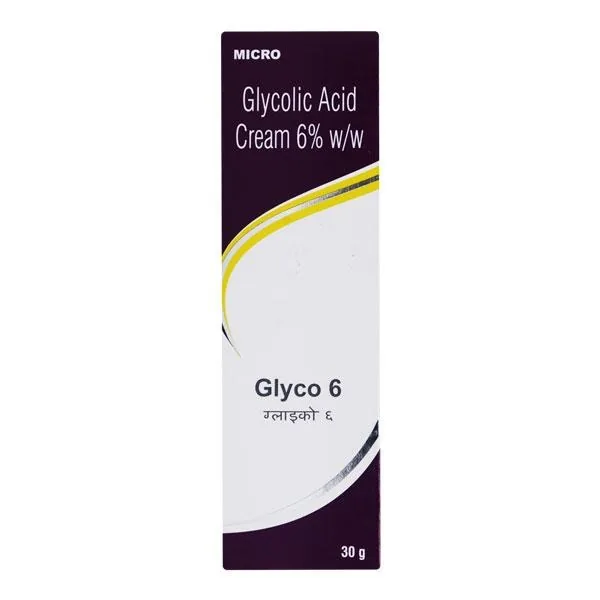
Glyco 6% 30 gm Cream contains glycolic acid 6% in a topical cream formulation, manufactured by Micro Labs Ltd. Glycolic acid is the smallest and most bioavailable member of the alpha-hydroxy acid (AHA) family — a group of naturally occurring carboxylic acids found in sugarcane, citrus fruits, and other plant sources. At dermatological concentrations of 5–10%, glycolic acid acts as a keratolytic and exfoliant, loosening and shedding the outermost layers of the stratum corneum to reveal brighter, smoother skin underneath.
Glyco 6% Cream is used in the management of several common dermatological conditions driven by abnormal keratinisation or post-inflammatory pigmentation: photoageing, mild-to-moderate acne, post-inflammatory hyperpigmentation (PIH), melasma, and rough or dry skin conditions including ichthyosis and keratosis pilaris. At the 6% concentration used in this formulation, the cream is suitable for home use and is gentler than the higher concentrations (20–70%) used in professional chemical peels performed in clinical settings.
Mechanism of Action
Keratolysis via Desmosome Disruption
The primary mechanism of glycolic acid in skin is keratolysis — the loosening of cohesion between corneocytes in the stratum corneum. At acidic pH, glycolic acid reduces the calcium-dependent ionic interactions that stabilise desmosomal junctions between corneocytes, the flattened, terminally differentiated keratinocytes that form the outermost layers of the skin. Destabilisation of these junctions accelerates the shedding of the superficial stratum corneum layers, reducing the thickness and compaction of the horny layer. This normalises the rate of desquamation, which is impaired in conditions like ichthyosis and keratosis pilaris, and clears accumulated dead cell debris in the follicular infundibulum in acne-prone skin.
Stimulation of Dermal Remodelling
At concentrations used in professional peels (20–70%), glycolic acid penetrates to the dermis and stimulates fibroblast activity, increasing collagen, elastin, and glycosaminoglycan synthesis. At lower concentrations (5–10%) used in home-care products, the primary action is at the epidermal level, though some stimulation of epidermal turnover and mild enhancement of dermal groundwork may occur with continued use over months.
Melanin Dispersion and Hyperpigmentation Reduction
By accelerating epidermal turnover, glycolic acid facilitates the shedding of melanin-laden keratinocytes from the upper epidermis, reducing the visible density of post-inflammatory hyperpigmentation and melasma. It does not directly inhibit melanin synthesis (unlike hydroquinone or kojic acid), but accelerated epidermal desquamation reduces the residence time of melanin in the superficial epidermis and gradually lightens localised hyperpigmented areas with regular use over 8–12 weeks.
Indications
Post-Inflammatory Hyperpigmentation (PIH)
Glyco 6% Cream is indicated for the reduction of post-inflammatory hyperpigmentation following acne, eczema, or minor skin injuries, particularly in Fitzpatrick skin types III–VI where PIH is more pronounced and persistent.
Melasma
Glycolic acid is a recognised adjunct treatment for melasma, frequently combined with other depigmenting agents such as hydroquinone or kojic acid for enhanced efficacy.
Photoageing and Rough Skin Texture
Regular use improves skin texture, reduces fine lines, and imparts a brighter complexion in photodamaged skin by normalising epidermal turnover.
Acne Vulgaris
Keratolytic action clears follicular impaction (comedones), making glycolic acid a useful adjunct in comedonal and mild inflammatory acne, often combined with topical retinoids or antibiotics.
Ichthyosis and Keratosis Pilaris
By reducing stratum corneum compaction, glycolic acid smooths the rough, scaly skin texture characteristic of these conditions.
Dosage and Administration
Apply a thin layer to clean, dry skin once or twice daily, as directed by the physician. Begin with once-daily application in the evening to assess tolerance; increase to twice daily if no significant irritation occurs after 1–2 weeks. Avoid the immediate periorbital area, lips, nasal mucosa, and open wounds. Wash hands thoroughly after application. Use sunscreen daily (SPF ≥30) throughout treatment — glycolic acid increases photosensitivity by thinning the stratum corneum, and sun exposure without protection will worsen pigmentation and risk sunburn.
For post-inflammatory hyperpigmentation, significant improvement typically requires 8–12 weeks of consistent daily use. Do not use on actively inflamed, broken, or sunburned skin.
Contraindications
- Known hypersensitivity to glycolic acid, any other alpha-hydroxy acid, or any excipient in the formulation.
- Active inflammatory skin conditions (e.g., active eczema, rosacea flares, active acne lesions with significant inflammation) where barrier function is already compromised — application may cause excessive irritation.
- Broken or wounded skin.
- Not recommended for use in children without specialist dermatological supervision.
Warnings and Precautions
Photosensitivity: Glycolic acid thins the stratum corneum and significantly increases susceptibility to sunburn and UV-induced pigmentation. Daily broad-spectrum sunscreen use (SPF ≥30, preferably SPF 50 in high UV environments) is mandatory during treatment and for at least 1 week after discontinuation.
Stinging and irritation: A mild stinging or tingling sensation is normal immediately after application, particularly during the first week of use. Persistent burning, significant redness, or peeling indicates excessive irritation; reduce frequency or discontinue temporarily and consult a dermatologist.
Avoid contact with eyes: Glycolic acid can cause significant conjunctival irritation. If accidental contact occurs, flush thoroughly with water.
Fitzpatrick types V–VI (darker skin tones): Paradoxical post-inflammatory hyperpigmentation from irritation can occur. Use cautiously; start with every-other-day application to establish tolerance.
Adverse Effects
- Common: Mild stinging, tingling, or burning on application (usually transient); erythema; mild peeling or flaking, particularly in the first 1–2 weeks.
- Uncommon: Contact dermatitis (allergic or irritant); persistent erythema requiring discontinuation.
- Rare: Paradoxical hyperpigmentation (particularly in dark skin types with irritant reaction); blistering at high concentrations (not at 6%).
Drug Interactions
- Topical retinoids (tretinoin, adapalene, isotretinoin): Combined use increases risk of skin irritation and barrier disruption; introduce cautiously, monitor for excessive peeling or erythema, and use on alternate evenings if sensitivity is a concern.
- Other AHAs and BHAs (lactic acid, salicylic acid): Additive keratolytic effect; simultaneous use of multiple exfoliating agents increases risk of over-exfoliation and barrier impairment.
- Hydrogen peroxide or benzoyl peroxide: May cause excessive skin irritation when combined; separate application times if both are used.
- Topical corticosteroids: May reduce inflammatory response to irritation but continued combination use is not standard practice.
Storage
Store below 30°C in a cool, dry place away from direct sunlight. Do not freeze. Keep in the original sealed tube and tightly close after each use. Keep out of reach of children. Do not use after the expiry date printed on the pack.
Related Products
For patients with acne requiring both keratolytic and antibiotic action, Retino-AC Gel (tretinoin + clindamycin) provides combined comedolytic and antibacterial activity in a single formulation. For more severe inflammatory skin conditions requiring topical corticosteroid therapy, Halovate CR 0.05% 15 gm Cream (halobetasol propionate) provides potent anti-inflammatory action under dermatologist supervision. For antibiotic management of skin infections alongside dermatological treatment, Dalacin C 150 mg Tablets (clindamycin) addresses systemic antimicrobial needs.
References
- U.S. Food and Drug Administration / DailyMed. Glycolic Acid Topical Products — Prescribing Information. National Library of Medicine. Available at: https://dailymed.nlm.nih.gov
- National Library of Medicine MedlinePlus. Glycolic Acid Topical. Available at: https://medlineplus.gov
- Mayo Clinic. Glycolic Acid (Topical Route) — Proper Use. Available at: https://www.mayoclinic.org
- Electronic Medicines Compendium (EMC). Glycolic Acid Cream — Summary of Product Characteristics. Available at: https://www.medicines.org.uk/emc
- Sharad J. Glycolic acid peel therapy — a current review. Clin Cosmet Investig Dermatol. 2013;6:281–288. PubMed PMID: 24399880
Reviews
There are no reviews yet.