Description
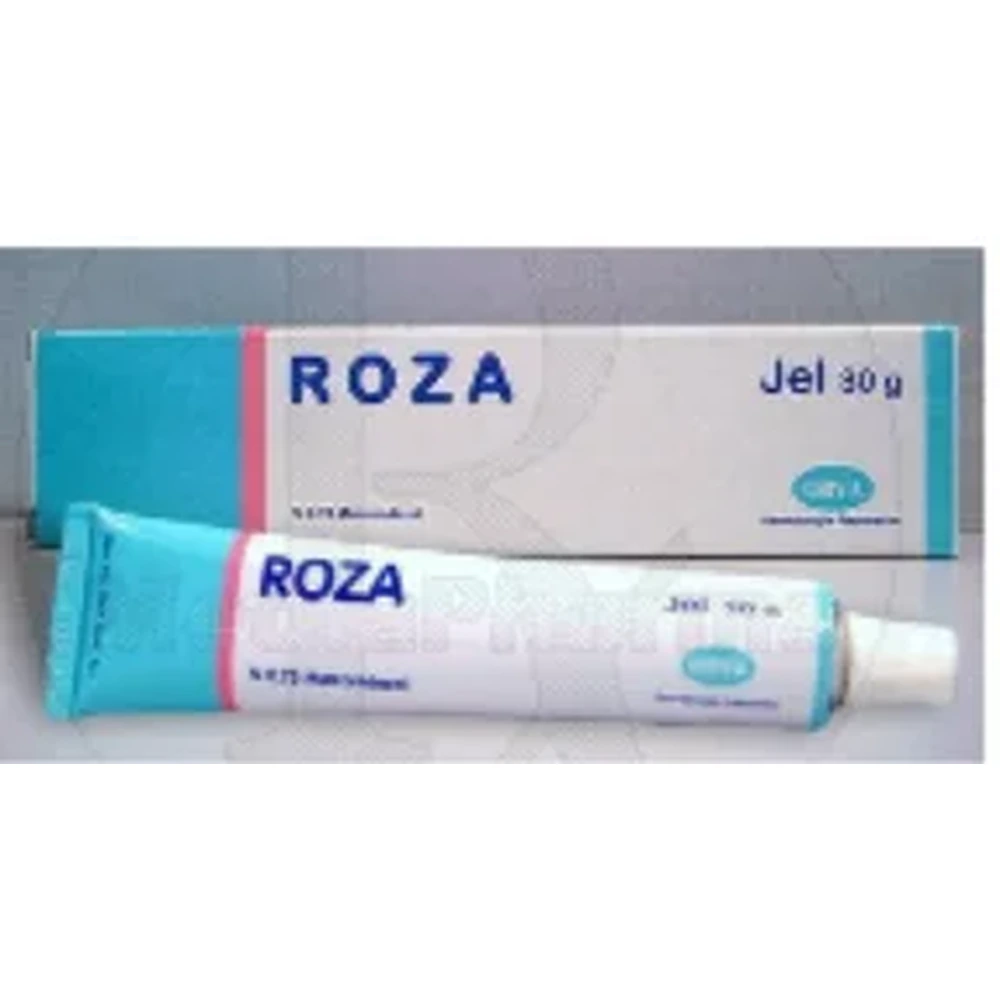
Roza 30 Gm Gel – Metronidazole 0.75% Topical Gel
Roza 30 Gm Gel contains metronidazole 0.75% as a topical aqueous gel formulation for the treatment of rosacea. Metronidazole is a nitroimidazole antibacterial and antiprotozoal agent that has been used in the management of inflammatory rosacea since the 1980s. When applied to the face twice daily, it reduces the inflammatory papules and pustules characteristic of this chronic skin condition, as well as helping to control facial erythema. Roza Gel is supplied in a 30-gram tube and is intended for external use on the face only. It is a prescription-only preparation manufactured to Good Manufacturing Practice (GMP) standards for use in adult patients with rosacea.
Composition
Each gram of Roza 30 Gm Gel contains:
- Active ingredient: Metronidazole 7.5 mg (equivalent to 0.75% w/w)
- Inactive ingredients: Carbomer (gel-forming agent), propylene glycol, methylparaben, propylparaben, disodium edetate, and purified water.
The gel is a colourless to pale yellow, homogeneous preparation. Each 30-gram tube contains 225 mg of metronidazole in total. The low concentration of active ingredient relative to oral metronidazole preparations is intentional — systemic absorption from the skin surface is minimal, keeping plasma levels far below those achieved after oral dosing.
How Roza Gel Works
The precise mechanism by which metronidazole acts in rosacea has not been fully established, but the evidence points to two complementary properties:
- Antibacterial activity: Metronidazole is active against many anaerobic bacteria and certain micro-organisms that have been implicated in rosacea pathogenesis. By reducing microbial burden on the skin surface and within follicles, it suppresses one of the triggers of inflammation. It is also active against Demodex mites (a skin-dwelling parasite found in higher numbers in rosacea patients), contributing to its therapeutic effect.
- Anti-inflammatory effect: Metronidazole inhibits the production of reactive oxygen species (free radicals) by neutrophils. These reactive species are key mediators of the inflammatory cascade responsible for the redness, papules, and pustules of rosacea. By quenching neutrophil-derived oxidative damage to skin tissues, metronidazole reduces visible inflammation without acting as a classic anti-inflammatory drug in the corticosteroid sense.
Because cutaneous absorption of the gel is very low, systemic antibacterial effects do not play a meaningful role during topical treatment. Maximum serum concentrations after applying 1 gram of 0.75% gel to the face are approximately 100 times lower than those produced by a standard 250 mg oral metronidazole tablet. In most patients, plasma levels are below the detection limit of assays used in pharmacokinetic studies. This minimal absorption profile explains why topical metronidazole does not carry the same interaction and systemic side-effect risks as oral metronidazole.
Topical metronidazole does not eliminate rosacea — effects are palliative, not curative. It controls symptoms and suppresses flares during the treatment period. Rosacea is a chronic relapsing condition, and prolonged or repeated courses of treatment may be necessary to maintain remission.
Therapeutic Uses
Roza 30 Gm Gel is indicated for:
- Rosacea: Specifically for the treatment of inflammatory papules, pustules, and erythema (facial redness) associated with rosacea. It is not effective for the telangiectasia (visible dilated blood vessels) or rhinophyma (thickened skin on the nose) that can develop in later stages of rosacea — these features require different interventions.
Rosacea is a common chronic inflammatory skin condition primarily affecting the central face. It is characterised by episodes of flushing, persistent facial redness, inflammatory papules and pustules resembling acne, and in some patients visible blood vessels or thickening of nasal skin. It most commonly affects fair-skinned adults between the ages of 30 and 60, with women affected more frequently than men.
Topical metronidazole is recommended in clinical guidelines as a first-line or maintenance treatment for mild-to-moderate papulopustular rosacea. It is at least as effective as oral tetracycline antibiotics for controlling inflammatory lesions in comparative studies, and it may be used for longer-term maintenance following initial oral antibiotic therapy to sustain remission.
Dosage and Administration
- Adults: Apply a thin layer of Roza Gel to all affected areas of the face twice daily — in the morning and in the evening. Areas should be washed with a mild, non-irritating cleanser and gently dried before each application.
- Application technique: Squeeze a small amount of gel (approximately a pea-sized amount for the full face) onto clean fingertips. Spread as a thin, even layer over affected skin. Rub in gently. Avoid the eyes, mouth, nostrils, and mucous membranes. Wash hands after use.
- Duration of treatment: The average treatment course is 3 to 4 months. If there is a clear clinical benefit, a further 3–4 month course may be considered. If there is no clear improvement after an adequate trial, treatment should be discontinued and medical review sought.
- Elderly: No dose adjustment required. Use at the same dose and frequency as in adults.
- Children under 18 years: Safety and efficacy have not been established. Not recommended for use in this age group.
- Cosmetics: Non-comedogenic (non-pore-blocking) and non-astringent cosmetics may be applied after the gel has been absorbed into the skin. Avoid heavy or occlusive products over the treated area.
- Sunscreen: Patients with rosacea are advised to use a daily broad-spectrum sunscreen with SPF 30 or higher, as UV exposure worsens rosacea and can reduce the efficacy of metronidazole by promoting its photodegradation.
Side Effects
Roza Gel is generally very well tolerated because systemic absorption is negligible. Adverse effects are almost exclusively local reactions at the site of application:
Common side effects (affect up to 1 in 10 people):
- Dry skin at the application site
- Erythema (skin redness) — transient, particularly after first applications
- Itching (pruritus) of treated skin
- Burning or stinging sensation after application
- Skin irritation
- Temporary worsening of rosacea symptoms at initiation of treatment
Uncommon side effects (affect up to 1 in 100 people):
- Hypoaesthesia (reduced skin sensation) or paraesthesia (tingling, numbness) in treated area
- Metallic taste in the mouth (reported rarely despite low absorption)
- Nausea
Frequency unknown:
- Contact dermatitis (allergic or irritant skin reaction) — if this occurs, discontinue use and consult a doctor
- Facial swelling
- Skin exfoliation (peeling)
- Lacrimation (watery eyes) if gel applied too close to the eye area — keep away from eyes
Most side effects are mild and self-limiting. If local irritation is troublesome, reduce application frequency temporarily. If contact dermatitis develops, stop use and seek medical advice. Severe allergic reactions to topical metronidazole are very rare. The excipients methylparaben and propylparaben can occasionally cause delayed allergic contact dermatitis in susceptible individuals; propylene glycol may also cause mild skin irritation.
Precautions and Warnings
- For external use only: Do not swallow. If accidentally ingested, seek medical advice. Do not apply inside the nose, mouth, eyes, or on mucous membranes.
- Eye contact: Avoid applying near the eyes. Metronidazole gel can cause eye watering and mild irritation if it contacts the conjunctiva.
- Allergy to metronidazole: Do not use if you have a known hypersensitivity to metronidazole, other nitroimidazoles (e.g., tinidazole, ornidazole), parabens, or any other excipients in the formulation.
- Cockayne syndrome: Metronidazole is contraindicated in patients with Cockayne syndrome. Severe hepatotoxicity and acute liver failure, sometimes fatal, have been reported with systemic metronidazole in these patients. Although topical absorption is low, use is contraindicated as a precautionary measure.
- Blood dyscrasias: Use with caution in patients with a known history of blood disorders, as metronidazole has been associated with haematopoietic adverse effects at systemic doses.
- UV exposure: Metronidazole undergoes photodegradation on UV exposure, reducing its efficacy. Patients should minimise prolonged sun exposure, avoid UV lamps and solariums, and use sunscreen daily. UV exposure also independently worsens rosacea.
- Avoid unnecessary or prolonged use: As with all antimicrobials, unnecessary or excessively prolonged use should be avoided to reduce the risk of resistance development.
- Pregnancy: There is no clinical experience with topical metronidazole in pregnancy. Because systemic absorption is very low, the theoretical risk is minimal, but topical use should be avoided during the first trimester and limited to essential use thereafter under medical supervision. Oral metronidazole crosses the placental barrier; this has not been demonstrated for the topical route at clinical doses.
- Breastfeeding: Oral metronidazole is excreted in breast milk. Systemic concentrations from topical gel are very much lower, but a decision should be made whether to discontinue breastfeeding or discontinue the gel, taking into account the importance of treatment to the mother.
- Driving and machinery: Roza Gel has no effect on the ability to drive or use machinery.
- Propylene glycol: May cause skin irritation. Patients with known sensitivity to propylene glycol should use with caution.
- Parabens: Methylparaben and propylparaben in the formulation may rarely cause delayed-type allergic contact reactions.
Drug Interactions
Because systemic absorption of Roza Gel is very low, pharmacokinetic drug interactions are unlikely in clinical practice. However, the following interactions have been reported with systemic metronidazole and cannot be entirely excluded with long-term topical use:
- Warfarin and coumarin anticoagulants: Oral metronidazole is a well-established inhibitor of CYP2C9 and potentiates the anticoagulant effect of warfarin, increasing the risk of bleeding. Very rare cases of raised INR have been reported with topical metronidazole. Patients on warfarin or other coumarins who use Roza Gel should be monitored with INR checks. Inform your anticoagulation clinic if you start Roza Gel.
- Alcohol: Disulfiram-like reactions (flushing, nausea, vomiting, palpitations) can occur with oral metronidazole plus alcohol. This interaction has not been confirmed with topical preparations due to low systemic levels, but patients should be aware of this theoretical risk and alcohol should be avoided during treatment as an additional precaution given that alcohol also worsens rosacea independently.
- Disulfiram: Concurrent use of systemic metronidazole with disulfiram has been associated with psychotic reactions. This interaction is considered very unlikely with the topical gel.
- Lithium: Systemic metronidazole can increase lithium plasma levels. Not considered clinically relevant with topical metronidazole but monitor lithium levels if concerned.
- Other topical preparations: Avoid applying other topical products (particularly keratolytics, strong retinoids, alcohol-containing toners, or astringents) to the same areas of skin at the same time as Roza Gel, as these can increase local irritation and potentially alter absorption. Use with a simple, mild moisturiser is generally acceptable.
Contraindications
Roza 30 Gm Gel must not be used in:
- Known hypersensitivity to metronidazole, other nitroimidazoles, parabens (methylparaben, propylparaben), or any other excipients in the formulation
- Patients with Cockayne syndrome
- Children under 18 years (no established safety and efficacy data)
Storage Instructions
- Store below 25°C in a cool, dry place away from direct sunlight and heat
- Do not freeze
- Keep the tube cap tightly closed when not in use
- Store out of the reach and sight of children
- Do not use after the expiry date printed on the tube and packaging
- Dispose of unused gel responsibly; do not flush down the sink or place in household waste
Related Products
Patients managing rosacea or related skin conditions may find the following products on IndoGenMed useful:
- Supatret 15 Gm 0.1% Gel – Tretinoin 0.1% gel for acne and photoaged skin
- Skin Lite 20 Gm Cream – Hydroquinone/Tretinoin/Mometasone combination for hyperpigmentation
- Roxid 150 Mg Tablet – Roxithromycin 150 mg, macrolide antibiotic for bacterial infections
- Seczol DS 1000 Mg Tablet – Secnidazole 1000 mg, nitroimidazole for protozoal infections
References
- Galderma (U.K.) Limited. Rozex 0.75% w/w Gel (Metronidazole) – Summary of Product Characteristics. UK Electronic Medicines Compendium (EMC). Last updated 28 November 2025. Available at: https://www.medicines.org.uk/emc/product/925/smpc
- Galderma (U.K.) Limited. Metrogel 0.75% w/w Gel (Metronidazole) – Summary of Product Characteristics. UK Electronic Medicines Compendium (EMC). Last updated 4 December 2025. Available at: https://www.medicines.org.uk/emc/product/922/smpc
- Dréno B, Bettoli V, Araviiskaia E, et al. The influence of exposome on acne and rosacea. Review article. PubMed PMID: 11702300. Available at: https://pubmed.ncbi.nlm.nih.gov/11702300/
- U.S. National Library of Medicine. Metronidazole (Topical Route). MedlinePlus Drug Information. Available at: https://medlineplus.gov/druginfo/meds/a689004.html
Reviews
There are no reviews yet.