Description
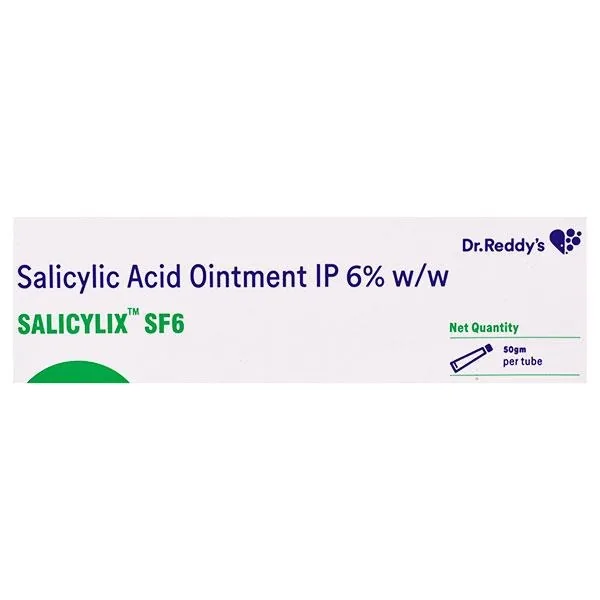
Salicylix SF 6% – Salicylic Acid 6% Ointment/Gel, 50 g
Salicylix SF 6% is a topical keratolytic preparation containing salicylic acid 6% in a 50 g formulation. Salicylic acid is a beta-hydroxy acid (BHA) used extensively in dermatology for its keratolytic, comedolytic, and mild anti-inflammatory properties. The 6% concentration sits in the medium-strength range of salicylic acid topical preparations, above the 2–5% concentrations used for acne and mild hyperkeratosis, and below the 10–20–40% concentrations used for the targeted chemical destruction of plantar warts and verrucas. At 6%, salicylic acid provides effective exfoliation and softening of hyperkeratotic skin in conditions such as psoriasis, seborrhoeic dermatitis, ichthyosis, keratodermas, and hyperkeratotic eczema, with an efficacy-to-safety profile suitable for both facial and body application. The product is sugar-free (SF), making it appropriate for use on potentially mucosal-adjacent or sensitive areas without glycaemic concerns.
Composition
Each 100 g of Salicylix SF 6% contains salicylic acid 6 g (6% w/w). Depending on the base formulation (ointment, cream, or gel), excipients may include white soft paraffin, liquid paraffin, emulsifying wax, cetostearyl alcohol, glycerol, propylene glycol, purified water, or carbomer. The SF designation confirms the product contains no sucrose or sugar-based excipients.
Mechanism of Action
Salicylic acid exerts its therapeutic effects through several complementary mechanisms:
Keratolytic action: At concentrations of 2–6%, salicylic acid reduces the pH of the stratum corneum and disrupts the hydrogen bonds that maintain corneocyte cohesion. This solubilises the intercellular cement (lamellar bodies and corneodesmosomes) that holds keratinocytes together in the outermost layers of skin, facilitating the shedding of excessive keratin. This keratolytic effect results in softening, thinning, and removal of hyperkeratotic plaques and scales without causing significant irritation at concentrations up to 6%.
Comedolytic action: In follicular keratolysis, salicylic acid penetrates the follicular infundibulum and reduces the cohesion of follicular keratinocytes, loosening comedones and preventing new microcomedone formation. This is distinct from retinoids (which primarily act on retinoid receptors to regulate keratinocyte differentiation) and allows salicylic acid to be used in patients who do not tolerate topical retinoids.
Anti-inflammatory action: Salicylic acid is the parent compound of aspirin. At topical concentrations, it suppresses arachidonic acid metabolism and reduces prostaglandin E2 synthesis in the epidermis, contributing mild anti-inflammatory activity that reduces erythema and pruritus associated with psoriatic plaques, eczematous lesions, and seborrhoeic dermatitis.
Penetration enhancement: By reducing scale burden and thinning the stratum corneum, salicylic acid can enhance the penetration of concurrently applied topical agents, including corticosteroids and antifungals. This property is used therapeutically when salicylic acid is combined with potent topical steroids for psoriasis.
Indications
- Psoriasis: Reduction of plaque scale on the body and scalp; often used in combination with topical corticosteroids to enhance steroid penetration.
- Seborrhoeic dermatitis: Scalp and facial seborrhoeic scale; reduces adherent scaling and improves the efficacy of antifungal agents.
- Hyperkeratotic conditions: Ichthyosis vulgaris, palmoplantar keratoderma, keratosis pilaris, pityriasis rubra pilaris, and other disorders of keratinisation.
- Hyperkeratotic eczema: Chronic lichen simplex chronicus, nummular eczema with significant scale.
- Acne and comedonal skin: Comedolytic treatment of open and closed comedones; suitable for patients with predominantly non-inflammatory comedonal acne or blackhead-prone skin.
- Calluses and corns: Softening and reduction of pressure-induced hyperkeratosis on the feet and hands at the 6% concentration.
Dosage and Administration
Apply a thin layer of Salicylix SF 6% to the affected area once or twice daily, as directed by a physician. For thick psoriatic plaques or hyperkeratotic lesions, occlusion with a dressing may enhance penetration but increases systemic absorption and risk of salicylism; occlusion should be used under medical supervision and not prolonged. Avoid application to large body surface areas simultaneously, particularly in children and patients with renal impairment. Avoid contact with eyes, mucous membranes, and broken or inflamed skin. Wash hands after application. Treatment duration depends on the indication; for psoriasis and chronic hyperkeratosis, maintenance therapy may continue as long as the product is tolerated and clinically effective.
When used as an adjunct to topical corticosteroids for scalp psoriasis, salicylic acid preparations should be applied first to remove scale, followed by the corticosteroid once the scale has been softened and removed, to maximise steroid penetration to the dermis.
Pharmacokinetics
Salicylic acid applied topically is absorbed through the stratum corneum by passive diffusion. The rate and extent of percutaneous absorption increase with concentration, occlusion, inflamed or disrupted skin, and application to thin-skinned or mucosal areas. Approximately 25–60% of applied salicylic acid may be absorbed under occlusion from intact skin. Once absorbed, salicylic acid is distributed throughout the body and metabolised by conjugation in the liver to salicyluric acid, the phenolic glucuronide, the acyl glucuronide, and gentisic acid. Elimination is predominantly renal. The plasma half-life of systemically absorbed salicylate is dose-dependent: at low plasma concentrations (below 300 mg/L), it is approximately 2–3 hours; at higher concentrations, hepatic glycine conjugation becomes saturated (Michaelis-Menten kinetics), and the half-life may extend to 20 hours or more, increasing the risk of salicylate accumulation. Systemic absorption is clinically relevant when large areas are treated under occlusion, particularly in children and patients with renal impairment.
Drug Interactions
- Topical corticosteroids: Salicylic acid increases the penetration of topical corticosteroids; clinical benefit (enhanced anti-psoriatic efficacy) is the therapeutic rationale for combination products.
- Other topical keratolytics: Combined use with urea, lactic acid, or glycolic acid increases the keratolytic effect and potentially increases systemic absorption.
- Systemic salicylates or NSAIDs: Concomitant systemic salicylate therapy adds to the salicylate load; monitor for salicylism when large areas of skin are treated.
- Warfarin: Systemic absorption of salicylic acid from extensive topical application may modestly affect INR; monitor anticoagulation in patients applying salicylic acid to large surface areas.
Contraindications
- Known hypersensitivity to salicylic acid or any formulation excipient.
- Aspirin-hypersensitive patients (risk of cross-reactivity with topically absorbed salicylate).
- Application to open wounds, broken skin, or inflamed perilesional skin where systemic absorption is markedly increased.
- Children under 2 years of age — high body-surface-area-to-weight ratio increases systemic absorption risk.
- Widespread application in patients with renal or hepatic impairment due to reduced salicylate clearance.
Adverse Effects
- Local effects (common): Mild erythema, burning, stinging, and peeling are expected at higher concentrations and when applied to sensitive or inflamed skin. These generally subside with continued use or dose reduction.
- Irritant contact dermatitis: Excessive or frequent application may cause skin irritation, particularly around the eyes and in skin folds.
- Salicylism (rare at correct use): Systemic toxicity from excessive topical absorption may manifest as tinnitus, nausea, vomiting, and hyperventilation. Risk is real when large surface areas are treated under occlusion for extended periods, particularly in children and renally impaired patients.
- Hypersensitivity reactions: Rare; allergic contact dermatitis to salicylic acid itself is uncommon but has been reported.
Special Precautions
Application to large body surface areas (greater than 20–30% of total body surface area) should be avoided, particularly under occlusion. Salicylic acid preparations should be used with particular caution in children: their larger relative body surface area results in proportionally greater systemic exposure per unit dose applied. Any patient who develops tinnitus, nausea, or other systemic symptoms during use should discontinue and seek medical review. Patients with known aspirin hypersensitivity, impaired renal clearance, or hepatic disease should use salicylic acid topical preparations under medical supervision. Avoid contact with eyes and mucous membranes; if contact occurs, rinse thoroughly with water.
Storage
Store below 25–30°C, away from direct heat and sunlight. Close the cap tightly after use. Keep out of reach of children. Do not use after the expiry date.
Related Products
- Persol 5% Gel (Benzoyl Peroxide) – Bactericidal acne treatment; benzoyl peroxide + salicylic acid often combined for comedolytic and antibacterial dual action in acne vulgaris
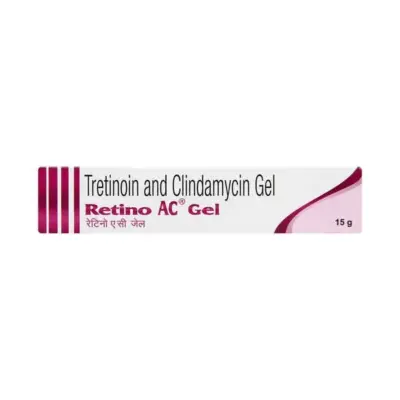
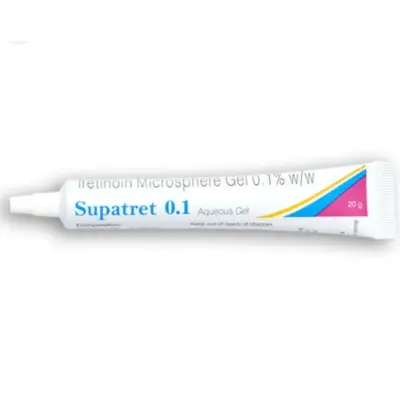
- Retino-A 0.05% Cream (Tretinoin) – Retinoid for comedonal and inflammatory acne; retinoin + salicylic acid layered for comprehensive pore-clearing therapy
- Retino-A 0.025% Cream (Tretinoin) – Lower-strength retinoid option for initiation alongside salicylic acid in sensitive or retinoid-naïve skin
- Kenacort 0.1% Cream (Triamcinolone) – Short-course anti-inflammatory adjunct for salicylic acid peeling procedures when irritation is significant
References
- National Library of Medicine – DailyMed. Salicylic Acid Topical Product Label. dailymed.nlm.nih.gov
- MedlinePlus. Salicylic Acid Topical. U.S. National Library of Medicine. medlineplus.gov
- Lebwohl M, et al. Treatment of psoriasis. Part 1: Topical therapy and phototherapy. Journal of the American Academy of Dermatology. 2001;45(4):487–498. PMID: 11568737.
- Draelos ZD. Salicylic acid in the treatment of acne. Journal of the European Academy of Dermatology and Venereology. 2008;22(Suppl 1):15–19. PMID: 18194211.
Reviews
There are no reviews yet.