Description
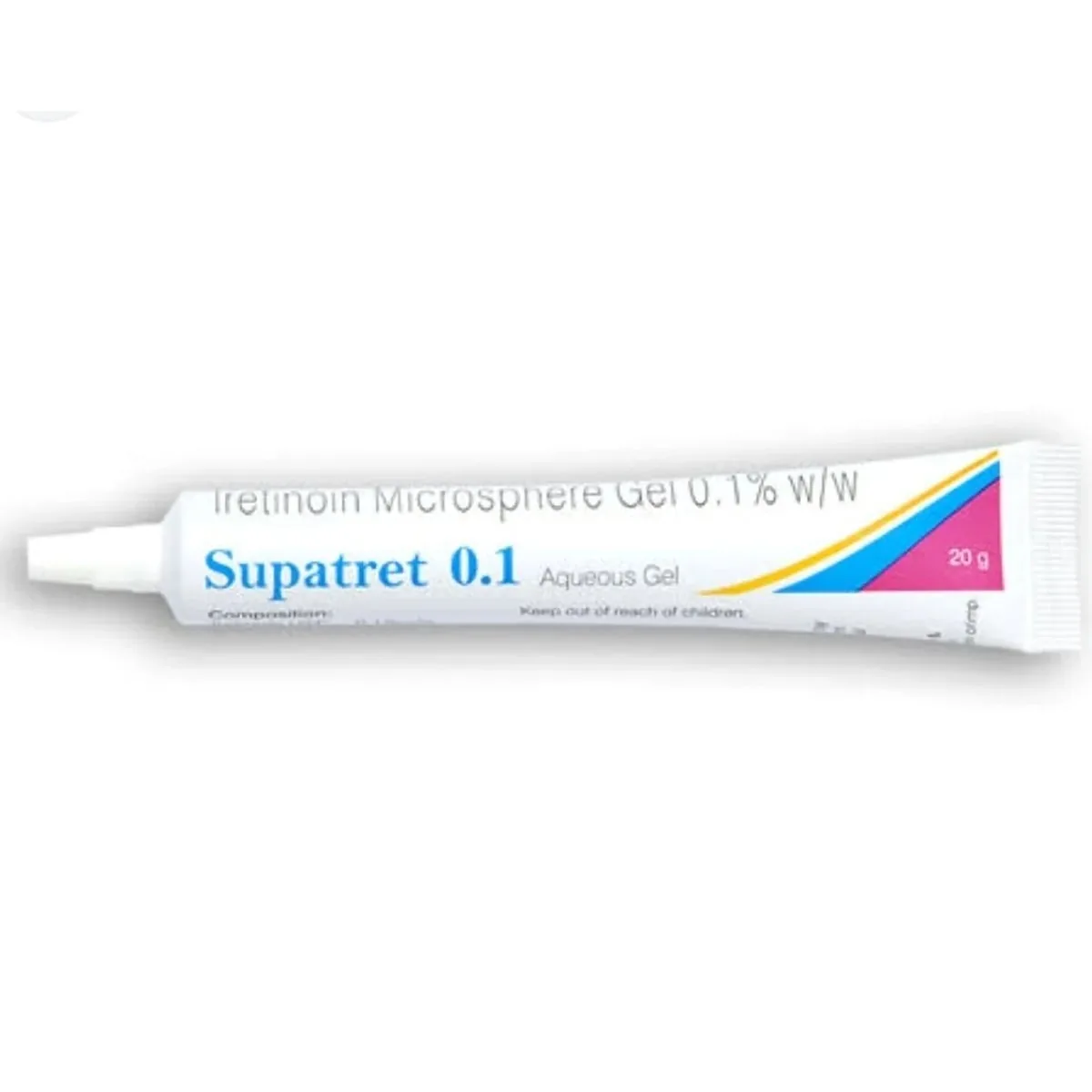
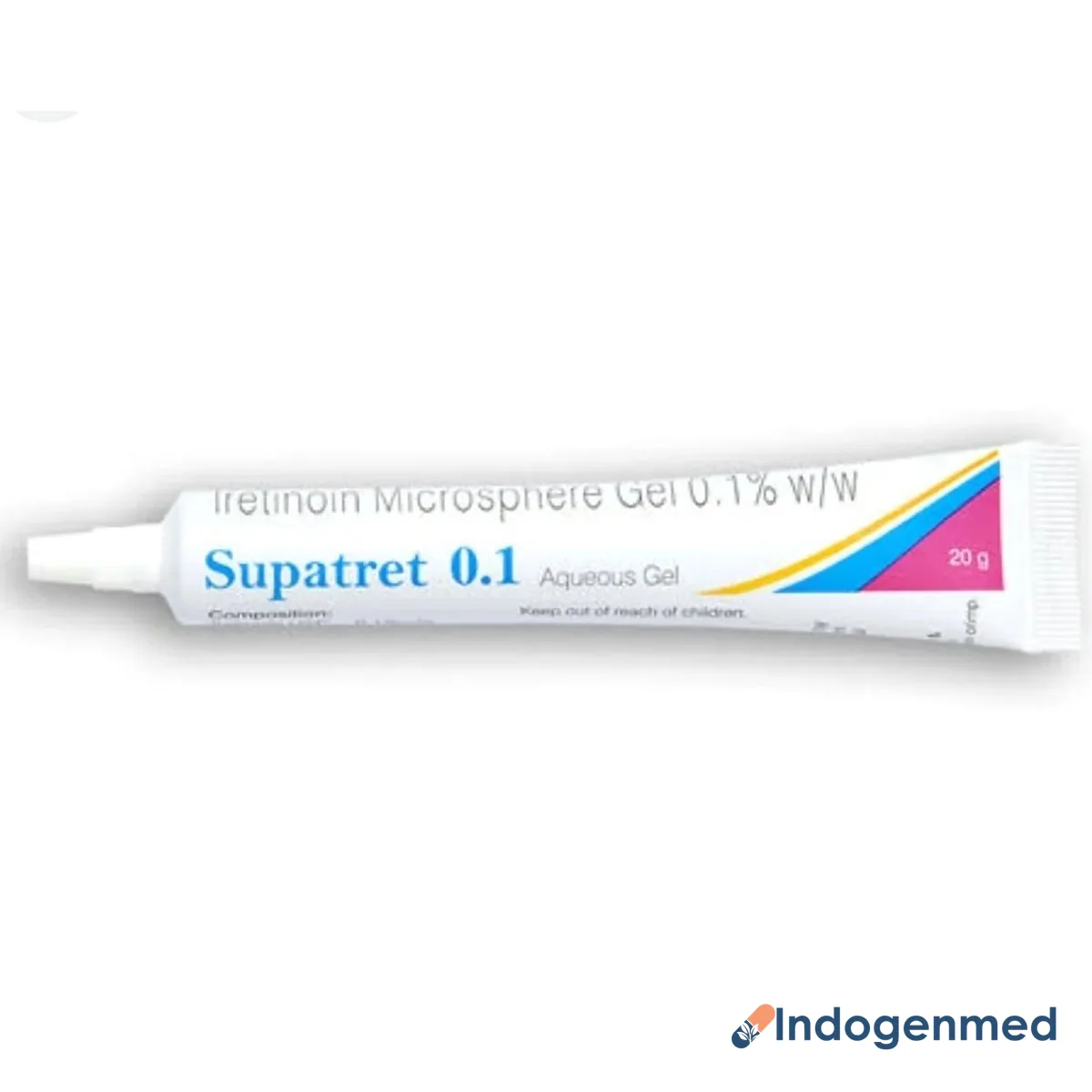
Supatret 15 Gm 0.1% Gel – Tretinoin Topical Gel for Acne
Supatret 15 Gm 0.1% Gel is a prescription topical retinoid manufactured by Cipla Ltd. Each gram of gel contains tretinoin 0.1% w/w (1 mg per gram), supplied in a 15-gram tube for topical application to the skin.
Tretinoin — also known as all-trans retinoic acid (ATRA) — is the most extensively studied and widely used topical retinoid in dermatology. The 0.1% concentration represents the highest available prescription strength of tretinoin gel and is used for acne vulgaris in patients who require maximum retinoid activity. It is the reference standard against which other topical retinoids are compared for efficacy in acne treatment.
Supatret 0.1% Gel acts at the follicular level to unclog blocked pores, suppress comedone formation, normalise abnormal skin cell turnover, and reduce the inflammatory and non-inflammatory lesions characteristic of acne. It is a cornerstone of evidence-based acne pharmacotherapy and is included in international acne management guidelines as a first-line topical treatment.
Composition
Each gram of Supatret 0.1% Gel contains:
- Tretinoin 0.1% w/w (equivalent to 1 mg tretinoin per gram of gel)
The gel base contains excipients including carbomer (polyacrylic acid) as the gelling agent, butylated hydroxytoluene (BHT) as an antioxidant stabiliser, alcohol (ethanol), and purified water. The aqueous-alcohol gel vehicle facilitates rapid, even delivery of tretinoin to the follicular opening. The gel formulation is preferred for oily and acne-prone skin due to its non-comedogenic, non-occlusive characteristics.
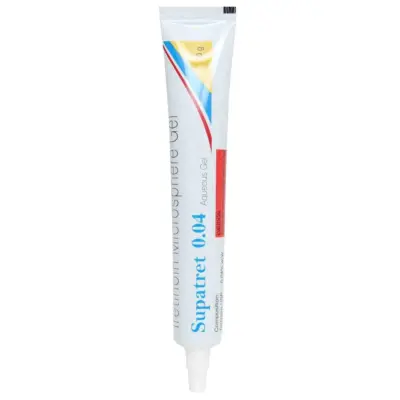
The 0.1% strength is the maximum concentration in the Supatret range. Supatret 0.04% Gel (microsphere formulation) provides an alternative lower-concentration option for patients who are tretinoin-naive or who experience significant retinoid irritation.
How Supatret Gel Works (Mechanism of Action)
Tretinoin exerts its therapeutic effects through multiple, complementary mechanisms acting on the sebaceous follicle — the site of acne pathogenesis.
Nuclear Retinoic Acid Receptor Activation
Tretinoin binds and activates nuclear retinoic acid receptors (RARs) — specifically RAR-α, RAR-β, and RAR-γ — which are ligand-activated transcription factors. The RAR-γ subtype predominates in skin. After nuclear translocation, activated RARs form heterodimers with retinoid X receptors (RXRs) and bind retinoic acid response elements (RAREs) in the promoter regions of target genes, fundamentally altering gene expression in keratinocytes and sebocytes.
Comedolytic Action (Primary Anti-Acne Mechanism)
The hallmark of tretinoin’s action in acne is its profound comedolytic effect. Under the influence of tretinoin, the follicular keratinisation pattern is normalised:
- Tretinoin promotes the differentiation of less cohesive, loosely packed corneocytes within the follicular canal
- It decreases the abnormal stickiness (cohesion) of follicular keratinocytes that causes the ductal plug characteristic of comedones
- The resulting reduction in impaction allows sebum to flow freely to the surface, preventing microcomedo formation — the earliest precursor lesion of all acne types
- Existing comedones (blackheads and whiteheads) are gradually resolved by accelerated exfoliation of the follicular contents
Keratinocyte Turnover Acceleration
Tretinoin accelerates epidermal cell turnover, thinning the compacted stratum corneum and increasing the rate at which abnormal cells are shed. This action expels existing plugged follicles and prevents new ones from forming. The accelerated turnover is also responsible for the initial peeling, redness, and dryness commonly observed during the first weeks of therapy.
Anti-Inflammatory Activity
Beyond its comedolytic properties, tretinoin exerts significant direct anti-inflammatory effects:
- Suppression of inflammatory cytokine production (IL-1α, TNF-α, IL-6) in keratinocytes and sebocytes
- Inhibition of toll-like receptor 2 (TLR2) signalling — the innate immune pathway activated by Cutibacterium acnes (formerly Propionibacterium acnes), which drives the papule and pustule formation in inflammatory acne
- Downregulation of matrix metalloproteinases (MMPs) that contribute to post-acne scarring
These anti-inflammatory properties make tretinoin effective against both non-inflammatory lesions (comedones) and inflammatory lesions (papules, pustules), and contribute to its efficacy in preventing post-inflammatory hyperpigmentation and atrophic scarring when used early in the disease course.
Sebum Regulation
At the 0.1% concentration, tretinoin measurably suppresses sebaceous gland activity by modulating lipogenesis in sebocytes, reducing the sebum overproduction that feeds C. acnes proliferation in the follicular canal.
Indications and Uses
Primary Indication: Acne Vulgaris
Supatret 0.1% Gel is indicated for the topical treatment of acne vulgaris, including both non-inflammatory acne (open and closed comedones, blackheads, whiteheads) and inflammatory acne (papules and pustules). The 0.1% strength is particularly appropriate for:
- Patients with moderate-to-severe comedonal and inflammatory acne who have not achieved adequate response with lower tretinoin concentrations (0.025%, 0.04%, 0.05%)
- Patients requiring step-up therapy due to insufficient improvement on lower-strength retinoids after 8–12 weeks of consistent use
- Adults with persistent or treatment-resistant acne requiring maximum retinoid effect
- Patients in whom a gel formulation is preferred over cream due to oilier skin type or concerns about comedogenicity
Off-Label Uses (Dermatologist-supervised)
Under dermatological supervision, tretinoin 0.1% has evidence supporting its use in:
- Post-inflammatory hyperpigmentation (PIH) — accelerated keratinocyte turnover disperses melanin deposits, fading dark marks left after acne lesions resolve
- Acne scarring prevention — early and consistent use reduces scar formation by modulating matrix metalloproteinase activity
- Fine lines and photodamage — tretinoin 0.1% is the most studied concentration for photoaging reversal; stimulates collagen I synthesis and promotes dermal remodelling
- Keratosis pilaris and mild ichthyosis — normalises follicular keratinisation
All off-label uses require physician supervision due to the potency of the 0.1% formulation.
Dosage and Administration
Always follow your dermatologist’s or prescribing physician’s instructions. The following are general guidelines.
Standard Dosage
- Apply a small, pea-sized amount (approximately 0.5 cm ribbon) to cover the entire acne-affected area of the face or body — once daily, in the evening before bedtime
- Applying more than a pea-sized amount per application does not increase efficacy and significantly increases the risk of irritation, peeling, and photosensitivity
- Use once daily only; do not apply twice daily unless specifically directed by your doctor
Application Technique
- Cleanse the face gently with a mild, non-irritating cleanser and pat completely dry — wait at least 20–30 minutes before applying Supatret, as applying to damp skin significantly increases absorption, irritation, and the risk of adverse effects
- Apply a thin layer evenly across the acne-affected areas using clean fingertips; avoid the eyes, nostrils, mouth, and lips
- If contact with eyes, nostrils, or mucous membranes occurs, flush immediately with water
- Wash hands thoroughly after application
- Apply sunscreen (SPF 30+) every morning — tretinoin 0.1% substantially increases photosensitivity; unprotected sun exposure will cause significant burning and may worsen hyperpigmentation
- Avoid applying to broken, eczematous, sunburned, or windburned skin
- Do not apply under occlusive dressings or wraps
Initiation Protocol (Minimising Retinoid Irritation)
The 0.1% concentration is the strongest available and may cause significant irritation at initiation, particularly in tretinoin-naive patients. A gradual introduction protocol is strongly recommended:
- Weeks 1–2: Apply every other night (alternate nights)
- Weeks 3–4: If tolerating well (mild dryness only, no significant peeling or discomfort), increase to 5 nights per week
- Week 5 onwards: Progress to nightly application as tolerated
- Patients who have used lower-strength tretinoin (0.025%–0.05%) successfully may tolerate the 0.1% strength more quickly but should still introduce it gradually
Duration of Treatment
Improvement in acne typically begins at 4–8 weeks, with significant clearing seen at 12 weeks. Full benefit may require 16–24 weeks of consistent nightly use. An initial “purging” phase (temporary worsening of acne during the first 2–6 weeks) is normal — this represents the accelerated expulsion of subclinical microcomedones and should not be interpreted as treatment failure. Continue use through the purging phase under physician guidance.
Special Populations
- Children under 12 years: Not recommended; safety and efficacy in paediatric acne at the 0.1% strength have not been established
- Adolescents (12–17 years): May be used under dermatological supervision; consider starting with the 0.04% microsphere formulation first
- Elderly: Use with caution; skin may be thinner and more susceptible to irritation and photosensitivity; begin with alternate-night application
- Pregnancy: Contraindicated — tretinoin is a known teratogen in animal studies and belongs to the same chemical class as systemic retinoids (isotretinoin). Although systemic absorption from topical application is minimal, tretinoin must not be used during pregnancy or if pregnancy is planned. Effective contraception is required during treatment in women of childbearing potential.
- Breastfeeding: Avoid — safety data are insufficient; systemic absorption, though low, cannot be excluded
- Renal/hepatic impairment: No dose adjustment required for topical use; systemic exposure is minimal
Pharmacokinetics
Tretinoin is an endogenous retinoid — the active form of vitamin A — that is naturally present in human plasma at low concentrations. This complicates the measurement of exogenous tretinoin absorption from topical formulations.
- Absorption: Minimal — approximately 1–2% of the applied dose is absorbed systemically through intact skin. The aqueous-alcohol gel vehicle enhances local follicular penetration without substantially increasing systemic bioavailability.
- Distribution: Tretinoin circulates in plasma bound to plasma proteins. Endogenous plasma tretinoin concentrations are approximately 1–2 ng/mL; topical application of 0.1% gel produces minimal measurable elevation above this baseline.
- Metabolism: Tretinoin is extensively metabolised in the skin and liver. Major metabolic pathways include isomerisation to 13-cis-retinoic acid (isotretinoin), oxidation via CYP26 enzymes, and glucuronide conjugation. These pathways limit systemic accumulation.
- Elimination half-life: Plasma half-life after topical application is approximately 0.5–2 hours, consistent with rapid local metabolism and endogenous clearance pathways
- Excretion: Metabolites excreted in urine and faeces; renal and biliary routes
The low systemic exposure from topical application explains the excellent local efficacy with generally low systemic risk, distinguishing tretinoin gel from systemic oral retinoids such as isotretinoin.
Side Effects
The majority of side effects from Supatret 0.1% Gel are local skin reactions, expected as a consequence of retinoid-driven keratinocyte turnover. They are most pronounced during the first 2–6 weeks of treatment and diminish as the skin adapts.
Very Common (affecting more than 1 in 10 users, especially at initiation)
- Retinoid dermatitis — dryness, peeling, flaking of treated skin; the most frequent and expected reaction at the 0.1% strength
- Erythema (skin redness and warmth at the application site)
- Stinging and burning sensation after application, particularly on sensitive areas or if skin was not fully dry before applying
- Pruritus (itching at the application site)
- Photosensitivity — increased susceptibility to sunburn; unprotected sun exposure causes rapid, intense burning and blistering
Common
- Temporary worsening of acne (“purging”) during the first 2–6 weeks — a normal and expected phase of treatment
- Skin irritation at application site — tightness, scaling
- Temporary hyperpigmentation or hypopigmentation at the application site, particularly in patients with darker skin tones; usually resolves after discontinuation
Uncommon / Rare
- Blistering, crusting, or severe skin peeling — indicates over-application or applying to damp skin; reduce frequency
- Allergic contact dermatitis (rare) — characterised by worsening irritation, intense redness, and swelling disproportionate to expected retinoid effects; discontinue and consult physician
- Eyelid swelling if the gel migrates close to the periorbital area
Managing Side Effects
- Apply a fragrance-free, non-comedogenic moisturiser in the morning to counteract dryness and peeling
- Reduce application frequency to every other night if irritation is severe
- Avoid concurrent use of other potentially irritating topical agents (AHAs, BHAs, benzoyl peroxide at high concentrations, other retinoids)
- Use a broad-spectrum SPF 50+ sunscreen daily — this is not optional at the 0.1% concentration
- Persistent severe irritation, blistering, or allergic-type reactions warrant discontinuation and medical review
Precautions and Warnings
Sun Exposure and Photosensitivity
Tretinoin 0.1% gel significantly increases photosensitivity. During treatment, unprotected sun exposure must be avoided. Apply a broad-spectrum sunscreen (SPF 30 minimum, SPF 50 recommended) every morning to all treated areas. Wear protective clothing and limit time in direct sunlight. Patients who experience sunburn should discontinue tretinoin and allow complete healing before restarting at reduced frequency. Use of other photosensitising agents (fluoroquinolone antibiotics, thiazide diuretics, some NSAIDs) should be reported to the prescribing physician.
Avoid Eyes and Mucous Membranes
Keep Supatret Gel away from the eyes, lips, nostrils, and angles of the nose. If contact occurs, flush immediately with water. Gel migration into the periorbital region causes stinging, irritation, and eyelid swelling.
Do Not Use on Irritated or Compromised Skin
Do not apply to skin with active eczema, dermatitis, rosacea, sunburn, windburn, cuts, or abrasions. Tretinoin on compromised skin causes exaggerated irritation and barrier disruption. Wait until these conditions have fully resolved before resuming application.
Interactions with Other Topical Products
Avoid applying products containing alcohol, astringents, spice or lime fragrances, medicated or abrasive soaps, and other keratolytic or drying agents concurrently, as these significantly potentiate tretinoin irritation. Benzoyl peroxide and tretinoin degrade each other when applied simultaneously — if using both, apply benzoyl peroxide in the morning and tretinoin at night, on completely dry skin.
Pregnancy and Contraception
Tretinoin belongs to vitamin A derivatives. While systemic absorption from topical gel is low, the drug belongs to the same pharmacological class as isotretinoin — a known teratogen. Do not use Supatret 0.1% Gel during pregnancy. Women of childbearing potential should use reliable contraception during treatment. Discontinue immediately if pregnancy occurs and consult your physician.
Skin Colour and Hyperpigmentation
Patients with darker skin tones (Fitzpatrick types IV–VI) are at higher risk of post-inflammatory hyperpigmentation during the purging phase. Strict daily photoprotection is especially important in this population to prevent worsening pigmentation from sun exposure during active retinoid irritation. Initiating at alternate-night application reduces this risk.
Drug Interactions
- Benzoyl peroxide: Mutual oxidative degradation occurs when mixed. Apply separately — benzoyl peroxide in the morning, tretinoin gel at night. Using both in the same application destroys the efficacy of both agents.
- Salicylic acid and AHA/BHA exfoliants: Combined use amplifies keratolytic activity and significantly increases irritation and barrier disruption. Use on separate days or under dermatological guidance only.
- Other topical retinoids (adapalene, tazarotene, retinol serums): Do not combine; additive retinoid irritation with no additional therapeutic benefit.
- Photosensitising systemic drugs (fluoroquinolone antibiotics, sulfonamides, thiazide diuretics, St. John’s Wort): Increases photosensitivity; use with strict sun protection and advise prescribing physician.
- Medicated or abrasive cleansers: Potentiate tretinoin skin barrier disruption; switch to a mild non-medicated cleanser during Supatret use.
- Vitamin A supplements or foods high in vitamin A: Excessive systemic retinoid exposure from dietary or supplement sources may increase local or systemic side effects; consult your physician if taking high-dose vitamin A supplements.
Contraindications
Supatret 0.1% Gel must NOT be used by:
- Patients with known hypersensitivity to tretinoin, other retinoids, or any component of the gel formulation (including BHT, carbomer, or ethanol)
- Pregnant women or women planning pregnancy (teratogenic risk)
- Patients with active eczema, rosacea, perioral dermatitis, or severe skin irritation — tretinoin is contraindicated on actively inflamed or compromised skin
- Application near the eyes or on mucous membranes
- Children under 12 years of age
Storage Instructions
- Store at room temperature, below 25°C; protect from freezing
- Keep the tube in a cool, dry place, away from direct sunlight and heat sources — tretinoin is light-sensitive and degrades with UV exposure
- Keep the tube tightly capped when not in use; ethanol evaporation from the gel vehicle can alter the formulation
- Do not refrigerate unless specifically instructed; temperature extremes alter the gel consistency
- Keep out of reach of children
- Use within the period indicated on the label after first opening
Related Products
Patients managing acne or skin concerns may also find these IndoGenMed product pages relevant:
- Supatret 20 Gm 0.04% Gel (Tretinoin 0.04% Microsphere) – Lower-Strength Tretinoin for Tretinoin-Naive Patients
- Roza 30 Gm Gel (Azelaic Acid) – Topical Acne and Rosacea Treatment
- Skin Lite Cream 20 Gm – Hydroquinone, Tretinoin and Mometasone Combination for Hyperpigmentation
- Roxid 150 Tablet (Roxithromycin 150 mg) – Macrolide Antibiotic for Inflammatory Acne
- Seczol DS 1000 Mg Tablet (Secnidazole) – Antiprotozoal and Antibacterial Agent
References
- U.S. National Library of Medicine, DailyMed. Tretinoin Gel, 0.1% — Full Prescribing Information (Obagi Medical Products). Available at: dailymed.nlm.nih.gov
- MedlinePlus (U.S. National Library of Medicine). Tretinoin Topical. Available at: medlineplus.gov/druginfo/meds/a682437.html
- Mayo Clinic. Tretinoin (Topical Route) — Description and Brand Names. Available at: mayoclinic.org
- U.S. Food and Drug Administration. Tretinoin Gel 0.1% (Avita Medical) — Approved Drug Products. Available at: accessdata.fda.gov
- Electronic Medicines Compendium (UK EMC). Retin-A Gel 0.1% — Summary of Product Characteristics. Available at: medicines.org.uk/emc
Reviews
There are no reviews yet.