Description
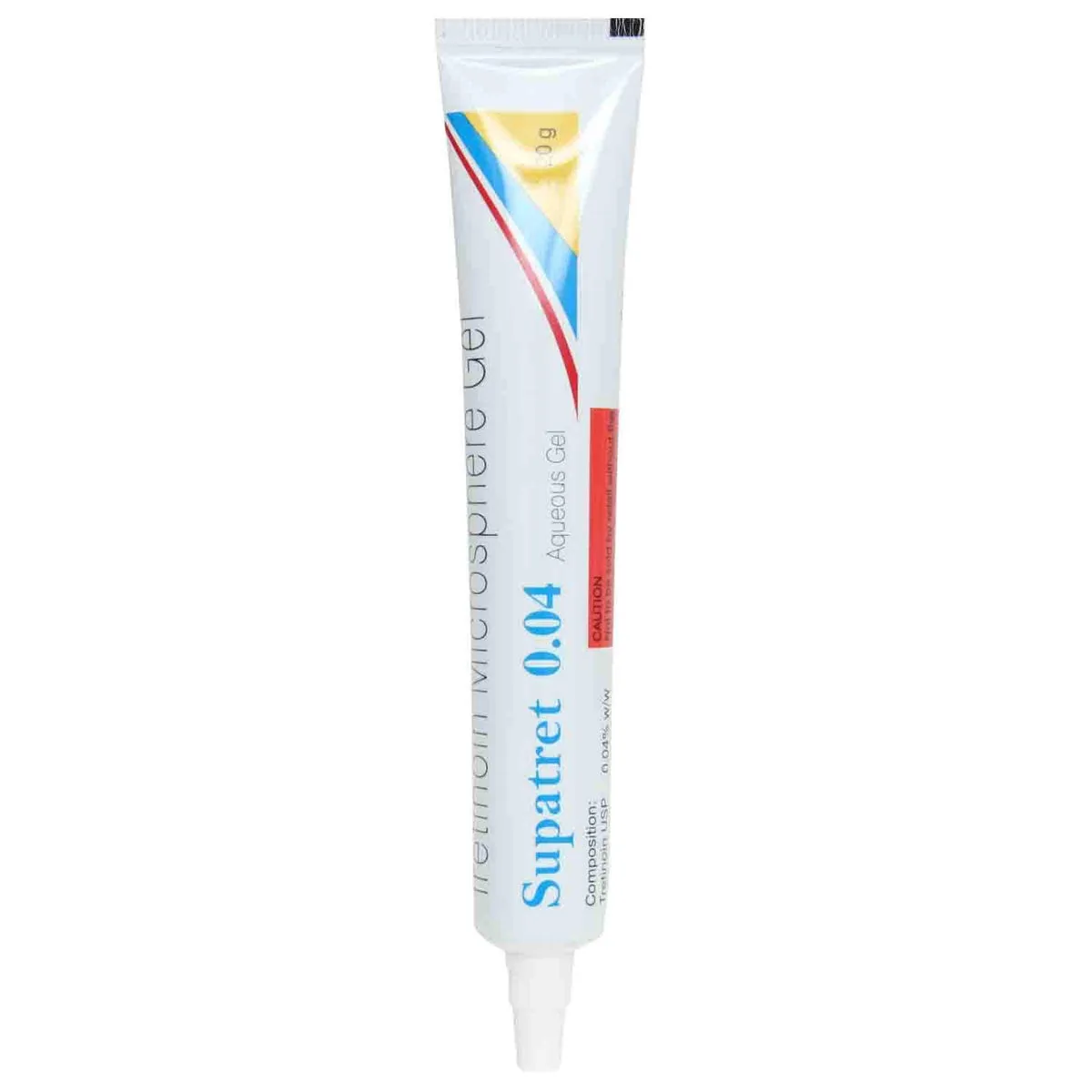
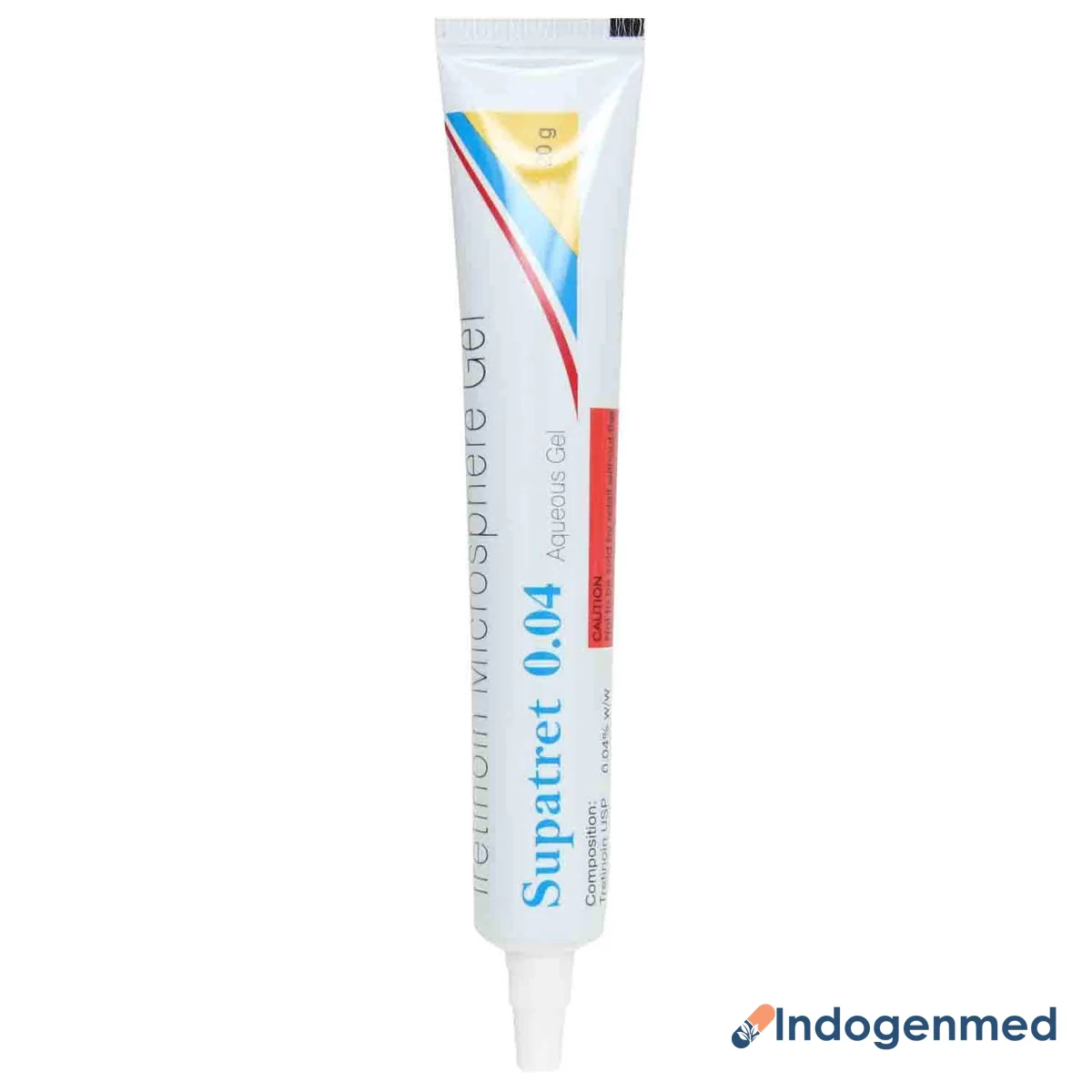
Supatret 20 Gm 0.04% Gel — Tretinoin Microsphere Gel for Acne Treatment
Supatret 20 Gm 0.04% Gel contains tretinoin 0.04% in a microsphere delivery system, formulated as a topical gel for the treatment of mild-to-moderate acne vulgaris. Manufactured by Cipla Ltd, one of India’s leading pharmaceutical companies, this product uses an advanced microsphere technology that encapsulates tretinoin within porous microspheres, releasing the active ingredient gradually onto the skin surface. This controlled-release mechanism is designed to deliver effective retinoid therapy while reducing the acute irritation that can accompany conventional tretinoin formulations.
Tretinoin (all-trans retinoic acid) is a first-generation retinoid derived from vitamin A and is considered a cornerstone of acne therapy. The 0.04% concentration in this microsphere gel represents an intermediate strength suitable for patients who require more than minimal retinoid activity but who may not tolerate higher concentrations such as the 0.1% gel. The microsphere vehicle further moderates the delivery profile, making Supatret 20 Gm 0.04% Gel an appropriate choice for both treatment-naive patients and those transitioning from milder therapies.
Composition
Each gram of Supatret 20 Gm 0.04% Gel contains:
- Tretinoin (all-trans retinoic acid) 0.04% w/w — the active pharmaceutical ingredient; a vitamin A derivative and first-generation retinoid
- Microsphere base (Microsponge® technology) — porous polymethylmethacrylate or similar polymer microspheres that encapsulate and gradually release tretinoin
- Carbomer (carbopol) — a polyacrylic acid polymer that forms the gel matrix, providing viscosity and texture
- Glycerin — a humectant that attracts moisture to the skin, helping offset potential dryness from tretinoin
- Disodium EDTA — a chelating agent that stabilises the formulation by binding trace metal ions
- BHT (butylated hydroxytoluene) — an antioxidant preservative that protects tretinoin from oxidative degradation
- Purified water — the aqueous vehicle base
The microsphere delivery system is a key differentiator of this formulation. The polymer microspheres act as reservoirs, releasing tretinoin in response to pressure and sebum contact, allowing a more sustained and uniform delivery compared to conventional cream or gel vehicles.
How Supatret 0.04% Gel Works
Tretinoin exerts its therapeutic effects through binding to and activating specific nuclear retinoic acid receptors (RAR-α, RAR-β, and RAR-γ), which are members of the steroid hormone receptor superfamily. These activated receptors function as transcription factors, binding to retinoic acid response elements (RAREs) in the promoter regions of target genes and modulating their expression. The key pharmacological actions relevant to acne treatment include:
Normalisation of Follicular Keratinisation
In acne, abnormal keratinisation of the follicular epithelium leads to retention of keratinocytes and formation of the microcomedo — the precursor lesion to all acne types. Tretinoin normalises this process by reducing the cohesiveness of follicular keratinocytes, accelerating their turnover, and promoting the orderly shedding of the follicular epithelium. This comedolytic action prevents the formation of new microcomedones and encourages the expulsion of existing ones.
Reduction of Microcomedone Formation
By acting on the follicular epithelium before visible comedones form, tretinoin addresses acne at its earliest pathological stage. Regular use results in a gradual reduction in the density of microcomedones, translating over weeks and months to fewer open comedones (blackheads), closed comedones (whiteheads), papules, and pustules.
Anti-inflammatory Activity
Tretinoin possesses significant anti-inflammatory properties independent of its comedolytic effects. It suppresses the production of pro-inflammatory cytokines including interleukin-1 alpha (IL-1α), tumour necrosis factor-alpha (TNF-α), and interleukin-6 (IL-6). Additionally, tretinoin downregulates Toll-like receptor 2 (TLR2) expression on keratinocytes and monocytes, thereby reducing the inflammatory response triggered by Cutibacterium acnes (formerly Propionibacterium acnes) colonisation.
Penetration Enhancement for Combination Therapies
By thinning and normalising the stratum corneum, tretinoin enhances the penetration of co-applied topical agents such as clindamycin, benzoyl peroxide (applied separately to avoid degradation), and niacinamide. This “vehicle effect” is a clinically important rationale for including tretinoin in combination acne regimens.
The Microsphere Advantage
The microsphere encapsulation in Supatret 0.04% Gel moderates the release kinetics of tretinoin. Rather than immediate full-dose contact with the skin, the drug is released gradually over hours in response to pressure and lipid contact. Studies have shown that microsphere tretinoin formulations maintain efficacy comparable to conventional formulations while significantly reducing the incidence and severity of retinoid dermatitis (dryness, peeling, erythema, burning), which is particularly relevant during the initiation phase of therapy.
Uses and Indications
Primary Indication
- Acne vulgaris (mild to moderate): Supatret 0.04% Gel is indicated for the topical treatment of acne vulgaris, particularly comedonal and mild inflammatory acne. It is suitable for facial acne and can be used on the back and chest under medical supervision.
Off-Label and Adjunctive Uses
- Post-inflammatory hyperpigmentation (PIH): By accelerating keratinocyte turnover, tretinoin promotes the clearance of melanin-laden cells and reduces the appearance of dark marks left after acne lesions resolve.
- Fine lines and photoaging: Lower-concentration tretinoin preparations, including 0.04%, have been studied for their beneficial effects on fine lines, skin texture, and mild photoaging, though the 0.025% or 0.05% concentrations are more commonly studied in this context.
- Prevention of new acne scarring: By resolving inflammatory lesions more rapidly and reducing the formation of new comedones, tretinoin can help limit the acne scarring that results from prolonged inflammation.
- Keratosis pilaris (adjunctive): Tretinoin’s keratolytic and keratinisation-normalising properties may benefit the rough follicular papules of keratosis pilaris when used off-label.
Dosage and How to Apply
Standard Dosage
Apply a thin layer of Supatret 20 Gm 0.04% Gel once daily in the evening, preferably at bedtime. Apply to the entire affected area rather than to individual lesions — a technique known as “field treatment” that addresses subclinical microcomedones across the acne-prone zone.
Application Protocol
- Cleanse: Wash the affected area with a mild, non-comedogenic cleanser. Rinse thoroughly and pat dry gently.
- Wait: Allow the skin to dry completely for 20–30 minutes before applying the gel. Applying to damp skin significantly increases absorption and risk of irritation.
- Apply: Squeeze a pea-sized amount (approximately 0.5 g) of gel and spread it evenly across the affected area using fingertips. Avoid the eyes, nostrils, mouth, and mucous membranes.
- Wash hands: Wash hands thoroughly after application to avoid inadvertent transfer to other areas or the eyes.
Initiation Protocol (Reducing Initial Irritation)
- Weeks 1–2: Apply on alternate nights (every other night) to allow the skin to acclimatise
- Weeks 3–4: If tolerated, increase to 5 nights per week
- Week 5 onwards: Progress to nightly application as tolerated
The microsphere formulation typically permits a more rapid progression through this initiation schedule compared to conventional tretinoin gels or creams.
Special Populations
- Pregnancy: Tretinoin is classified as Pregnancy Category C (US) and is generally considered contraindicated during pregnancy due to potential teratogenicity, although systemic absorption from topical application is minimal (approximately 1–2%). Patients who may become pregnant should use reliable contraception. Consult a healthcare provider before use.
- Breastfeeding: Use with caution; avoid applying to the breast area if breastfeeding.
- Paediatric patients under 12 years: Safety and efficacy have not been established; not generally recommended.
- Elderly patients: No specific dose adjustment required, though elderly skin may be more susceptible to irritation.
Side Effects
Very Common (≥1 in 10 patients)
- Skin dryness and peeling (desquamation) — especially during the first 4–6 weeks
- Erythema (redness) at the site of application
- Burning or stinging sensation, particularly in the first weeks of use
- Pruritus (skin itching)
Common (1 in 10 to 1 in 100 patients)
- Increased skin sensitivity to sunlight (photosensitivity)
- Temporary worsening of acne during the first 2–6 weeks (“tretinoin purge”) as microcomedones are expunged
- Skin discomfort or tightness
- Temporary hyperpigmentation or hypopigmentation at the application site
Uncommon (1 in 100 to 1 in 1,000 patients)
- Allergic contact dermatitis
- Blistering or crusting of the skin
- Oedema (swelling) at the application site
Note: The microsphere formulation of tretinoin 0.04% is associated with a lower incidence and severity of local irritation reactions compared to conventional tretinoin gel formulations at equivalent concentrations, which is a key advantage of this technology.
Precautions and Warnings
- Sun protection is essential: Tretinoin significantly increases photosensitivity. Use a broad-spectrum SPF 30+ sunscreen every morning during treatment. Avoid prolonged sun exposure and use protective clothing.
- Avoid during the initial purge phase: Some patients experience a temporary increase in acne lesions during the first 2–6 weeks. This is a normal part of the treatment process as microcomedones are expunged. Do not discontinue treatment unless irritation is severe.
- Avoid eyes, nostrils, and mouth: Keep the gel away from mucous membranes and periorbital skin. If contact occurs, rinse thoroughly with water.
- Avoid waxing and abrasive procedures: Do not use wax epilation, dermabrasion, chemical peels, or laser treatments on tretinoin-treated skin without a healthcare provider’s guidance, as the skin is more susceptible to trauma.
- Cold and wind exposure: Tretinoin-treated skin may be more sensitive to cold and wind. Use appropriate protective measures in harsh weather.
- Eczema and rosacea: Use with caution or avoid if the patient has active eczema, rosacea, or other inflammatory skin conditions, as tretinoin may exacerbate these.
- Avoid on sunburned or windburned skin: Do not apply to areas that are acutely sunburned, irritated, or broken.
- Vitamin A supplements: Avoid taking vitamin A supplements or other retinoid products (oral or topical) concurrently to prevent additive effects and potential vitamin A toxicity.
Drug Interactions
- Benzoyl peroxide: Concurrent application of benzoyl peroxide and tretinoin may cause mutual degradation of both agents through oxidation. Apply benzoyl peroxide in the morning and tretinoin at night to avoid this interaction.
- Alpha-hydroxy acids (AHAs) and beta-hydroxy acids (BHAs): Products containing glycolic acid, lactic acid, or salicylic acid increase skin turnover and can amplify tretinoin-induced irritation. Use with caution; consider alternating days if using both.
- Other topical retinoids: Combining tretinoin with other retinoids (adapalene, tazarotene, retinol) is generally unnecessary and increases the risk of cumulative irritation.
- Photosensitising agents: Drugs or cosmetics that increase photosensitivity (fluoroquinolones, tetracyclines, thiazide diuretics, phenothiazines, certain sunscreens with PABA) should be used with caution alongside tretinoin.
- Sulphur-containing preparations: Topical sulphur products may interact with tretinoin and increase local irritation.
- Oral vitamin A supplements: Concurrent use should be avoided due to the risk of additive retinoid effects and potential systemic toxicity.
- Medicated or abrasive soaps: Harsh cleansers or scrubs used alongside tretinoin increase the risk of irritation and should be replaced with gentle, non-comedogenic alternatives.
Contraindications
- Known hypersensitivity or allergy to tretinoin, other retinoids, or any component of the formulation
- Pregnancy (or planning pregnancy) — teratogenic potential; use reliable contraception
- Active skin conditions such as eczema, seborrheic dermatitis, or perioral dermatitis in the treatment area
- Severely sunburned, abraded, or broken skin at the site of application
Storage Instructions
- Store below 25°C in a cool, dry place
- Protect from direct sunlight and heat — exposure degrades tretinoin
- Keep the tube tightly closed when not in use
- Keep out of reach of children
- Do not freeze
- Use within the period indicated on the packaging after first opening
Related Products
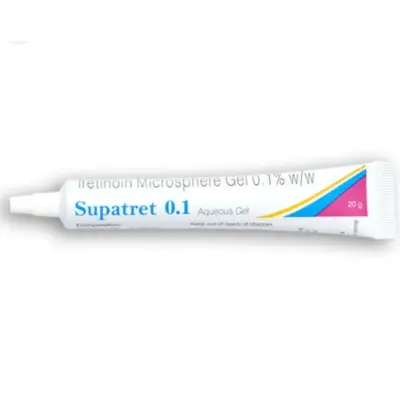
- Supatret 15 Gm 0.1% Gel — higher concentration tretinoin 0.1% gel for moderate-to-severe or treatment-resistant acne
- Roza 30 Gm Gel — metronidazole gel for inflammatory acne and rosacea
- Skin Lite Cream 20 Gm — combination hyperpigmentation cream for PIH following acne
- Roxid 150 Tablet — roxithromycin antibiotic for inflammatory acne with antibiotic sensitivity
- Seczol DS 1000 Mg Tablet — secnidazole for mixed anaerobic skin infections
References
- U.S. National Library of Medicine. DailyMed — Tretinoin Gel 0.04%. Available at: https://dailymed.nlm.nih.gov/dailymed/
- MedlinePlus (U.S. National Library of Medicine). Tretinoin Topical. Available at: https://medlineplus.gov/druginfo/meds/a682437.html
- Mayo Clinic. Tretinoin (Topical Route). Available at: https://www.mayoclinic.org/drugs-supplements/tretinoin-topical-route/description/drg-20066521
- U.S. Food and Drug Administration. Retin-A Micro (tretinoin gel) microsphere 0.04% — Prescribing Information. Available at: https://www.accessdata.fda.gov/scripts/cder/daf/
- Electronic Medicines Compendium (UK EMC). Retin-A Gel 0.025% Summary of Product Characteristics. Available at: https://www.medicines.org.uk/emc/
Reviews
There are no reviews yet.