
Description
Comprehensive Guide to Upadoz 15mg Tablet (Upadacitinib)
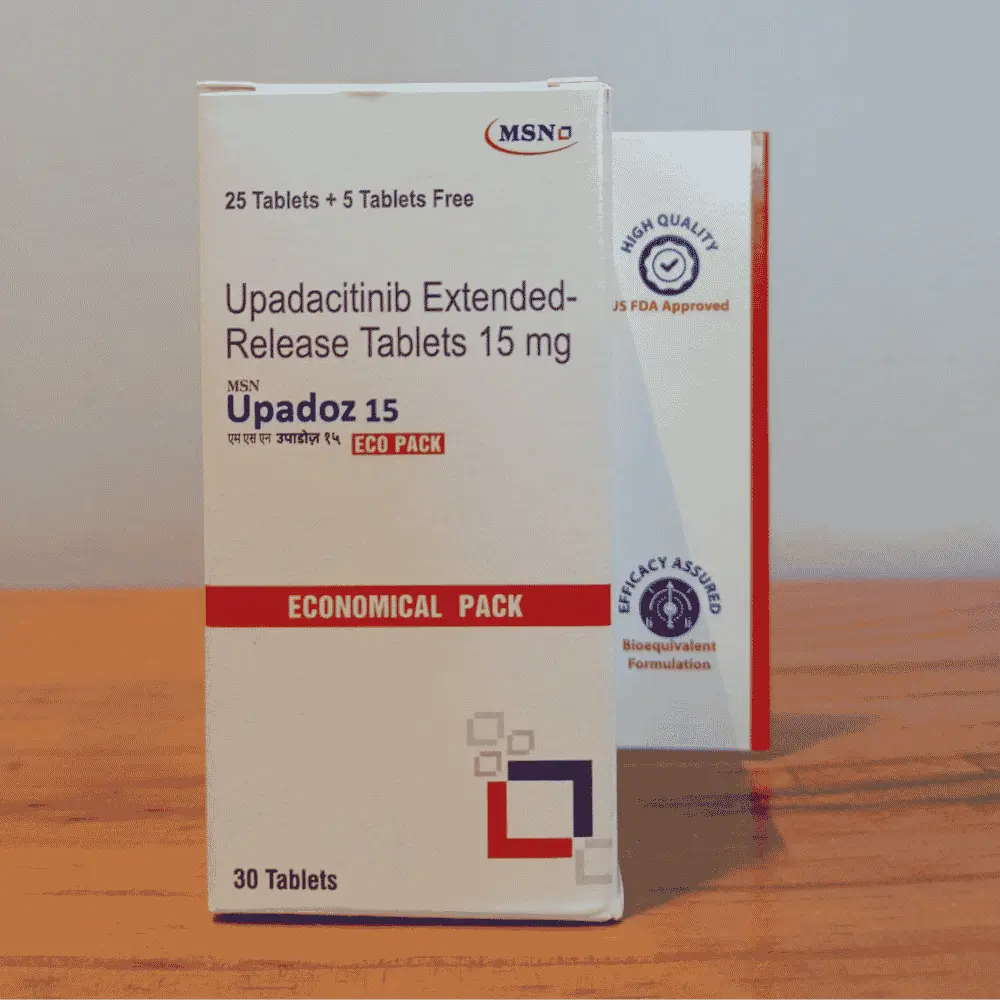
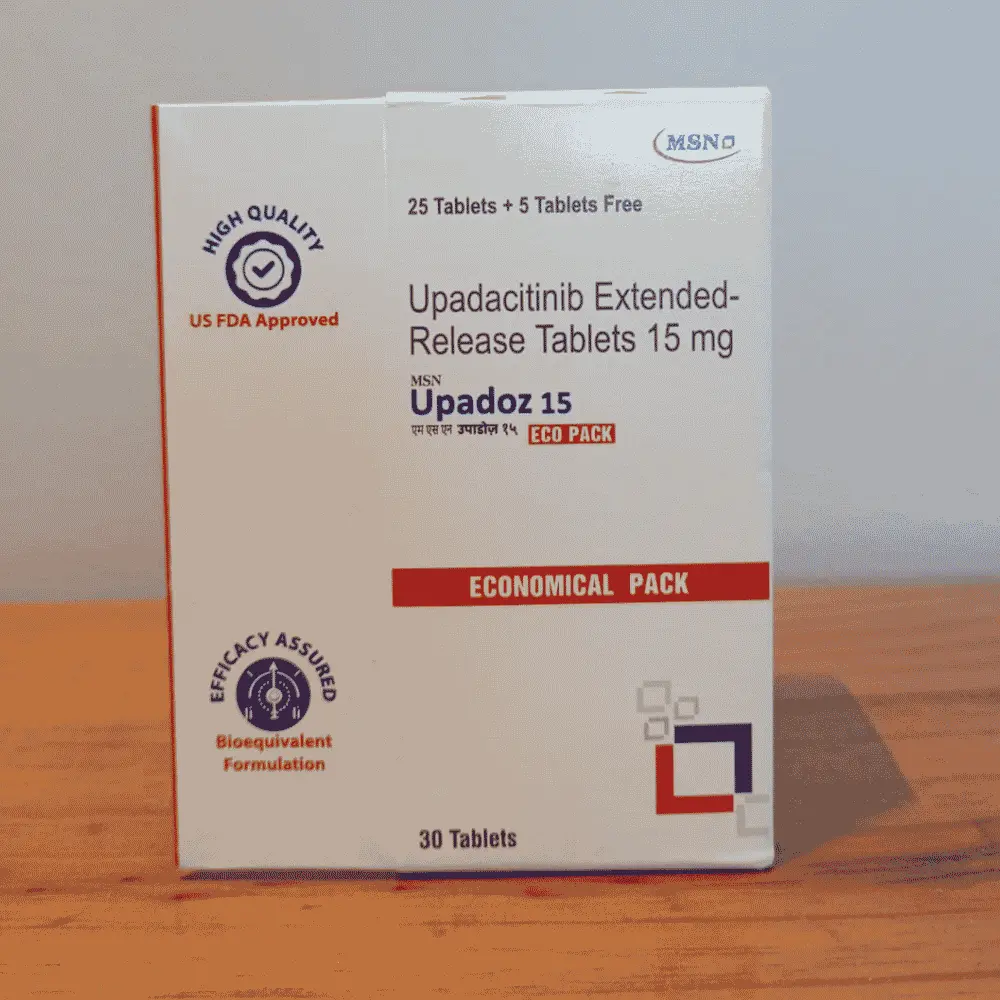
Upadoz 15mg Tablet is an oral targeted prescription medication containing:
-
Upadacitinib (as upadacitinib hemihydrate): 15 mg
Upadoz is a Janus kinase (JAK) inhibitor that has a selective and reversible inhibitory effect on the JAK1 enzyme. It is indicated for the treatment of patients with moderate to severe chronic autoimmune and immune-mediated inflammatory diseases affecting the joints, skin, and internal organs.
The drug is administered under the supervision of a rheumatologist, dermatologist, or gastroenterologist to adult and adolescent patients.
It differs from conventional immunosuppressive treatments and monoclonal antibody therapies targeting a single cytokine by inhibiting intracellular signaling pathways. This helps to block the development of chronic inflammation and destruction of tissues typical of many autoimmune diseases.
Quick Product Fact Sheet
| Feature | Details |
| Brand Name | Upadoz 15mg Tablet |
| Active Ingredient | Upadacitinib (15 mg) |
| Therapeutic Class | Disease-Modifying Antirheumatic Drug (targeted synthetic DMARD) |
| Pharmacological Class | Selective Janus Kinase-1 (JAK1) Inhibitor |
| Dosage Form | Extended-release film-coated oral tablet |
| Standard Adult Dose | One 15mg tablet taken orally once daily |
| Dietary Rule | Can be taken with or without food |
| Mandatory Pre-Screening | Tuberculosis (TB) testing, Hepatitis B/C serology, and complete blood count |
How Upadoz 15 mg Works
In healthy individuals, immune signaling relies on chemical messengers called cytokines (such as interleukins and interferons) to coordinate responses against infections. In autoimmune diseases, these cytokines are produced excessively, binding to cell surface receptors and triggering chronic, destructive inflammation.
Many of these cytokine receptors rely on an intracellular signaling pathway known as the JAK-STAT pathway (Janus Kinase-Signal Transducer and Activator of Transcription).
[Pro-inflammatory Cytokines Bind to Cell Surface Receptor]
                           │
                           ▼
           [JAK Enzymes Pair & Phosphorylate]
                           │
         [UPADOZ (Upadacitinib 15mg) STEPS IN]
    • Selectively binds to and blocks the JAK1 enzyme
    • Prevents phosphorylation and STAT activation
                           │
                           ▼
    [Halts STAT Dimerization & Nuclear Translocation]
                           │
                           ▼
  [Shuts Down Inflammatory Gene Transcription & Tissue Damage]
The Selective JAK1 Advantage
The human body utilizes four related JAK enzymes: JAK1, JAK2, JAK3, and TYK2.
-
Upadacitinib was chemically engineered to exhibit greater biochemical selectivity for JAK1 over JAK2, JAK3, and TYK2.
-
By selectively inhibiting JAK1, Upadoz blocks key drivers of chronic inflammation (including IL-6, IFN-gamma, IL-2, and IL-4).
-
Relative sparing of JAK2 minimizes interference with erythropoietin signaling, reducing the depth of bone marrow suppression and severe anemia often seen with older, non-selective first-generation pan-JAK inhibitors.
Approved Medical Uses
Upadoz 15mg Tablet is indicated for patients who have had an inadequate response or intolerance to one or more disease-modifying antirheumatic drugs (DMARDs) or tumor necrosis factor (TNF) blockers across several chronic inflammatory conditions:
-
Rheumatoid Arthritis (RA): For adults with moderate-to-severe active rheumatoid arthritis to reduce signs and symptoms, induce clinical remission, and inhibit structural joint damage progression.
-
Psoriatic Arthritis (PsA): For adults with active psoriatic arthritis to reduce joint tenderness, swelling, and concurrent skin psoriasis.
-
Ankylosing Spondylitis (AS) & Non-Radiographic Axial Spondyloarthritis (nr-axSpA): For adults with active disease to decrease spinal pain, stiffness, and inflammation
-
Atopic Dermatitis (Eczema): For adults and adolescents (12 years of age and older, weighing at least 40 kg) with moderate-to-severe eczema not adequately controlled by topical prescription treatments.
-
Ulcerative Colitis (UC) & Crohn’s Disease (CD): Used as maintenance therapy (15 mg once daily) following clinical response achieved with higher induction dosing regimens.
Standard Dosage and How to Take
Upadoz 15mg must be taken strictly as prescribed by your treating specialist.
Standard Administration Schedule
-
Standard Daily Dose: One 15mg tablet taken orally once daily.
-
With or Without Food: Can be taken with or without food. Taking it with a meal may help reduce mild initial nausea.
-
Consistency: Take your dose at the exact same time every day to maintain steady 24-hour drug concentrations.
Administration Rules for Extended-Release Tablets
-
Swallow Whole: Upadoz 15mg is an extended-release formulation designed to release medicine slowly throughout the day. Do not chew, crush, break, split, or dissolve the tablet. Chewing or crushing breaks the extended-release membrane, releasing the full dose instantly into your stomach (dose-dumping), increasing toxicity risks.
-
Swallow with Water: Ingest with a full glass of water.
-
Missed Dose Protocol: If you miss a dose, take it as soon as you remember that day. If you do not remember until the next day, skip the missed tablet and resume your normal once-daily schedule. Never take two tablets on the same day to make up for a missed dose.
Potential Side Effects & Clinical Management
Because Upadoz modulates internal immune signaling, patients require regular clinical observation.
Common Side Effects
-
Upper Respiratory Tract Infections: Common cold, sore throat, sinus congestion, or cough.
-
Digestive Symptoms: Mild nausea, abdominal discomfort, or diarrhea.
-
Laboratory Shifts: Mild elevations in liver enzymes (ALT, AST), elevated creatine phosphokinase (CPK), or elevations in blood lipids (cholesterol).
-
Skin Symptoms: Mild acne or folliculitis (especially common in atopic dermatitis patients).
Serious Warnings & Class Precautions (Boxed Warnings)
-
Serious Infections: By dampening immune responses, Upadoz increases vulnerability to serious bacterial, fungal, and viral infections. Watch for fever, chills, persistent cough, or shortness of breath.
-
Reactivation of Latent Infections (Herpes Zoster & TB): Shingles (Herpes Zoster) reactivation is significantly elevated with JAK inhibitors. Patients must also be screened and treated for latent tuberculosis before starting therapy.
-
Major Adverse Cardiovascular Events (MACE): Increased risks of heart attack, stroke, and cardiovascular death have been observed with JAK inhibitors, especially in individuals 50 years of age or older with at least one cardiovascular risk factor or smoking history.
-
Thrombosis (Blood Clots): Deep vein thrombosis (DVT) and pulmonary embolism (PE) can occur. Report sudden leg pain, swelling in one calf, sudden shortness of breath, or sharp chest pain immediately.
-
Malignancies: Lymphoma, non-melanoma skin cancer, and other solid tumors have been reported with JAK inhibitor therapy. Periodic dermatologic skin checks are recommended.
-
Gastrointestinal Perforations: Increased risk in patients with a history of diverticulitis or concurrent use of NSAIDs or corticosteroids.
Precautions & Medical Monitoring
Physicians follow a structured laboratory schedule before and during Upadoz therapy:
| Monitoring Parameter | Baseline Evaluation | Ongoing Frequency | Purpose |
| Tuberculosis Screening (IGRA / TST) | Mandatory before initiation | Annually if in high-risk environments | Identifies latent TB before immune modulation starts. |
| Complete Blood Count (CBC) | Mandatory | Month 1, Month 3, then every 3 months | Monitors for low neutrophils (neutropenia), low lymphocytes, and anemia. |
| Liver Function Tests (ALT, AST, Bilirubin) | Mandatory | Month 1, Month 3, then periodic | Detects drug-induced transaminase elevations. |
| Lipid Profile (Fasting Cholesterol & Triglycerides) | Mandatory | Week 8 to 12 after initiation | Monitors for elevations in LDL and HDL cholesterol. |
| Hepatitis B & C Serology | Mandatory before initiation | As clinically indicated | Screens for active or occult viral hepatitis reactivation. |
Drug Interactions & Dietary Precautions
Upadacitinib is metabolized primarily by the liver enzyme CYP3A4.
-
Grapefruit & Grapefruit Juice: Strictly avoid grapefruit and grapefruit juice. Grapefruit inhibits intestinal CYP3A4, causing upadacitinib blood levels to rise significantly, which increases the risk of severe infections and toxicities.
-
Strong CYP3A4 Inducers (Rifampin, Carbamazepine, Phenytoin, St. John’s Wort): These accelerate the breakdown of upadacitinib, significantly reducing blood concentrations and leading to treatment failure. Co-administration is not recommended.
-
Strong CYP3A4 Inhibitors (Ketoconazole, Clarithromycin, Itraconazole): These slow down upadacitinib clearance, raising drug levels. Use with caution.
-
Other Immunosuppressants & Biologics: Combining Upadoz with biologic DMARDs (e.g., adalimumab, infliximab, etanercept) or potent immunosuppressants (like azathioprine or cyclosporine) is not recommended due to cumulative risks of severe immunosuppression.
-
Live Vaccines: Avoid live vaccines (such as MMR, yellow fever, or oral typhoid) immediately prior to and during treatment. Inactivated vaccines (like the shingles recombinant vaccine or flu shot) are recommended prior to starting therapy.
Special Population Guidance
| Subpopulation | Clinical Assessment & Prescribing Directives |
| Pregnancy (Strictly Unsafe) | Upadoz can cause embryo-fetal harm and birth defects based on animal studies. Females of reproductive potential must use effective contraception during treatment and for at least 4 weeks after the final dose. |
| Lactation (Contraindicated) | Avoid breastfeeding during treatment and for at least 6 days after the final dose, as upadacitinib can pass into milk and harm the infant. |
| Cardiovascular Risk / Smokers | Use only if no suitable treatment alternatives exist in patients aged 50 years or older with cardiovascular risk factors or who are current/past smokers. |
| Kidney Disease | No dosage adjustment is needed for mild or moderate kidney impairment. For severe renal impairment, consultation with a specialist is required. |
| Liver Disease | Safe in mild or moderate liver disease (Child-Pugh Class A or B). Not recommended for patients with severe liver impairment (Child-Pugh Class C). |
| Pediatric Use | Approved for adolescents aged 12 years and older (weighing at least 40 kg) specifically for atopic dermatitis. |
Storage and Handling Protocols
-
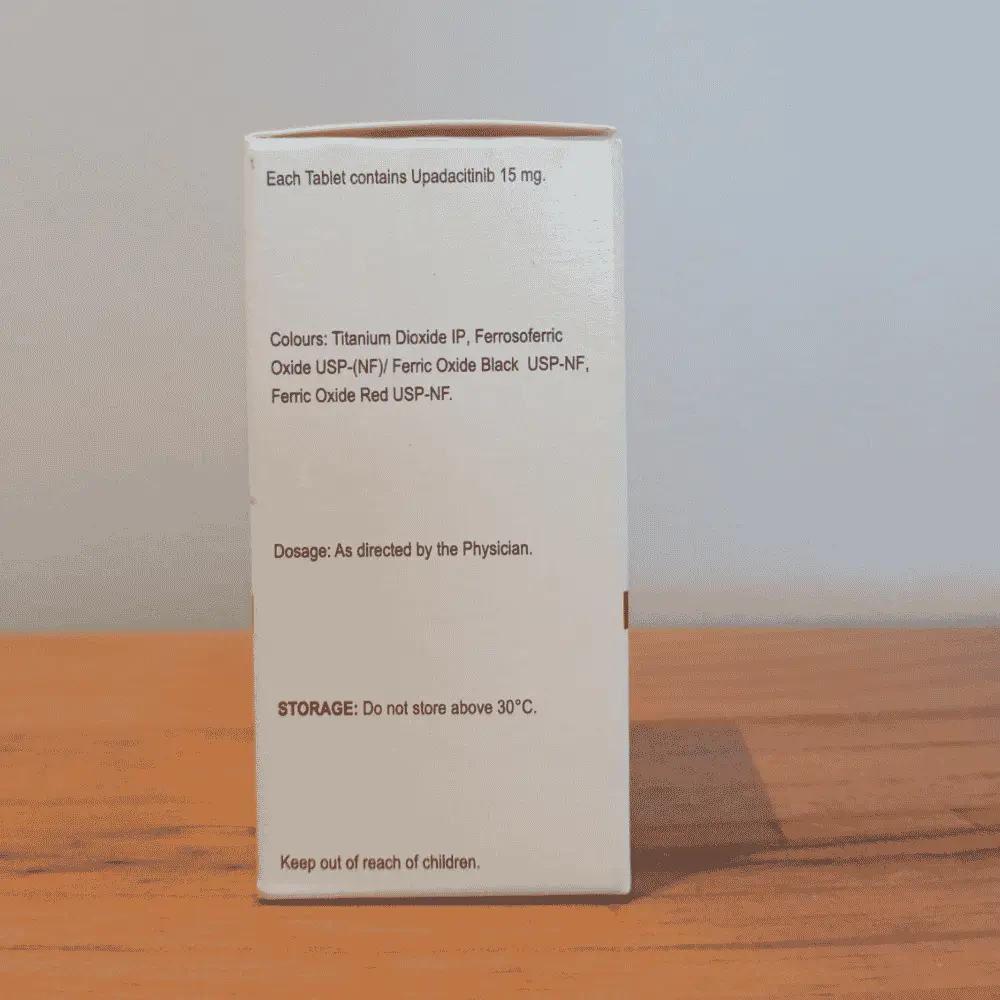
Store tablets at room temperature between 20°C and 25°C (68°F to 77°F). Excursions between 15°C and 30°C (59°F to 86°F) are permitted.
-
Keep in the original bottle or blister pack to protect tablets from moisture.
-
Keep strictly out of reach of children and household pets.
Frequently Asked Questions (FAQs)
Q1: How quickly does Upadoz 15mg start working?
In conditions like atopic dermatitis, many patients notice meaningful reductions in itching within the first 1 to 2 days, with skin clearance improving across 2 to 4 weeks. In rheumatoid arthritis and psoriatic arthritis, reductions in morning stiffness and joint pain are typically evident within 2 to 4 weeks, with maximum clinical benefit observed between weeks 8 and 12.
Q2: Can I crush or cut the Upadoz 15mg tablet in half if I have trouble swallowing?
No. Upadoz is formulated as an extended-release tablet that delivers medicine slowly over 24 hours. Crushing, chewing, or splitting the tablet destroys this controlled mechanism, releasing the full daily dose all at once. This can cause high drug spikes in your blood and lead to side effects.
Q3: Can I receive routine vaccines while taking Upadoz?
Inactivated (dead) vaccines, including the yearly flu shot, COVID-19 vaccines, and the recombinant shingles vaccine (Shingrix), can be administered. However, live vaccines (such as MMR, yellow fever, or live nasal flu spray) must be avoided while taking Upadoz.
Q4: What should I do if I develop a fever or cold symptoms while on Upadoz?
Because Upadoz reduces immune activity, minor infections can escalate more quickly. Contact your prescribing physician promptly if you develop a fever, persistent cough, burning during urination, or painful skin rashes. Your doctor may advise temporarily holding your dose until the infection resolves.
Medical Disclaimer
This clinical guide is strictly for educational, informational, and professional onboarding purposes and must not replace individualized medical advice, clinical diagnosis, or professional treatment. Always consult a qualified rheumatologist, dermatologist, or healthcare provider before initiating, modifying, or discontinuing any immunosuppressive or targeted therapy.
References
-
U.S. Food and Drug Administration (FDA):RINVOQ (upadacitinib) Extended-Release Tablets Full Prescribing Information & Medication Guide.
-
National Center for Biotechnology Information (NCBI):StatPearls Review: Upadacitinib Pharmacology, JAK1 Selectivity, and Clinical Profile.
-
European Medicines Agency (EMA):Rinvoq (upadacitinib) Summary of Product Characteristics (SmPC).
-
American College of Rheumatology (ACR):Clinical Guidelines for the Treatment of Rheumatoid Arthritis with Targeted Synthetic DMARDs.

Reviews
There are no reviews yet.