Description
What Is Glinate 120 mg Tablets?
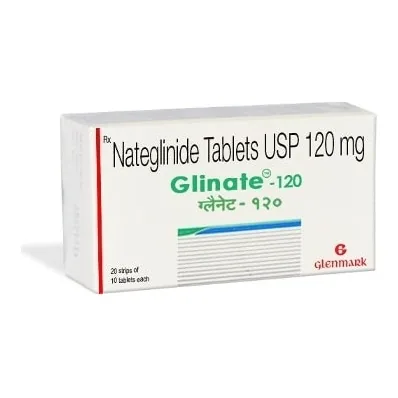
Glinate 120 mg Tablets contains nateglinide 120 mg, a meglitinide-class rapid-acting insulin secretagogue used in the management of type 2 diabetes mellitus (T2DM). Nateglinide is a phenylalanine derivative that stimulates pancreatic beta cells to release insulin rapidly and briefly following oral administration — an action specifically targeted to controlling post-prandial (after-meal) glucose excursions. Unlike sulfonylureas which provide sustained, meal-independent insulin secretion, nateglinide’s very rapid onset (10–20 minutes) and short duration of action (2–4 hours) mean that it stimulates insulin release only in direct temporal association with meal ingestion, reducing the risk of late inter-meal and nocturnal hypoglycaemia.
Nateglinide belongs to the meglitinide class of insulin secretagogues, which also includes repaglinide. The meglitinides share the same molecular target as sulfonylureas (the K-ATP channel on beta cells) but bind to a different receptor site (SUR1 benzamido site vs. the sulfonylurea binding site) with lower affinity and faster kinetics — producing rapid, transient insulin secretion rather than the prolonged secretion characteristic of sulfonylureas. The 120 mg tablet is the standard meal-time dose; a lower 60 mg dose is used for patients with milder post-prandial hyperglycaemia or in elderly/renally impaired patients. Glinate 120 mg is intended to be taken with each main meal and omitted if a meal is skipped.
Mechanism of Action
K-ATP Channel Blockade and Rapid Insulin Secretion
Nateglinide is absorbed rapidly from the gastrointestinal tract and reaches peak plasma concentrations within approximately 1 hour of oral administration. After absorption, nateglinide enters the pancreatic microcirculation and binds to the sulfonylurea receptor 1 (SUR1) subunit of the ATP-sensitive potassium channel (K-ATP channel) on beta-cell plasma membranes, binding at the benzamido domain distinct from but adjacent to the sulfonylurea binding site. This binding closes the K-ATP channel, depolarises the beta-cell membrane, opens voltage-gated calcium channels, allows calcium influx, and triggers calcium-dependent exocytosis of insulin secretory granules. The result is a rapid first-phase insulin response — mimicking the physiological early-phase insulin secretion that is characteristically blunted or absent in type 2 diabetes.
Glucose-Dependent Amplification
An important pharmacological feature of nateglinide is that its insulin-secretagogue effect is amplified by elevated ambient glucose concentrations — the drug potentiates glucose-stimulated insulin secretion rather than purely overriding glucose-independent mechanisms. This glucose-dependent enhancement means that when blood glucose falls toward the normal range after a meal, nateglinide’s secretory stimulus diminishes, reducing (though not eliminating) the risk of late hypoglycaemia compared to sulfonylureas, which continue to stimulate insulin secretion regardless of glucose level.
Targeted Post-Prandial Action
Nateglinide’s very short plasma half-life (approximately 1.5 hours) and rapid dissociation from SUR1 mean that its insulin-stimulating effect is substantially resolved within 2–4 hours of administration. When taken 1–30 minutes before meals, this pharmacokinetic profile provides a pulse of insulin that is temporally matched to post-meal glucose absorption, thereby blunting the post-prandial glucose spike while minimising residual insulin effect during subsequent fasting periods. This makes nateglinide particularly suitable for patients whose principal glycaemic problem is post-prandial hyperglycaemia rather than elevated fasting glucose.
Indications
Type 2 Diabetes Mellitus
Glinate 120 mg Tablets is indicated to lower blood glucose in adults with type 2 diabetes mellitus as an adjunct to diet and exercise. It is used specifically to target post-prandial glucose elevations, either as monotherapy in patients for whom metformin is inappropriate or not tolerated, or in combination with metformin when metformin monotherapy provides inadequate fasting glucose control but post-prandial spikes persist. Nateglinide is not indicated for type 1 diabetes mellitus or diabetic ketoacidosis.
Dosage and Administration
Standard dose: 120 mg taken orally 1–30 minutes before each main meal (up to three times daily). The tablet should be swallowed whole with water.
Lower starting dose: 60 mg three times daily before meals in patients with near-target HbA1c (HbA1c close to treatment goal), elderly patients, or those at higher hypoglycaemia risk.
Critical instruction — skip with skipped meals: Nateglinide must only be taken immediately before a meal. If a meal is skipped, the corresponding dose must be omitted to avoid hypoglycaemia from unopposed insulin stimulation in a fasted state. This is a fundamental difference from sulfonylureas which are taken at a fixed daily schedule.
Renal impairment: No dose adjustment required for mild-to-moderate renal impairment. Use with caution in severe renal impairment due to limited clinical data; start at 60 mg if used.
Hepatic impairment: Use with caution in moderate hepatic impairment (reduced first-pass metabolism may increase drug exposure). Avoid in severe hepatic impairment.
Contraindications
- Type 1 diabetes mellitus or diabetic ketoacidosis.
- Known hypersensitivity to nateglinide or any excipient in the formulation.
- Severe hepatic impairment.
- Pregnancy — insufficient safety data; insulin is preferred for glycaemic management in pregnancy.
- Breastfeeding — it is unknown whether nateglinide is excreted in human breast milk; use with caution or avoid.
Warnings and Precautions
Hypoglycaemia risk: Although nateglinide’s glucose-dependent mechanism and short duration reduce hypoglycaemia risk compared to sulfonylureas, hypoglycaemia remains possible — particularly when meals are delayed, reduced in carbohydrate content, or skipped after the dose is taken, and when nateglinide is combined with metformin, alcohol, or other glucose-lowering agents. Patients must understand to omit the dose if skipping a meal and to carry a source of rapidly absorbed glucose.
Meal-dose relationship: Nateglinide’s efficacy depends on being taken before a meal — taking it without subsequent food intake is the primary preventable cause of hypoglycaemia with this drug. Patient education on this point is essential.
Secondary failure: Like all insulin secretagogues, nateglinide depends on residual beta-cell secretory function. As type 2 diabetes progresses and beta-cell mass declines, nateglinide becomes less effective and combination therapy or insulin will be required.
Adverse Effects
- Common: Hypoglycaemia (risk lower than sulfonylureas but present, especially with meal skipping), upper respiratory tract infections (reported in clinical trials, mechanism unclear), nausea, diarrhoea.
- Uncommon: Dizziness, weight gain (modest; less than with sulfonylureas).
- Rare: Hypersensitivity reactions including urticaria, pruritus, and rash. Elevated liver enzymes (hepatotoxicity rare).
Drug Interactions
- Agents potentiating hypoglycaemia: Alcohol, NSAIDs (salicylates, ibuprofen), MAO inhibitors, non-selective beta-blockers (mask tachycardia), and other antidiabetic agents (metformin, insulin, GLP-1 receptor agonists). Additive glucose-lowering effect; monitor and adjust doses.
- CYP2C9 and CYP3A4 inhibitors: Nateglinide is metabolised primarily by CYP2C9 (major) and CYP3A4 (minor). CYP2C9 inhibitors (fluconazole, gemfibrozil, amiodarone) may increase nateglinide plasma levels and hypoglycaemia risk; CYP3A4 inhibitors (clarithromycin, ketoconazole) may contribute additively. Monitor glucose.
- CYP2C9 and CYP3A4 inducers: Rifampicin, carbamazepine, St John’s Wort may reduce nateglinide plasma levels and glycaemic control. Increase monitoring if adding these agents.
- Agents antagonising glycaemic control: Corticosteroids, thiazide diuretics, sympathomimetics, nifedipine — counter-regulatory hyperglycaemia; monitor blood glucose and adjust nateglinide dose.
- Beta-blockers: Mask hypoglycaemia tachycardia; sweating remains a warning sign. Cardioselective agents preferred but still require vigilance.
Storage
Store below 25°C in a cool, dry place away from direct sunlight and moisture. Keep in original packaging. Keep out of reach of children. Do not use after the expiry date printed on the pack. Tablets should not be crushed or split unless the prescribing information specifies otherwise, as this may alter absorption kinetics and dose accuracy.
Related Products
For patients who prefer a fixed daily dosing schedule rather than meal-linked dosing, Glez 2.5 mg Tablets (glipizide 2.5 mg) is a sulfonylurea that provides sustained insulin secretagogue activity with a once- or twice-daily schedule, taken 30 minutes before meals. For patients who require a third-generation sulfonylurea with once-daily dosing and established cardiovascular outcome data, Glypride 3 mg Tablets (glimepiride 3 mg) offers an alternative insulin secretagogue option. For comprehensive type 2 diabetes management, nateglinide is frequently combined with metformin to address both fasting and post-prandial glucose components.
References
- U.S. Food and Drug Administration / DailyMed. Nateglinide Tablets — Prescribing Information. National Library of Medicine. Available at: https://dailymed.nlm.nih.gov
- National Library of Medicine MedlinePlus. Nateglinide. Available at: https://medlineplus.gov/druginfo/meds/a601101.html
- Mayo Clinic. Nateglinide (Oral Route) — Description and Brand Names. Available at: https://www.mayoclinic.org
- Electronic Medicines Compendium (EMC). Starlix 120 mg Tablets — Summary of Product Characteristics. Available at: https://www.medicines.org.uk/emc
- Hollander PA, et al. Role of nateglinide in the management of patients with type 2 diabetes. Diabetes Care. 2001;24(10):1764–1769. PubMed PMID: 11574437
Reviews
There are no reviews yet.