Description
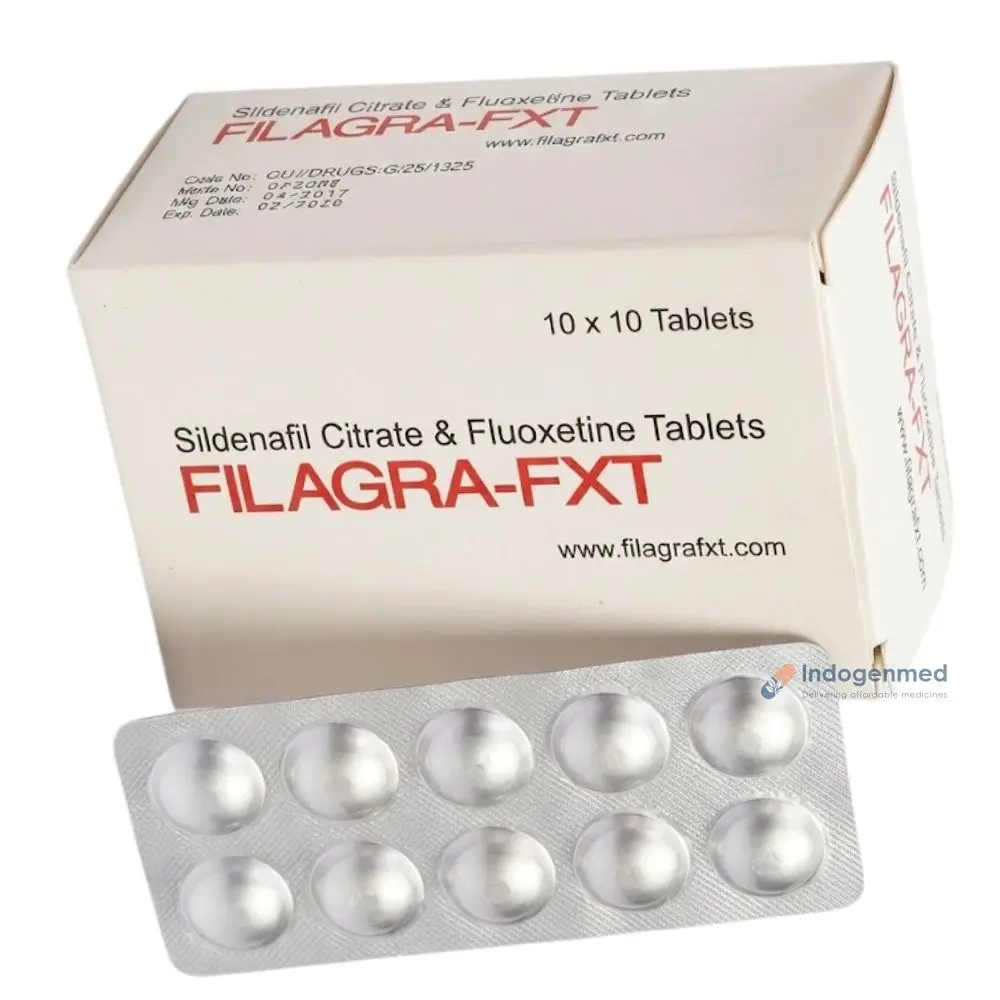
Filagra FXT 100+30 Mg Tablets — Sildenafil 100 mg + Fluoxetine 30 mg for Erectile Dysfunction and Premature Ejaculation
Filagra FXT 100+30 Mg Tablets are a dual-action oral formulation combining sildenafil 100 mg and fluoxetine 30 mg, manufactured by Fortune Healthcare Pvt. Ltd. This combination addresses two of the most prevalent male sexual health concerns simultaneously: erectile dysfunction (ED) and premature ejaculation (PE). The two components act through entirely distinct pharmacological mechanisms — sildenafil by enhancing penile vascular engorgement via phosphodiesterase type 5 (PDE5) inhibition, and fluoxetine by elevating the ejaculatory threshold via selective serotonin reuptake inhibition (SSRI activity) in the central nervous system.
This fixed-dose combination is particularly relevant for men experiencing both conditions concurrently, which is clinically common — epidemiological data suggests that ED and PE co-occur in a substantial proportion of patients presenting with sexual dysfunction. Treating both conditions with a single daily tablet offers a practical alternative to managing two separate prescriptions, provided the dosing of each component is clinically appropriate for the individual patient.
It is important to understand that the two components differ fundamentally in their dosing requirements. Sildenafil 100 mg is an on-demand agent taken 30–60 minutes before sexual activity. Fluoxetine 30 mg, by contrast, requires regular daily dosing to reach steady-state plasma concentrations that produce consistent PE control — it is not effective when used only on demand. Patients and prescribers must understand and plan for this pharmacokinetic mismatch before initiating Filagra FXT therapy.
Composition of Filagra FXT 100+30 Mg Tablets
Each tablet of Filagra FXT 100+30 Mg contains:
- Sildenafil citrate equivalent to sildenafil 100 mg — PDE5 inhibitor for erectile dysfunction
- Fluoxetine hydrochloride equivalent to fluoxetine 30 mg — selective serotonin reuptake inhibitor (SSRI) for premature ejaculation
- Inactive excipients: microcrystalline cellulose, lactose monohydrate, croscarmellose sodium, magnesium stearate, colloidal silicon dioxide, film coating agents
The sildenafil component is the same active ingredient used in branded Viagra and multiple generic sildenafil products at the standard 100 mg therapeutic dose for erectile dysfunction. The fluoxetine 30 mg dose falls between the 20 mg starting dose and 40–60 mg therapeutic doses commonly used in depression and other anxiety-spectrum disorders; for the PE indication, this intermediate dose is intended to provide ejaculatory delay benefit while limiting the tolerability issues associated with higher SSRI doses.
How Filagra FXT 100+30 Mg Works — Mechanism of Action
Sildenafil 100 mg — PDE5 Inhibition and Erectile Function
Penile erection is initiated by sexual stimulation, which triggers the release of nitric oxide (NO) from parasympathetic nerve endings and endothelial cells within the corpus cavernosum. NO activates soluble guanylate cyclase, catalysing the conversion of guanosine triphosphate (GTP) to cyclic guanosine monophosphate (cGMP). Elevated intracellular cGMP activates protein kinase G, which reduces free calcium in cavernosal smooth muscle cells, producing smooth muscle relaxation. The resulting vasodilation increases arterial inflow into the corpora cavernosa, compressing venous outflow and sustaining the erection.
Phosphodiesterase type 5 (PDE5) is the principal enzyme responsible for degrading cGMP in cavernosal smooth muscle to biologically inactive 5′-GMP, terminating the erection signal. In men with erectile dysfunction, reduced NO bioavailability, impaired cGMP synthesis, or upregulated PDE5 activity result in inadequate smooth muscle relaxation and inability to achieve or maintain a satisfactory erection.
Sildenafil is a potent, selective, reversible inhibitor of PDE5. By blocking cGMP degradation, sildenafil allows cGMP to accumulate and sustain smooth muscle relaxation in response to sexual stimulation. The result is enhanced penile arterial vasodilation, improved cavernosal engorgement, and restoration of erectile capacity. Sildenafil is effective only in the presence of sexual stimulation — it does not produce erections in the absence of appropriate arousal signals.
Key pharmacokinetic parameters for sildenafil 100 mg:
- Onset: 30–60 minutes after oral administration (median Tmax ~60 minutes)
- Duration: 4–6 hours of enhanced erectile responsiveness
- Bioavailability: approximately 41%; reduced by approximately 29% when taken with a high-fat meal (delay absorption and reduce Cmax)
- Protein binding: approximately 96%
- Metabolism: primarily hepatic via CYP3A4 (major) and CYP2C9 (minor); active N-desmethyl metabolite (~50% potency of parent compound) contributes approximately 20% of total pharmacological activity
- Elimination half-life: approximately 3–5 hours for sildenafil; similar for the N-desmethyl metabolite
- Excretion: predominantly faecal (~80%) as metabolites
Fluoxetine 30 mg — SSRI Mechanism and Ejaculatory Control
Premature ejaculation is characterised by ejaculation occurring with minimal sexual stimulation, before, upon, or shortly after penetration, and before the person wishes it. The underlying pathophysiology is not fully elucidated, but central serotonergic neurotransmission plays a key modulatory role in ejaculatory timing. Reduced activity at central 5-HT receptors — particularly 5-HT2C receptors — is associated with shortened ejaculatory latency, while enhanced serotonergic signalling delays ejaculation by raising the ejaculatory threshold.
Fluoxetine is a selective serotonin reuptake inhibitor (SSRI). It binds to and blocks the serotonin transporter (SERT) on presynaptic neurones, preventing the reuptake of serotonin (5-hydroxytryptamine, 5-HT) from the synaptic cleft back into the presynaptic cell. The result is an increase in the concentration of 5-HT available to stimulate postsynaptic serotonin receptors. In the neural pathways regulating ejaculation, sustained elevation of synaptic 5-HT activity raises the ejaculatory threshold, increasing the time from penetration to ejaculation (intravaginal ejaculatory latency time, IELT) and enabling greater voluntary control over ejaculation timing.
Fluoxetine’s key pharmacokinetic features that distinguish it from other SSRIs used for PE:
- Tmax: approximately 6–8 hours after oral administration
- Bioavailability: approximately 72% (not significantly affected by food)
- Protein binding: approximately 94%
- Metabolism: primarily by CYP2D6 to the active metabolite norfluoxetine; also involves CYP2C9 and CYP3A4
- Half-life of fluoxetine: 1–4 days (approximately 24–96 hours)
- Half-life of norfluoxetine (active metabolite): 4–16 days — exceptionally long, ensuring prolonged serotonergic activity even after discontinuation
- Steady-state: reached after approximately 4–5 weeks of regular daily dosing
- Excretion: primarily renal; norfluoxetine is also renally cleared
The long half-life of fluoxetine and its active metabolite norfluoxetine is the most clinically important pharmacokinetic feature of this SSRI. It means:
- Fluoxetine is not suitable for on-demand use for PE — consistent daily dosing over several weeks is required to achieve steady-state therapeutic plasma concentrations
- After stopping fluoxetine, the drug and its active metabolite remain in the body for weeks, maintaining MAOI interaction risk and other drug interactions for an extended washout period
- Steady-state PE benefit may not be fully apparent until 4–6 weeks of regular daily dosing
This profile is entirely different from dapoxetine (the only short-acting SSRI specifically approved for on-demand PE treatment, with a half-life of approximately 1.3 hours), and from duloxetine (an SNRI with balanced SERT and NET inhibition and a half-life of 8–17 hours).
Combined Effect in Filagra FXT
When used as a fixed combination in Filagra FXT, sildenafil addresses the vascular/mechanical component of sexual dysfunction (achieving and maintaining erection), while fluoxetine addresses the central serotonergic component (delaying ejaculation and improving ejaculatory control). Men with concurrent ED and PE may experience improvements in both domains: greater confidence in achieving a satisfactory erection and reduced anxiety about rapid ejaculation — a cycle in which each condition often exacerbates the other.
Uses and Indications
- Erectile dysfunction (ED): The sildenafil component (100 mg) treats the persistent inability to achieve or maintain an erection sufficient for satisfactory sexual performance. It is effective across all severities of ED and in men with underlying conditions commonly associated with ED, including diabetes mellitus, hypertension, cardiovascular disease, and psychogenic ED.
- Premature ejaculation (PE): The fluoxetine component (30 mg) is used off-label to treat premature ejaculation by raising the ejaculatory threshold via central serotonin reuptake inhibition. Regular daily dosing is required to achieve benefit; the effect develops progressively over several weeks of treatment.
- Concurrent ED and PE: Filagra FXT is intended specifically for men who experience both conditions simultaneously, allowing combined pharmacological management with a single formulation.
Dosage and Administration
Recommended Dose
- One tablet of Filagra FXT 100+30 Mg per day
- Can be taken with or without food (note: a high-fat meal may delay sildenafil onset)
- For the sildenafil component to be effective for ED on a given occasion: take approximately 30–60 minutes before anticipated sexual activity; sexual stimulation is required
- For the fluoxetine component to achieve PE benefit: regular daily dosing for 4–6 weeks is required to reach steady-state; benefit develops progressively
- Do not take more than one tablet per 24 hours
Special Populations
- Elderly (>65 years): Both sildenafil and fluoxetine exhibit increased plasma exposure in elderly patients. Initiating at a lower sildenafil dose (25–50 mg) may be appropriate. Fluoxetine dose adjustment should be considered in elderly patients, who are generally more sensitive to SSRIs.
- Hepatic impairment: Sildenafil clearance is reduced in hepatic impairment — the standard maximum sildenafil dose is 25 mg in severe hepatic impairment. Fluoxetine undergoes extensive hepatic metabolism; use with caution or avoid in significant hepatic impairment.
- Renal impairment: No dose adjustment required for mild to moderate renal impairment. In severe renal impairment (CrCl <30 mL/min), both sildenafil bioavailability and fluoxetine/norfluoxetine accumulation increase — caution is warranted.
- Not for use in women or children: Neither component is indicated for use in women or children in this formulation context.
- CYP2D6 poor metabolisers: Approximately 7–10% of Caucasians are CYP2D6 poor metabolisers. In these patients, fluoxetine exposure will be higher than average, increasing adverse effect risk.
Side Effects
Sildenafil-Related Side Effects
Common (≥1 in 10):
- Headache — most frequent; vasodilatory origin
- Flushing — warmth or redness of the face, neck, and chest
- Dyspepsia (heartburn, indigestion)
- Nasal congestion
- Visual disturbances — blurred vision, light sensitivity, or blue-green colour tinge (transient; due to mild PDE6 cross-reactivity in retinal photoreceptors)
- Dizziness
Fluoxetine-Related Side Effects
Common:
- Nausea — particularly during initial weeks of therapy; often improves with continued use
- Headache
- Insomnia or sleep disturbances — fluoxetine has activating properties; evening doses may worsen sleep onset
- Anxiety or agitation — particularly during the initial weeks; paradoxical worsening of anxiety can occur at treatment initiation
- Decreased libido (reduced sex drive) — SSRI class effect; may limit the benefit of this combination in some patients
- Delayed orgasm or anorgasmia in female partners is not relevant here, but delayed ejaculation in the patient may be more pronounced than desired at higher steady-state levels
- Diarrhoea or loose stools
- Dry mouth
- Excessive sweating (hyperhidrosis)
- Fatigue or somnolence
Serious Adverse Effects (Seek Immediate Medical Attention)
- Priapism: A prolonged, painful erection lasting more than 4 hours is a urological emergency. Irreversible erectile dysfunction can result without prompt treatment. Seek immediate emergency medical care if this occurs.
- Non-arteritic anterior ischaemic optic neuropathy (NAION): Rare cases of sudden, painless vision loss (typically monocular) have been reported in patients taking sildenafil. Discontinue immediately and seek urgent ophthalmological evaluation.
- Sudden hearing loss: Sudden decrease or loss of hearing, potentially with tinnitus and vertigo, has been reported rarely with PDE5 inhibitors. Discontinue immediately and seek medical attention.
- Serotonin syndrome: When fluoxetine is combined with other serotonergic agents, serotonin syndrome — characterised by agitation, tremor, hyperthermia, tachycardia, clonus, and diarrhoea — can occur. The risk is highest with MAOIs; the interaction is potentially fatal. Serotonin syndrome requires immediate medical attention.
- Suicidal ideation (boxed warning — antidepressant class): Antidepressants including SSRIs carry a boxed warning regarding increased risk of suicidal thinking and behaviour in children, adolescents, and young adults (up to age 24) during initial months of treatment. Patients and families should be advised to monitor for worsening depression, agitation, or suicidal thoughts. Filagra FXT is intended for adult males; however, this warning applies to fluoxetine as an SSRI component and must be communicated.
- Severe skin reactions: Stevens-Johnson syndrome (SJS) and toxic epidermal necrolysis (TEN) have been reported with SSRIs. Discontinue immediately if a severe skin reaction, blistering, or mucosal involvement occurs.
- Severe hypotension: Particularly when sildenafil is combined with nitrates (absolutely contraindicated), alpha-blockers, or other antihypertensives.
- Hyponatraemia: SSRIs, including fluoxetine, can cause syndrome of inappropriate antidiuretic hormone secretion (SIADH) with resulting hyponatraemia, particularly in elderly patients.
- Bleeding risk: SSRIs inhibit platelet serotonin uptake, reducing platelet aggregation and increasing bleeding risk — particularly gastrointestinal bleeding, especially with concomitant NSAID or aspirin use.
Fluoxetine Discontinuation
Due to fluoxetine’s very long half-life and that of its active metabolite norfluoxetine, abrupt discontinuation of fluoxetine does not typically produce the severe discontinuation syndrome associated with shorter-acting SSRIs (such as paroxetine or venlafaxine). However, gradual dose reduction remains the preferred approach. Patients should not abruptly stop Filagra FXT without medical advice.
Precautions and Warnings
- Cardiovascular assessment (sildenafil): Sexual activity imposes cardiovascular demands. Patients with significant cardiovascular disease, recent myocardial infarction or stroke, uncontrolled arrhythmia, or heart failure should undergo cardiovascular evaluation before initiating sildenafil. Sildenafil produces a mild decrease in blood pressure (~1–5 mmHg systolic); in patients on antihypertensives or alpha-blockers, this additive effect requires monitoring.
- Mental health monitoring (fluoxetine): Although Filagra FXT is used for sexual dysfunction rather than depression, fluoxetine is an antidepressant with class effects on mood. Patients should be monitored for mood changes, worsening anxiety, agitation, or suicidal ideation during early treatment — particularly patients with a history of depression, bipolar disorder, or suicidal behaviour. Prescribers should evaluate the patient’s mental health history before initiating fluoxetine-containing therapy.
- Bipolar disorder: Prescribing fluoxetine or any SSRI to a patient with undiagnosed or inadequately controlled bipolar disorder may precipitate a manic or hypomanic episode. Evaluate bipolar risk before initiating fluoxetine.
- Seizure history: SSRIs including fluoxetine can lower seizure threshold. Use with caution in patients with a history of seizure disorder.
- Priapism risk conditions (sildenafil): Patients with sickle cell anaemia, multiple myeloma, leukaemia, or Peyronie’s disease are at increased priapism risk and should use sildenafil with caution.
- Retinitis pigmentosa: Patients with retinitis pigmentosa should use sildenafil with caution; experience in this population is limited.
- High-fat meal effect on sildenafil: A high-fat meal delays sildenafil absorption and reduces peak plasma concentration by approximately 29%. For situations where rapid onset is desired, Filagra FXT should be taken in the fasted state or at least 2 hours after a high-fat meal.
- Alcohol: Moderate alcohol reduces blood pressure and can exacerbate sildenafil-associated dizziness and flushing. Excessive alcohol also impairs sexual function. Patients should limit alcohol intake.
- CYP2D6 drug interaction awareness: Fluoxetine is a potent inhibitor of CYP2D6. This affects the metabolism of a wide range of concomitant medications (see Drug Interactions). The prescriber must review the full medication list before initiating fluoxetine therapy.
- Driving and machinery: Both sildenafil (dizziness, visual disturbances) and fluoxetine (impaired concentration, fatigue during initiation) can affect the ability to drive or operate machinery. Patients should assess their individual response before engaging in such activities.
Drug Interactions
- Nitrates — ABSOLUTE CONTRAINDICATION (sildenafil): All organic nitrates in any form or route (glyceryl trinitrate, isosorbide mononitrate, isosorbide dinitrate, amyl nitrite, nicorandil) are absolutely contraindicated. The combination causes profound, potentially fatal hypotension due to synergistic cGMP amplification. A minimum 24-hour washout after the last sildenafil dose is required before nitrate use can be considered; cautious clinicians prefer 48 hours.
- Riociguat — ABSOLUTE CONTRAINDICATION (sildenafil): The soluble guanylate cyclase stimulator riociguat is contraindicated due to severe hypotension risk via synergistic cGMP pathway activation.
- MAOIs — ABSOLUTE CONTRAINDICATION (fluoxetine): Monoamine oxidase inhibitors (phenelzine, tranylcypromine, isocarboxazid, selegiline at higher doses) are absolutely contraindicated with fluoxetine due to the risk of serotonin syndrome, which can be fatal. A washout interval of at least 14 days after stopping an MAOI is required before starting fluoxetine. Critically — due to fluoxetine’s very long half-life and that of norfluoxetine — at least 5 weeks must elapse after stopping fluoxetine before starting an MAOI.
- Thioridazine — ABSOLUTE CONTRAINDICATION (fluoxetine): Thioridazine (a phenothiazine antipsychotic) is absolutely contraindicated with fluoxetine. Fluoxetine inhibits CYP2D6, the primary enzyme metabolising thioridazine, causing dangerous plasma accumulation and potentially fatal QTc prolongation and torsade de pointes arrhythmia. A minimum 5-week washout after stopping fluoxetine is required before thioridazine can be used.
- Pimozide — contraindicated: Fluoxetine-mediated CYP2D6 inhibition increases pimozide exposure, risking QTc prolongation. The combination is contraindicated.
- CYP3A4 inhibitors (sildenafil): Potent CYP3A4 inhibitors (ritonavir, ketoconazole, itraconazole, erythromycin, clarithromycin, grapefruit juice) substantially increase sildenafil plasma concentration. When co-prescribed with potent CYP3A4 inhibitors, sildenafil should be used at the lowest effective dose (25 mg), with dose intervals of at least 48 hours for ritonavir. Filagra FXT 100+30 Mg (at the 100 mg sildenafil dose) should generally be avoided in patients receiving potent CYP3A4 inhibitors without specialist review.
- CYP2D6 substrates (fluoxetine as inhibitor): Fluoxetine is a potent inhibitor of CYP2D6. It significantly increases plasma levels of drugs primarily metabolised by CYP2D6, including: tricyclic antidepressants (amitriptyline, nortriptyline, imipramine, desipramine), antipsychotics (haloperidol, risperidone, perphenazine, clozapine), opioids (codeine, tramadol — conversion to active metabolites reduced), beta-blockers (metoprolol, propranolol, carvedilol), antiarrhythmics (flecainide, mexiletine), and type 1C antiarrhythmics. Dose reductions of CYP2D6-metabolised drugs may be required when fluoxetine is added to the regimen.
- Other serotonergic agents (fluoxetine): Combining fluoxetine with other serotonergic medications increases the risk of serotonin syndrome. This includes other SSRIs, SNRIs (venlafaxine, duloxetine), triptans (sumatriptan), tramadol, linezolid, lithium, St John’s Wort, and high-dose tryptophan. Caution is required; in many cases, concurrent use should be avoided.
- Alpha-blockers (sildenafil): Alpha-adrenoceptor antagonists (tamsulosin, doxazosin, terazosin) used for BPH or hypertension can produce additive hypotension with sildenafil. Patients should be on a stable alpha-blocker dose before initiating sildenafil; the lowest effective sildenafil dose should be used initially. Avoid taking both agents within 4 hours of each other where possible.
- Warfarin (fluoxetine): Fluoxetine inhibits CYP2C9, the primary metaboliser of warfarin’s active S-enantiomer. The combination can increase warfarin’s anticoagulant effect and bleeding risk. INR should be monitored closely when fluoxetine is initiated, dose-changed, or stopped in patients on warfarin.
- Antiepileptics (fluoxetine): Fluoxetine increases plasma levels of phenytoin and carbamazepine via CYP inhibition. Plasma level monitoring of antiepileptic drugs is recommended when fluoxetine is added to or removed from therapy.
- Antidiabetic agents (fluoxetine): Fluoxetine can alter glycaemic control by enhancing insulin sensitivity. Blood glucose monitoring should be increased when fluoxetine is initiated or discontinued in diabetic patients receiving antidiabetic medications.
Contraindications
- All organic nitrate medications in any formulation or route — absolute contraindication with sildenafil
- Riociguat — absolute contraindication with sildenafil
- Concurrent use of MAOIs or use within 14 days of stopping an MAOI — absolute contraindication with fluoxetine; allow 5 weeks after stopping fluoxetine before initiating an MAOI
- Thioridazine — absolute contraindication with fluoxetine; allow at least 5 weeks after stopping fluoxetine before initiating thioridazine
- Pimozide — contraindicated with fluoxetine
- Severe hepatic impairment (both components affected; sildenafil is specifically contraindicated at standard doses)
- Severe cardiovascular disease: unstable angina, recent myocardial infarction (within 90 days), recent stroke (within 6 months), significant arrhythmia, uncontrolled heart failure, hypotension (systolic <90 mmHg) or uncontrolled hypertension (>170/100 mmHg)
- Prior episode of non-arteritic anterior ischaemic optic neuropathy (NAION)
- Not for use in women or children
- Known hypersensitivity to sildenafil, fluoxetine, or any excipient in Filagra FXT 100+30 Mg
- Patients in whom sexual activity is contraindicated due to underlying cardiac disease
Storage Instructions
- Store below 30°C in a cool, dry place
- Protect from moisture, humidity, and direct sunlight
- Store in original packaging
- Keep out of the reach of children
- Do not use after the expiry date printed on the pack
Related Products
- Filagra FXT Plus 100+60 Mg Tablets — sildenafil 100 mg + fluoxetine 60 mg for ED and PE (higher fluoxetine dose)
- Filagra DXT 100+60 Mg Tablets — sildenafil 100 mg + duloxetine 60 mg for ED and PE
- Duratia 30 Mg Tablets — dapoxetine 30 mg, on-demand SSRI for premature ejaculation
- Duratia 60 Mg Tablets — dapoxetine 60 mg for premature ejaculation
- Tadalista CT 20 Mg Tablets — tadalafil 20 mg chewable tablets for erectile dysfunction
References
- U.S. National Library of Medicine. DailyMed — Sildenafil. Label for Viagra (sildenafil citrate). Available at: https://dailymed.nlm.nih.gov/dailymed/search.cfm?labeltype=all&query=sildenafil
- U.S. National Library of Medicine. DailyMed — Fluoxetine. Label for fluoxetine hydrochloride. Available at: https://dailymed.nlm.nih.gov/dailymed/search.cfm?labeltype=all&query=fluoxetine
- MedlinePlus (U.S. National Library of Medicine). Sildenafil. Available at: https://medlineplus.gov/druginfo/meds/a699015.html
- MedlinePlus (U.S. National Library of Medicine). Fluoxetine. Available at: https://medlineplus.gov/druginfo/meds/a689006.html
- Mayo Clinic. Fluoxetine (Oral Route). Available at: https://www.mayoclinic.org/drugs-supplements/fluoxetine-oral-route/description/drg-20063952
- Waldinger MD, Hengeveld MW, Zwinderman AH, Olivier B. Effect of SSRI antidepressants on ejaculation: a double-blind, randomized, placebo-controlled study with fluoxetine, fluvoxamine, paroxetine, and sertraline. Journal of Clinical Psychopharmacology. 1998;18(4):274–281. PubMed PMID: 9690692. Available at: https://pubmed.ncbi.nlm.nih.gov/9690692/




Reviews
There are no reviews yet.