Description
Duratia 60 Mg Tablets — Higher-Dose Dapoxetine for Premature Ejaculation
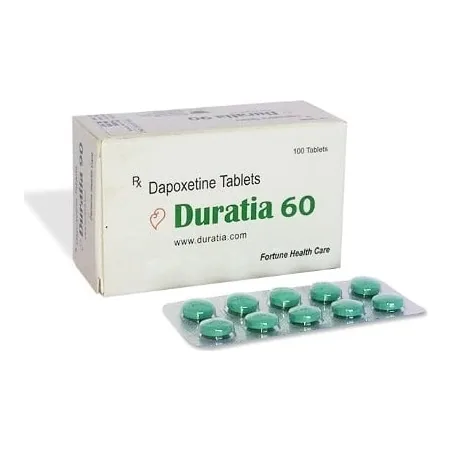
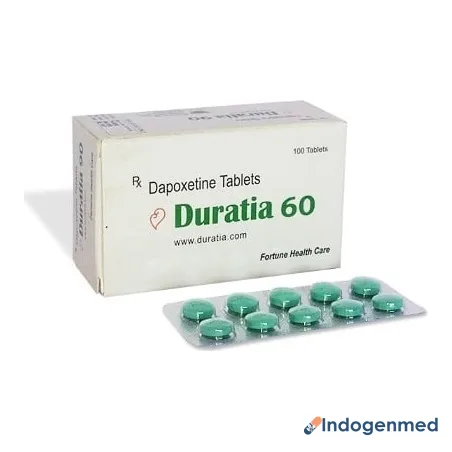
Duratia 60 Mg Tablets contain dapoxetine 60 mg as the active pharmaceutical ingredient. Manufactured by Fortune Healthcare Pvt. Ltd., Duratia 60 Mg is a prescription oral tablet for the on-demand treatment of premature ejaculation (PE) in adult men aged 18–64 years. Dapoxetine is the only oral pharmacotherapy specifically developed and approved for premature ejaculation and is classified as a short-acting selective serotonin reuptake inhibitor (SSRI) engineered for on-demand — not daily — use.
Duratia 60 Mg represents the higher available dose of dapoxetine. It is intended for patients who have already trialled dapoxetine 30 mg (see Duratia 30 Mg Tablets) and found it to be well tolerated but insufficient in therapeutic effect. In clinical trials, approximately 46% of patients who had an inadequate response to the 30 mg dose responded to dose escalation to 60 mg. For patients initiating dapoxetine therapy, treatment should always begin at 30 mg; the 60 mg dose is reserved for escalation after at least four weeks on the lower dose.
Premature ejaculation is characterised by persistent ejaculation occurring within approximately one minute of vaginal penetration, before the person wishes it, with associated personal distress or interpersonal difficulty. It is estimated to affect 20–30% of men globally and is the most prevalent male sexual dysfunction. Duratia 60 Mg addresses the unmet need for men whose PE is not adequately controlled by the 30 mg starting dose, offering meaningful additional improvement in intra-vaginal ejaculatory latency time (IELT) and ejaculatory control.
Composition of Duratia 60 Mg Tablets
Each film-coated tablet of Duratia 60 Mg contains:
- Dapoxetine 60 mg (as dapoxetine hydrochloride) — the active short-acting SSRI at the higher approved dose
- Inactive excipients: lactose monohydrate, microcrystalline cellulose, croscarmellose sodium, colloidal silicon dioxide, magnesium stearate; film coating contains hypromellose, polyethylene glycol, titanium dioxide, and iron oxide pigments
Duratia 60 Mg tablets are film-coated for oral administration. The 60 mg dose provides approximately double the plasma exposure of the 30 mg dose, with correspondingly greater SERT inhibition and a modestly higher adverse effect profile, particularly nausea and dizziness.
How Duratia 60 Mg Works — Mechanism of Action
The Neurobiology of Ejaculation and Serotonin
Ejaculation is mediated by a spinal reflex coordinated through the sympathetic nervous system, with cortical and brainstem inputs modulating the ejaculatory threshold. Serotonin (5-HT) exerts a key inhibitory influence on ejaculatory pathways via projections from the nucleus paragigantocellularis in the brainstem to the spinal ejaculatory generators. Men with premature ejaculation are characterised by reduced serotonergic tone in these pathways, lowering the ejaculatory threshold and resulting in rapid, involuntary ejaculation.
Mechanism of Dapoxetine at the 60 mg Dose
Dapoxetine is a potent, selective inhibitor of the serotonin transporter (SERT). SERT is the primary mechanism by which serotonin is cleared from the synapse; by blocking it, dapoxetine increases synaptic serotonin concentrations, amplifying serotonergic neurotransmission. In the spinal ejaculatory centres, this raises the ejaculatory threshold, increasing IELT and improving the subjective sense of ejaculatory control. At 60 mg, the degree of SERT inhibition and the resulting elevation in synaptic serotonin are greater than at 30 mg, translating into a clinically meaningful additional delay in ejaculation for patients who responded incompletely to the lower dose.
Dapoxetine also has weaker inhibitory activity at the noradrenaline transporter (NET) and modest effects at dopamine transporters. Its ejaculatory effects are attributed primarily to central serotonergic enhancement. The drug has no direct cardiovascular, hormonal, or pro-erectile activity.
Why Dapoxetine Is Uniquely Suited to On-Demand Dosing
Conventional SSRIs (paroxetine, fluoxetine, sertraline, citalopram) require days to weeks of daily dosing before steady-state central serotonergic effects are achieved — their half-lives of 15–36+ hours make on-demand use pharmacologically ineffective. Dapoxetine was specifically engineered with a short half-life of approximately 1.3 hours: it reaches therapeutic plasma concentrations within 1–2 hours of administration and falls below pharmacologically meaningful levels within hours. This pharmacokinetic design enables a single pre-intercourse dose to provide ejaculatory delay within the dosing window without accumulation, persistent CNS effects, or the need for chronic daily treatment.
Dose-Proportional Pharmacokinetics
Dapoxetine displays approximately dose-proportional pharmacokinetics across the 30–60 mg range. Following oral administration of the 60 mg dose, peak plasma concentrations (Cmax) and total drug exposure (AUC) are approximately double those observed with 30 mg. Tmax remains approximately 1–2 hours under fasting conditions. Bioavailability is approximately 42% due to first-pass hepatic metabolism. Protein binding is approximately 99%. Primary metabolic pathways involve CYP2D6, CYP3A4, and flavin monooxygenase 1 (FMO1), generating active metabolites desmethyl-dapoxetine (DED) and didesmethyl-dapoxetine (DDED). The elimination half-life of dapoxetine is approximately 1.3 hours. At the 60 mg dose, the AUC of the active metabolite DED is correspondingly elevated; combined serotonergic exposure (parent + metabolites) is greater than at 30 mg, explaining both the additional efficacy and the modestly higher incidence of dose-related adverse effects such as nausea, dizziness, and syncope.
Uses and Indications
Primary Indication
- Premature ejaculation — inadequate response to 30 mg: Duratia 60 Mg is indicated for the on-demand treatment of premature ejaculation in adult men aged 18–64 years who meet the standard PE criteria AND who had an insufficient therapeutic response to dapoxetine 30 mg taken for at least four weeks. The 60 mg dose is a step-up dose, not a first-line treatment; it must not be used to initiate dapoxetine therapy in dapoxetine-naïve patients.
Patient Characteristics
- IELT consistently less than approximately two minutes
- Marked personal distress or interpersonal difficulty attributable to premature ejaculation
- Poor voluntary control over ejaculation
- History of premature ejaculation in the majority of sexual encounters over at least six months
- Dapoxetine 30 mg tolerated but providing inadequate improvement after at least four weeks of use
- Both lifelong (primary) and acquired (secondary) PE are addressed
Clinical Efficacy at 60 mg
In Phase III randomised controlled trials, dapoxetine 60 mg administered on demand produced significantly greater increases in IELT compared to both placebo and dapoxetine 30 mg in some subgroup analyses. Men treated with dapoxetine 60 mg reported approximately 3- to 3.5-fold increases in IELT from baseline in trial populations with baseline IELT under two minutes. Improvements in patient-reported ejaculatory control, satisfaction with sexual intercourse, and reduced personal distress were significantly greater than placebo. For patients who had not responded adequately to 30 mg, approximately 46% achieved a clinically meaningful response upon escalation to 60 mg. Dapoxetine 60 mg is the maximum approved dose; it must not be exceeded.
Dosage and Administration
Administration
- Take Duratia 60 Mg orally, 1–3 hours before anticipated sexual activity
- Swallow the tablet whole with at least one full glass of water (240 mL); swallowing with a large volume of water is particularly important at the 60 mg dose, as it substantially reduces the incidence and severity of nausea
- Can be taken with or without food; taking the tablet with food reduces nausea and may modestly reduce the rate of absorption
- Take no more than once per 24-hour period
- Use only as needed — not for daily continuous dosing
Dose and Escalation
- Who should take 60 mg: Only patients who have been using dapoxetine 30 mg for at least four weeks, found it tolerable, but had insufficient therapeutic response
- Not for treatment initiation: New dapoxetine users must start at 30 mg; 60 mg is never used as the first dose
- Maximum dose: 60 mg is the maximum approved single dose; under no circumstances should it be exceeded
- Not a daily medication: Even at 60 mg, dapoxetine is taken on demand only, with a minimum 24-hour interval between doses
Special Populations
- Age: Not recommended in men under 18 or over 64 years; safety and efficacy in these age groups have not been established
- Hepatic impairment: Contraindicated in moderate or severe hepatic impairment (Child-Pugh Class B or C); at 60 mg the increased plasma exposure in hepatic impairment amplifies the risk of toxicity
- Renal impairment: No dose adjustment required in mild-to-moderate renal impairment; not recommended in severe renal impairment (creatinine clearance <30 mL/min)
- CYP2D6 or CYP3A4 inhibitor co-administration: The 60 mg dose is specifically contraindicated in patients taking potent CYP2D6 or CYP3A4 inhibitors (see Drug Interactions); maximum dose in these patients is 30 mg
- Not for women: Dapoxetine is not indicated in women
Side Effects
Common Side Effects (Dose-Related — More Frequent at 60 mg Than 30 mg)
The adverse effect profile of dapoxetine 60 mg is qualitatively similar to that of 30 mg but with a higher frequency and, in some cases, greater intensity of dose-related effects:
- Nausea — the most frequently reported adverse event; significantly more common at 60 mg than 30 mg. Mitigated by taking with food and a large glass of water
- Headache
- Dizziness — particularly orthostatic (postural) dizziness; significantly more common at 60 mg; patients should sit or lie down if dizzy
- Diarrhoea
- Somnolence (drowsiness) or fatigue
- Dry mouth
- Insomnia
- Nasopharyngitis
Less Common Side Effects
- Anxiety or agitation
- Blurred vision
- Tinnitus
- Erectile dysfunction (mild, transient)
- Decreased libido
- Hyperhidrosis (excessive sweating)
- Tremor
- Paraesthesia
- Vomiting — more frequently reported at 60 mg than at 30 mg
Serious Adverse Effects (Seek Immediate Medical Attention)
- Syncope (fainting) and presyncope — amplified at 60 mg: Vasovagal reactions including syncope (sudden loss of consciousness) and presyncope are a clinically important and distinguishing safety concern for dapoxetine. The incidence is higher with the 60 mg dose than with 30 mg. Patients must sit or lie down at the first sign of dizziness, light-headedness, or nausea. Alcohol consumption and concurrent PDE5 inhibitor use further increase this risk. Patients must not drive or operate machinery for several hours after taking dapoxetine 60 mg.
- Serotonin syndrome: When dapoxetine is combined with other serotonergic drugs, potentially fatal serotonin syndrome can occur — characterised by hyperthermia, rigidity, agitation, clonus, diaphoresis, and cardiovascular instability. The risk is elevated at higher serotonergic exposure (60 mg). Seek immediate medical attention if these symptoms develop.
- Hypomania or mania: Dapoxetine may precipitate hypomania or mania in susceptible individuals, particularly those with an underlying bipolar diathesis. Discontinue if manic symptoms emerge.
- Increased intraocular pressure: Dapoxetine may increase intraocular pressure; use with particular caution (or avoid) in patients with narrow-angle glaucoma.
- Seizures: Rare cases of seizures have been reported with SSRIs; use with caution in patients with a seizure history.
Precautions and Warnings
- Syncope risk — heightened at 60 mg: The vasovagal syncope risk is higher at 60 mg than 30 mg. Patients must always take the tablet while seated, avoid sudden standing after dosing, and lie down immediately if lightheadedness or nausea develop. Alcohol is strictly prohibited. Patients taking concurrent PDE5 inhibitors (for erectile dysfunction) face additive orthostatic risk and must be particularly cautious.
- Cardiovascular assessment before prescribing 60 mg: At the higher dose, cardiovascular evaluation is especially important. Patients with QT prolongation, conduction abnormalities, heart failure, or uncontrolled hypertension should not use dapoxetine 60 mg without specialist assessment.
- Psychiatric history: As with all SSRIs, use with caution in patients with pre-existing depression, bipolar disorder, mania, or suicide attempt. Patients with a history of mania or bipolar disorder should not use dapoxetine at any dose without specialist input. At 60 mg the serotonergic burden is greater.
- Bleeding disorders: SSRIs impair platelet serotonin uptake and may impair platelet aggregation. Use with caution in patients taking anticoagulants, antiplatelet agents, or NSAIDs; use at 60 mg warrants particular attention in patients with bleeding diatheses.
- Driving and machinery — 60 mg: The risk of dizziness, somnolence, and syncope is higher at 60 mg. Patients must not drive or operate heavy machinery for an extended period after dosing. Consider the full individual risk profile when counselling the patient on activity restriction after the 60 mg dose.
- Alcohol — absolute prohibition: Alcohol significantly potentiates the risk of syncope, CNS depression, and cardiovascular instability with dapoxetine. Alcohol must be strictly avoided when taking dapoxetine 60 mg.
- Tolerability assessment after dose escalation: When a patient escalates from 30 mg to 60 mg, the treating clinician should reassess tolerability at the next clinical review. If adverse effects at 60 mg are unacceptable, the dose should be reduced back to 30 mg.
Drug Interactions
- Monoamine oxidase inhibitors (MAOIs) — ABSOLUTE CONTRAINDICATION: Dapoxetine is absolutely contraindicated in patients receiving any MAOI (phenelzine, tranylcypromine, isocarboxazid, selegiline, moclobemide, linezolid). The combination risks fatal serotonin syndrome. Dapoxetine must not be started within 14 days of stopping an MAOI, and an MAOI must not be started within 7 days of stopping dapoxetine. These washout periods apply at all dapoxetine doses.
- Other serotonergic agents — HIGH RISK: Concurrent use with other SSRIs, SNRIs, tricyclic antidepressants, triptans, lithium, tramadol, pethidine, St John’s Wort, or other serotonergic drugs carries a significantly elevated risk of serotonin syndrome. This risk is amplified at the 60 mg dose due to greater serotonergic burden; such combinations are generally contraindicated or require specialist assessment.
- Thioridazine — ABSOLUTE CONTRAINDICATION: Due to risk of QT prolongation and potentially fatal cardiac arrhythmias. Contraindicated at all dapoxetine doses.
- Potent CYP2D6 inhibitors — 60 mg CONTRAINDICATED: Drugs that potently inhibit CYP2D6 (fluoxetine, paroxetine, bupropion, quinidine, terbinafine) substantially increase dapoxetine and DED plasma concentrations. The maximum dapoxetine dose in patients receiving a potent CYP2D6 inhibitor is 30 mg; dose escalation to 60 mg is specifically contraindicated. This is a critical prescribing restriction.
- Potent CYP3A4 inhibitors — 60 mg CONTRAINDICATED: Potent CYP3A4 inhibitors (ketoconazole, itraconazole, ritonavir, clarithromycin, telithromycin, nefazodone) significantly increase dapoxetine systemic exposure. The maximum dapoxetine dose with potent CYP3A4 inhibitor co-administration is 30 mg; dose escalation to 60 mg is specifically contraindicated.
- PDE5 inhibitors (sildenafil, tadalafil, vardenafil): Co-administration of dapoxetine 60 mg with PDE5 inhibitors in men with concurrent erectile dysfunction increases orthostatic hypotension and syncope risk. The combination requires careful patient education: both medicines must be taken while seated, alcohol must be strictly avoided, and the patient should remain seated for 2 hours after dosing. At the 60 mg dose, this interaction is of particular clinical relevance.
- Alcohol — strict prohibition: Substantially increases the risk of syncope, sedation, and cardiovascular compromise. Must be strictly avoided at all dapoxetine doses, but the risk is greatest at 60 mg.
- Anticoagulants and antiplatelet drugs: Increased bleeding risk due to impaired platelet serotonin uptake; monitor closely. The risk is proportional to serotonergic exposure and may be greater at 60 mg.
Contraindications
- Concurrent use of MAOIs or use within 14 days of stopping an MAOI
- Concurrent use of thioridazine
- Concurrent use of potent CYP2D6 inhibitors (fluoxetine, paroxetine, bupropion, quinidine, terbinafine) — maximum dapoxetine dose in these patients is 30 mg
- Concurrent use of potent CYP3A4 inhibitors (ketoconazole, itraconazole, ritonavir, clarithromycin, nefazodone) — maximum dapoxetine dose in these patients is 30 mg
- Moderate or severe hepatic impairment (Child-Pugh Class B or C)
- Severe renal impairment (creatinine clearance <30 mL/min)
- Significant cardiovascular disease including heart failure, conduction abnormalities, sick sinus syndrome, sinoatrial block, significant bundle branch block, or uncontrolled hypertension
- History of syncope or presyncope
- History of bipolar disorder, mania, or hypomania
- History of seizure disorder
- Narrow-angle glaucoma
- Age below 18 or above 64 years
- Not indicated in women
- Use as an initiating dapoxetine dose in patients who have not previously taken dapoxetine 30 mg
- Known hypersensitivity to dapoxetine or any excipient
Storage Instructions
- Store below 30°C in a cool, dry place
- Protect from moisture and direct sunlight
- Store in original packaging
- Keep out of the reach of children
- Do not use after the expiry date printed on the pack
Related Products
- Duratia 30 Mg Tablets — dapoxetine 30 mg, the recommended starting dose for premature ejaculation
- Filitra 10 Mg Tablets — vardenafil 10 mg for erectile dysfunction, used by some men alongside dapoxetine
- Filitra 40 Mg Tablets — high-dose vardenafil for erectile dysfunction
- Bigfun Jelly 100 Mg — sildenafil 100 mg oral jelly for erectile dysfunction
- Caverta 25 Mg Tablets — sildenafil 25 mg by Sun Pharma for erectile dysfunction
References
- U.S. National Library of Medicine. DailyMed — Dapoxetine. Available at: https://dailymed.nlm.nih.gov/dailymed/search.cfm?labeltype=all&query=dapoxetine
- MedlinePlus (U.S. National Library of Medicine). Dapoxetine. Available at: https://medlineplus.gov/druginfo/meds/a614025.html
- Mayo Clinic. Dapoxetine (Oral Route). Available at: https://www.mayoclinic.org/drugs-supplements/dapoxetine-oral-route/description/drg-20067951
- Pryor JL, Althof SE, Steidle C, et al. Efficacy and tolerability of dapoxetine in treatment of premature ejaculation: an integrated analysis of two double-blind, randomised controlled trials. Lancet. 2006;368(9539):929–937. Available at: https://pubmed.ncbi.nlm.nih.gov/16962882/
- Shabsigh R, Patrick DL, Rowland DL, et al. Perceived control over ejaculation is central to treatment benefit in men with premature ejaculation: results from phase III trials with dapoxetine. BJU Int. 2008;102(7):824–828. Available at: https://pubmed.ncbi.nlm.nih.gov/18540928/
Reviews
There are no reviews yet.