Description
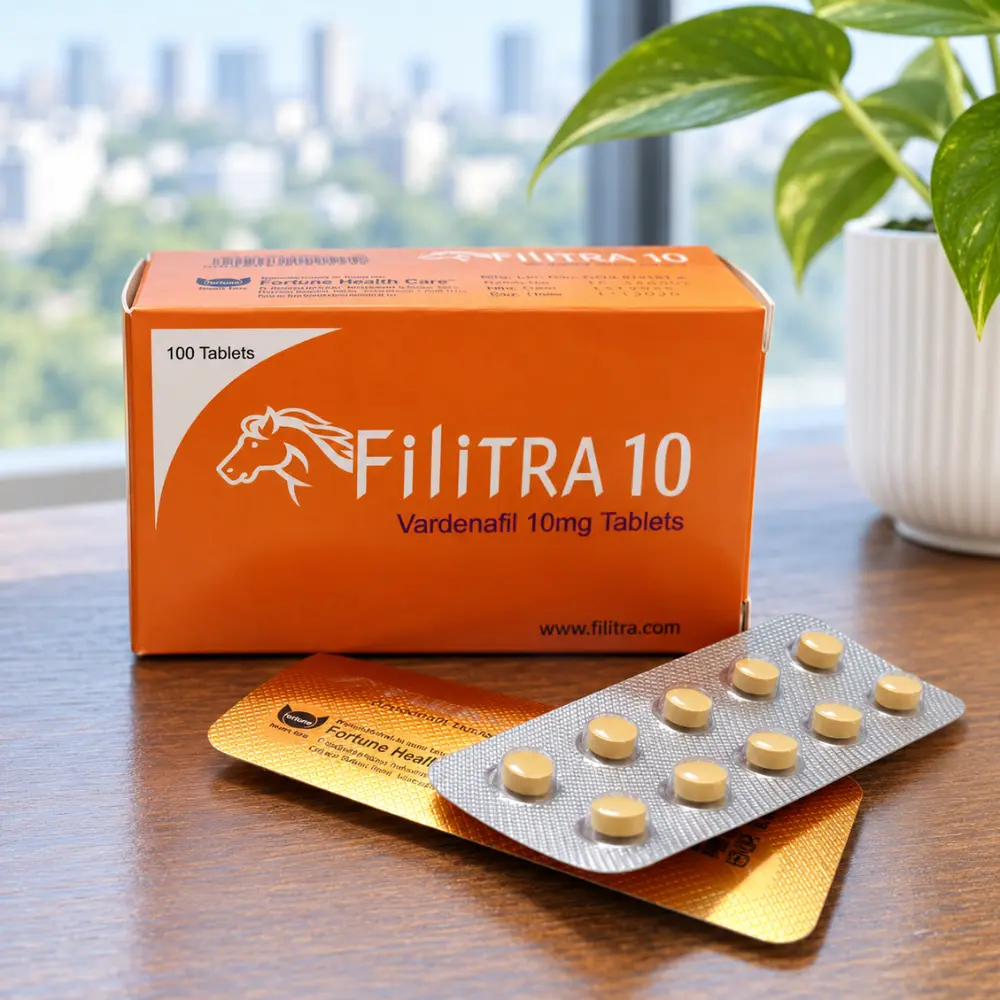
Filitra 10 Mg Tablets — Vardenafil 10 mg for Erectile Dysfunction
Filitra 10 Mg Tablets contain vardenafil 10 mg as the active pharmaceutical ingredient. Manufactured by Fortune Healthcare Pvt. Ltd., Filitra belongs to the class of medicines known as phosphodiesterase type 5 (PDE5) inhibitors — the same pharmacological class as sildenafil (Viagra) and tadalafil. Vardenafil is an oral treatment for erectile dysfunction (ED) in adult men, helping to achieve and maintain an erection sufficient for satisfactory sexual activity when taken approximately 60 minutes before intercourse.
Vardenafil was first approved by the US FDA in 2003 under the brand name Levitra. It is recognised for its high selectivity and potency against PDE5, with an inhibitory concentration (IC50) of approximately 0.7 nM, making it one of the most potent PDE5 inhibitors available. Unlike tadalafil — which can remain active for up to 36 hours — vardenafil has a half-life of 4–6 hours, making Filitra 10 Mg a suitable option for men who prefer a shorter-acting, on-demand treatment for erectile dysfunction.
Erectile dysfunction affects a significant proportion of adult men worldwide and is defined as the persistent inability to achieve or maintain an erection sufficient for satisfactory sexual performance. It can result from psychological factors, vascular disease, diabetes, hormonal imbalances, neurological conditions, or as a side effect of certain medications. PDE5 inhibitors such as vardenafil are considered first-line pharmacological therapy for ED in men who are suitable candidates for oral treatment.
Composition of Filitra 10 Mg Tablets
Each film-coated tablet of Filitra 10 Mg contains:
- Vardenafil 10 mg (as vardenafil hydrochloride trihydrate) — the active PDE5-inhibiting ingredient
- Inactive excipients: microcrystalline cellulose, crospovidone, colloidal anhydrous silica, magnesium stearate; tablet coating contains hypromellose, titanium dioxide, macrogol, iron oxide yellow, and iron oxide red
Filitra 10 Mg tablets are film-coated, orange-coloured tablets for oral administration. The 10 mg strength is the standard starting dose recommended for most adult men.
How Filitra 10 Mg Works — Mechanism of Action
The Physiology of Penile Erection
Penile erection is a haemodynamic process initiated by smooth muscle relaxation in the corpus cavernosum and its associated arterioles. During sexual stimulation, nerve endings and endothelial cells in the corpus cavernosum release nitric oxide (NO). Nitric oxide activates the enzyme guanylate cyclase, which catalyses the conversion of guanosine triphosphate (GTP) to cyclic guanosine monophosphate (cGMP). The resulting increase in intracellular cGMP causes smooth muscle relaxation, arterial vasodilation, and increased blood flow into the penile erectile tissue, producing an erection. Compression of venous outflow between the engorged corpus cavernosum and the tunica albuginea maintains the erection.
Role of PDE5
The enzyme phosphodiesterase type 5 (PDE5) is the most abundant phosphodiesterase in the human corpus cavernosum. PDE5 hydrolyses cGMP to its inactive form (5′-GMP), thereby terminating the smooth muscle relaxation signal and limiting erection duration and rigidity. In men with erectile dysfunction, excessive PDE5 activity or reduced NO availability results in insufficient cGMP accumulation for a satisfactory erection.
How Vardenafil Inhibits PDE5
Vardenafil competitively inhibits PDE5, preventing the breakdown of cGMP in the corpus cavernosum. This amplifies and prolongs the cGMP signal generated by sexual stimulation, enhancing smooth muscle relaxation, arterial inflow, and venous occlusion — collectively producing and sustaining an erection.
A critical feature of PDE5 inhibitors — including vardenafil — is that sexual stimulation must be present to initiate nitric oxide release. Without sexual arousal, vardenafil does not cause an erection, as there is no NO release to trigger cGMP synthesis. This requirement for sexual stimulation is an important safety feature that distinguishes PDE5 inhibitors from injectable or intraurethral prostaglandin treatments.
Selectivity Profile
Vardenafil exhibits high selectivity for PDE5 over other PDE isoforms: it is more than 15 times selective over PDE6 (found in the retina), over 130 times selective over PDE1, over 300 times selective over PDE11, and more than 1,000 times selective over PDE2, PDE3, PDE4, PDE7, PDE8, PDE9, and PDE10. This high selectivity profile is clinically relevant: the relatively lower selectivity of sildenafil for PDE6 is associated with blue-tinge visual disturbances reported with that drug, an effect not associated with vardenafil at recommended doses.
Pharmacokinetics
Following oral administration, vardenafil is rapidly absorbed with a time to maximum plasma concentration (Tmax) of approximately 30–120 minutes (median 60 minutes). Bioavailability is approximately 15%, reflecting significant first-pass hepatic metabolism. A high-fat meal may delay absorption slightly. Vardenafil is primarily metabolised by the hepatic cytochrome P450 isoenzyme CYP3A4, with minor contributions from CYP3A5 and CYP2C. The active metabolite M1 contributes approximately 7% of total pharmacological activity. The elimination half-life of vardenafil and its M1 metabolite is 4–6 hours, making it suitable for on-demand use. Excretion occurs primarily via the faeces (approximately 91–95%) with the remainder in the urine.
Uses and Indications
Primary Indication
- Erectile dysfunction in adult men: Filitra 10 Mg is indicated for the treatment of erectile dysfunction — the persistent inability to achieve or maintain an erection sufficient for satisfactory sexual activity. It is effective across a broad range of ED aetiologies including psychogenic ED, vasculogenic ED, diabetic ED, and ED associated with post-radical prostatectomy or other pelvic surgery.
Patient Populations Where Vardenafil Has Demonstrated Efficacy
- Men with type 1 and type 2 diabetes mellitus-associated ED
- Men with hypertension-related ED
- Men with ED following radical prostatectomy (nerve-sparing procedures)
- Older men with age-related ED
- Men with psychogenic ED not responding to psychological therapies alone
Dosage and Administration
Standard Dosing
- Starting dose: 10 mg taken orally approximately 60 minutes before anticipated sexual activity
- Dose adjustment: Based on individual efficacy and tolerability, the dose may be increased to 20 mg or decreased to 5 mg
- Maximum frequency: No more than once per 24-hour period
- Food interaction: Can be taken with or without food; a high-fat meal may delay onset slightly
- Alcohol: Excessive alcohol consumption may impair erection quality and can increase the hypotensive effect of vardenafil; moderate alcohol intake is advisable
Special Populations
- Elderly men (≥65 years): Consider starting with the 5 mg dose due to potentially higher plasma levels and greater sensitivity to side effects
- Moderate hepatic impairment (Child-Pugh B): Starting dose should not exceed 5 mg; maximum dose 10 mg. Contraindicated in severe hepatic impairment (Child-Pugh C).
- Renal impairment: Dose adjustment generally not required for creatinine clearance 30–80 mL/min. Use is not recommended in patients on haemodialysis.
- Not indicated in women or children: Vardenafil is not approved for use in women, children, or adolescents under 18 years of age.
Missed Dose
Filitra 10 Mg is taken on an as-needed basis, not on a fixed schedule. There is no concept of a “missed dose” for on-demand use. Take the tablet approximately 60 minutes before sexual activity and do not take more than one tablet in 24 hours.
Side Effects
Common Side Effects (typically mild to moderate and dose-dependent)
- Headache — the most frequently reported adverse effect with PDE5 inhibitors
- Flushing (warmth, redness, or tingling sensation), particularly of the face and upper body
- Nasal congestion or rhinitis
- Dyspepsia (indigestion, heartburn, upset stomach)
- Sinusitis
- Dizziness or light-headedness (usually related to mild blood pressure reduction)
- Back pain and myalgia (muscle aches) — slightly less common than with tadalafil
Less Common but Clinically Significant Side Effects
- Blood pressure reduction — vardenafil has a mild systemic vasodilatory effect and can lower blood pressure by approximately 6–8 mmHg systolic; this is generally asymptomatic in healthy men but can be significant when combined with antihypertensives or alpha-blockers
- Visual disturbances — blurred vision, altered colour perception; less likely with vardenafil than with sildenafil due to greater PDE6 selectivity
- QT interval prolongation — vardenafil can prolong the cardiac QT interval; this is clinically relevant in patients with congenital or acquired long QT syndrome or those on QT-prolonging drugs
Serious Adverse Effects (Seek Immediate Medical Attention)
- Priapism: A prolonged, painful erection lasting more than 4 hours unrelated to sexual stimulation; a medical emergency requiring immediate treatment to prevent permanent erectile tissue damage
- Sudden vision loss: Non-arteritic anterior ischaemic optic neuropathy (NAION) has been rarely reported with PDE5 inhibitors; discontinue immediately if sudden loss of vision occurs in one or both eyes
- Sudden hearing loss: Sudden decrease or loss of hearing, with or without tinnitus or dizziness, has been reported; discontinue and seek immediate medical attention
- Severe hypotension: Particularly when vardenafil is taken with nitrates, alpha-blockers, or antihypertensives; can cause syncope and cardiovascular collapse
- Serious cardiovascular events: Myocardial infarction and other serious cardiovascular events have been rarely reported, predominantly in men with pre-existing cardiovascular risk factors during or shortly after sexual activity
Precautions and Warnings
- Cardiovascular assessment: Sexual activity carries inherent cardiovascular demand. Before prescribing vardenafil, evaluate the patient’s cardiovascular status. Men with significant cardiovascular disease, unstable angina, uncontrolled hypertension, recent stroke or myocardial infarction (within 6 months), severe heart failure, or those for whom sexual activity is inadvisable should not use vardenafil.
- QT prolongation risk: Vardenafil prolongs the QT interval and should be used with particular caution in patients with congenital or acquired QT syndrome, those with hypokalaemia or hypomagnesaemia, or patients receiving other QT-prolonging agents (including certain antiarrhythmics, macrolide antibiotics, antipsychotics, and antifungals).
- Priapism risk: Men with sickle cell anaemia, multiple myeloma, leukaemia, or anatomical penile deformities (such as Peyronie’s disease, angulation, or cavernosal fibrosis) are at higher risk of priapism with PDE5 inhibitors.
- Retinitis pigmentosa: Vardenafil has not been studied in men with hereditary degenerative retinal disorders; use is not recommended in these patients until further information is available.
- Avoid concomitant ED therapies: Do not use vardenafil in combination with other PDE5 inhibitors or other erectile dysfunction treatments (including alprostadil, papaverine, phentolamine) due to risk of additive effects and priapism.
- Driving and machinery: Dizziness may occur with vardenafil; patients should determine their response before driving or operating heavy machinery.
Drug Interactions
- Nitrates (ABSOLUTE CONTRAINDICATION): Vardenafil is absolutely contraindicated in patients taking any form of nitrate or nitric oxide donor, including glyceryl trinitrate (GTN), isosorbide mono- or di-nitrate, amyl nitrite, or any other organic nitrate. The combination can cause a severe, potentially fatal fall in blood pressure. This contraindication applies to both regular and intermittent (“as needed”) nitrate use.
- Guanylate cyclase stimulators: Riociguat (Adempas) and other guanylate cyclase stimulators are absolutely contraindicated with vardenafil as the combination can cause profound hypotension.
- Alpha-blockers: Caution is required when vardenafil is coadministered with alpha-adrenergic blockers (tamsulosin, doxazosin, terazosin, alfuzosin). Both drug classes lower blood pressure, and concurrent use can cause symptomatic hypotension. If alpha-blockers are required, begin with the lowest recommended dose of vardenafil (5 mg) and ensure haemodynamic stability before dose increases.
- CYP3A4 inhibitors: Potent inhibitors of CYP3A4 significantly increase vardenafil plasma levels. Ketoconazole 200 mg daily increases vardenafil AUC approximately 10-fold; ketoconazole 400 mg daily increases it approximately 13-fold. Similar interactions occur with itraconazole, ritonavir, indinavir, clarithromycin, and other potent CYP3A4 inhibitors. Dose reductions are required and in some cases concurrent use should be avoided. With ritonavir or indinavir (HIV protease inhibitors), a maximum single dose of 2.5 mg vardenafil should not be exceeded and dosing should not be more frequent than once every 72 hours.
- CYP3A4 inducers: Drugs that induce CYP3A4 (rifampicin, carbamazepine, phenytoin, phenobarbital, St John’s Wort) may reduce vardenafil plasma concentrations and potentially reduce efficacy.
- Antihypertensive drugs: Additive blood pressure lowering effects may occur; monitor blood pressure and adjust treatment as necessary.
- Alcohol: Heavy alcohol consumption can impair erectile function and may enhance vardenafil’s blood pressure lowering effect. Moderate intake is advisable.
- Grapefruit juice: Can moderately inhibit CYP3A4 and potentially increase vardenafil plasma levels; excessive consumption should be avoided.
Contraindications
- Concomitant use of any form of nitrate or nitric oxide donor (see Drug Interactions above)
- Concomitant use of guanylate cyclase stimulators such as riociguat
- Severe hepatic impairment (Child-Pugh class C)
- Patients with end-stage renal disease requiring haemodialysis
- Severe cardiovascular disease or recent (within 6 months) myocardial infarction or stroke
- Unstable angina or angina occurring during sexual intercourse
- Severe heart failure (NYHA Class IV) or uncontrolled cardiac failure
- Uncontrolled hypertension (resting systolic BP >170 mmHg or diastolic >100 mmHg) or severe hypotension (resting BP <90/50 mmHg)
- Hereditary degenerative retinal disorders including retinitis pigmentosa
- Known hypersensitivity to vardenafil or any excipient in the formulation
- Not for use in women, children, or adolescents under 18 years
Storage Instructions
- Store below 30°C in a cool, dry place
- Keep away from moisture and direct sunlight
- Store in the original packaging
- Keep out of the reach of children
- Do not use after the expiry date printed on the pack
Related Products
- Filitra 40 Mg Tablets — higher-dose vardenafil for erectile dysfunction
- Duratia 30 Mg Tablets — dapoxetine for premature ejaculation
- Duratia 60 Mg Tablets — dapoxetine 60 mg for premature ejaculation
- Bigfun Jelly 100 Mg — sildenafil 100 mg oral jelly for erectile dysfunction
- Caverta 25 Mg Tablets — sildenafil 25 mg by Sun Pharma for erectile dysfunction
References
- U.S. National Library of Medicine. DailyMed — Vardenafil Hydrochloride Tablets. Available at: https://dailymed.nlm.nih.gov/dailymed/drugInfo.cfm?setid=5876e062-e604-42a7-99c3-5da30b8dac06
- MedlinePlus (U.S. National Library of Medicine). Vardenafil. Available at: https://medlineplus.gov/druginfo/meds/a603035.html
- Mayo Clinic. Vardenafil (Oral Route). Available at: https://www.mayoclinic.org/drugs-supplements/vardenafil-oral-route/description/drg-20067851
- U.S. Food and Drug Administration. LEVITRA (vardenafil hydrochloride) Prescribing Information. Available at: https://www.accessdata.fda.gov/drugsatfda_docs/label/2014/021392s018lbl.pdf
- Keating GM, Scott LJ. Vardenafil: a review of its use in erectile dysfunction. Drugs. 2003;63(23):2673–703. Available at: https://pubmed.ncbi.nlm.nih.gov/14742800/
Reviews
There are no reviews yet.