
Description
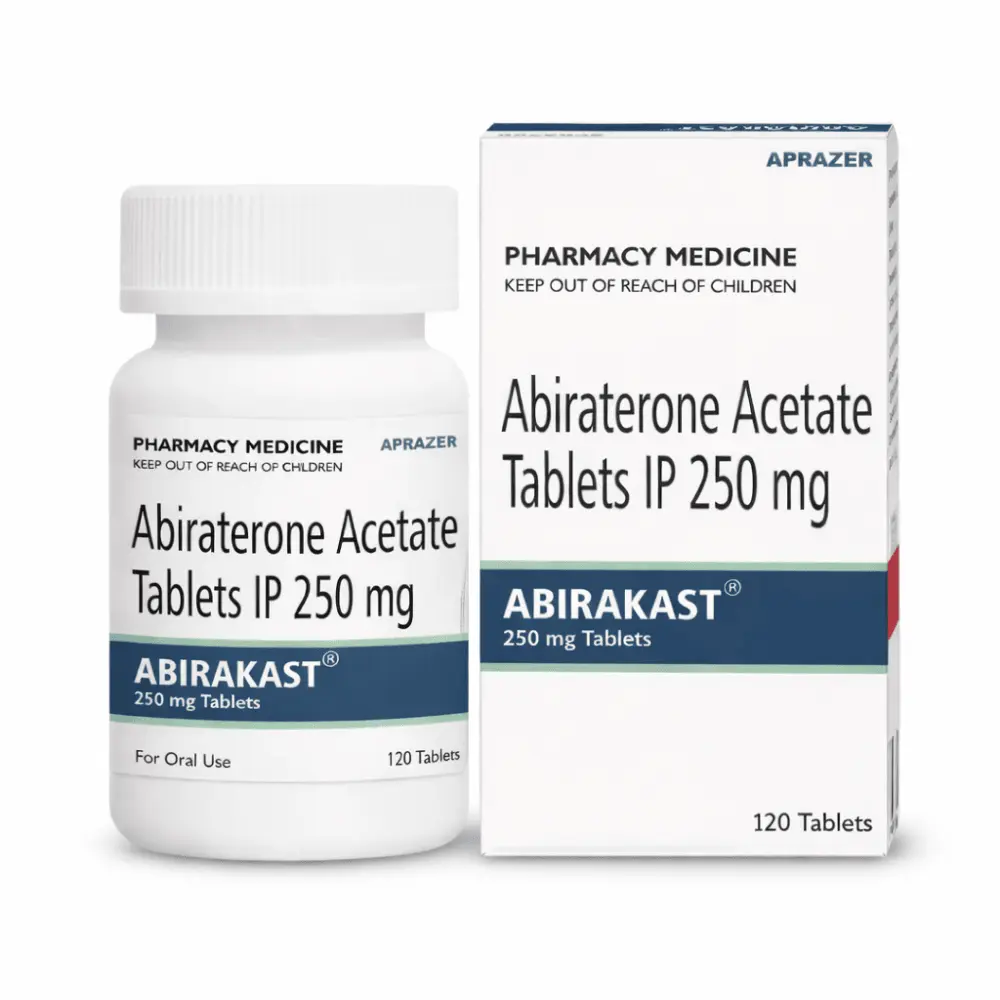
Comprehensive Patient & Clinician Guide to Abirakast 250mg Tablet (Abiraterone Acetate)
Abirakast 250mg Tablet is a sophisticated, prescription-only targeted therapy cancer drug that belongs to the class of androgen biosynthesis inhibitor drugs.
Produced by Aprazer Healthcare Pvt. Ltd., each tablet has 250 mg of abiraterone acetate in it.
Abirakast is administered under strict supervision by an oncologist for the treatment of advanced and metastatic prostate cancer in adult males.
In general, most of the prostate cancer cells use male hormones, especially testosterone and androgens, as their source of energy to grow and multiply.
Contrary to the old-school cytotoxic chemotherapy, which kills the cancer cells, Abirakast starves them of androgen sources.
Molecular Pharmacology & Mechanism of Action
To understand how Abirakast works, it helps to review androgen synthesis. In the male body, standard hormone-deprivation treatments (like surgical castration or LHRH/GnRH agonists) stop the testicles from producing testosterone.
However, prostate cancer can continue to grow because two secondary backup sources remain active:
-
The adrenal glands (located atop the kidneys)
-
The prostate cancer cells themselves (intratumoral androgen synthesis)
Abiraterone acetate is an orally active prodrug that converts in vivo to active abiraterone.
It acts as a potent, selective, and irreversible inhibitor of the cytochrome P450 c17 (CYP17) enzyme complex. This enzyme mediates two critical sequential reactions in steroidogenesis:
- By shutting down CYP17, Abirakast blocks the conversion of steroid precursors into dehydroepiandrosterone (DHEA) and androstenedione. This halts androgen creation across all three physiological sites: the testes, adrenal glands, and tumor tissue.
- Why Co-Administration with Prednisone is Essential: Blocking the CYP17 enzyme decreases cortisol synthesis in the adrenal glands. This prompts the pituitary gland to produce excess Adrenocorticotropic Hormone (ACTH), leading to an overproduction of mineralocorticoids (aldosterone precursors).
- To counteract this, Abirakast must always be taken alongside low-dose oral prednisone or prednisolone. The steroid replaces natural cortisol, suppresses ACTH release, and reduces the risk of mineralocorticoid-related side effects (such as severe fluid retention, low potassium, and high blood pressure).
Approved Therapeutic Indications
Abirakast 250mg Tablet is indicated for adult male patients in the following clinical settings:
- Metastatic Castration-Resistant Prostate Cancer (mCRPC): Administered in combination with prednisone to patients who have their prostate cancer spread to other body parts (such as bone or lymph nodes) while continuing to grow despite having undergone castration either by surgery or medically. This is administered to those who have never been subjected to chemotherapy or those whose cancer grows after being treated with docetaxel-based chemotherapy.
- Metastatic High Risk Castration-Sensitive Prostate Cancer (mCSPC): Administered in combination with prednisone and standard ADT (Androgen Deprivation Therapy) for newly diagnosed advanced prostate cancer which is still sensitive to hormone manipulation but has high-risk prognostic characteristics.
Standard Dosage and Administration Guidelines
Abirakast 250mg must be taken strictly according to the regimen established by your oncology care team.
Standard Adult Dosage
-
Standard Daily Dose: The standard dose is 1,000 mg taken orally once daily. This requires swallowing four 250mg tablets together at the same time each day.
-
Accompanying Corticosteroid:
-
For mCRPC: Combined with prednisone 5 mg orally twice daily.
-
For mCSPC: Combined with prednisone 5 mg orally once daily.
-
The Strict Empty-Stomach Requirement
Abirakast must be taken on an empty stomach:
-
Take your daily dose at least 1 hour before eating, OR
-
Wait at least 2 hours after your last meal or snack before taking your tablets.
Why should there be such strict adherence to this schedule? The absorption rate of Abiraterone increases drastically if taken after eating.
Abirakast taken after even a minimal amount of food can result in unpredictable spikes in blood concentration, as high as 10 times the desired concentration level, leading to the risk of serious liver damage, potassium depletion, and cardiovascular issues.
Available Alternatives
- Abirapro 250 Mg Tablets
- Adbiron 250 Mg Tablet
- Ahabir 250 Mg Tablet
- Alkeprost 250 Mg Tablet
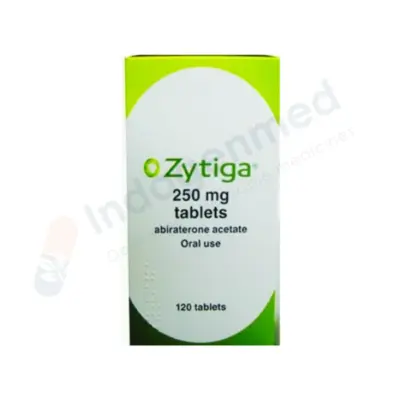
- Zytiga 250 Mg Tablets
Key Administration Checkpoints
- Swallow Whole: The four tablets should be swallowed whole using plain water. No chewing, crushing, splitting, or dissolving of the tablets should occur.
- Handling by Pregnant Women: It is forbidden for women who are pregnant or could become pregnant to handle or come into contact with Abirakast tablets without wearing gloves because Abiraterone is known to absorb via the skin with a very high risk of causing harm to a developing male fetus.
- Missed Dose Procedure: Should a dose of Abirakast or your steroid be missed, the missed dose will be skipped, and the next day, the usual dose prescribed will be taken. Taking extra tablets to compensate for the missed dose should never be done.
Potential Side Effects & Clinical Management Strategies
While concurrent low-dose prednisone controls many hormonal imbalances, side effects can still occur and require close observation.
Common Adverse Reactions
| Organ System | Common Symptoms | Clinical Management |
| Cardiovascular & Fluid | Hypertension (high blood pressure), peripheral edema (swelling in feet/ankles). | Monitor blood pressure weekly at home; low-sodium diet; antihypertensives may be adjusted. |
| Metabolic & Electrolyte | Hypokalemia (low potassium), hypertriglyceridemia, hyperglycemia. | Regular blood electrolyte monitoring; potassium supplementation or dietary changes if prescribed. |
| Gastrointestinal | Diarrhea, indigestion, vomiting, nausea. | Stay hydrated; eat small, balanced meals during permitted eating hours. |
| Hematologic & General | Fatigue, anemia (low red blood cells), hot flushes, joint swelling, groin pain. | Plan rest periods; routine Complete Blood Count (CBC) tracking. |
Serious Adverse Reactions (Require Immediate Medical Attention)
-
Hepatotoxicity (Severe Liver Toxicity): Marked increases in liver enzymes (ALT, AST) or bilirubin can occur. Watch for yellowing of the skin or eyes (jaundice), dark brown or tea-colored urine, light-colored stools, or severe upper-right abdominal pain.
-
Severe Hypokalemia & Cardiac Arrhythmias: Critically low potassium levels can lead to muscle twitching, severe weakness, heart palpitations, or irregular heartbeats (arrhythmias).
-
Adrenocortical Insufficiency: Can occur if prednisone is stopped abruptly or during periods of physical stress (e.g., severe infection, surgery). Symptoms include dizziness upon standing, profound weakness, vomiting, and confusion.
-
Cardiovascular Events: Increased risk of heart failure, chest pain (angina), rapid heart rate (tachycardia), or shortness of breath.
-
Bone Fractures: Decreased bone mineral density over time increases fracture risk. Calcium and Vitamin D supplementation are frequently recommended.
Precautions & Mandatory Safety Monitoring Protocols
To ensure safe administration, your oncologist will order a structured schedule of baseline laboratory tests and regular follow-ups.
Essential Laboratory Monitoring Schedule
| Test Parameter | Recommended Frequency | Purpose |
| Liver Function Tests (ALT, AST, Bilirubin) | Baseline, every 2 weeks for the first 12 weeks, then monthly thereafter | Detects transaminase elevations early to prevent severe chemical hepatitis or liver failure. |
| Serum Potassium & Electrolytes | Baseline, then monthly | Tracks potassium levels to identify and treat hypokalemia promptly. |
| Blood Pressure Monitoring | Baseline, then at least monthly (or weekly at home) | Manages secondary hypertension caused by mineralocorticoid excess. |
| Cardiac Assessment (LVEF) | Baseline (in at-risk patients) and as clinically indicated | Evaluates heart pumping function in patients with underlying cardiac disease. |
Key Clinical Precautions
- Previous Heart Disease: Caution is advised in patients who have suffered from congestive heart failure, myocardial infarction, or unstable arrhythmias because water retention caused by the change in hormone balance can exacerbate the heart conditions.
- Never Stop Taking Prednisone Suddenly: If prednisone is stopped suddenly, a sudden increase in ACTH and mineralocorticoids can trigger acute adrenal insufficiency and raise blood pressure rapidly.
- Radium Ra 223 Contraindication: It is contraindicated to use abiraterone and Radium Ra 223 together except for within clinical trials owing to a higher risk of bone fracture and death.
Drug Interactions & Special Population Guidelines
Abiraterone is metabolized by the liver enzyme CYP3A4 and is a strong inhibitor of CYP2D6 and CYP2C8.
Key Drug Interactions
-
Strong CYP3A4 Inducers (e.g., Rifampin, Phenytoin, Carbamazepine, St. John’s Wort): Accelerate the breakdown of abiraterone, reducing its blood levels and making the cancer treatment less effective. Avoid co-administration.
-
CYP2D6 Substrates (e.g., Metoprolol, Dextromethorphan, Desipramine, Venlafaxine): Abiraterone increases blood levels of drugs processed by CYP2D6. Your doctor may need to adjust doses or select alternative medications.
-
Diuretics & Potassium-Wasting Drugs: Co-administration with drugs that lower potassium (like thiazide or loop diuretics) increases the risk of severe hypokalemia and requires close electrolyte monitoring.
Special Population Safety Guidelines
-
Use in Women (Contraindicated): Abiraterone is not indicated for use in women. It is strictly contraindicated in women who are pregnant or may become pregnant due to severe fetal harm and potential loss of pregnancy.
-
Contraception & Seminal Transmission: Abiraterone is present in human seminal fluid. Male patients with female partners of childbearing potential must use a male condom along with another effective form of birth control during treatment and for at least 3 weeks after the final dose.
-
Pediatric Use: Abirakast is not approved for use in pediatric populations.
Storage, Handling, and Quality Compliance
-
Storage Conditions: Store Abirakast 250mg Tablets at room temperature between 20°C and 25°C (68°F to 77°F). Keep the bottle tightly sealed in a dry place to protect from moisture.
-
Keep Out of Reach: Keep strictly out of reach of children and pets.
-
Manufacturing Standards: Marketed by Aprazer Healthcare Pvt. Ltd., Abirakast is manufactured in pharmaceutical facilities compliant with WHO-GMP (World Health Organization Good Manufacturing Practices) guidelines, ensuring batch uniformity and chemical purity.
Frequently Asked Questions (FAQs)
Q1: Can I stop taking the prednisone tablets if I feel well?
No. Never stop or change your prednisone dose without explicit direction from your oncologist. Prednisone is required to replace the natural cortisol that Abirakast blocks. Stopping it suddenly can cause acute adrenal crisis, severe fluid retention, and dangerous drops in potassium.
Q2: What should I do if I accidentally take Abirakast with breakfast?
Taking Abirakast with food causes your body to absorb significantly more medicine than intended. If this happens accidentally, inform your oncology team. Watch for symptoms such as dizziness, nausea, swelling, or palpitations, and resume your strict empty-stomach schedule for your next dose the following day.
Q3: How long will I need to continue treatment with Abirakast?
Treatment typically continues as long as Abirakast keeps your prostate cancer stable or controlled (monitored through PSA tests and imaging) and you do not experience unmanageable side effects. Your oncologist will regularly assess your response to determine the best treatment duration.
Medical Disclaimer
This guide is strictly for educational and informational purposes and should not replace professional medical advice, diagnosis, or treatment. Always consult a qualified oncologist or healthcare professional before initiating, modifying, or halting any cancer therapy or prescription medication.
References
-
National Center for Biotechnology Information (NCBI):
-
StatPearls Review: Abiraterone Acetate Pharmacology and Clinical Profile. https://www.ncbi.nlm.nih.gov/books/NBK557620/
-
PMC Clinical Studies: Abiraterone Acetate in Metastatic Castration-Resistant and Castration-Sensitive Prostate Cancer. https://pmc.ncbi.nlm.nih.gov/articles/PMC3628169/
-
-
U.S. Food and Drug Administration (FDA):
-
ZYTIGA (abiraterone acetate) Full Prescribing Information & Safety Updates. https://www.accessdata.fda.gov/scripts/cder/daf/index.cfm?event=overview.process&ApplNo=202379
-
-
MedlinePlus Drug Information (US National Library of Medicine):
-
Abiraterone Monograph & Patient Instructions. https://medlineplus.gov/druginfo/meds/a611046.html
-
-
Mayo Clinic:
-
Abiraterone (Oral Route) Description, Dosing & Side Effects. https://www.mayoclinic.org/drugs-supplements/abiraterone-oral-route/description/drg-20074889
-


Reviews
There are no reviews yet.