Description
What are Cefadur DT 250 Mg Tablets?
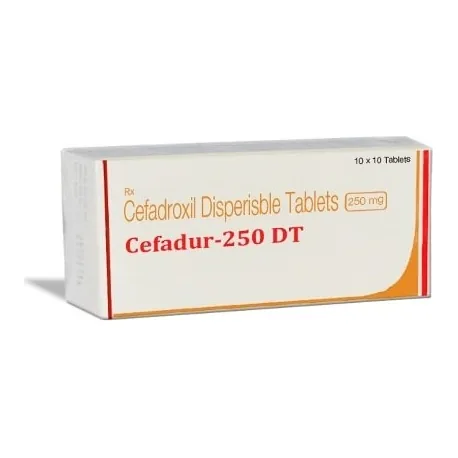
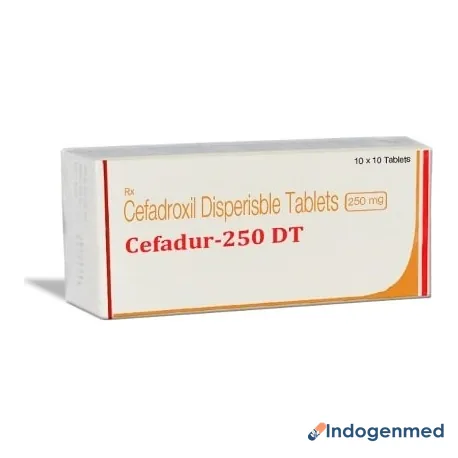
Cefadur DT 250 Mg Tablets are a prescription-only antibiotic medicine manufactured by Cipla Ltd., India. Each dispersible tablet contains 250 mg of cefadroxil, a first-generation oral cephalosporin antibiotic used in the treatment of bacterial infections including skin infections, throat infections, and urinary tract infections caused by susceptible organisms.
The DT (Dispersible Tablet) formulation is designed to be dissolved in a small amount of water before swallowing, making it particularly convenient for patients who have difficulty swallowing solid tablets — including children, elderly patients, and those with dysphagia. Cefadur DT 250 Mg tablets can also be swallowed whole or chewed as directed by the prescribing doctor.
A valid prescription from a licensed healthcare professional is required. Cefadur DT should only be used for confirmed or strongly suspected bacterial infections under medical supervision, at the prescribed dose and for the full recommended duration.
Composition and Presentation
| Attribute | Detail |
|---|---|
| Brand Name | Cefadur DT |
| Active Ingredient | Cefadroxil |
| Strength | 250 mg per dispersible tablet |
| Dosage Form | Dispersible Tablet (DT) |
| Pack Size | 10 Tablets per strip |
| Manufacturer | Cipla Ltd., India |
| Medicine Type | Generic |
| Rx Status | Prescription Only (Rx) |
| Country of Origin | India |
About Cipla Ltd. and the Cefadur Brand
Cipla Ltd. is one of India’s most established global pharmaceutical companies, headquartered in Mumbai and operating in over 100 countries. With more than eight decades of experience in affordable medicine manufacturing, Cipla is recognised for its rigorous adherence to Good Manufacturing Practice (GMP) standards and its commitment to patient accessibility. Cefadur DT represents Cipla’s dispersible formulation of cefadroxil, designed for ease of administration across patient populations.
How Cefadroxil (Cefadur DT) Works
Cefadroxil is a first-generation oral cephalosporin antibiotic belonging to the beta-lactam class. It exerts a bactericidal effect — it kills susceptible bacteria outright rather than simply slowing their growth. Its mechanism of action follows the same fundamental pathway as other beta-lactam antibiotics:
- Binding to penicillin-binding proteins (PBPs): After absorption, cefadroxil binds to PBPs — specifically the transpeptidase enzymes embedded in the bacterial cell wall membrane. These enzymes are responsible for the final cross-linking step in peptidoglycan synthesis.
- Inhibition of peptidoglycan cross-linking: Peptidoglycan is the main structural polymer of the bacterial cell wall. By inactivating PBPs, cefadroxil prevents the formation of cross-links between peptidoglycan strands, weakening the cell wall scaffold.
- Bacterial lysis: With the cell wall unable to withstand osmotic pressure, the bacterium loses structural integrity, water rushes in, and the cell lyses (ruptures), causing death.
As a first-generation cephalosporin, cefadroxil has a narrower spectrum than third-generation agents such as cefpodoxime. It is most potent against Gram-positive bacteria — particularly streptococci and methicillin-susceptible staphylococci — and has more limited coverage of Gram-negative organisms.
Spectrum of Antibacterial Activity
Cefadroxil is generally active against (susceptibility may vary; local resistance patterns must inform prescribing decisions):
- Gram-positive organisms: Streptococcus pyogenes (Group A beta-haemolytic streptococcus), Streptococcus pneumoniae, methicillin-susceptible Staphylococcus aureus (MSSA), other streptococcal species.
- Selected Gram-negative organisms: Escherichia coli, Klebsiella pneumoniae, Proteus mirabilis — making it suitable for uncomplicated urinary tract infections caused by these organisms.
Cefadroxil is not effective against methicillin-resistant Staphylococcus aureus (MRSA), Pseudomonas aeruginosa, enterococci, or most other Gram-negative organisms. Your doctor will select the appropriate antibiotic based on the suspected causative organism and local susceptibility data.
Pharmacokinetic Advantages of Cefadroxil
Cefadroxil has several practical pharmacokinetic properties that distinguish it from some other oral antibiotics:
- Excellent oral bioavailability (~90%): Nearly complete absorption from the gastrointestinal tract ensures high systemic drug concentrations.
- Food-independent absorption: Unlike some antibiotics, cefadroxil can be taken with or without food, offering flexible dosing around meal times.
- High urinary excretion: Cefadroxil is primarily excreted unchanged in the urine, producing high urinary drug concentrations — a particularly valuable property for the treatment of urinary tract infections.
- Longer half-life (~1.5 hours) enabling once- or twice-daily dosing: Allows for simpler dosing regimens compared to some other first-generation cephalosporins (e.g., cefalexin, which typically requires dosing every 6 hours).
Indications — What Cefadur DT 250 Mg Is Used For
Cefadur DT 250 Mg Tablets are indicated for the treatment of mild-to-moderate bacterial infections caused by susceptible organisms, including:
- Skin and soft tissue infections: Impetigo, folliculitis, furunculosis, cellulitis, wound infections, and other uncomplicated skin infections caused by MSSA or Streptococcus pyogenes.
- Upper respiratory tract infections: Pharyngitis (sore throat) and tonsillitis caused by Streptococcus pyogenes (Group A streptococcus) — one of the primary indications for which cefadroxil is particularly effective, including in the prevention of rheumatic fever complications.
- Urinary tract infections (UTIs): Uncomplicated cystitis and other UTIs caused by susceptible Gram-negative organisms, primarily E. coli, K. pneumoniae, and Proteus mirabilis. High urinary drug concentrations make cefadroxil an effective option for lower UTIs.
The dispersible tablet form is particularly useful in paediatric patients who require weight-based dosing and in adults or elderly patients who have difficulty swallowing conventional tablets. Treatment should be guided by laboratory culture and sensitivity results where available.
Dosage and Administration
This information is provided for general reference only and does not replace the instructions of your prescribing doctor. Dose, frequency, and duration will be individualised based on the type and severity of infection, the patient’s age and weight, and kidney function.
How to Take Dispersible Tablets
Dissolve the tablet in a small amount of water (approximately 5–10 mL) and stir until fully dispersed, then drink the mixture immediately. Alternatively, the tablet may be swallowed whole or chewed with water, as directed by your doctor. Take with or without food — food does not significantly affect cefadroxil absorption.
Recommended Doses
| Patient Group / Indication | Dose | Frequency | Duration |
|---|---|---|---|
| Adults — pharyngitis / tonsillitis (Group A strep) | 1,000 mg (4 × 250 mg DT) | Once daily or 500 mg twice daily | 10 days |
| Adults — skin and soft tissue infections | 500 mg (2 × 250 mg DT) | Twice daily | 7–14 days |
| Adults — uncomplicated UTI (cystitis) | 500–1,000 mg | Once or twice daily | 7 days |
| Children — pharyngitis / skin infections | 30 mg/kg/day (weight-based) | Once or twice daily | As prescribed |
| Children — UTI | 30 mg/kg/day (weight-based) | Twice daily | As prescribed |
Complete the full prescribed course of Cefadur DT even if symptoms improve before the course is finished. Stopping antibiotics early can allow surviving bacteria to multiply, risking relapse and development of antibiotic resistance.
Special Populations
Renal Impairment
Cefadroxil is renally excreted and requires dose or frequency adjustment in patients with reduced kidney function:
- Normal renal function (CrCl >50 mL/min): Standard dose; no adjustment required.
- Moderate impairment (CrCl 25–50 mL/min): 500 mg every 12 hours.
- Moderate-severe impairment (CrCl 10–25 mL/min): 500 mg every 24 hours.
- Severe impairment (CrCl <10 mL/min): 500 mg every 36 hours.
Your doctor will assess kidney function before prescribing and advise accordingly.
Hepatic Impairment
Cefadroxil does not undergo significant hepatic metabolism. Dose adjustments are not generally required in patients with liver disease, though medical supervision remains advisable.
Elderly Patients
Elderly patients may have age-related reduction in renal function. Kidney function should be assessed before prescribing, and the renal impairment dosing guidance above applied as appropriate.
Paediatric Use
The dispersible tablet formulation of Cefadur DT 250 Mg is particularly well-suited to weight-based dosing in children. Standard paediatric dosing is approximately 30 mg/kg/day divided into once- or twice-daily doses. For streptococcal pharyngitis, a full 10-day course is important to reduce the risk of complications, including rheumatic fever. The prescribing paediatrician will determine the appropriate number of dispersible tablets per dose based on the child’s weight.
Pregnancy and Breastfeeding
Cefadroxil is a Pregnancy Category B agent in many jurisdictions. Animal studies have not demonstrated foetal harm; adequate human data are limited. It should be used in pregnancy only where the potential benefit justifies any possible risk and under medical supervision. Cefadroxil passes into breast milk in small quantities; discuss the risk-benefit balance with your doctor before using while breastfeeding.
Precautions Before Taking Cefadur DT
Before starting Cefadur DT 250 Mg Tablets, inform your doctor or pharmacist if you:
- Have a known allergy to any cephalosporin antibiotic or to penicillin. Approximately 1–10% of individuals with penicillin allergy may show cross-reactivity with cephalosporins. A history of severe immediate allergic reactions to penicillin (anaphylaxis, severe urticaria) warrants careful clinical assessment before initiating any cephalosporin.
- Have a history of gastrointestinal problems, colitis, or antibiotic-associated diarrhoea. All antibiotics — including cefadroxil — can disrupt the normal intestinal flora and may predispose susceptible individuals to Clostridioides difficile (C. diff) colitis.
- Have impaired kidney function. Renal excretion of cefadroxil means dose adjustments are required to prevent drug accumulation.
- Are taking oral anticoagulants (e.g., warfarin). Cephalosporins may potentiate anticoagulant effects; INR monitoring is advisable.
- Are pregnant, planning pregnancy, or breastfeeding.
- Are using probenecid. Probenecid reduces renal tubular secretion of cefadroxil, potentially increasing drug levels.
Cefadroxil should not be used for viral infections (such as colds, flu, or COVID-19). Inappropriate antibiotic use drives the development of antimicrobial resistance, a major global public health concern. Use this medicine only for bacterial infections as determined by your prescribing doctor.
Contraindications
Cefadur DT 250 Mg Tablets must not be used in patients with:
- A known hypersensitivity or allergic reaction to cefadroxil or any other cephalosporin antibiotic.
- A history of severe immediate-type hypersensitivity to beta-lactam antibiotics, including penicillins, where cross-reactivity with cephalosporins has been established or cannot be excluded.
Side Effects
Like all medicines, cefadroxil can cause side effects, though not all patients will experience them.
Common Side Effects (may affect up to 1 in 10 people)
- Diarrhoea or loose stools
- Nausea
- Vomiting
- Stomach pain or indigestion
- Headache
Less Common Side Effects (may affect up to 1 in 100 people)
- Skin rash, itching (pruritus), or urticaria (hives)
- Genital or oral candidiasis (thrush) due to disruption of normal flora
- Temporary elevation of liver enzymes on blood tests
- Dizziness
Rare but Serious Side Effects (require immediate medical attention)
- Severe allergic reaction (anaphylaxis): Sudden difficulty breathing, throat or facial swelling, rapid heart rate, collapse. This is a medical emergency — call emergency services immediately.
- C. difficile-associated diarrhoea (CDAD): Severe, persistent, or blood-streaked diarrhoea during or after a course of antibiotics may indicate C. diff colitis. Do not take anti-diarrhoeal medicines; seek medical attention promptly.
- Severe skin reactions (Stevens-Johnson syndrome, toxic epidermal necrolysis): Very rare blistering or peeling of the skin and mucous membranes. Discontinue the medicine immediately and seek emergency care.
Report any unexpected or worsening symptoms to your doctor or pharmacist promptly.
Drug Interactions
Inform your doctor and pharmacist of all medicines, supplements, and herbal products you are taking before starting Cefadur DT.
- Probenecid: Inhibits renal tubular secretion of cefadroxil, increasing its blood levels. Your doctor may need to adjust the dose.
- Oral anticoagulants (warfarin): Monitor INR regularly if these medicines are co-prescribed, as cephalosporins can potentiate anticoagulant effects.
- Metformin: Some drug interaction data suggests a potential interaction affecting renal transport; clinical significance is generally low, but inform your doctor if you are taking diabetes medicines.
- Live attenuated bacterial vaccines (e.g., oral typhoid vaccine): Antibiotics may reduce the effectiveness of live bacterial vaccines. Discuss timing of vaccinations with your doctor.
- Aminoglycosides: Co-administration may increase the risk of nephrotoxicity (kidney damage) when given together; combined use should be monitored clinically.
Related Products at Indogenmed
Indogenmed carries a range of antibiotic medicines for different bacterial indications. For infections requiring a broader-spectrum oral cephalosporin with enhanced Gram-negative activity, you may also be interested in Cefoprox 200 Mg Tablets (Cefpodoxime) — a third-generation oral cephalosporin that may be prescribed for respiratory, urinary, and skin infections where broader coverage is required. All antibiotic selections are made by your prescribing doctor based on clinical assessment.
Storage Instructions
- Store below 25°C in a dry place, away from direct sunlight and humidity.
- Keep in the original strip packaging until immediately before use.
- Keep out of the reach and sight of children.
- Do not use after the expiry date printed on the strip or box.
- Dispose of unused medicines responsibly — return them to a pharmacy; do not flush down the sink or drain.
Frequently Asked Questions (FAQs)
What does “DT” mean on Cefadur DT tablets?
DT stands for Dispersible Tablet. Dispersible tablets are designed to be dissolved in water before swallowing, making them ideal for patients who have difficulty swallowing conventional tablets — including young children, elderly patients, or anyone with dysphagia (swallowing difficulties). The dissolved suspension can also allow for more flexible dose adjustment based on body weight, which is particularly useful in paediatric prescribing.
Can Cefadur DT 250 Mg be given to children?
Yes, cefadroxil is commonly prescribed in paediatric patients. The dispersible tablet form allows for weight-based dosing: the standard paediatric dose is approximately 30 mg/kg/day, divided into once- or twice-daily doses, as prescribed by the child’s doctor or paediatrician. The 250 mg DT can be dissolved in water and administered in fractional volumes to achieve the appropriate dose for the child’s weight. Always follow the paediatrician’s instructions precisely regarding the number of tablets and the volume of water to use.
Can I take Cefadur DT with or without food?
Cefadur DT 250 Mg Tablets can be taken with or without food. Unlike some antibiotics where food is required to improve absorption, cefadroxil is well absorbed regardless of whether the stomach is full or empty. Taking it with food may help reduce any stomach upset or nausea. Dissolve the tablet in water before drinking, or swallow whole with a full glass of water.
What should I do if I miss a dose of Cefadur DT?
Take the missed dose as soon as you remember. However, if it is nearly time for the next scheduled dose, skip the missed one and resume the regular dosing schedule. Do not take a double dose to make up for a missed one. If you are unsure, contact your doctor or pharmacist for advice.
How is cefadroxil (first-generation) different from cefpodoxime (third-generation)?
Cefadroxil and cefpodoxime are both oral cephalosporin antibiotics, but they differ in their generation, spectrum, and typical uses. Cefadroxil (first-generation) has stronger activity against Gram-positive bacteria — particularly streptococci and MSSA — making it the preferred choice for streptococcal throat infections and skin infections. Cefpodoxime (third-generation) has a broader Gram-negative spectrum, making it suitable for respiratory tract infections caused by organisms like Haemophilus influenzae and Moraxella catarrhalis, as well as some Gram-negative UTIs. Your doctor will select the generation and agent best matched to your specific infection.
References and Further Information
- NHS. Cefalexin (a first-generation cephalosporin). NHS Medicines. Available at: https://www.nhs.uk/medicines/cefalexin/ (accessed November 2026). [Reference for first-generation cephalosporin class guidance.]
- MedlinePlus. Cefadroxil. U.S. National Library of Medicine. Available at: https://medlineplus.gov/druginfo/meds/a682732.html (accessed November 2026).
- U.S. Food and Drug Administration (FDA). Cefadroxil Prescribing Information. Available via FDA Drugs@FDA database (accessed November 2026).
- European Medicines Agency (EMA). Cephalosporin class: Scientific overview. EMA reference literature for beta-lactam antibiotics (accessed November 2026).
This product description is intended for general informational purposes only. It does not constitute medical advice and is not a substitute for consultation with a licensed healthcare professional. Antibiotic selection, dosing, and treatment duration must be determined by a qualified prescriber based on clinical evaluation, microbiological results, and local resistance patterns.
Reviews
There are no reviews yet.