Description
What are Cefoprox 200 Mg Tablets?
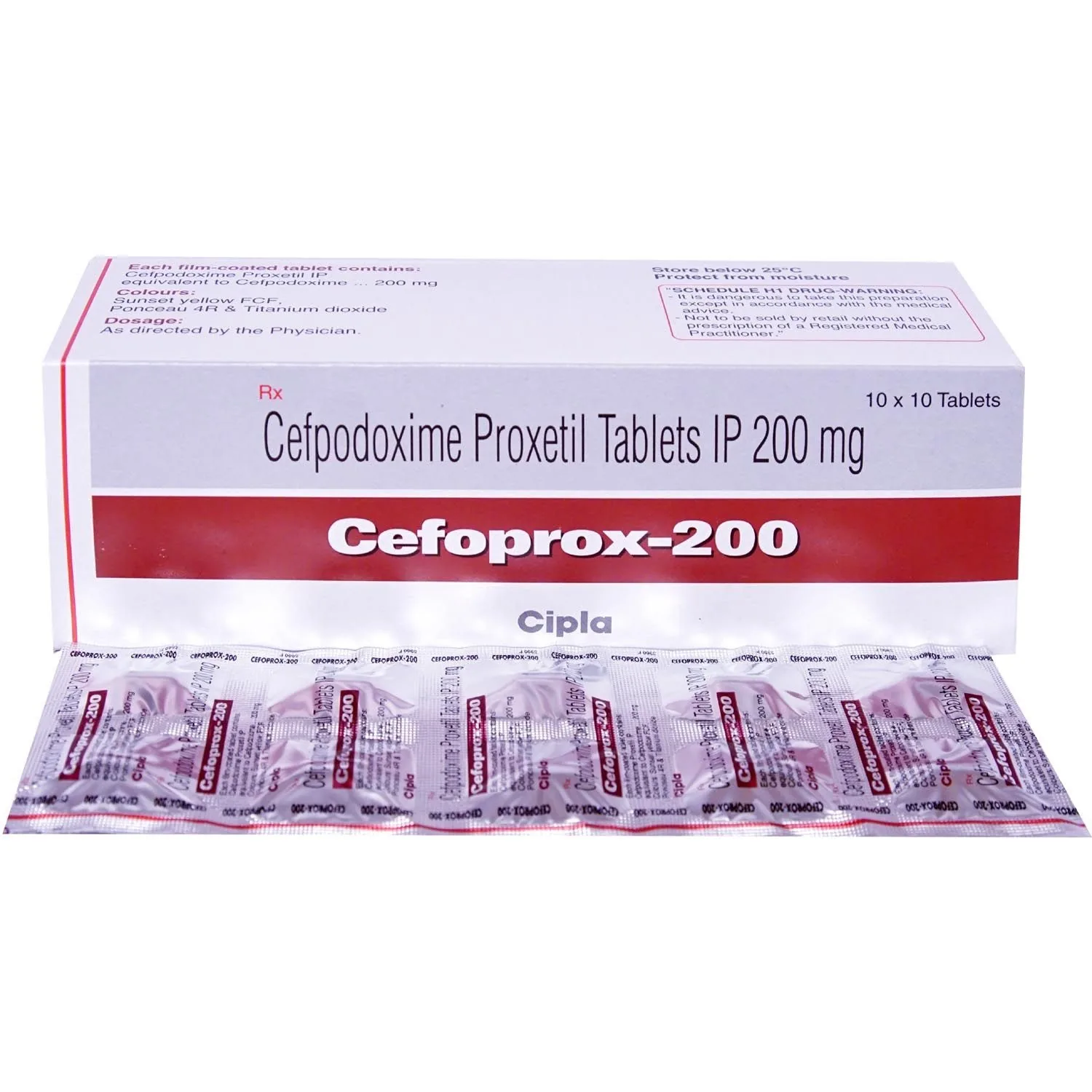
Cefoprox 200 Mg Tablets are a prescription-only antibiotic medicine manufactured by Cipla Ltd., one of India’s foremost pharmaceutical companies. Each tablet contains 200 mg of cefpodoxime proxetil, a third-generation oral cephalosporin antibiotic indicated for treating a range of bacterial infections in adults and older children.
Cefpodoxime proxetil is an esterified prodrug: it is absorbed through the intestinal wall and then hydrolysed to the active compound, cefpodoxime, which exerts its bactericidal effect in tissues and body fluids. Cefoprox is prescribed only where bacterial infection has been confirmed or strongly suspected; it is not effective against viral illnesses such as the common cold or influenza.
A valid prescription from a licensed healthcare provider is required before ordering. Always follow your doctor’s instructions regarding dose and duration — completing the full course is essential to prevent antibiotic resistance.
Composition and Presentation
| Attribute | Detail |
|---|---|
| Brand Name | Cefoprox |
| Active Ingredient | Cefpodoxime Proxetil |
| Strength | 200 mg per tablet |
| Dosage Form | Tablet (oral) |
| Pack Size | 10 Tablets per strip |
| Manufacturer | Cipla Ltd., India |
| Medicine Type | Generic |
| Rx Status | Prescription Only (Rx) |
| Country of Origin | India |
About Cipla Ltd. and the Cefoprox Brand
Cipla Ltd. is a global pharmaceutical company headquartered in Mumbai, India, with more than eight decades of experience in manufacturing high-quality, affordable medicines. It supplies products to over 100 countries and is well regarded for its role in providing accessible antibiotic therapy globally. Cefoprox is Cipla’s branded formulation of cefpodoxime proxetil, manufactured under strict Good Manufacturing Practice (GMP) standards and subject to quality controls aligned with Indian regulatory requirements (CDSCO).
How Cefpodoxime (Cefoprox) Works
Cefpodoxime is a bactericidal antibiotic — it kills susceptible bacteria rather than simply inhibiting their growth. Its mechanism of action involves several interconnected steps:
- Prodrug conversion: Cefpodoxime proxetil is absorbed from the gastrointestinal tract and hydrolysed by intestinal esterases to the active form, cefpodoxime.
- Binding to penicillin-binding proteins (PBPs): Cefpodoxime binds with high affinity to bacterial PBPs, particularly PBP1a, PBP1b, and PBP3, which are enzymes (transpeptidases) located in the bacterial cell wall.
- Inhibition of cell wall cross-linking: PBPs catalyse the cross-linking of peptidoglycan chains — the structural scaffold of the bacterial cell wall. By binding and inactivating these enzymes, cefpodoxime prevents proper wall assembly.
- Bacterial lysis: Without an intact peptidoglycan scaffold, the bacteria cannot maintain structural integrity under osmotic pressure. The cell wall weakens, ruptures, and the bacterium lyses (dies).
As a third-generation cephalosporin, cefpodoxime has an extended spectrum of activity compared to earlier-generation agents, demonstrating enhanced potency against many Gram-negative bacteria while retaining effectiveness against key Gram-positive pathogens.
Spectrum of Antibacterial Activity
Cefpodoxime is generally active against the following organisms (susceptibility may vary; local resistance patterns must be considered):
- Gram-positive: Streptococcus pneumoniae (including penicillin-susceptible strains), Streptococcus pyogenes (Group A streptococcus), methicillin-susceptible Staphylococcus aureus (MSSA).
- Gram-negative: Haemophilus influenzae, Moraxella catarrhalis, Neisseria gonorrhoeae, Escherichia coli, Klebsiella pneumoniae, Proteus mirabilis.
Cefpodoxime is not effective against methicillin-resistant Staphylococcus aureus (MRSA), Pseudomonas aeruginosa, enterococci, or organisms producing extended-spectrum beta-lactamases (ESBLs). Your doctor will select the appropriate antibiotic based on culture and sensitivity results where available.
Indications — What Cefoprox 200 Mg Is Used For
Cefoprox 200 Mg Tablets are indicated in adults and older adolescents for the treatment of mild-to-moderate infections caused by susceptible bacteria, including:
- Upper respiratory tract infections: Community-acquired pneumonia (CAP) caused by S. pneumoniae or H. influenzae; acute exacerbation of chronic bronchitis; acute bacterial sinusitis; pharyngitis and tonsillitis caused by S. pyogenes.
- Ear infections: Acute otitis media (middle ear infection), particularly caused by S. pneumoniae, H. influenzae, or M. catarrhalis.
- Urinary tract infections (UTIs): Uncomplicated UTIs (cystitis) and certain complicated UTIs caused by susceptible Gram-negative organisms such as E. coli and K. pneumoniae.
- Skin and soft tissue infections: Uncomplicated skin infections caused by MSSA or S. pyogenes.
- Sexually transmitted infections: Uncomplicated urogenital gonorrhoea caused by Neisseria gonorrhoeae.
Treatment should be guided by culture and sensitivity data whenever available. Empirical treatment may be initiated before results are known, but therapy should be adjusted accordingly once susceptibility is confirmed.
Dosage and Administration
This information is provided for general reference only. Your prescribing doctor will determine the correct dose, frequency, and treatment duration based on the type and severity of infection, your age, weight, and kidney function. Always follow your doctor’s specific instructions.
Recommended Doses in Adults
| Indication | Dose | Frequency | Duration |
|---|---|---|---|
| Community-acquired pneumonia | 200 mg | Twice daily (every 12 hours) | 14 days |
| Acute exacerbation of chronic bronchitis | 200 mg | Twice daily | 10 days |
| Acute sinusitis | 200 mg | Twice daily | 10 days |
| Pharyngitis / tonsillitis | 100 mg | Twice daily | 5–10 days |
| Uncomplicated UTI (cystitis) | 100 mg | Twice daily | 7 days |
| Uncomplicated gonorrhoea | 200 mg | Single dose | One day |
| Uncomplicated skin infections | 200–400 mg | Once or twice daily | 7–14 days |
Take Cefoprox tablets with food. Food significantly increases the oral bioavailability of cefpodoxime proxetil; taking the tablets on an empty stomach reduces absorption. Swallow with a full glass of water.
Complete the full prescribed course even if symptoms improve earlier. Stopping antibiotics prematurely risks relapse and promotes antibiotic resistance.
Special Populations
Renal Impairment
Cefpodoxime is primarily excreted unchanged by the kidneys. Dose adjustment is required in patients with reduced kidney function:
- Mild impairment (CrCl ≥50 mL/min): Standard dose; no adjustment needed.
- Moderate impairment (CrCl 10–49 mL/min): Standard dose but extend interval to once every 24 hours.
- Severe impairment (CrCl <10 mL/min) or haemodialysis: Extend interval to once every 48 hours; give supplemental dose after each dialysis session.
Your doctor will assess your renal function before prescribing and adjust accordingly.
Hepatic Impairment
The conversion of cefpodoxime proxetil to its active form occurs in the intestinal mucosa rather than the liver. Patients with mild-to-moderate hepatic impairment generally do not require dose adjustment, though medical supervision is advisable.
Elderly Patients
Older adults may have reduced kidney function even without a formal diagnosis of renal disease. Renal function should be assessed prior to prescribing; dose adjustments follow the same renal impairment criteria as above.
Paediatric Use
Weight-based liquid formulations of cefpodoxime are typically used in younger children. Cefoprox 200 Mg Tablets may be used in older children and adolescents as directed by a paediatrician. Consult your doctor for weight-appropriate dosing in children.
Pregnancy and Breastfeeding
Cefpodoxime is a Pregnancy Category B medicine in many jurisdictions: animal studies have not shown foetal harm, but adequate human studies are limited. Its use during pregnancy should be restricted to cases where the benefit clearly outweighs any potential risk, and only under medical supervision. Small amounts of cefpodoxime may pass into breast milk; discuss risks and benefits with your doctor if you are breastfeeding.
Precautions Before Taking Cefoprox
Before starting Cefoprox 200 Mg Tablets, inform your doctor if you:
- Have a known allergy to cephalosporins or penicillins. Approximately 1–10% of individuals with penicillin allergy may exhibit cross-reactivity with cephalosporins. Severe immediate allergic reactions to penicillins (anaphylaxis, urticaria) may indicate a higher risk.
- Have a history of colitis, inflammatory bowel disease, or antibiotic-associated diarrhoea. Cephalosporins can disrupt the intestinal flora and predispose to Clostridioides difficile (C. diff) overgrowth.
- Have impaired kidney or liver function.
- Are taking anticoagulants (e.g., warfarin), as cephalosporins may potentiate anticoagulant effects.
- Are taking antacids or H2-receptor antagonists (e.g., ranitidine). These medicines raise gastric pH and significantly reduce cefpodoxime absorption; take Cefoprox at least 2 hours before such medicines.
- Are pregnant, planning pregnancy, or breastfeeding.
- Have a history of seizures or central nervous system disorders (high-dose or prolonged use in severe renal impairment may rarely lower the seizure threshold).
Do not use cefpodoxime to treat viral infections. Unnecessary or inappropriate antibiotic use contributes to the global problem of antimicrobial resistance. Use only when prescribed by a doctor who has diagnosed a bacterial infection.
Contraindications
Cefoprox 200 Mg Tablets are contraindicated in patients who have:
- A confirmed hypersensitivity or allergic reaction to cefpodoxime or any other cephalosporin antibiotic.
- A history of severe immediate-type hypersensitivity (e.g., anaphylaxis, severe urticaria, or angioedema) to beta-lactam antibiotics, including penicillins — due to potential cross-reactivity.
If you are unsure whether you have had an allergic reaction to antibiotics in the past, discuss this with your doctor before taking Cefoprox.
Side Effects
Like all medicines, cefpodoxime can cause side effects, though not everyone experiences them.
Common Side Effects (may affect up to 1 in 10 people)
- Diarrhoea
- Nausea
- Vomiting
- Abdominal pain or discomfort
- Headache
- Vaginal discharge or vaginitis (in women)
Less Common Side Effects (may affect up to 1 in 100 people)
- Skin rash, urticaria (hives), or itching
- Dizziness
- Elevated liver enzymes (detected on blood tests)
Rare but Serious Side Effects (seek immediate medical attention)
- Severe allergic reaction (anaphylaxis): Difficulty breathing, swelling of the face, lips, or throat, rapid heartbeat, collapse. Call emergency services immediately.
- C. difficile-associated diarrhoea (CDAD): Severe, persistent, or bloody diarrhoea — particularly diarrhoea developing during or after antibiotic treatment — may indicate C. difficile colitis. Seek medical attention promptly; do not take anti-diarrhoeal medicines without medical advice.
- Stevens-Johnson syndrome or toxic epidermal necrolysis: Very rare severe skin reactions with blistering, peeling, and mucous membrane involvement. Stop the medicine and seek emergency care immediately.
- Jaundice or severe abdominal pain: May indicate liver involvement; seek medical assessment.
This is not a complete list of side effects. Report any unexpected symptoms to your doctor or pharmacist.
Drug Interactions
Cefpodoxime can interact with several medicines. Inform your doctor and pharmacist of all medications, supplements, and herbal products you are taking.
- Antacids (aluminium/magnesium hydroxide) and H2 antagonists (ranitidine, famotidine): Raise gastric pH, significantly reducing cefpodoxime absorption and plasma concentrations. Take Cefoprox at least 2 hours before these medicines.
- Proton pump inhibitors (omeprazole, lansoprazole): May also reduce absorption; clinical significance varies.
- Probenecid: Blocks renal tubular secretion of cefpodoxime, increasing its blood concentrations. Your doctor may adjust the dose.
- Oral anticoagulants (warfarin): Cephalosporins may enhance the anticoagulant effect of warfarin. INR monitoring is recommended if these are used together.
- Live attenuated bacterial vaccines (e.g., typhoid vaccine): Antibiotics may reduce the efficacy of live bacterial vaccines. Discuss vaccination timing with your doctor.
Storage Instructions
- Store below 25°C in a dry place, away from direct sunlight and heat.
- Keep in the original strip packaging until use.
- Keep out of reach and sight of children.
- Do not use after the expiry date printed on the packaging.
- Do not dispose of medicines via wastewater or household waste. Return unused medicines to your pharmacist for proper disposal.
Frequently Asked Questions (FAQs)
What type of antibiotic is cefpodoxime?
Cefpodoxime is a third-generation oral cephalosporin antibiotic. It belongs to the beta-lactam class and works by inhibiting bacterial cell wall synthesis. As a third-generation cephalosporin, it has a broader spectrum of activity against Gram-negative bacteria compared to first- and second-generation agents, while retaining effectiveness against key Gram-positive pathogens such as Streptococcus pneumoniae.
Should I take Cefoprox with or without food?
Take Cefoprox 200 Mg Tablets with food. Food significantly increases the absorption of cefpodoxime proxetil. Taking the tablets on an empty stomach reduces bioavailability, meaning less of the active drug reaches your system. Take with a meal or a snack and a full glass of water for best results.
What should I do if I miss a dose?
Take the missed dose as soon as you remember — unless it is almost time for your next scheduled dose, in which case skip the missed dose and continue from the next scheduled time. Do not double up or take two doses at once to make up for a missed one. Maintain a regular dosing schedule as prescribed.
Can I stop taking Cefoprox when I feel better?
No. It is important to complete the full prescribed course of Cefoprox even if your symptoms improve after a few days. Stopping the antibiotic early allows surviving bacteria to multiply and may cause the infection to return, potentially with antibiotic-resistant organisms. Always complete the full course as directed by your doctor.
I am allergic to penicillin — can I take cefpodoxime?
This requires careful medical assessment. There is a small risk of cross-reactivity between penicillins and cephalosporins. Many individuals with mild penicillin sensitivity can safely receive cephalosporins; however, those with a history of severe immediate reactions (anaphylaxis) to penicillin may be at higher risk. Your prescribing doctor will review your allergy history and make a clinical decision. Never assume it is safe without consulting your doctor first.
References and Further Information
- NHS. Cefalexin. NHS Medicines. Available at: https://www.nhs.uk/medicines/cefalexin/ (accessed November 2026). [Reference for cephalosporin antibiotic class guidance.]
- MedlinePlus. Cefpodoxime. U.S. National Library of Medicine. Available at: https://medlineplus.gov/druginfo/meds/a698033.html (accessed November 2026).
- U.S. Food and Drug Administration (FDA). Vantin (Cefpodoxime Proxetil) Prescribing Information. Available via FDA Drugs@FDA database (accessed November 2026).
- European Medicines Agency (EMA). Cephalosporins — Scientific Discussion. EMA reference literature for beta-lactam antibiotics (accessed November 2026).
This product description is intended for general informational purposes only. It does not constitute medical advice and must not replace consultation with a qualified healthcare professional. Antibiotic prescriptions, dosing, and treatment duration must be individualised by a licensed prescriber based on clinical evaluation, culture results, and local resistance patterns.


Reviews
There are no reviews yet.