Description
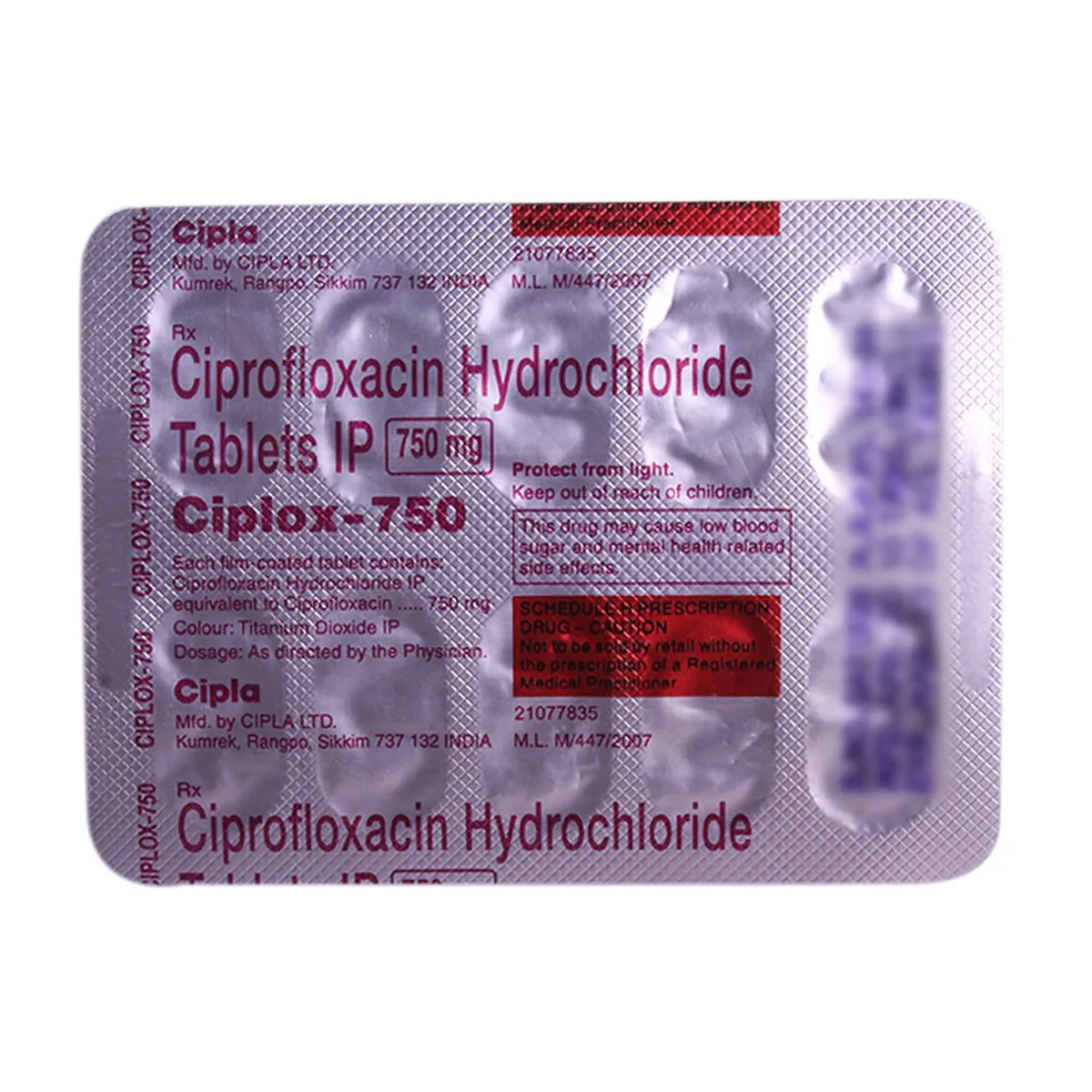
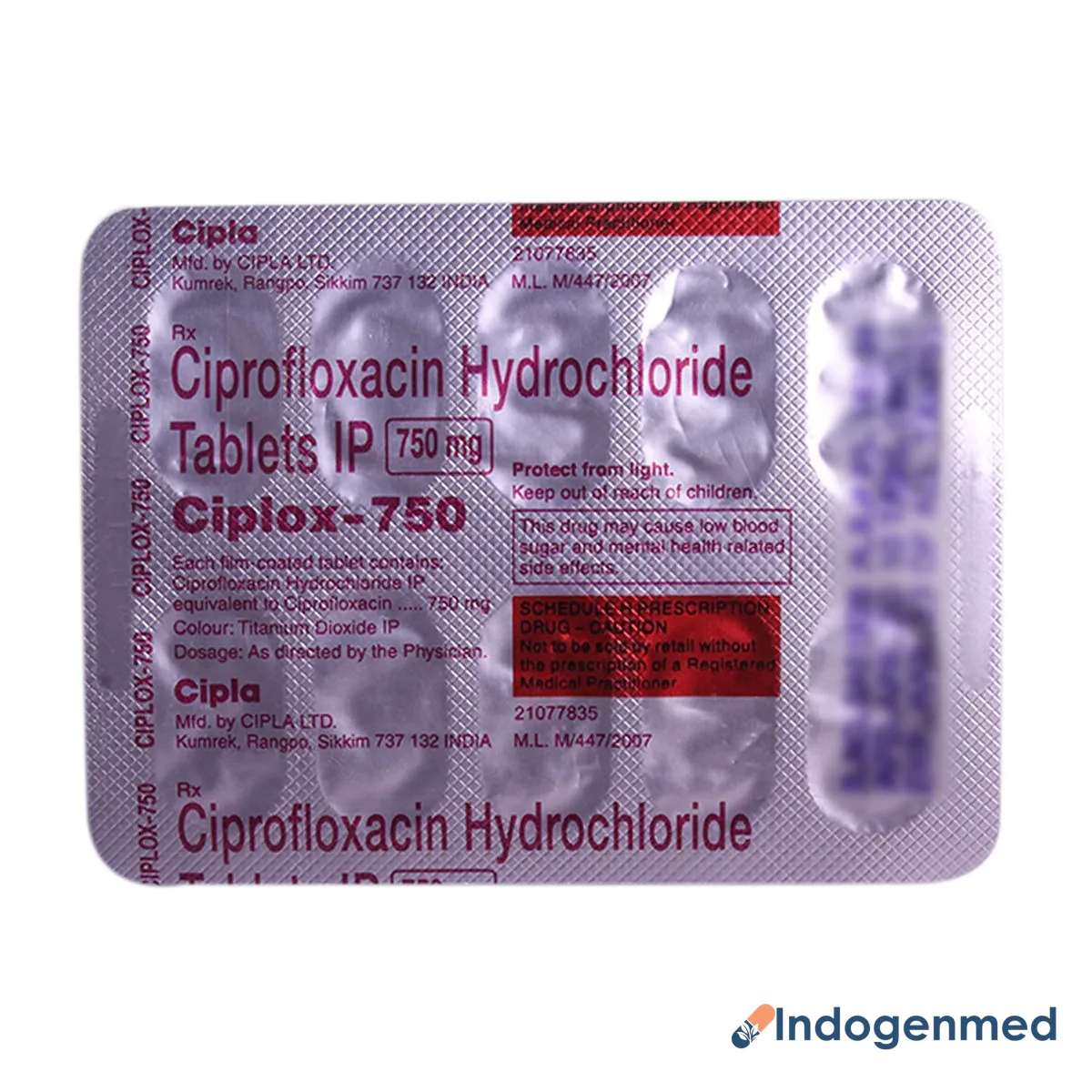
Ciplox 750 Mg Tablets
Ciplox 750 Mg Tablets contain ciprofloxacin 750 mg, a broad-spectrum fluoroquinolone antibiotic. The 750 mg dose is used for more severe or complex bacterial infections, including complicated urinary tract infections, hospital-acquired pneumonia, osteomyelitis, intra-abdominal infections, and anthrax prophylaxis. Ciprofloxacin demonstrates concentration-dependent bactericidal activity against a wide range of Gram-negative and selected Gram-positive organisms and achieves excellent tissue penetration.
Composition
| Active Ingredient | Strength |
|---|---|
| Ciprofloxacin | 750 mg per tablet |
About the Manufacturer
Ciplox is manufactured by Cipla Limited, one of India’s largest and most globally recognised pharmaceutical companies, headquartered in Mumbai. Cipla has an extensive anti-infective portfolio and distributes to over 80 countries worldwide. Ciplox is one of Cipla’s best-known antibiotic brands.
Mechanism of Action
Ciprofloxacin inhibits bacterial DNA gyrase (topoisomerase II) and topoisomerase IV — enzymes essential for bacterial DNA replication, transcription, repair, and recombination. By blocking these enzymes, ciprofloxacin introduces fatal double-strand DNA breaks in bacteria, leading to rapid, concentration-dependent bactericidal activity. The 750 mg dose achieves higher peak plasma concentrations than 500 mg, increasing the AUC/MIC ratio and bactericidal effect against more resistant or less susceptible organisms.
Indications
- Complicated urinary tract infections and pyelonephritis (severe or complicated cases)
- Lower respiratory tract infections including hospital-acquired pneumonia (HAP) — not first-line for community-acquired pneumonia
- Acute exacerbations of chronic bronchitis (severe cases)
- Complicated intra-abdominal infections (in combination with metronidazole)
- Osteomyelitis and septic arthritis caused by susceptible organisms
- Skin and soft tissue infections (severe)
- Typhoid fever, severe shigellosis
- Prophylaxis and treatment of inhalational anthrax (Bacillus anthracis)
Dosage & Administration
- Swallow tablets whole with water, with or without food
- Take every 12 hours (twice daily) for most indications
- Avoid taking within 2 hours of antacids, dairy products, or supplements containing calcium, iron, magnesium, or zinc — these significantly reduce absorption
- Complicated UTI / pyelonephritis (severe): 500–750 mg twice daily for 7–14 days
- Hospital-acquired pneumonia: 750 mg twice daily for 10–14 days
- Osteomyelitis: 750 mg twice daily for 4–8 weeks
- Anthrax prophylaxis: 500 mg twice daily for 60 days
- Complete the full prescribed course even if symptoms resolve
Special Populations
- Severe renal impairment (CrCl <30 mL/min): Reduce dose (typically 500 mg once daily or extend interval); monitoring required
- Elderly: Use with caution — increased risk of tendinopathy, QT prolongation, and CNS effects; consider lower doses
- Children and adolescents: Generally not recommended; use only under specialist guidance where benefit outweighs risk (e.g., anthrax prophylaxis, specific resistant infections)
- Pregnancy: Avoid; potential arthropathy risk in developing foetus; use only where no alternative exists
- Severe hepatic impairment: Use with caution
Precautions
- Tendinitis and tendon rupture: risk is higher with the 750 mg dose, in patients over 60, those on corticosteroids, and organ transplant recipients; discontinue immediately if tendon pain develops
- QT prolongation: avoid in patients with known QT prolongation, electrolyte abnormalities, or on other QT-prolonging drugs
- CNS effects: fluoroquinolones may lower seizure threshold; use with caution in epilepsy; discontinue if seizures, hallucinations, or significant CNS disturbance occur
- Peripheral neuropathy: discontinue immediately if pain, burning, tingling, or numbness develops in the extremities
- Clostridioides difficile: consider in any patient who develops significant diarrhoea during or after antibiotic treatment
- Blood glucose: hypoglycaemia and hyperglycaemia have been reported; monitor in diabetic patients
- Photosensitivity: avoid excessive sunlight or UV exposure; use sunscreen
Contraindications
- Known hypersensitivity to ciprofloxacin, other fluoroquinolones, or any excipient
- Concurrent administration with tizanidine
- Children and growing adolescents (unless specialist use with no alternative)
Side Effects
- Common: Nausea, diarrhoea, dyspepsia, abdominal pain, headache, dizziness, rash
- Less common: Elevated liver enzymes, vomiting, insomnia, photosensitivity, restlessness
- Serious: Tendinitis, tendon rupture, QT prolongation, peripheral neuropathy, C. difficile-associated diarrhoea, hypersensitivity reactions including anaphylaxis, CNS effects (psychosis, convulsions), aortic aneurysm (rare, FDA safety communication)
Drug Interactions
- Antacids, sucralfate, iron, zinc, calcium, dairy products: Markedly reduce ciprofloxacin absorption; separate by at least 2 hours
- Tizanidine: Contraindicated — ciprofloxacin markedly elevates tizanidine levels, causing severe hypotension and sedation
- Theophylline: Ciprofloxacin inhibits CYP1A2, raising theophylline levels; risk of serious theophylline toxicity
- Warfarin: May enhance anticoagulant effect; monitor INR
- QT-prolonging drugs: Additive risk of cardiac arrhythmia; avoid combinations
- NSAIDs: May increase risk of ciprofloxacin-induced CNS stimulation and seizures
Storage
Store below 30°C in a dry place, protected from light and moisture. Keep tablets in the original blister packaging. Keep out of reach of children. Do not use after the expiry date printed on the pack.
Related Products
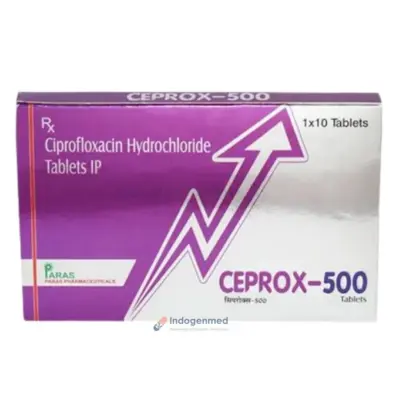
- Ceprox 500 Mg Tablets – ciprofloxacin 500 mg for less severe infections
- Azax 500 Mg Tablets – azithromycin 500 mg antibiotic
- Distaclor DT 250 Mg Tablets – cefaclor 250 mg dispersible tablet
Frequently Asked Questions
- What is Ciplox 750 Mg used for?
- Ciplox 750 Mg is used for the treatment of more serious or complex bacterial infections, including complicated urinary tract infections, hospital-acquired pneumonia, severe intra-abdominal infections, osteomyelitis, and prophylaxis of inhalational anthrax. It is used when a lower dose of ciprofloxacin (such as 500 mg) would be insufficient for the infection being treated.
- Why is the 750 mg dose used instead of 500 mg?
- Ciprofloxacin is a concentration-dependent antibiotic, meaning higher peak concentrations achieve a greater and faster bactericidal effect. The 750 mg dose produces higher plasma concentrations that are more effective against organisms requiring higher drug exposures to be killed, against harder-to-treat infection sites such as bone, or against infections where the pathogen is less sensitive to ciprofloxacin.
- Can I take Ciplox 750 Mg with milk or antacids?
- No. Dairy products, antacids (particularly those containing aluminium, magnesium, or calcium), and mineral supplements can reduce ciprofloxacin absorption by up to 90%, rendering the antibiotic potentially ineffective. Take Ciplox at least 2 hours before or 6 hours after such products. Plain water is the best liquid to take it with.
- What are the signs that I should stop Ciplox and see a doctor urgently?
- Stop Ciplox and seek medical attention immediately if you experience: tendon pain, swelling, or rupture (especially in the Achilles tendon); persistent tingling, numbness, or pain in the arms or legs (peripheral neuropathy); a seizure or significant confusion; severe or bloody diarrhoea during or after treatment (possible C. difficile colitis); or chest pain or palpitations (possible cardiac arrhythmia). These are known serious adverse effects of fluoroquinolones.
- How is Ciplox 750 Mg different from other antibiotics like azithromycin?
- Ciplox (ciprofloxacin) and azithromycin are both broad-spectrum antibiotics but from completely different classes and with different target organisms. Ciprofloxacin is a fluoroquinolone, particularly effective against Gram-negative bacteria including Pseudomonas aeruginosa, and kills bacteria by inhibiting their DNA replication enzymes. Azithromycin is a macrolide, effective against typical respiratory pathogens and atypical organisms (like Mycoplasma and Chlamydia), and inhibits bacterial protein synthesis. They are used for different infections and are not interchangeable.
References
- NHS – Ciprofloxacin
- MedlinePlus – Ciprofloxacin
- FDA – Cipro (Ciprofloxacin) Prescribing Information
- EMA – Fluoroquinolone Antibiotics Review
Disclaimer: This page is for informational purposes only and does not constitute medical advice. Ciplox 750 Mg Tablets are a prescription antibiotic that must be used only under the supervision of a qualified healthcare professional. Never self-medicate with antibiotics. Stop taking ciprofloxacin and seek urgent medical attention if you develop tendon pain, numbness or tingling in the limbs, or significant diarrhoea.


Reviews
There are no reviews yet.