Description
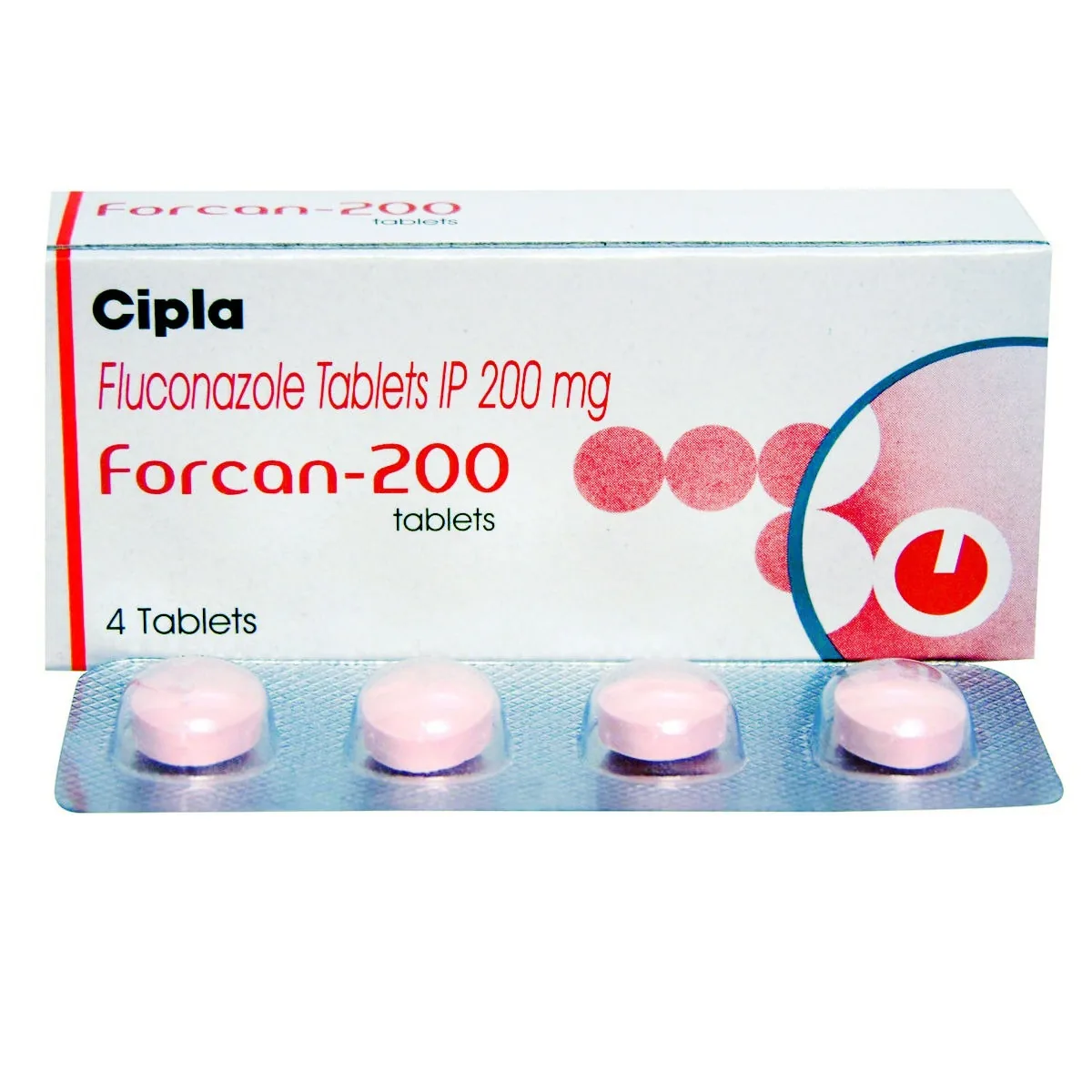
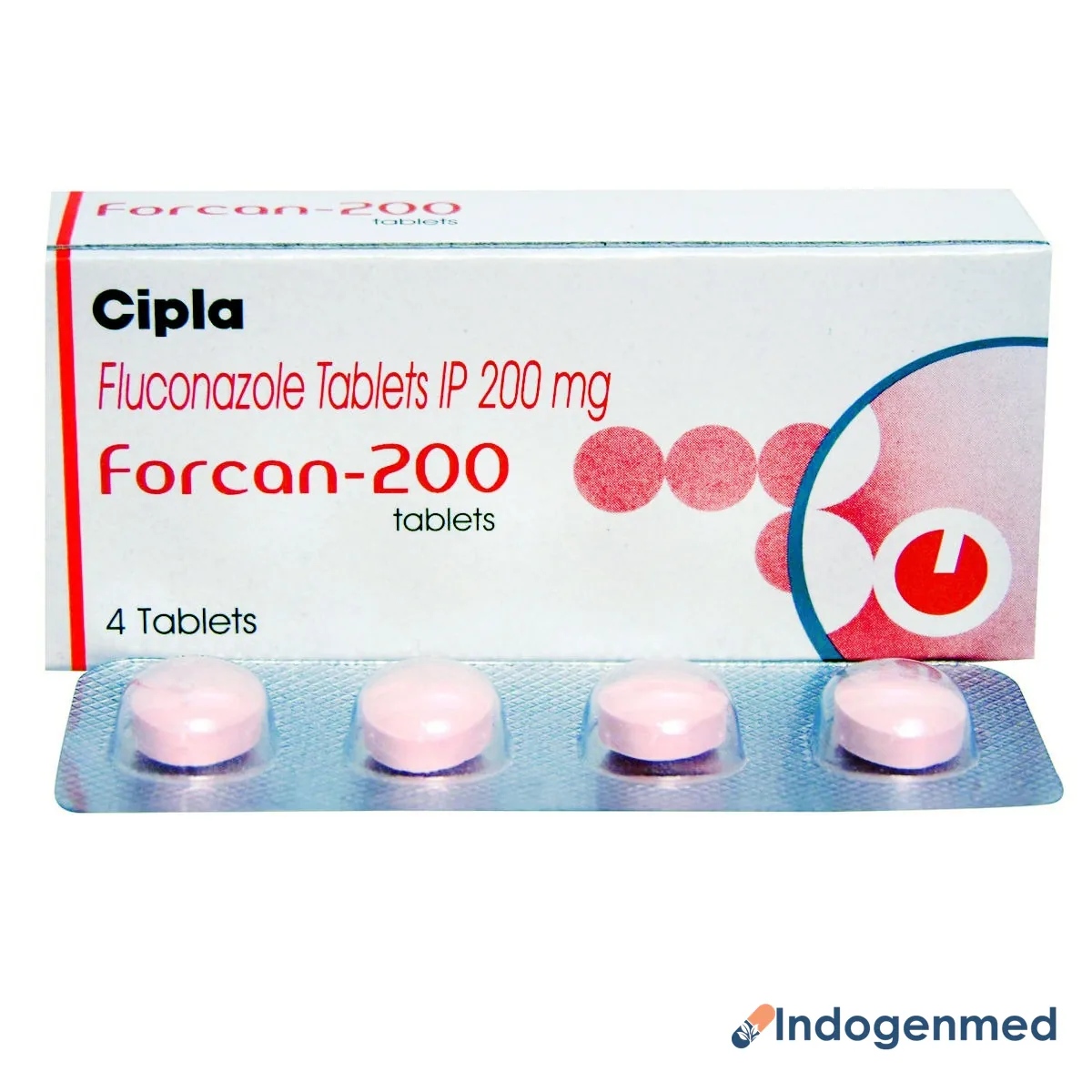
Forcan 200 Tablet — Fluconazole 200 mg for Systemic and Serious Fungal Infections
Forcan 200 Tablet contains fluconazole 200 mg as its active ingredient. Fluconazole belongs to the pharmacological class of triazole antifungal agents, with ATC code J02AC01. It is a synthetic bis-triazole compound that selectively inhibits fungal cytochrome P450-dependent enzymes, disrupting ergosterol biosynthesis and thereby fungal cell membrane integrity. Fluconazole is distinguished from earlier antifungals by its excellent water solubility, high oral bioavailability (greater than 90%), CNS penetration, and a broad but selective spectrum of antifungal activity that covers Candida species (most), Cryptococcus neoformans, and dermatophytes. The 200 mg dose represents the standard treatment dose for serious systemic infections, cryptococcal meningitis maintenance therapy, and invasive candidiasis, as well as the recommended suppressive therapy dose in immunocompromised patients. It is prescribed widely in settings including HIV/AIDS, organ transplantation, haematological malignancies, and critical care.
Composition of Forcan 200 Tablet
Each film-coated tablet of Forcan 200 contains:
- Fluconazole — 200 mg (active ingredient)
- Excipients (typical): microcrystalline cellulose, dibasic calcium phosphate anhydrous, povidone, croscarmellose sodium, magnesium stearate, sodium lauryl sulphate; film coat: hypromellose, titanium dioxide, talc, polyethylene glycol
Fluconazole has the molecular formula C₁₃H₁₂F₂N₆O and a molecular weight of 306.3 g/mol. It is a white crystalline powder that is slightly soluble in water and saline. The two triazole rings are essential for binding to fungal cytochrome P450 14α-demethylase (CYP51) with high affinity and selectivity over mammalian CYP enzymes, which explains its relatively favourable safety profile compared with imidazoles such as ketoconazole.
Mechanism of Action
Fluconazole exerts its antifungal effect through selective inhibition of fungal cytochrome P450-dependent lanosterol 14α-demethylase (encoded by the ERG11 gene in Candida species). This enzyme is essential for the conversion of lanosterol to ergosterol, the principal sterol in fungal cell membranes. Ergosterol is the functional equivalent of cholesterol in mammalian cells — it regulates membrane fluidity, permeability, and the function of membrane-embedded proteins including transporters and signalling molecules.
When fluconazole inhibits lanosterol 14α-demethylase:
- Ergosterol synthesis is blocked, depleting the fungal cell membrane of its key structural component
- Toxic methylated sterol intermediates (particularly 14α-methyl sterols) accumulate in the cell membrane, causing additional membrane disruption
- Membrane permeability is compromised, leading to leakage of cellular contents and disruption of membrane-associated functions including ion transport, glucose uptake, and cell wall synthesis signalling
- The result is fungistatic activity against most Candida species (inhibition of growth without cell killing at typical concentrations) and fungicidal activity against Cryptococcus neoformans
- The selectivity of fluconazole for fungal CYP51 over human CYP enzymes is high, but not absolute — fluconazole does significantly inhibit human CYP3A4 and CYP2C9, which is the basis for most of its clinically important drug interactions
Spectrum of activity: Fluconazole is active against Candida albicans, Candida tropicalis, Candida parapsilosis, Candida lusitaniae, Cryptococcus neoformans, Talaromyces (Penicillium) marneffei, and dermatophytes. Important intrinsic resistances: Candida krusei (now Pichia kudriavzevii) is intrinsically resistant. Candida glabrata (now Nakaseomyces glabrata) has dose-dependent susceptibility or intrinsic resistance and requires higher doses or alternative agents. Aspergillus species and mucormycetes (Mucor, Rhizopus) are intrinsically resistant and fluconazole must not be used for these infections.
Pharmacokinetics
| Parameter | Value / Description |
|---|---|
| Oral bioavailability | >90% — one of the highest of any antifungal; IV and oral doses are essentially bioequivalent |
| Tmax | 1–2 hours after oral dose |
| Effect of food | Not clinically significant; may be taken with or without food |
| Protein binding | Low: approximately 11–12% — extensively distributes into tissues and body fluids |
| Volume of distribution | 0.6–0.8 L/kg — approaches total body water; excellent penetration into CNS, urine, skin, nails, saliva, sputum, and vaginal secretions |
| CSF penetration | CSF concentrations reach 60–80% of plasma concentrations — exceptional for an antifungal, and the basis for fluconazole’s effectiveness in cryptococcal meningitis |
| Metabolism | Minimal hepatic metabolism (<10% of dose converted to metabolites); primarily eliminated unchanged |
| Elimination route | Predominantly renal: approximately 80% excreted unchanged in urine; 11% as metabolites |
| Elimination half-life | Approximately 30 hours in adults with normal renal function — allows once-daily dosing |
| Renal impairment | Half-life prolonged significantly; dose reduction required based on creatinine clearance (see dosage table) |
| Haemodialysis | A single dose after each dialysis session approximates normal dosing — dialysis removes approximately 50% of circulating fluconazole |
| Hepatic impairment | Use with caution; hepatic impairment does not significantly alter fluconazole pharmacokinetics (minimal hepatic metabolism), but hepatotoxicity risk may be higher |
| Elderly patients | Half-life may be prolonged (up to 46 hours) due to age-related decline in renal function; monitor renal function and adjust dose accordingly |
Uses of Forcan 200 Tablet
- Cryptococcal meningitis: Forcan 200 is used for consolidation and maintenance (suppressive) therapy of cryptococcal meningitis following an induction phase with liposomal amphotericin B plus flucytosine. The standard suppressive dose is fluconazole 200 mg once daily for at least 12 months (or indefinitely in patients not achieving immune reconstitution on antiretroviral therapy). This indication is particularly important in patients with HIV/AIDS in whom cryptococcal meningitis is a major cause of mortality; fluconazole 200 mg daily reduces the risk of relapse by approximately 95% compared with placebo in this population
- Invasive candidiasis (candidaemia and deep-tissue candidiasis): Forcan 200 is used at a loading dose of 800 mg (12 mg/kg) on day 1, followed by 400 mg (6 mg/kg) daily for step-down treatment of non-neutropenic patients with candidaemia caused by susceptible Candida species (not C. glabrata or C. krusei), after clinical stabilisation on echinocandin therapy. For isolated deep-tissue candidiasis in clinically stable patients with susceptible organisms, 200–400 mg daily may be appropriate
- Oropharyngeal and oesophageal candidiasis: Oropharyngeal candidiasis (thrush) in immunocompromised patients: 200 mg on day 1, then 100 mg daily for 7–14 days. Oesophageal candidiasis: 200 mg on day 1, then 100–200 mg daily for 14–21 days. The 200 mg tablet is relevant for severe or refractory cases or in immunocompromised patients where higher doses are needed
- Vulvovaginal candidiasis (recurrent or severe): A single 150 mg oral dose is standard for uncomplicated vulvovaginal candidiasis; however, recurrent vulvovaginal candidiasis (four or more episodes per year) is treated with an induction regimen followed by suppressive therapy with fluconazole 150 mg weekly for six months. Forcan 200 is relevant when the treating physician prescribes higher doses for refractory cases or in patients with risk factors for severe infection
- Prophylaxis of fungal infections in immunocompromised patients: Fluconazole 200–400 mg daily is used prophylactically in patients undergoing bone marrow transplantation, intensive chemotherapy for haematological malignancies, or receiving prolonged high-dose corticosteroids, to prevent systemic candidiasis. Fluconazole 200 mg daily is a standard prophylactic dose in many transplant protocols
- Tinea infections (dermatophytoses): Fluconazole 150–300 mg weekly for 2–4 weeks is used for tinea corporis, tinea cruris, and tinea pedis refractory to topical treatment. For tinea unguium (onychomycosis), fluconazole 150–300 mg weekly is given for 3–6 months (fingernails) or 6–12 months (toenails). The 200 mg tablet may be used as a weekly pulse therapy for these indications
- Pityriasis versicolor: Fluconazole 300 mg as a single dose or 300 mg weekly for two weeks is used for this superficial fungal infection caused by Malassezia species; the 200 mg tablet may be used in adjusted regimens
Dosage and Administration
| Indication | Recommended Dose | Duration | Notes |
|---|---|---|---|
| Cryptococcal meningitis — consolidation / maintenance | 200 mg once daily | Minimum 8 weeks consolidation, then 200 mg daily indefinitely (HIV patients) or 12 months (others) | After amphotericin B + flucytosine induction (2 weeks); continue until CD4 >100 cells/μL × 3 months if on ART |
| Invasive candidiasis — step-down (non-neutropenic) | Loading: 800 mg (12 mg/kg) day 1; then 400 mg (6 mg/kg) daily | Minimum 14 days after last positive blood culture and resolution of symptoms | Only after clinical stabilisation on echinocandin; confirm Candida species is susceptible (not C. krusei or resistant C. glabrata) |
| Oesophageal candidiasis | 200 mg on day 1; then 100–200 mg daily | 14–21 days; at least 2 weeks after symptom resolution | Use 200 mg daily in immunocompromised or refractory cases |
| Oropharyngeal candidiasis (immunocompromised) | 200 mg on day 1; then 100 mg daily | 7–14 days | 200 mg loading dose and higher daily doses for severe or refractory cases |
| Prophylaxis (bone marrow transplant, haematological malignancy) | 200–400 mg once daily | Starting 2–3 days before anticipated neutropenia; continue 7 days after neutrophil recovery | 200 mg daily is effective; 400 mg daily used in centres with higher baseline invasive candidiasis rates |
| Tinea unguium (onychomycosis) | 150–300 mg once weekly | 3–6 months (fingernails); 6–12 months (toenails) | Weekly pulse therapy; 200 mg weekly may be used as an alternative to 150 mg |
| Renal impairment — CrCl 11–50 mL/min | 50% of recommended dose | As per indication | Use loading dose unchanged on day 1 regardless of renal function |
| Renal impairment — haemodialysis | Full dose after each dialysis session | As per indication | Dialysis removes ~50% of fluconazole; give dose after, not before, each session |
| Paediatric patients (≥14 days old) | 3–12 mg/kg/day depending on indication | As per indication | Maximum paediatric dose: 400–800 mg/day; neonates ≤14 days: use with caution (prolonged half-life) |
Administration notes:
- Swallow tablets whole with water
- May be taken with or without food — bioavailability is not significantly affected by meals
- Take at the same time each day for consistent plasma levels
- Always use a loading dose on day 1 of therapy (usually double the daily maintenance dose) to reach therapeutic steady-state plasma concentrations rapidly — fluconazole’s 30-hour half-life means that without a loading dose, steady state is not reached for approximately 5 days
- If a dose is missed, take it as soon as remembered; if close to the next dose, skip the missed dose — never double dose
- Complete the full course even if symptoms improve; premature discontinuation risks relapse and development of resistance
Side Effects
Common (affecting ≥1 in 100 patients):
- Gastrointestinal: Nausea, abdominal pain, vomiting, and diarrhoea are the most frequently reported side effects, occurring in approximately 7–15% of patients. Usually mild and transient; taking with food may reduce nausea
- Headache: Reported in approximately 2% of patients; usually mild
- Liver enzyme elevations: Transient rises in AST, ALT, and alkaline phosphatase occur commonly; usually asymptomatic and reversible on discontinuation. Regular monitoring recommended in prolonged courses
- Rash: Mild skin rashes occur in approximately 2% of patients. Patients with serious underlying conditions (HIV, malignancy) may have higher rates of rash, some of which may represent hypersensitivity
Uncommon to rare but serious adverse effects:
- Hepatotoxicity: Serious hepatic reactions including hepatitis, cholestasis, and fatal fulminant hepatic failure have been reported, particularly in patients with underlying liver disease, immunodeficiency, or receiving multiple hepatotoxic drugs. Usually manifests after several weeks of treatment; monitor LFTs during prolonged therapy
- QT interval prolongation and torsades de pointes: Fluconazole prolongs the cardiac QT interval in a dose-dependent manner, particularly at doses ≥400 mg/day. Torsades de pointes has been reported in rare cases, predominantly in patients with other risk factors (hypokalaemia, hypomagnesaemia, bradycardia, pre-existing QT prolongation, or concurrent QT-prolonging medications). ECG monitoring is recommended at higher doses or in patients with cardiac risk factors
- Stevens-Johnson syndrome and toxic epidermal necrolysis: Rare but potentially life-threatening severe cutaneous reactions have been reported. Discontinue fluconazole immediately if progressive rash, blistering, mucosal involvement, or skin peeling occurs
- Anaphylaxis: Rare severe hypersensitivity reactions including anaphylaxis; cross-reactivity with other azole antifungals is possible
- Adrenal insufficiency: At high doses, fluconazole may suppress adrenal cortisol synthesis. Clinically significant adrenal suppression is uncommon at standard doses but monitor for signs of adrenal insufficiency in patients on prolonged high-dose therapy
- Alopecia: Hair loss reported with prolonged treatment (months), usually reversible after discontinuation
Precautions and Warnings
- Hepatic monitoring: Baseline LFTs are recommended before starting prolonged fluconazole therapy. Monitor ALT, AST, and alkaline phosphatase at regular intervals (every 2–4 weeks) during courses longer than 2–4 weeks, particularly in patients with pre-existing liver disease, those receiving multiple hepatotoxic drugs, or HIV-positive patients. Discontinue fluconazole if clinical signs of hepatic dysfunction (jaundice, right upper quadrant pain, dark urine, fatigue) develop or if LFTs rise to more than 5× the upper limit of normal
- QT prolongation and cardiac arrhythmias: Obtain a baseline ECG in patients with known cardiac disease, hypokalaemia, hypomagnesaemia, or who are receiving other QT-prolonging medications before initiating fluconazole 200 mg or higher doses. Correct electrolyte abnormalities before starting therapy. Avoid or use with extreme caution in patients with congenital long QT syndrome
- Renal function: Since approximately 80% of fluconazole is excreted unchanged in the urine, dose reduction is mandatory in patients with creatinine clearance below 50 mL/min to avoid drug accumulation and toxicity. Check renal function before starting and during prolonged courses
- Severe skin reactions: Educate patients to report any rash immediately. If a rash appears and the patient is immunocompetent, consider discontinuation. In immunocompromised patients, monitor closely and discontinue if bullous lesions or mucosal involvement develops
- Resistance and species identification: Always identify the causative Candida species and perform antifungal susceptibility testing where possible. Empirical use of fluconazole in patients who have had recent exposure to fluconazole, in hospitals with high rates of non-albicans Candida, or in critically ill patients should be guided by susceptibility data to avoid treating with an ineffective agent. Intrinsically resistant species (C. krusei) and potentially resistant species (C. glabrata) must be treated with alternative agents such as echinocandins
- Drug interactions (critical — see below): Fluconazole is a potent inhibitor of CYP2C9 and CYP3A4. It significantly elevates plasma concentrations of warfarin, cyclosporine, tacrolimus, phenytoin, sirolimus, oral hypoglycaemic agents, and many other drugs. Always review the patient’s full medication list before prescribing fluconazole, and anticipate the need to reduce doses of affected medications and to monitor levels or effects closely
- Pregnancy: Fluconazole 150 mg as a single dose for vaginal candidiasis has been widely used in pregnancy with reassuring data. However, prolonged high-dose therapy (400–800 mg/day) has been associated with rare cases of congenital defects (Antley-Bixler-like syndrome) and foetal harm in animal studies. Standard doses ≥150 mg daily throughout the first trimester should be avoided. Where fluconazole is essential (e.g., life-threatening cryptococcal meningitis in pregnancy), the benefit-risk ratio must be carefully assessed; topical antifungals are preferred for vaginal candidiasis in pregnancy
- Breastfeeding: Fluconazole is excreted in breast milk at concentrations similar to plasma. Single-dose 150 mg treatment of vaginal candidiasis is generally considered compatible with breastfeeding; prolonged high-dose therapy should be avoided during breastfeeding
- Elderly patients: Age-related decline in renal function prolongs fluconazole’s half-life; check creatinine clearance before prescribing and adjust dose accordingly. Increased risk of QT prolongation due to polypharmacy and comorbidities
Drug Interactions
| Drug / Class | Interaction / Mechanism | Clinical Action Required |
|---|---|---|
| Warfarin and other oral anticoagulants | Fluconazole inhibits CYP2C9; significantly increases warfarin AUC and INR — INR may double or more | Monitor INR closely (every 2–3 days) during and for 1 week after fluconazole course; anticipate dose reduction of warfarin. Use anticoagulant alternatives if possible |
| Cyclosporine | CYP3A4 inhibition by fluconazole increases cyclosporine trough levels by approximately 50–100% | Monitor cyclosporine levels and renal function closely; anticipate dose reduction. Begin monitoring 2–3 days after starting fluconazole |
| Tacrolimus | CYP3A4 inhibition markedly increases tacrolimus exposure; nephrotoxicity and neurotoxicity risk | Monitor tacrolimus levels very closely; reduce dose by 50% at initiation of fluconazole; adjust based on levels. Avoid combination where possible |
| Sirolimus | CYP3A4 inhibition increases sirolimus levels significantly | Monitor sirolimus levels; reduce dose and monitor for toxicity (myelosuppression, pneumonitis) |
| Phenytoin | Fluconazole inhibits CYP2C9-mediated phenytoin metabolism; phenytoin levels may increase by 75% or more | Monitor phenytoin levels and signs of toxicity (nystagmus, ataxia, diplopia); anticipate dose reduction |
| Sulphonylureas (glibenclamide, glipizide, tolbutamide) | CYP2C9 inhibition increases sulphonylurea levels; risk of hypoglycaemia | Monitor blood glucose closely during and after fluconazole course; warn patients about symptoms of hypoglycaemia |
| QT-prolonging agents (amiodarone, haloperidol, sertindole, quinolones, macrolides, terfenadine, astemizole, cisapride) | Additive QT prolongation; risk of torsades de pointes | Avoid combinations; if unavoidable, obtain baseline ECG, correct electrolytes, and monitor ECG during therapy. Terfenadine and cisapride are CONTRAINDICATED with fluconazole |
| Rifampicin | CYP induction by rifampicin accelerates fluconazole clearance; reduces fluconazole AUC by approximately 25% | May need to increase fluconazole dose during co-administration; monitor antifungal response |
| Statins metabolised by CYP3A4 (simvastatin, lovastatin, atorvastatin) | Fluconazole increases statin exposure; risk of myopathy and rhabdomyolysis | Temporarily withhold or reduce statin dose during fluconazole course; monitor for muscle pain or weakness |
| Benzodiazepines (midazolam, triazolam) | CYP3A4 inhibition markedly increases sedative plasma levels; prolonged sedation | Avoid combination if possible; if unavoidable, reduce benzodiazepine dose substantially and monitor closely |
| Oral contraceptives | Fluconazole inhibits CYP3A4-mediated metabolism of oestrogens and progestogens; may increase or decrease OCP levels depending on formulation | Counsel patients; additional contraceptive precautions during short courses of fluconazole are generally not required, but awareness is appropriate |
| Hydrochlorothiazide | Thiazide diuretics increase fluconazole plasma concentrations by reducing renal clearance (approximately 40%); may increase risk of fluconazole adverse effects | Monitor for fluconazole toxicity (LFT elevation, QT prolongation) in patients on concomitant thiazide diuretics |
Contraindications
Forcan 200 Tablet must NOT be used in:
- Patients with known hypersensitivity to fluconazole or other azole antifungals (cross-reactivity possible)
- Concomitant use with terfenadine (antihistamine — risk of life-threatening cardiac arrhythmias due to QT prolongation; terfenadine is now withdrawn in many countries)
- Concomitant use with cisapride (prokinetic — contraindicated due to QT prolongation and risk of torsades de pointes)
- Concomitant use with astemizole and pimozide (QT prolongation risk)
- Concomitant use with erythromycin due to additive QT prolongation risk
- Pregnancy (prolonged high-dose therapy — doses ≥150 mg daily for more than one trimester; single doses for vaginal candidiasis should be used with caution)
- Patients with known QT prolongation or at high risk of QT-related arrhythmia when high doses are planned
Storage Instructions
- Store below 30°C in a dry place, protected from light and moisture
- Store in the original blister pack or container
- Keep all medicines out of reach and sight of children
- Do not use after the expiry date printed on the outer carton or blister
- Shelf life: typically 3 years
- Do not store in a refrigerator unless specifically instructed on the label
Related Products
The following medicines on IndoGenMed are frequently used in combination with or as alternatives to Forcan 200 Tablet in the management of fungal infections and immunocompromised patients:
- Zytanix 5 Tablet (Olanzapine 5 mg) — occasionally used in patients with cryptococcal meningitis-associated neuropsychiatric complications; also relevant in HIV patients with comorbid psychiatric illness
- Zytanix 2.5 Tablet (Olanzapine 2.5 mg) — lower-dose antipsychotic relevant in elderly or frail immunocompromised patients who develop neuropsychiatric complications during antifungal treatment
- Montair Plus Tablet (Montelukast + Levocetirizine) — may be co-prescribed in patients with allergic manifestations or asthma alongside antifungal therapy; relevant in patients where azole-antifungal interactions with respiratory medications must be managed
- Cosart 50 Tablet (Losartan 50 mg) — relevant in hypertensive patients receiving fluconazole; note that fluconazole inhibits CYP2C9 which metabolises losartan to its active metabolite E-3174, potentially reducing losartan’s antihypertensive effect — monitor blood pressure during co-administration
- Taxim O DT 100 Tablet (Cefixime 100 mg) — an antibacterial used in concurrent bacterial and fungal infection scenarios; cefixime and fluconazole have no significant pharmacokinetic interaction
References
- Pfizer Limited. Diflucan (fluconazole) 50 mg, 150 mg, 200 mg Capsules — Summary of Product Characteristics. Electronic Medicines Compendium (EMC). Last updated 2023. Available at: https://www.medicines.org.uk/emc/product/865/smpc
- MedlinePlus (U.S. National Library of Medicine). Fluconazole. Available at: https://medlineplus.gov/druginfo/meds/a690002.html
- DailyMed (FDA). Fluconazole Tablets — Full Prescribing Information. Available at: https://dailymed.nlm.nih.gov/dailymed/search.cfm?labeltype=all&query=fluconazole+tablet
- Perfect JR, Dismukes WE, Dromer F, et al. Clinical practice guidelines for the management of cryptococcal disease: 2010 update by the Infectious Diseases Society of America (IDSA). Clin Infect Dis. 2010;50(3):291–322. PubMed PMID: 20047480
- Pappas PG, Kauffman CA, Andes DR, et al. Clinical practice guideline for the management of candidiasis: 2016 update by the IDSA. Clin Infect Dis. 2016;62(4):e1–e50. PubMed PMID: 26679628
- Rex JH, Bennett JE, Sugar AM, et al. A randomized trial comparing fluconazole with amphotericin B for the treatment of candidemia in patients without neutropenia. N Engl J Med. 1994;331(20):1325–1330. PubMed PMID: 7935701
- Mayo Clinic. Fluconazole (Oral Route) — Description and Brand Names, Before Using, Proper Use, Precautions, Side Effects. Available at: https://www.mayoclinic.org/drugs-supplements/fluconazole-oral-route/description/drg-20068892
Reviews
There are no reviews yet.