Description
<![CDATA[
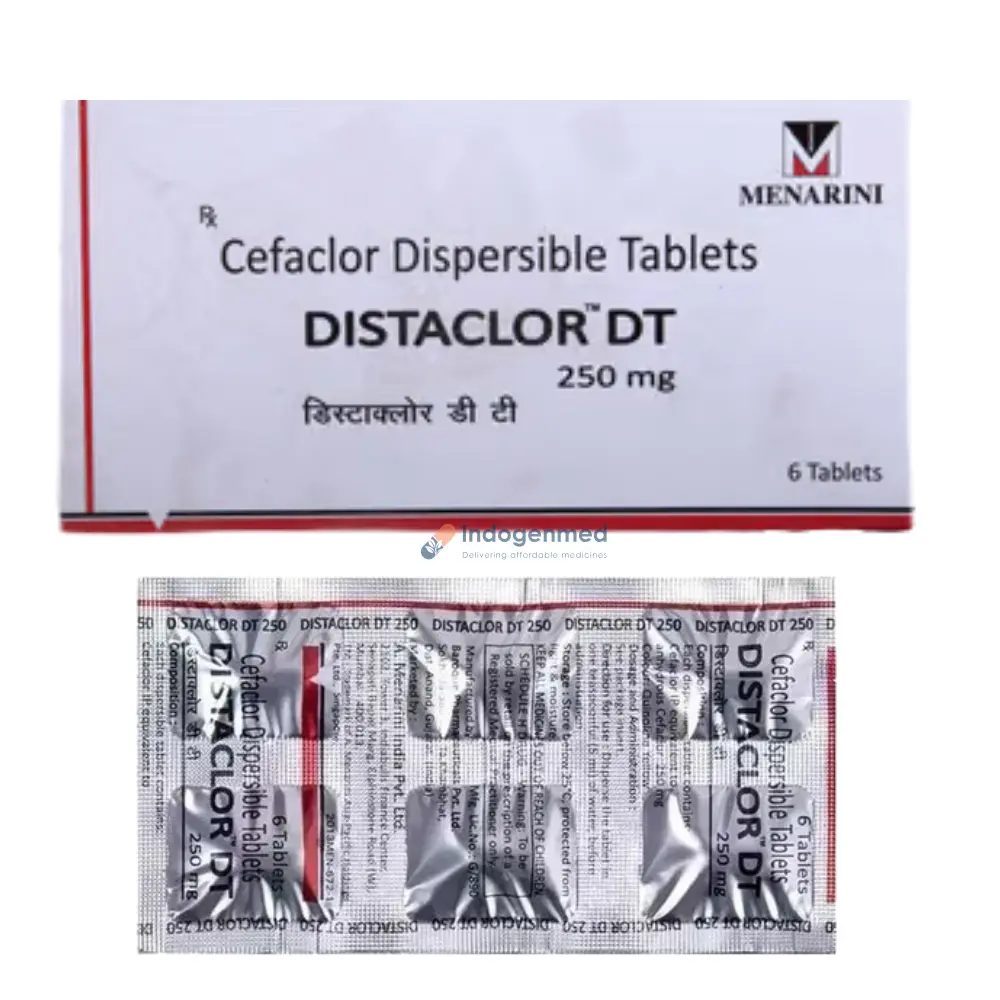
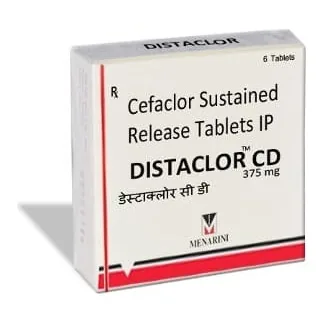
Distaclor DT 250 Mg Tablets
Distaclor DT 250 Mg Tablets contain cefaclor 250 mg in a dispersible tablet (DT) formulation that can be dissolved in water before swallowing, making it particularly suitable for patients who have difficulty swallowing standard tablets. Cefaclor is a second-generation oral cephalosporin antibiotic with activity against a range of gram-positive and gram-negative bacteria, used for the treatment of mild-to-moderate bacterial infections of the respiratory tract, ear, urinary tract, and skin.
Composition
| Active Ingredient | Strength |
|---|---|
| Cefaclor | 250 mg per dispersible tablet |
About the Manufacturer
Distaclor is manufactured by Eli Lilly and Company, a global biopharmaceutical company headquartered in Indianapolis, USA. Eli Lilly has a broad anti-infective and specialty medicines portfolio and distributes its products to healthcare markets worldwide.
Mechanism of Action
Cefaclor is a beta-lactam antibiotic that exerts bactericidal action by binding to penicillin-binding proteins (PBPs) on the bacterial cell wall. This inhibits the final cross-linking step of peptidoglycan synthesis, weakening and ultimately rupturing the bacterial cell wall. Cefaclor is resistant to some beta-lactamases produced by gram-negative organisms but may be hydrolysed by extended-spectrum beta-lactamases (ESBLs).
Indications
- Otitis media (middle ear infection)
- Pharyngitis and tonsillitis (caused by Streptococcus pyogenes)
- Acute bronchitis and exacerbations of chronic bronchitis
- Pneumonia (mild-to-moderate, community-acquired)
- Urinary tract infections (cystitis, pyelonephritis — mild-to-moderate)
- Skin and soft tissue infections (impetigo, cellulitis — mild-to-moderate)
Dosage & Administration
- Disperse the tablet in a small amount of water (approximately 5–10 mL), stir, and drink immediately; can also be swallowed whole
- Can be taken with or without food (taking with food reduces nausea)
- Adults and children ≥12 years: 250 mg three times daily; for more severe infections or pneumonia, 500 mg three times daily
- Children under 12: Dosing is weight-based; consult a physician
- Complete the full prescribed course even if symptoms improve; do not stop early
- Usual course duration: 7–10 days (Streptococcal pharyngitis: at least 10 days)
Special Populations
- Renal impairment: Dose adjustment may be required in severe renal impairment; consult prescribing information
- Hepatic impairment: No specific dose adjustment generally required
- Elderly: Standard adult dosing; monitor renal function
- Pregnancy: May be used when clearly indicated; discuss risk-benefit with prescribing doctor
- Breastfeeding: Small amounts pass into breast milk; use with caution
Precautions
- Before prescribing, establish prior penicillin allergy status; there is a small risk of cross-reactivity in penicillin-allergic patients (estimated 1–2%)
- Superinfection: prolonged use may cause overgrowth of non-susceptible organisms including Clostridioides difficile (C. diff-associated diarrhoea)
- Serum sickness-like reactions (rash, joint swelling, fever) have been reported with cefaclor more frequently than with other cephalosporins, particularly in children; discontinue and seek medical review if these occur
- Use with caution in patients with known GI disease, especially colitis
Contraindications
- Hypersensitivity to cefaclor, other cephalosporins, or any excipient
- Known immediate severe hypersensitivity (anaphylaxis) to penicillins (due to possible cross-reactivity)
Side Effects
- Common: Diarrhoea, nausea, vomiting, abdominal discomfort
- Less common: Rash, urticaria, pruritus, headache
- Uncommon: Serum sickness-like reaction (rash, arthralgia, fever 7–10 days into course)
- Rare: C. difficile-associated diarrhoea, Stevens-Johnson syndrome, elevated liver enzymes, haemolytic anaemia, positive Coombs’ test
- Very rare: Anaphylaxis (in penicillin-hypersensitive individuals)
Drug Interactions
- Warfarin: Cephalosporins may enhance anticoagulant effect; monitor INR during cefaclor treatment
- Probenecid: Reduces renal tubular secretion of cefaclor, increasing plasma levels; use with caution
- Aminoglycosides: Potential additive nephrotoxicity; monitor renal function if used concurrently
- Oral typhoid vaccine: May reduce vaccine efficacy; avoid concurrent use
Storage
Store below 25°C in a dry place, protected from light and moisture. Keep tablets in original blister packaging. Keep out of reach of children. Do not use after the expiry date printed on the pack. Once dispersed in water, use immediately; do not store the prepared solution.
Related Products
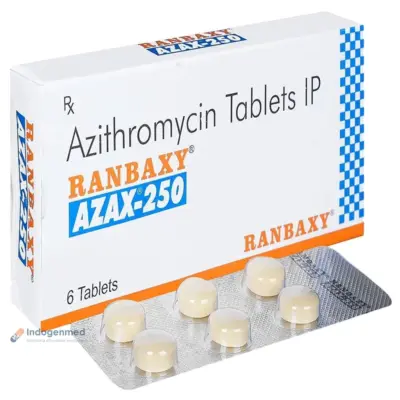
- Azax 500 Mg Tablets – azithromycin macrolide antibiotic for respiratory infections
- Ceprox 500 Mg Tablets – ciprofloxacin for urinary and systemic infections
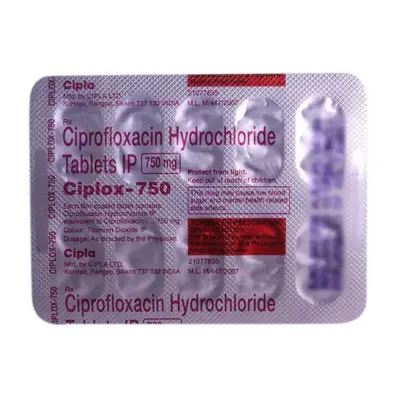
- Ciplox 750 Mg Tablets – higher-dose ciprofloxacin for severe infections
Frequently Asked Questions
- What is Distaclor DT 250 Mg used for?
- Distaclor DT 250 Mg is a cephalosporin antibiotic used to treat bacterial infections including ear infections, throat infections, chest infections, urinary tract infections, and skin infections. It is effective against a range of common bacteria but does not treat viral infections like colds or flu.
- What does DT mean in Distaclor DT?
- DT stands for Dispersible Tablet. This means the tablet can be dissolved in a small amount of water to form a suspension before swallowing. This makes it easier for people who have difficulty swallowing standard tablets, including some children and elderly patients, while still delivering the same dose as a standard tablet.
- How long should I take Distaclor DT 250 Mg?
- Complete the full course as prescribed by your doctor, usually 7–10 days. For throat infections caused by Group A Streptococcus, at least 10 days is recommended to prevent complications. Never stop early just because symptoms improve — incomplete courses can lead to treatment failure or antibiotic resistance.
- Can I take Distaclor DT if I am allergic to penicillin?
- There is a small risk of cross-allergy between penicillins and cephalosporins (approximately 1–2%). If you have had a severe allergic reaction (anaphylaxis) to a penicillin, cefaclor is generally avoided. If you have had a mild penicillin reaction (such as a rash), inform your doctor, who will assess the risk. Never assume complete safety without medical evaluation.
- What is a serum sickness-like reaction?
- A serum sickness-like reaction is an immune response that can occur with cefaclor, more commonly than with other cephalosporins, typically appearing 7–10 days into the course. Symptoms include skin rash, joint swelling or pain, and fever. It is not a true allergy but can be uncomfortable. Stop the antibiotic and contact your doctor if you develop these symptoms.
References
- NHS – Cefaclor
- MedlinePlus – Cefaclor
- FDA – Cefaclor Prescribing Information
- EMA – Cefaclor-Containing Medicinal Products Assessment
Disclaimer: This page is for informational purposes only and does not constitute medical advice. Distaclor DT 250 Mg Tablets must be prescribed by a qualified healthcare professional. Never self-medicate with antibiotics, and always complete the full prescribed course.
]]>
Reviews
There are no reviews yet.