Description
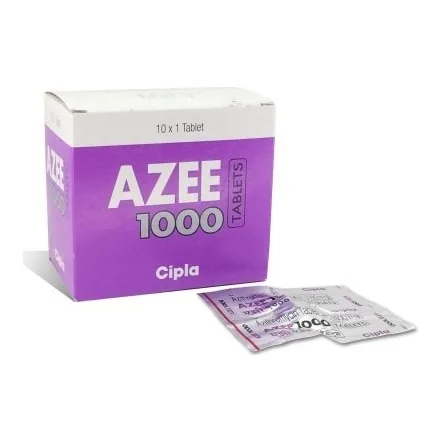
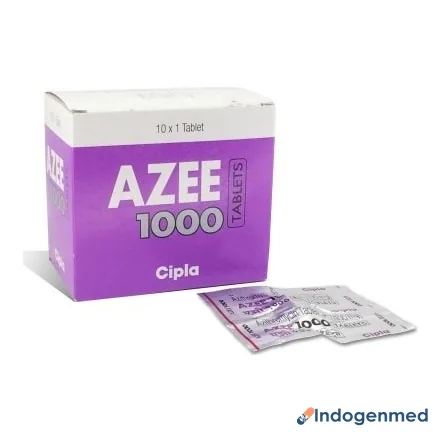
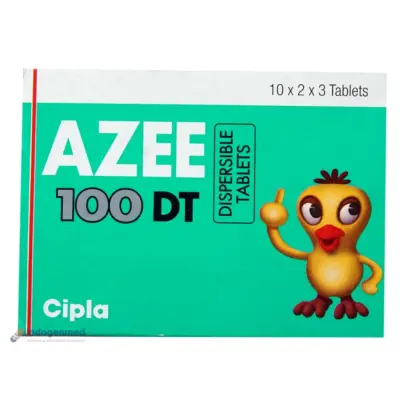
Azee 1000 Tablet — Azithromycin 1000 mg Single-Dose Antibiotic
Azee 1000 Tablet contains azithromycin 1000 mg, a macrolide antibiotic manufactured by Cipla Ltd. At 1000 mg, this is a high-dose single-tablet formulation used most commonly as a one-time treatment for specific infections — most notably uncomplicated genital Chlamydia trachomatis infection, where a single 1 g oral dose achieves cure rates exceeding 95%. Azithromycin belongs to the azalide subclass of macrolide antibiotics, structurally derived from erythromycin but with significantly superior pharmacokinetics: a tissue half-life of 68–72 hours, extensive intracellular penetration (tissue concentrations 10–100× plasma levels), and once-daily or single-dose regimens for many indications. This makes it one of the most convenient antibiotics available. Azee 1000 is widely used in sexually transmitted infection (STI) clinics, travel medicine (single-dose treatment of travellers’ diarrhoea), and as a step-down or single-dose treatment of community-acquired respiratory infections. Cipla’s Azee brand has been a cornerstone of global antibiotic access, particularly in resource-limited settings.
Composition of Azee 1000 Tablet
- Active ingredient: Azithromycin (as azithromycin dihydrate) 1000 mg
- Excipients: microcrystalline cellulose, anhydrous dibasic calcium phosphate, sodium croscarmellose, magnesium stearate; film coat: hypromellose, titanium dioxide, triacetin
Azithromycin: Chemical name: (2R,3S,4R,5R,8R,10R,11R,12S,13S,14R)-13-[(2,6-dideoxy-3-C-methyl-3-O-methyl-α-L-ribo-hexopyranosyl)oxy]-2-ethyl-3,4,10-trihydroxy-3,5,6,8,10,12,14-heptamethyl-11-[[3,4,6-trideoxy-3-(dimethylamino)-β-D-xylo-hexopyranosyl]oxy]-1-oxa-6-azacyclopentadecan-15-one dihydrate. Molecular formula C₃₈H₇₂N₂O₁₂·2H₂O, molecular weight 785.0 g/mol. Azithromycin is a 15-membered ring macrolide (azalide) with a nitrogen atom inserted into the macrolide ring, distinguishing it from erythromycin (14-membered) and clarithromycin.
Mechanism of Action
Azithromycin is a protein synthesis inhibitor that acts on the bacterial ribosome:
- 50S ribosomal subunit binding: Azithromycin binds reversibly to the 23S rRNA of the 50S ribosomal subunit. This binding site — the peptidyl transferase loop — is structurally distinct from mammalian (80S) ribosomes, conferring selective antibacterial activity with minimal mammalian ribosomal toxicity
- Peptide elongation blockade: By binding to the 50S subunit near the peptide exit tunnel, azithromycin blocks translocation of the growing peptide chain, halting protein synthesis. This results in bacteriostatic activity against most susceptible organisms
- Bactericidal activity at high concentrations: Against some organisms (Streptococcus pneumoniae, Haemophilus influenzae at high tissue concentrations), azithromycin behaves bactericidally, particularly at the high intracellular concentrations achieved in infected tissues. This is relevant for the 1000 mg dose, which achieves substantially higher tissue levels than the standard 500 mg dose
- Intracellular accumulation: Azithromycin is actively transported into phagocytes (neutrophils, macrophages) and epithelial cells, achieving intracellular concentrations 10–200× plasma levels. This is clinically important for intracellular pathogens (Chlamydia, Mycoplasma, Legionella) that evade beta-lactam antibiotics. Phagocyte-mediated delivery of azithromycin to infection sites provides a pharmacokinetic advantage for treating intracellular organisms
- Anti-inflammatory effects: At sub-inhibitory concentrations, azithromycin suppresses proinflammatory cytokines (IL-8, TNF-α), reduces neutrophil chemotaxis, and modulates macrophage function. These non-antibiotic effects may contribute to clinical benefit in chronic airway inflammation (bronchiectasis, cystic fibrosis, diffuse panbronchiolitis)
Pharmacokinetics
| Parameter | Value |
|---|---|
| Oral bioavailability | ~37% (first-pass metabolism; tablet form has lower bioavailability than suspension) |
| Tmax (time to peak plasma) | 2–3 hours after oral dose |
| Protein binding | 7–51% (concentration-dependent; lower at higher plasma concentrations) |
| Volume of distribution | 31 L/kg (extensive tissue distribution; very high tissue:plasma ratio) |
| Tissue concentrations | 10–100× plasma levels in lung, tonsil, cervix, uterus, prostate, macrophages |
| Metabolism | Hepatic demethylation; metabolites are microbiologically inactive. CYP3A4 substrate at low concentrations |
| Plasma half-life (terminal) | 68–72 hours (3 days); enables once-daily dosing and single-dose treatments |
| Tissue half-life | Up to 7–10 days in some tissues (phagocytes); explains prolonged post-antibiotic effect |
| Elimination | Primarily biliary/faecal (~50%); renal excretion ~6% unchanged |
| Effect of food | Tablets: take on empty stomach (food reduces absorption by ~50%); if GI intolerance occurs, may be taken with food |
Uses of Azee 1000 Tablet
- Uncomplicated urogenital Chlamydia trachomatis infection: The primary indication for the 1000 mg single-dose formulation. Azithromycin 1 g single oral dose is a first-line treatment for uncomplicated chlamydial urethritis, cervicitis, and proctitis, recommended by CDC, WHO, and Indian STI guidelines. Single-dose therapy ensures compliance and eliminates the problem of incomplete antibiotic courses — critical in STI management. Cure rates >95% in clinical trials. Recommended to treat sexual partners concurrently
- Travellers’ diarrhoea (single-dose treatment): Azithromycin 1000 mg as a single dose is an effective and convenient treatment for travellers’ diarrhoea caused by common bacterial pathogens including Campylobacter, enterotoxigenic E. coli, and Shigella — particularly in regions where fluoroquinolone resistance is prevalent (Southeast Asia, South Asia). Single-dose therapy reduces duration and severity of illness significantly
- Non-gonococcal urethritis (NGU) and cervicitis: Azithromycin 1 g single dose treats NGU/cervicitis caused by Chlamydia and Ureaplasma urealyticum. It is preferred over doxycycline in settings where compliance with a 7-day course is uncertain
- Pelvic inflammatory disease (PID — part of combination regimen): Azithromycin 1 g once weekly for 2 weeks is used as part of combination PID regimens (with ceftriaxone), targeting Chlamydia as the primary pathogen. The 1000 mg tablet facilitates this regimen
- Community-acquired pneumonia (CAP — high-dose regimen): While the standard azithromycin course for CAP is 500 mg on day 1 followed by 250 mg daily, some guidelines and clinical settings use 1000 mg on day 1 (loading dose) for more rapid attainment of effective tissue levels in moderate CAP. Used in patients transitioning from IV therapy or when enhanced initial tissue penetration is desired
- Typhoid fever / enteric fever (adjunct): Azithromycin (500 mg–1 g once daily for 7 days) is used in uncomplicated typhoid fever, particularly in multidrug-resistant cases. The 1000 mg tablet can be used as a once-daily dose in resistant typhoid, though the standard course is 500–1000 mg per day depending on severity
- Pertussis (whooping cough — post-exposure prophylaxis or treatment): Azithromycin is the preferred macrolide for treatment and post-exposure prophylaxis of pertussis due to Bordetella pertussis, particularly in infants and pregnant women where erythromycin is poorly tolerated. The 1 g dose may be used as part of a short-course regimen
Dosage and Administration
| Indication | Dose | Duration | Notes |
|---|---|---|---|
| Uncomplicated chlamydia | 1000 mg single dose | Single dose (one tablet) | Take on empty stomach; treat partners simultaneously |
| Travellers’ diarrhoea | 1000 mg single dose | Single dose | Can take with food if nausea occurs |
| NGU / cervicitis | 1000 mg single dose | Single dose | As for chlamydia; test of cure not routinely needed if asymptomatic post-treatment |
| PID (combination regimen) | 1000 mg once weekly | 2 weeks | Combined with ceftriaxone 500 mg IM single dose ± metronidazole |
| CAP (high-dose loading) | 1000 mg on Day 1, then 500 mg Days 2–5 | 5 days total | As directed by physician; not standard first-line in India |
| Typhoid fever (alternative) | 500–1000 mg once daily | 7 days | Under physician supervision; culture and sensitivity guide therapy |
| Renal impairment | No dose adjustment (CrCl >10 mL/min); caution if CrCl <10 mL/min | As per indication | Primarily biliary excretion; renal dose adjustment rarely needed |
| Hepatic impairment | Use with caution; avoid in severe hepatic disease | As per indication | Hepatic metabolism and biliary excretion — impaired clearance in severe liver disease |
Side Effects
Common (affecting 1–10% of patients):
- Gastrointestinal effects: Nausea, vomiting, diarrhoea, and abdominal pain are the most common side effects, typically mild and transient. More frequent with higher doses (1 g) than with standard 500 mg dosing. Taking with food (despite reduced absorption) reduces GI intolerance. Azithromycin is a motilin receptor agonist, stimulating intestinal motility and causing GI side effects even at therapeutic doses
- Headache, dizziness
- Altered taste (dysgeusia)
Uncommon (affecting 0.1–1% of patients):
- QT prolongation: Azithromycin prolongs the cardiac QT interval, increasing the risk of ventricular arrhythmias (particularly torsades de pointes) in susceptible patients — those with pre-existing QT prolongation, electrolyte abnormalities (hypokalaemia, hypomagnesaemia), or concurrent use of other QT-prolonging drugs. This is an important safety consideration even with single-dose use
- Hepatotoxicity: Elevated liver transaminases; rare cholestatic jaundice. More common with multi-day courses
- Rash, urticaria
Rare but serious:
- Severe hypersensitivity / anaphylaxis: Including Stevens-Johnson syndrome and toxic epidermal necrolysis (very rare). Discontinue immediately if severe skin reaction occurs
- Clostridium difficile-associated diarrhoea (CDAD): As with all antibiotics; consider in patients with diarrhoea occurring >2 months after antibiotic use
- Sensorineural hearing loss / tinnitus: Rare; associated with high-dose or prolonged use. Usually reversible on discontinuation
Precautions and Warnings
- QT prolongation and cardiac arrhythmia risk: Azithromycin must be used with caution in patients with known QT prolongation, hypokalaemia, hypomagnesaemia, bradycardia, or those taking Class IA or III antiarrhythmic drugs. A cardiovascular risk-benefit assessment is recommended before prescribing to patients with pre-existing cardiac conditions. The FDA issued a Drug Safety Communication in 2013 about azithromycin’s potential for fatal cardiac arrhythmias
- Hepatic impairment: Avoid in patients with significant hepatic impairment (Child-Pugh B or C), as azithromycin is primarily metabolised and excreted hepatically. Hepatotoxicity, including jaundice and hepatic necrosis, has been reported with azithromycin — monitor liver function if prolonged use
- Resistance and appropriate use: Azithromycin resistance among Neisseria gonorrhoeae is a growing global concern. Azithromycin 1 g is no longer recommended as monotherapy for gonorrhoea; it must be combined with ceftriaxone in dual therapy for gonorrhoea. Use of azithromycin should be guided by local resistance patterns and culture sensitivities where available
- Myasthenia gravis: Azithromycin and other macrolides have been reported to exacerbate symptoms of myasthenia gravis. Use with caution; cases of new myasthenic syndrome have been reported
- Not for acute otitis media with penicillin-resistant S. pneumoniae: Where macrolide resistance in S. pneumoniae is prevalent (>25%), azithromycin should not be first-line for AOM or sinusitis — amoxicillin or amoxicillin-clavulanate are preferred
- Pregnancy (Category B): Azithromycin is used for treatment of chlamydia in pregnancy (preferred over doxycycline, which is contraindicated). Safety data from large observational studies are generally reassuring, though the FDA classifies azithromycin as Pregnancy Category B. Breastfeeding: azithromycin is excreted in breast milk; use with caution
Drug Interactions
| Drug / Class | Interaction | Clinical Action |
|---|---|---|
| QT-prolonging drugs (antiarrhythmics, antipsychotics, fluoroquinolones, antimalarials) | Additive QT prolongation; risk of ventricular arrhythmia including torsades de pointes | Avoid combination; if unavoidable, ECG monitoring and electrolyte correction before use |
| Warfarin and other anticoagulants | Azithromycin may enhance anticoagulant effects of warfarin (INR elevation reported); mechanism unclear — possible gut flora alteration reducing vitamin K synthesis | Monitor INR closely during and after azithromycin course; adjust warfarin dose as needed |
| Digoxin | Azithromycin may increase digoxin levels by reducing gut flora that metabolises digoxin (Eggerthella lenta) | Monitor digoxin levels and signs of toxicity (bradycardia, nausea, visual disturbances) |
| Colchicine | Macrolides inhibit colchicine efflux; azithromycin can increase colchicine toxicity (risk of fatal toxicity in patients with renal or hepatic impairment) | Avoid combination if possible; reduce colchicine dose if co-prescription is unavoidable; monitor carefully |
| Antacids (aluminium- and magnesium-containing) | Reduce peak plasma concentration of azithromycin by ~25% (affect rate of absorption, not total absorption); clinical significance is minor | Take azithromycin at least 1 hour before or 2 hours after antacid |
| Ergotamine / dihydroergotamine | Macrolides inhibit CYP3A4 metabolism of ergotamine; risk of ergotism (vasospasm, peripheral ischaemia) | Avoid combination; use alternative migraine therapy |
Contraindications
- Known hypersensitivity to azithromycin, erythromycin, clarithromycin, or any macrolide/azalide antibiotic
- History of cholestatic jaundice or hepatic dysfunction associated with prior azithromycin use
- Severe hepatic impairment (Child-Pugh C)
- Patients with known QT prolongation or at high risk (congenital long QT syndrome, electrolyte abnormalities, Class IA/III antiarrhythmics)
Storage Instructions
- Store below 30°C in a cool, dry place; protect from moisture and direct sunlight
- Keep in the original packaging (blister or container) until use
- Keep out of reach and sight of children
- Do not use after the printed expiry date on the packaging
Related Products
The following medicines on IndoGenMed are related to Azee 1000 Tablet in terms of antibiotic spectrum, indication, or clinical use:
- Taxim O DT 100 Tablet (Cefixime 100 mg) — third-generation oral cephalosporin; combined with azithromycin in dual therapy for gonorrhoea and in some community-acquired respiratory infection regimens
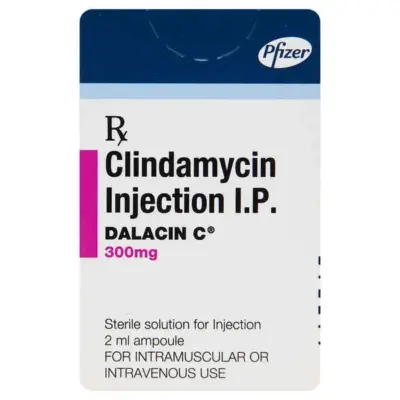
- Dalacin C 300 mg Capsule (Clindamycin 300 mg) — lincosamide antibiotic; used as an alternative in patients with macrolide allergy for skin and soft tissue infections, and in PID regimens as a substitute for azithromycin
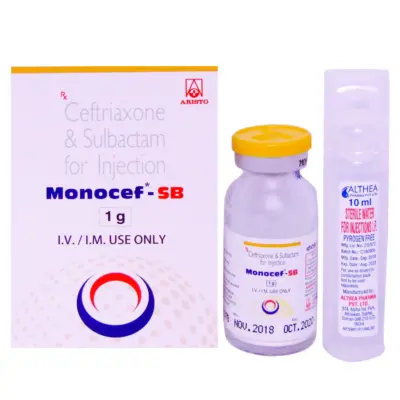
- Monocef 1g Injection (Ceftriaxone 1 g) — third-generation IV cephalosporin; combined with azithromycin in PID treatment regimens and for dual therapy of gonorrhoea
- Forcan 200 Tablet (Fluconazole 200 mg) — antifungal; prescribed alongside antibiotics including azithromycin to prevent or treat Candida superinfection during antibiotic therapy
- Omez 40 mg Injection (Omeprazole 40 mg) — proton pump inhibitor; used to manage GI side effects of antibiotic therapy; relevant when azithromycin-associated nausea or gastritis requires co-prescription of a gastroprotective agent
References
- DailyMed (FDA). Azithromycin Tablets — Full Prescribing Information. Available at: https://dailymed.nlm.nih.gov/dailymed/search.cfm?labeltype=all&query=azithromycin+1000
- MedlinePlus (U.S. National Library of Medicine). Azithromycin. Available at: https://medlineplus.gov/druginfo/meds/a697037.html
- Centers for Disease Control and Prevention (CDC). Sexually Transmitted Infections Treatment Guidelines, 2021 — Chlamydial Infections. Available at: https://www.cdc.gov/std/treatment-guidelines/chlamydia.htm
- Riddle MS, DuPont HL, Connor BA. ACG Clinical Guideline: Diagnosis, Treatment, and Prevention of Acute Diarrheal Infections in Adults. Am J Gastroenterol. 2016;111(5):602–622. PubMed PMID: 27068718
- Retsema J, Girard A, Schelkly W, et al. Spectrum and mode of action of azithromycin (CP-62,993), a new 15-membered-ring macrolide with improved potency against gram-negative organisms. Antimicrob Agents Chemother. 1987;31(12):1939–1947. PubMed PMID: 3435068
- Mayo Clinic. Azithromycin (Oral Route) — Description and Brand Names, Before Using, Proper Use, Precautions, Side Effects. Available at: https://www.mayoclinic.org/drugs-supplements/azithromycin-oral-route/description/drg-20072083
- FDA Drug Safety Communication. Azithromycin (Zithromax or Zmax) and the risk of potentially fatal heart rhythms. March 2013. Available at: https://www.fda.gov/drugs/drug-safety-and-availability/fda-drug-safety-communication-azithromycin-zithromax-or-zmax-and-risk-potentially-fatal-heart
Reviews
There are no reviews yet.