Description
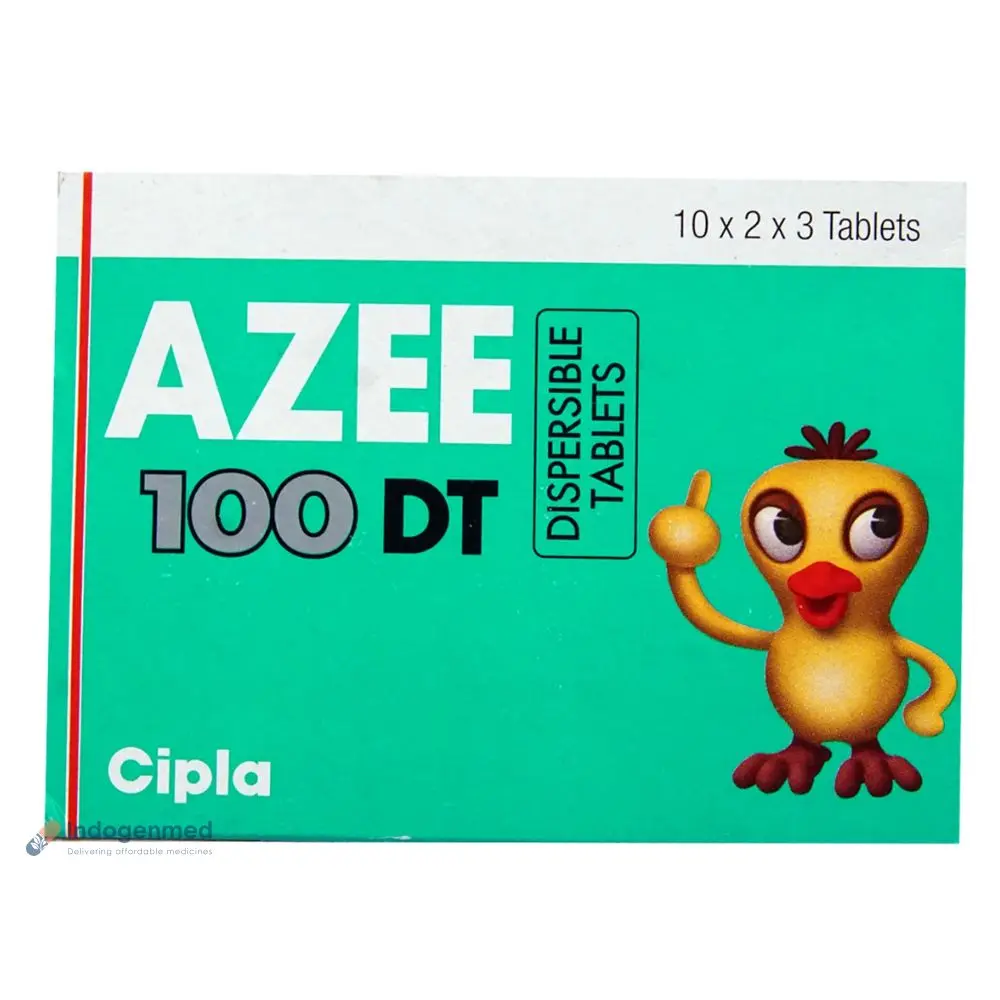
Azee DT 100 Mg Tablets
Azee DT 100 Mg Tablets contain azithromycin 100 mg in a dispersible tablet form. Azithromycin is a macrolide antibiotic used to treat bacterial infections, including respiratory, ear, throat, and skin infections. The dispersible formulation is designed to be dissolved in water to make a liquid dose, which is particularly useful for children and for adults who find tablets hard to swallow. Dispersible azithromycin is commonly used where a dose is set by body weight rather than a fixed adult tablet, so the dose should always be confirmed by a clinician. It treats bacterial infections only and has no effect on viral illnesses.
Composition
| Active Ingredient | Strength |
|---|---|
| Azithromycin (as dihydrate) | 100 mg per dispersible tablet |
About the Manufacturer
Manufacturer details are printed on the carton and in the patient information leaflet supplied with each pack. Check the leaflet for the current prescribing information before use.
Mechanism of Action
Azithromycin binds to the 50S ribosomal subunit of susceptible bacteria and blocks the translocation step of protein synthesis, which stops bacterial growth. Its high tissue penetration and long half-life mean that a short course can maintain effective concentrations at the site of infection. Dispersing the tablet in water does not change how the drug works, but it does mean the medicine must be taken as a liquid rather than swallowed whole.
Indications
- Acute bacterial infections of the respiratory tract, including sinusitis, pharyngitis, tonsillitis, and bronchitis, where macrolide therapy is appropriate
- Acute otitis media in children
- Uncomplicated skin and soft tissue infections
- Other infections caused by susceptible organisms, as determined by a clinician
Dosage & Administration
- Dispersible tablets are dissolved in a small amount of water, such as a half glass or about 15 to 30 mL, and drunk immediately. Do not swallow the tablet whole
- Stir well until the tablet has fully dispersed. Give the full dose, then rinse the glass with a little more water and drink it to make sure the whole dose is taken
- Dosing for children is weight-based and set by a clinician. Do not estimate the dose yourself
- For adults, the usual regimen for many infections is a short course, often three days, but the prescriber sets the exact dose and duration
- Take on an empty stomach, one hour before or two hours after food, unless your prescriber advises otherwise
- Complete the full course, even when symptoms improve
- Store unused dispersed liquid as directed on the leaflet; do not keep leftover doses for later use
Special Populations
- Children: Dosing depends on body weight and must be calculated by a clinician. Use only the formulation prescribed for the child’s age and weight
- Elderly: Use with caution, as older adults are more likely to have heart rhythm problems
- Renal impairment: No routine dose change is needed for mild to moderate impairment. Use with caution in severe impairment
- Hepatic impairment: Use with caution, as azithromycin is cleared mainly in bile
- Pregnancy: Generally considered acceptable when clearly needed. Discuss with your doctor
- Breastfeeding: Azithromycin passes into breast milk in small amounts and is generally considered acceptable. Discuss with your doctor
Precautions
- Heart rhythm: Azithromycin can prolong the QT interval and rarely cause serious arrhythmias. Use carefully in people with heart rhythm disorders, low potassium or magnesium, or those taking other QT-prolonging medicines
- Liver: Rare but serious liver injury has been reported. Seek help promptly for yellowing of the skin or eyes, dark urine, or abdominal pain
- Diarrhoea: Common with antibiotics. Severe, persistent, or bloody diarrhoea needs prompt medical review, as it may indicate Clostridioides difficile infection
- Myasthenia gravis: Macrolides may worsen muscle weakness. Tell your doctor if you have this condition
- Accurate dosing: Always use the measuring device or dosing instructions supplied, and check the dose calculation for children
- Resistance: Use antibiotics only when prescribed, to limit resistant bacteria
Contraindications
- Known hypersensitivity to azithromycin, erythromycin, or any other macrolide or ketolide, or to any excipient
- History of cholestatic jaundice or hepatic dysfunction associated with previous azithromycin use
Side Effects
- Common: Diarrhoea, loose stools, nausea, vomiting, abdominal pain, indigestion
- Less common: Headache, dizziness, rash, taste disturbance, fungal infections of the mouth or genital area
- Rare: Serious allergic reactions including anaphylaxis, liver injury, QT prolongation, arrhythmia, hearing changes, Clostridioides difficile-associated diarrhoea
- Seek urgent medical help for: Swelling of the face, lips, or throat; difficulty breathing; fainting or fast, irregular heartbeat; yellowing of the skin or eyes; severe or bloody diarrhoea
Drug Interactions
- Warfarin and other anticoagulants: May increase anticoagulant effect. Monitor clotting tests
- Digoxin: Macrolides may increase digoxin levels. Monitor if combined
- Colchicine: Serious toxicity risk with macrolides; avoid unless closely supervised
- Other QT-prolonging medicines: Additive effect on heart rhythm
- Antacids containing aluminium or magnesium: Reduce absorption. Separate doses as advised
- Ergot alkaloids: Avoid combination due to toxicity risk
Storage
Store below 30°C in a dry place, protected from light and moisture. Keep in the original blister or carton until use. Keep out of reach of children. Do not use after the expiry date printed on the pack.
Related Products
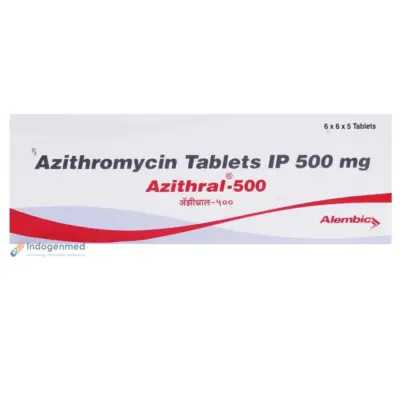
- Azithral 500 Mg Tablets – azithromycin 500 mg tablets
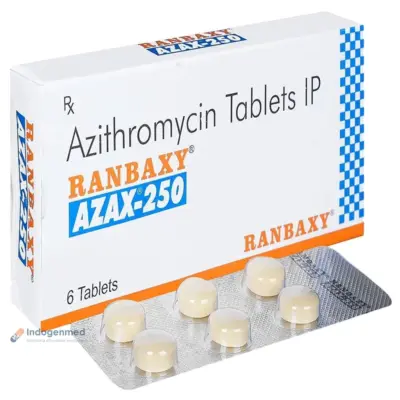
- Azax 250 Mg Tablets – azithromycin 250 mg tablets
- Azax 500 Mg Tablets – azithromycin 500 mg tablets
Frequently Asked Questions
- What is Azee DT 100 Mg used for?
- It is used to treat bacterial infections such as throat, sinus, chest, and ear infections, and some skin infections. It is available as a dispersible tablet that is dissolved in water, which is helpful for children and people who have difficulty swallowing tablets.
- How do I take a dispersible tablet?
- Dissolve the tablet fully in a small amount of water, stir, and drink it straight away. Rinse the glass with a little more water and drink that too, so the whole dose is taken.
- How do I know the right dose for my child?
- Doses for children are calculated from body weight and should be confirmed by a doctor or pharmacist. Do not guess or use adult doses.
- What if my child spits some of it out?
- Contact your doctor or pharmacist for advice before giving another dose. Do not simply give a second dose without advice.
- When should I seek urgent help?
- Seek urgent help for swelling of the face or throat, difficulty breathing, fainting or a fast, irregular heartbeat, yellowing of the skin or eyes, or severe or bloody diarrhoea.
References
- NHS – Azithromycin
- MedlinePlus – Drug Information Index (azithromycin)
- FDA – Drugs (azithromycin prescribing information)
- EMA – Medicines (azithromycin product information)
Disclaimer: This page is for informational purposes only and does not constitute medical advice. Azee DT 100 Mg Tablets is a prescription antibiotic. Children’s doses must be calculated by a qualified healthcare professional. Seek urgent medical help for signs of a serious allergic reaction, fainting or irregular heartbeat, yellowing of the skin or eyes, or severe diarrhoea.



Reviews
There are no reviews yet.