Description
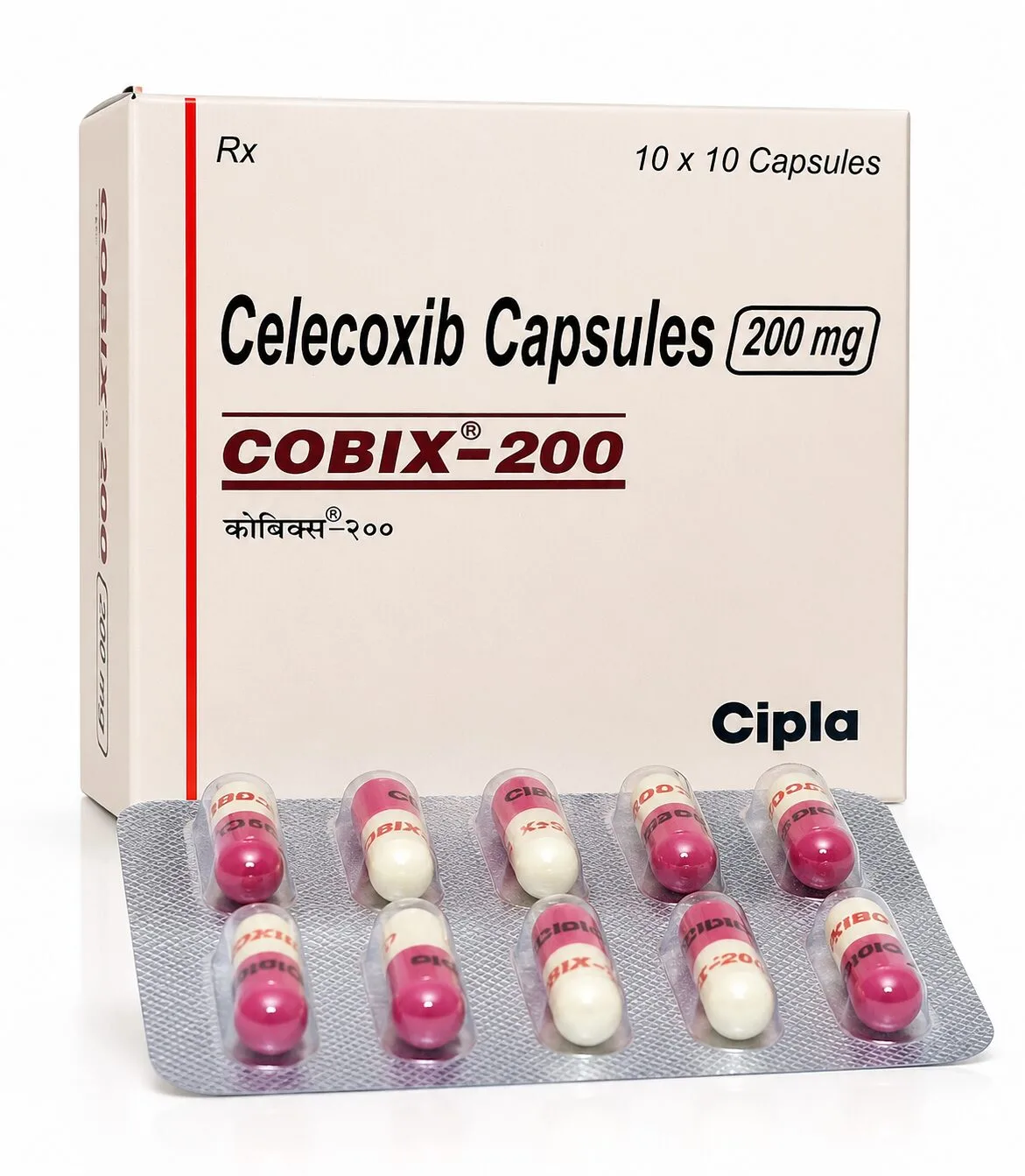
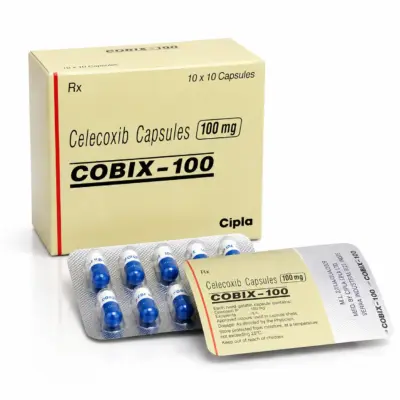
Cobix 200 Mg Capsules
Cobix 200 Mg Capsules contain celecoxib 200 mg, a selective cyclooxygenase-2 (COX-2) inhibitor (coxib) used for the relief of signs and symptoms of osteoarthritis, rheumatoid arthritis, ankylosing spondylitis, and acute pain including primary dysmenorrhoea. By selectively inhibiting COX-2 — the enzyme predominantly responsible for inflammation-related prostaglandin synthesis — celecoxib provides anti-inflammatory, analgesic, and antipyretic effects with significantly lower risk of gastrointestinal ulceration compared with non-selective NSAIDs.
Composition
| Active Ingredient | Strength |
|---|---|
| Celecoxib | 200 mg per capsule |
About the Manufacturer
Cobix is manufactured by Cipla Limited, one of India’s largest and most globally recognised pharmaceutical companies, headquartered in Mumbai. Cipla has an extensive pain management and anti-inflammatory medicines portfolio and distributes to over 80 countries worldwide.
Mechanism of Action
Prostaglandins are mediators of pain, inflammation, and fever, synthesised by the cyclooxygenase (COX) enzyme. COX exists in two main isoforms: COX-1 (constitutively expressed, important for gastric mucosal protection, platelet aggregation, and renal function) and COX-2 (inducible, predominantly expressed at sites of inflammation). Celecoxib selectively inhibits COX-2 with approximately 375-fold greater selectivity for COX-2 over COX-1, reducing inflammatory prostaglandin synthesis while sparing gastric and platelet COX-1 activity. This selectivity underpins celecoxib’s improved gastrointestinal tolerability compared with traditional NSAIDs.
Indications
- Osteoarthritis (OA) — relief of signs and symptoms
- Rheumatoid arthritis (RA) — relief of signs and symptoms
- Ankylosing spondylitis
- Acute pain in adults (post-surgical, musculoskeletal)
- Primary dysmenorrhoea
Dosage & Administration
- Swallow capsules whole with water, with or without food
- Patients with difficulty swallowing: contents of capsule may be mixed with applesauce and taken immediately with water
- Osteoarthritis: 200 mg once daily or 100 mg twice daily
- Rheumatoid arthritis: 100–200 mg twice daily
- Ankylosing spondylitis: 200 mg once daily or 100 mg twice daily; may increase to 400 mg daily if no response after 6 weeks
- Acute pain / dysmenorrhoea: 400 mg on Day 1 as initial dose, then 200 mg twice daily as needed
- Use the lowest effective dose for the shortest necessary duration
Special Populations
- Moderate hepatic impairment (Child-Pugh B): Reduce dose by 50%
- Severe hepatic impairment: Avoid use
- Poor CYP2C9 metabolisers: Consider starting at half the normal dose
- Elderly: Use lowest effective dose; elderly patients are at higher risk of GI and cardiovascular events
- Pregnancy (from 20 weeks): Avoid — NSAIDs including COX-2 inhibitors may cause premature closure of the ductus arteriosus and foetal renal dysfunction; avoid from 20 weeks and contraindicated from 30 weeks
- Renal impairment: Use with caution; avoid in severe renal impairment
Precautions
- Cardiovascular risk: all NSAIDs including COX-2 inhibitors are associated with increased risk of serious cardiovascular thrombotic events (myocardial infarction, stroke), particularly at higher doses and with prolonged use; use with caution in patients with established cardiovascular disease or cardiovascular risk factors
- Gastrointestinal effects: COX-2 selectivity reduces but does not eliminate GI risk; caution in patients with a history of GI ulceration or bleeding
- Sulphonamide allergy: celecoxib is a sulphonamide; use with caution in patients with sulphonamide hypersensitivity
- Renal: NSAIDs can reduce renal prostaglandin synthesis and impair renal function, particularly in patients with pre-existing renal disease, dehydration, or heart failure
- Hepatic: monitor liver enzymes in patients with signs or symptoms of hepatic dysfunction
- Fluid retention and oedema: may occur; use with caution in patients with cardiac decompensation, hypertension, or oedematous states
Contraindications
- Known hypersensitivity to celecoxib, sulphonamides, or any NSAID
- History of asthma, urticaria, or allergic-type reactions to aspirin or NSAIDs (aspirin-exacerbated respiratory disease)
- Active peptic ulcer disease or gastrointestinal bleeding
- Severe hepatic impairment
- Severe renal impairment (eGFR <30 mL/min/1.73 m²)
- Established ischaemic heart disease, peripheral arterial disease, cerebrovascular disease, or uncontrolled hypertension
- Pregnancy from 30 weeks onwards
- Concurrent use with another NSAID (including COX-2 inhibitors)
Side Effects
- Common: Headache, dizziness, dyspepsia, diarrhoea, abdominal pain, peripheral oedema, upper respiratory tract infection
- Less common: Elevated liver enzymes, elevated serum creatinine, hypertension, insomnia, rash
- Serious: Cardiovascular thrombotic events (MI, stroke), serious GI events (perforation, ulceration, bleeding), severe skin reactions (Stevens-Johnson syndrome, toxic epidermal necrolysis), anaphylaxis, hepatic failure, acute renal failure
Drug Interactions
- Warfarin and other anticoagulants: COX-2 inhibitors may enhance anticoagulant effects; monitor INR closely
- ACE inhibitors, ARBs, beta-blockers: NSAIDs may reduce antihypertensive efficacy; risk of renal impairment with concurrent use in patients with impaired renal function
- Diuretics: NSAIDs may reduce diuretic efficacy
- Lithium: Celecoxib may increase lithium levels; monitor
- CYP2C9 inhibitors (fluconazole): May increase celecoxib plasma levels by approximately 2-fold; consider dose reduction
- Aspirin: Concurrent use increases GI risk; low-dose aspirin does not fully protect against COX-2-related GI events
Storage
Store below 30°C in a dry place, protected from light and moisture. Keep capsules in the original packaging. Keep out of reach of children. Do not use after the expiry date printed on the pack.
Related Products
- Voveran SR 100 Mg Tablets – diclofenac sodium sustained-release 100 mg
- Indocap SR 75 Mg Capsules – indomethacin sustained-release 75 mg
- Emeset 8 Mg Tablets – ondansetron 8 mg for nausea management
Frequently Asked Questions
- What is Cobix 200 Mg used for?
- Cobix 200 Mg is used to relieve the pain, swelling, and stiffness associated with osteoarthritis, rheumatoid arthritis, and ankylosing spondylitis. It is also used for acute pain such as post-surgical pain and primary dysmenorrhoea (painful periods). It belongs to a class of medicines called selective COX-2 inhibitors.
- How is Cobix different from ibuprofen or diclofenac?
- Cobix (celecoxib) is a selective COX-2 inhibitor, meaning it targets the COX-2 enzyme (responsible for inflammation) much more selectively than the COX-1 enzyme (which protects the stomach lining and helps with platelet function). Traditional NSAIDs like ibuprofen and diclofenac inhibit both COX-1 and COX-2, which is why they are more likely to cause stomach ulcers and bleeding. Celecoxib has a significantly lower risk of serious gastrointestinal complications, though it carries similar cardiovascular risks.
- Is Cobix 200 Mg safe for the stomach?
- Cobix has a significantly better gastrointestinal safety profile than non-selective NSAIDs — it is less likely to cause stomach ulcers and upper GI bleeding. However, it does not eliminate gastrointestinal risk entirely, particularly in patients with a history of GI problems, those taking aspirin, or the elderly. The lowest effective dose for the shortest necessary duration is always recommended.
- Can I take Cobix if I have heart disease?
- COX-2 inhibitors, like all NSAIDs, are associated with an increased risk of cardiovascular events (heart attack, stroke), particularly with prolonged high-dose use. Cobix is contraindicated in patients with established ischaemic heart disease, peripheral arterial disease, or cerebrovascular disease. If you have cardiovascular risk factors, discuss the risks and benefits carefully with your doctor before taking celecoxib.
- Can I take Cobix 200 Mg during pregnancy?
- No, not in the later stages of pregnancy. NSAIDs including COX-2 inhibitors should be avoided from 20 weeks of pregnancy onwards and are absolutely contraindicated from 30 weeks due to the risk of premature closure of the ductus arteriosus and foetal kidney problems. Consult your doctor immediately if you become pregnant while taking Cobix.
References
- NHS – Celecoxib
- MedlinePlus – Celecoxib
- FDA – Celebrex (Celecoxib) Prescribing Information
- EMA – Celebrex (Celecoxib) EPAR
Disclaimer: This page is for informational purposes only and does not constitute medical advice. Cobix 200 Mg Capsules must be prescribed and monitored by a qualified healthcare professional. Use the lowest effective dose for the shortest time necessary. Report any chest pain, shortness of breath, weakness, or black or bloody stools to your doctor immediately.

Reviews
There are no reviews yet.