Description
What Is Donep 10 mg Tablets?
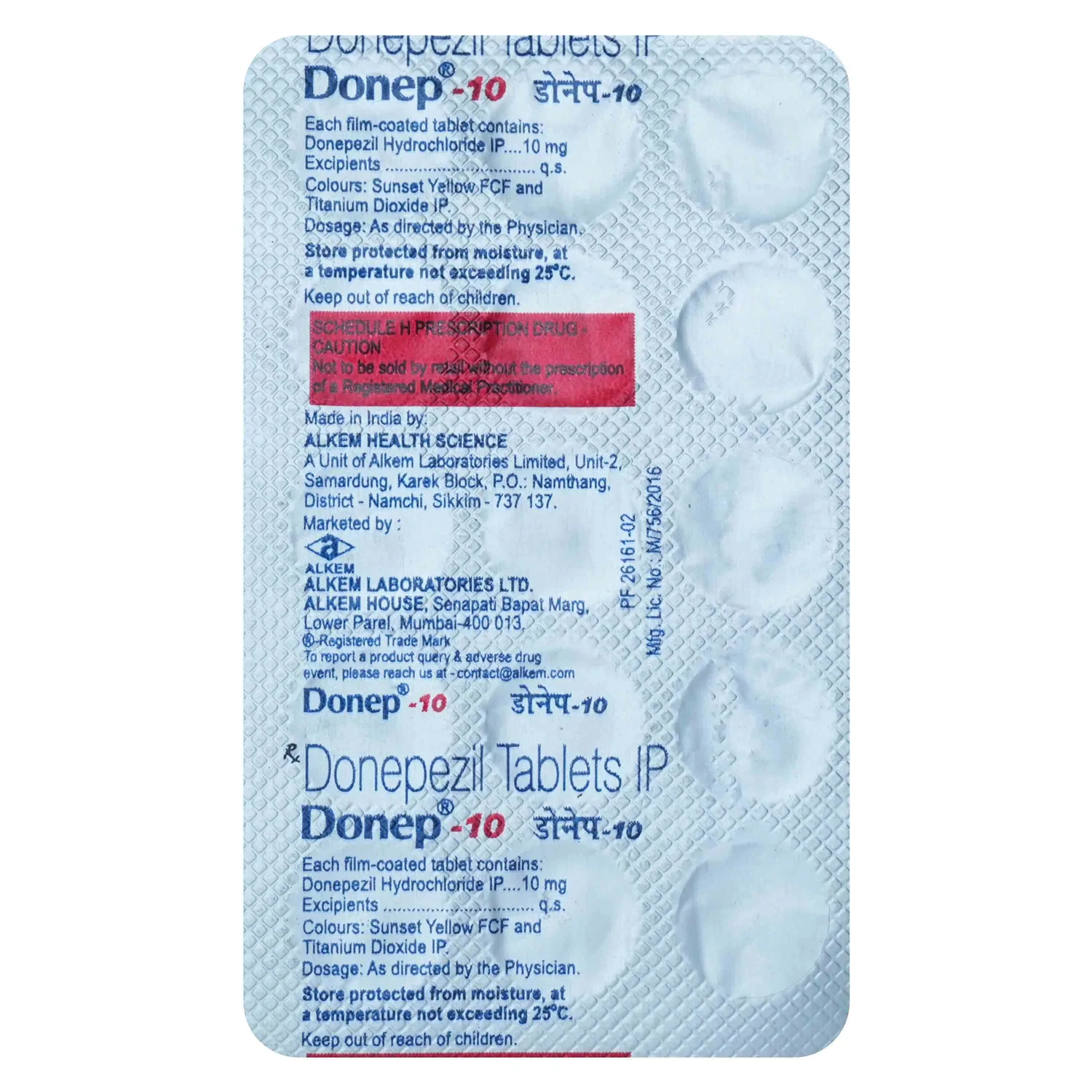
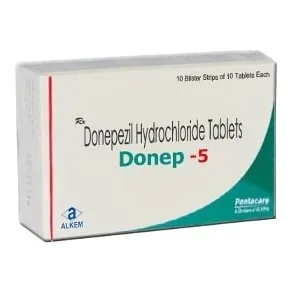
Donep 10 mg Tablets contain donepezil hydrochloride 10 mg, a reversible acetylcholinesterase inhibitor and the standard maintenance dose for the treatment of Alzheimer’s disease (AD). Donepezil is the most widely prescribed anti-dementia medication globally, recommended as first-line pharmacotherapy across all stages of Alzheimer’s disease — mild, moderate, and severe. The 10 mg strength is the target maintenance dose that the majority of patients are titrated to after an initial 4–6 week period on 5 mg, and it is the dose for which the most robust clinical evidence of efficacy exists in moderate-to-severe Alzheimer’s disease. Donep is a branded generic formulation manufactured for the South and Southeast Asian market, providing cost-effective long-term access to this essential neurological medicine.
Alzheimer’s disease is characterised by a progressive and irreversible decline in cholinergic neurotransmission in the cerebral cortex and hippocampus, secondary to degeneration of cholinergic neurons in the nucleus basalis of Meynert. This cholinergic deficit correlates directly with the severity of cognitive impairment. Donepezil 10 mg produces greater and more sustained elevation of synaptic acetylcholine (ACh) concentrations than the 5 mg dose, translating into measurably greater clinical benefit on validated cognitive and functional assessments — the ADAS-Cog, MMSE, CIBIC-plus, and ADL scales — particularly at the moderate and severe stages of disease where the cholinergic deficit is most pronounced.
Mechanism of Action
Acetylcholinesterase (AChE) Inhibition
Donepezil is a highly selective, reversible inhibitor of acetylcholinesterase (AChE), the primary enzyme responsible for acetylcholine (ACh) hydrolysis at cholinergic synapses throughout the central nervous system. At the 10 mg dose, donepezil achieves approximately 70–80% central AChE inhibition, compared with approximately 50–60% at 5 mg, based on PET imaging studies and CSF AChE activity measurements. This greater degree of enzyme inhibition at 10 mg correlates with the superior clinical efficacy demonstrated in clinical trials of moderate and severe Alzheimer’s disease. By competitively and reversibly binding to both the catalytic active site and peripheral anionic site (PAS) of AChE, donepezil prevents ACh hydrolysis at cortical and hippocampal synapses, raising synaptic ACh concentrations and enhancing postsynaptic muscarinic and nicotinic receptor activation.
Selectivity Profile
Donepezil demonstrates approximately 1000-fold greater selectivity for brain AChE over butyrylcholinesterase (BuChE), and high central over peripheral selectivity. At the 10 mg dose, dose-related peripheral cholinergic adverse effects (nausea, diarrhoea, muscle cramps) are more common than at 5 mg, but remain manageable in the majority of patients who have been tolerability-tested on 5 mg for 4–6 weeks before escalation. This selective inhibition of central AChE rather than peripheral cholinesterases is a key pharmacological advantage of donepezil compared with less selective cholinesterase inhibitors.
Additional Mechanisms
At the 10 mg dose, donepezil’s additional proposed mechanisms — including sigma-1 receptor modulation, reduction of glutamate excitotoxicity, and partial inhibition of amyloid precursor protein (APP) processing — may be more pharmacologically active than at the lower dose, though these effects remain incompletely characterised in clinical settings. Neuroprotective properties suggested by experimental data have not yet been confirmed as clinically relevant through prospective trials.
Indications
- Alzheimer’s disease — mild stage (MMSE 21–26): Donepezil 10 mg may be used as a maintenance dose in mild AD after initial titration from 5 mg. Some patients with mild AD are maintained long-term on 5 mg if 10 mg is not well tolerated; however, 10 mg is the preferred maintenance dose in guidelines for optimal long-term outcomes.
- Alzheimer’s disease — moderate stage (MMSE 10–20): The primary target maintenance dose. Clinical trial data (including the pivotal Aricept AD302 and AD318 trials) consistently demonstrate superior efficacy of 10 mg over 5 mg on cognitive, global, and functional outcomes in moderate AD. All major guidelines recommend 10 mg as the target dose for this stage.
- Alzheimer’s disease — severe stage (MMSE <10): Donepezil 10 mg is recommended by most guidelines for severe AD; it is one of only two agents (with memantine) licensed for severe AD in most jurisdictions. The DOMINO-AD trial confirmed continued benefit from donepezil even at the severe stage and demonstrated harm from discontinuation. At this stage, the combination of donepezil 10 mg with memantine 20 mg/day is guideline-recommended in several countries for additive benefit via complementary mechanisms.
- Dementia with Lewy bodies (DLB) — off-label: Donepezil 10 mg is widely used off-label in DLB for cognitive fluctuations, visual hallucinations, and attention deficits, with evidence from multiple clinical trials. Titration should be slower in DLB due to higher sensitivity to cholinergic adverse effects.
- Vascular dementia (VaD) — off-label: Some clinical evidence supports benefit in pure VaD and mixed AD/VaD; use is off-label in most countries.
Dosage and Administration
Standard titration to 10 mg: Donepezil therapy always begins at 5 mg once daily at bedtime for a minimum of 4 weeks (and ideally 4–6 weeks) to establish tolerability. After this period, if 5 mg is well tolerated and the clinical assessment supports escalation, the dose is increased to 10 mg once daily at bedtime. This gradual titration is essential — skipping the 5 mg initiation phase and starting directly at 10 mg significantly increases the incidence and severity of GI adverse effects (nausea, vomiting, diarrhoea) and is not recommended.
Maintenance at 10 mg: 10 mg once daily, taken at bedtime. This is the standard maintenance dose for moderate and severe Alzheimer’s disease and the dose for which maximum efficacy has been demonstrated. Taken at the same time each night for consistent plasma levels.
Duration: Long-term treatment. Donepezil is symptomatic therapy — it does not modify the underlying disease course — but clinical benefits in cognition, function, and behaviour are sustained during therapy. Treatment decisions should be reviewed regularly (every 6–12 months); discontinuation in patients with severe AD has been shown in the DOMINO-AD trial to cause significant clinical deterioration. If discontinuation is necessary, gradual tapering is preferred over abrupt cessation.
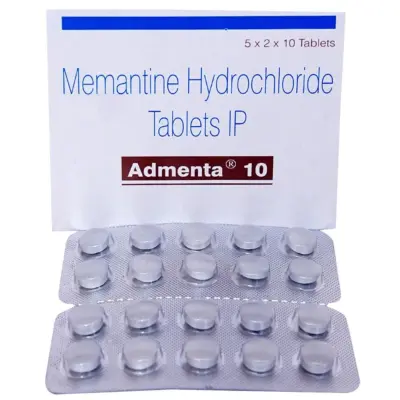
Combination with memantine: In moderate-to-severe AD, the combination of donepezil 10 mg with memantine 20 mg/day is recommended in several national guidelines (UK NICE, German S3 Guidelines) based on evidence of additive or synergistic benefit. Memantine acts via a complementary mechanism (NMDA receptor antagonism) and does not pharmacokinetically interact with donepezil.
Renal impairment: No dose adjustment required. Standard 10 mg maintenance dose applies.
Hepatic impairment: In mild-to-moderate hepatic impairment, standard dosing applies with cautious titration. In severe hepatic impairment, pharmacokinetic data are lacking; use with caution and consider maintaining at 5 mg if 10 mg is not tolerated.
Elderly patients: No dose adjustment based on age alone. Titration from 5 mg should be slow and individual, particularly in frail patients or those with low body weight. The 10 mg dose is appropriate for elderly patients who tolerate it.
Administration: Swallow the tablet whole with water. May be taken with or without food. Bedtime administration is recommended to minimise subjective impact of insomnia and vivid dreams — common early adverse effects that typically resolve with continued treatment. Do not crush the tablet; if swallowing is difficult, orodispersible donepezil formulations should be used.
Contraindications
- Hypersensitivity to donepezil hydrochloride, piperidine derivatives, or any excipient in the formulation
- Pregnancy and breastfeeding: No adequate human safety data; use only if clearly necessary. Donepezil is excreted in breast milk; breastfeeding should be discontinued if donepezil is initiated
Warnings and Precautions
Cardiac Conduction — Vagotonic Effects
At the 10 mg dose, donepezil’s cholinomimetic vagotonic effects on sinoatrial and atrioventricular nodes are more pronounced than at 5 mg, increasing the risk of clinically significant bradycardia, sinoatrial block, or AV conduction delay in susceptible patients. This is particularly relevant in elderly AD patients with pre-existing sick sinus syndrome, AV block, or other supraventricular conduction defects — a population where cardiac comorbidity is common. Obtain a baseline ECG before initiating therapy or escalating to 10 mg in patients with known or suspected cardiac conduction abnormalities. Monitor for symptomatic bradycardia (dizziness, pre-syncope, or syncope) after escalation to 10 mg.
Gastrointestinal Effects — Greater at 10 mg
The incidence and severity of cholinergically mediated GI adverse effects (nausea, vomiting, diarrhoea, anorexia) are significantly greater at 10 mg than at 5 mg and represent the principal tolerability issue with the higher dose. These are most likely to occur in the first 1–3 weeks after escalation to 10 mg. Gradual titration from 5 mg for 4–6 weeks before escalation is the most effective strategy to minimise GI tolerability issues. In patients with active peptic ulcer disease or concurrent NSAID use, donepezil-induced cholinergic stimulation of gastric acid secretion may increase the risk of GI haemorrhage. Use with caution in this group.
Pulmonary Disease
Cholinomimetic actions of donepezil increase bronchial secretions and may cause or worsen bronchospasm. Use with caution in patients with asthma, COPD, or other obstructive airways disease. Respiratory symptoms should be monitored at the 10 mg dose.
Seizures
Cholinomimetics may lower seizure threshold. Use with caution in patients with a history of epilepsy. Clinical evidence for seizure risk at therapeutic donepezil doses is limited, but the theoretical concern is greater at 10 mg than 5 mg.
Anaesthesia and Neuromuscular Blockade
At 10 mg, donepezil produces more pronounced inhibition of plasma cholinesterase than at 5 mg, with correspondingly greater potentiation of succinylcholine (suxamethonium) and other depolarising neuromuscular blocking agents. The anaesthetist must be informed of donepezil use — and the specific dose — before any procedure involving general anaesthesia. Recovery from depolarising neuromuscular blockade may be significantly prolonged.
Extrapyramidal Effects in DLB
In patients with dementia with Lewy bodies, donepezil 10 mg may exacerbate parkinsonian features or cause neuroleptic malignant syndrome-like reactions, particularly if antipsychotic agents are co-prescribed. Extrapyramidal symptom monitoring is essential, and titration in DLB patients should be slower than in AD patients.
Adverse Effects
- Very common (≥10%) at 10 mg: Nausea (significantly more common than at 5 mg; most cases resolve within 1–3 weeks), diarrhoea (dose-dependent; most resolve spontaneously), headache, insomnia/sleep disturbances (bedtime dosing reduces subjective impact)
- Common (1–10%): Vomiting (more common at 10 mg than 5 mg; often triggers dose reduction back to 5 mg if severe), muscle cramps (most common persistent adverse effect; dose-related; cholinergic mechanism), anorexia/decreased appetite (may cause or worsen weight loss in already thin AD patients), fatigue, dizziness, hallucinations (visual), agitation, aggressive behaviour, syncope, bradycardia, abnormal/vivid dreams (bedtime dosing), pain
- Less common (0.1–1%): Seizures, AV block, sinoatrial block, GI haemorrhage (concurrent PUD/NSAID risk), rhabdomyolysis, hepatitis, elevated liver transaminases, urinary incontinence
- Rare (<0.1%): Neuroleptic malignant syndrome (with concurrent antipsychotics, particularly in DLB), severe allergic reactions including angioedema and anaphylaxis
Tolerability note: The key distinction between 5 mg and 10 mg is the frequency and severity of nausea, vomiting, and diarrhoea — these are approximately 2-fold more common at 10 mg. Proper 4–6 week titration from 5 mg is the primary clinical strategy for minimising these effects. If intolerance to 10 mg develops after escalation, dose reduction back to 5 mg is appropriate, as 5 mg retains meaningful clinical efficacy.
Drug Interactions
Anticholinergic Drugs — Pharmacodynamic Antagonism
Drugs with antimuscarinic properties directly antagonise the pro-cholinergic mechanism of donepezil, potentially nullifying its therapeutic benefit and worsening cognitive function. This interaction is clinically significant at 10 mg as well as 5 mg. Anticholinergic agents should be avoided wherever possible in patients with Alzheimer’s disease on donepezil therapy; the anticholinergic burden of any co-prescribed medication (TCAs, first-generation antihistamines, bladder antimuscarinics, low-potency antipsychotics) should be systematically reviewed and minimised.
Memantine — Complementary Combination
Memantine (NMDA receptor antagonist) has a pharmacologically complementary mechanism to donepezil and no pharmacokinetic interaction. The donepezil 10 mg + memantine 20 mg/day combination is guideline-recommended in several countries for moderate-to-severe AD based on evidence of additive benefit on cognitive and functional outcomes. This combination does not require dose adjustment of either agent.
CYP2D6 and CYP3A4 Inhibitors
Donepezil is metabolised by CYP2D6 (primary) and CYP3A4. Potent inhibitors — fluoxetine, paroxetine (CYP2D6); ketoconazole, itraconazole, erythromycin (CYP3A4) — may increase donepezil plasma concentrations and enhance both efficacy and cholinergic adverse effects. Increased monitoring for cholinergic side effects (particularly GI effects, bradycardia, muscle cramps) is appropriate when these inhibitors are co-prescribed with donepezil 10 mg.
CYP3A4 Inducers
Rifampicin, carbamazepine, phenytoin, phenobarbitone, and St John’s Wort may reduce donepezil plasma concentrations. Loss of clinical efficacy should be monitored when inducers are added to donepezil 10 mg therapy; the dose cannot be increased beyond 10 mg in most licensed formulations, so alternative antibiotic or anticonvulsant selection may be warranted.
Drugs Causing Bradycardia
Additive bradycardic effects with beta-blockers, rate-limiting calcium channel blockers (diltiazem, verapamil), digoxin, and antiarrhythmic agents are more pronounced at 10 mg than 5 mg. ECG monitoring is warranted when these agents are co-prescribed in patients with underlying conduction defects.
NSAIDs — GI Bleeding Risk
Concurrent NSAID use combined with donepezil 10 mg increases gastric acid secretion beyond that of either agent alone, amplifying the risk of peptic ulceration and GI haemorrhage. Gastroprotective agents (proton pump inhibitors) should be considered in patients receiving both donepezil 10 mg and regular NSAIDs.
Storage
Store Donep 10 mg Tablets below 30°C in a dry place, protected from moisture and light. Keep in the original blister pack until use. Store out of reach of children and those who may not understand the importance of taking only the prescribed amount. Do not use after the expiry date printed on the pack.
Related Products
References
- DailyMed. Donepezil hydrochloride — prescribing information. U.S. National Library of Medicine. Available at: https://dailymed.nlm.nih.gov/dailymed/
- MedlinePlus. Donepezil. U.S. National Library of Medicine. Available at: https://medlineplus.gov/druginfo/meds/a697032.html
- Mayo Clinic. Donepezil (Oral Route). Available at: https://www.mayoclinic.org/
- Birks JS, Harvey RJ. Donepezil for dementia due to Alzheimer’s disease. Cochrane Database Syst Rev. 2018;6(6):CD001190. PMID: 29924395
- Howard R, McShane R, Lindesay J, et al. Donepezil and memantine for moderate-to-severe Alzheimer’s disease (DOMINO-AD). N Engl J Med. 2012;366(10):893–903. PMID: 22397651
- Electronic Medicines Compendium (EMC). Donepezil 10 mg film-coated tablets — Summary of Product Characteristics. Available at: https://www.medicines.org.uk/emc/
Reviews
There are no reviews yet.