Description
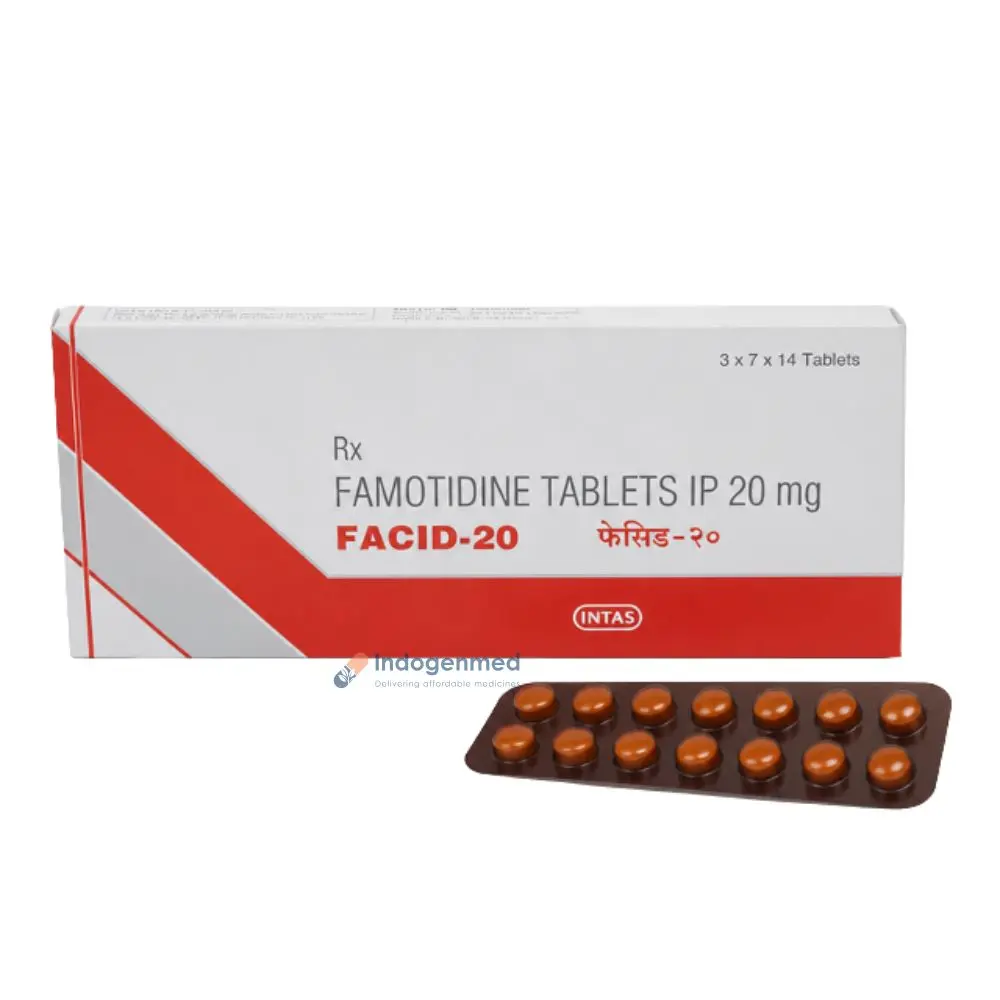
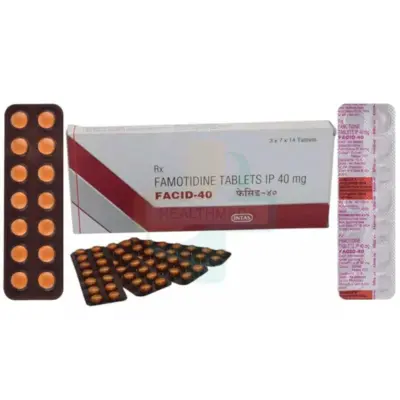
Facid 20 Tablet — Famotidine 20 mg
Facid 20 Tablet contains famotidine 20 mg as the active ingredient. Famotidine is a potent, selective histamine H2-receptor antagonist (H2 blocker) that suppresses gastric acid secretion. It is widely used for the treatment of peptic ulcers, gastro-oesophageal reflux disease (GORD/GERD), Zollinger-Ellison syndrome, and other acid-related gastrointestinal conditions. Famotidine acts on parietal cells of the stomach lining to reduce both basal and stimulated gastric acid output. Famotidine is significantly more potent than the earlier H2 blockers cimetidine and ranitidine on a weight-for-weight basis.
Composition of Facid 20 Tablet
Each tablet of Facid 20 contains:
- Famotidine — 20 mg (active ingredient)
- Typical inactive ingredients: microcrystalline cellulose, hydroxypropyl cellulose, magnesium stearate, talc, hydroxypropyl methylcellulose, titanium dioxide (film coat)
Famotidine is a thiazole-based compound chemically named 3-[[[2-[(diaminomethylene)amino]-4-thiazolyl]methyl]thio]-N-(aminosulfonyl)propanimidamide. Its molecular formula is C8H15N7O2S3, with a molecular weight of 337.43 g/mol. It is a white to pale yellow crystalline compound.
How Facid 20 Works — Mechanism of Action
Famotidine exerts its antisecretory effect through selective, competitive antagonism at histamine H2 receptors on the basolateral membrane of parietal cells in the gastric mucosa.
Gastric Acid Secretion Pathway
Gastric acid (hydrochloric acid) is secreted by parietal cells in response to three primary stimuli: histamine (acting at H2 receptors), acetylcholine (acting at M3 muscarinic receptors), and gastrin (acting at CCK-B receptors). Of these, histamine is the most potent physiological amplifier of acid secretion. When histamine binds to H2 receptors on parietal cells, it activates adenylyl cyclase, increasing intracellular cyclic AMP (cAMP). This cAMP activates protein kinase A, ultimately stimulating the hydrogen-potassium ATPase (H+/K+-ATPase) proton pump to secrete H+ ions into the gastric lumen.
H2 Receptor Antagonism
Famotidine competitively blocks histamine binding to H2 receptors on parietal cells. By occupying the receptor, famotidine prevents the histamine-driven increase in cAMP, thereby reducing parietal cell stimulation of the proton pump. Because histamine potentiates the action of gastrin and acetylcholine on acid secretion, blocking H2 receptors also diminishes the indirect acid-secretory response to these other stimulants. As a result, famotidine suppresses:
- Basal (fasting) acid secretion
- Nocturnal acid secretion (which is predominantly histamine-driven)
- Food-stimulated acid secretion
- Pentagastrin-stimulated acid secretion
Potency Compared to Other H2 Blockers
Famotidine is approximately 20 to 50 times more potent than cimetidine and 7 to 10 times more potent than ranitidine in suppressing gastric acid secretion on a molar basis. This greater potency allows effective acid suppression at lower doses. Famotidine has minimal affinity for androgen receptors and does not significantly inhibit cytochrome P450 enzymes, distinguishing it from cimetidine which causes anti-androgenic effects and significant CYP inhibition.
Pharmacokinetics
Absorption
Following oral administration, famotidine is incompletely absorbed from the gastrointestinal tract. The oral bioavailability is approximately 40 to 45%, due to incomplete absorption (not first-pass metabolism). Peak plasma concentrations (Cmax) are reached within 1 to 3 hours of dosing.
Distribution
Famotidine is widely distributed throughout the body. The volume of distribution is approximately 1.1 to 1.4 L/kg. Plasma protein binding is low at approximately 15 to 20%, primarily to albumin.
Metabolism
Famotidine undergoes minimal hepatic metabolism. The primary metabolite is famotidine S-oxide, which is pharmacologically inactive. Only about 30 to 35% of an absorbed oral dose is metabolised; the remainder is excreted unchanged. Importantly, famotidine does not inhibit hepatic cytochrome P450 enzymes (particularly CYP1A2, CYP2C9, CYP3A4), which means it has very few metabolism-based drug interactions compared to cimetidine.
Elimination
Famotidine is predominantly eliminated by the kidneys. The elimination half-life is approximately 2.5 to 3.5 hours in patients with normal renal function, extending significantly in renal impairment. Approximately 65 to 70% of the oral dose is excreted in the urine as unchanged drug. The duration of antisecretory action following a single dose is 10 to 12 hours, allowing for twice-daily dosing.
Uses of Facid 20 Tablet
Facid 20 Tablet is indicated for the following conditions:
- Duodenal ulcer (active): Short-term treatment of active duodenal ulcer. The standard adult dose for acute treatment is 40 mg at night (or 20 mg twice daily) for 4 to 8 weeks. Famotidine heals most duodenal ulcers within 4 weeks.
- Gastric ulcer (benign active): Treatment of active benign gastric ulcer. Standard course is 40 mg at night for 6 to 8 weeks.
- Gastro-oesophageal reflux disease (GORD/GERD): Relief of heartburn, acid regurgitation, and oesophagitis associated with GORD. The 20 mg dose twice daily is used for mild-to-moderate GORD. Severe oesophagitis may require 20 mg four times daily or escalation to a proton pump inhibitor.
- Zollinger-Ellison syndrome: Management of pathological hypersecretory conditions. High doses (up to 160 mg every 6 hours) may be required; famotidine at the 20 mg dose is insufficient for severe ZES.
- Prevention of NSAID-associated ulcers: Co-prescription with non-steroidal anti-inflammatory drugs (NSAIDs) in patients at risk of gastric or duodenal ulcer.
- Symptomatic relief of heartburn and dyspepsia: Over-the-counter use (where approved) for relief of episodic heartburn and indigestion.
- Urticaria: While primarily an H1 antihistamine condition, the combination of H1 and H2 blockade may be beneficial in some patients with refractory urticaria; famotidine as an H2 blocker can be adjunctively used in this context.
Dosage and Administration
Duodenal and Gastric Ulcer
- Acute treatment: 40 mg once at night, or 20 mg twice daily (morning and night), for 4 to 8 weeks
- Maintenance (prevention of recurrence): 20 mg once daily at bedtime
Gastro-oesophageal Reflux Disease (GORD)
- Mild-to-moderate GORD: 20 mg twice daily for 6 to 12 weeks
- Oesophagitis: 20 mg twice daily for up to 12 weeks; severe cases may require higher doses or switching to a PPI
Prophylaxis (NSAID-related ulcer prevention)
- 20 mg twice daily while taking NSAIDs
Renal Impairment
Since famotidine is primarily renally excreted, dose reduction is required in renal impairment. In patients with creatinine clearance below 50 mL/min, the dose should be halved or the dosing interval extended to 36 to 48 hours. In severe renal impairment (CrCl <10 mL/min), the half-life may extend to 20 hours or more.
Administration
Facid 20 tablets may be taken with or without food. The evening dose should be taken at or near bedtime to suppress nocturnal acid secretion, which is highest during sleep and is predominantly histamine-driven. Swallow whole with water.
Side Effects of Facid 20 Tablet
Famotidine is generally well tolerated. It has a superior tolerability profile compared to cimetidine, particularly regarding hormonal and drug interaction effects.
Common Side Effects (1–10% of patients)
- Headache — most frequently reported adverse effect
- Dizziness
- Constipation
- Diarrhoea
- Nausea
- Flatulence
- Dry mouth
Uncommon Side Effects (0.1–1% of patients)
- Fatigue and malaise
- Rash or pruritus
- Muscle cramps
- Elevated liver enzymes (transient, usually clinically insignificant)
- Thrombocytopenia (low platelet count — rare)
Rare and Serious Side Effects
- Hypersensitivity reactions: Anaphylaxis, urticaria, angioedema, bronchospasm — rare but have been reported
- CNS effects: Confusion, agitation, depression, hallucinations — particularly in elderly patients or those with renal impairment; rare at therapeutic doses
- QT prolongation: Rare cases of QT interval prolongation and arrhythmia have been reported, particularly at high doses or in patients with pre-existing cardiac conditions
- Hepatitis: Rare cases of cholestatic or hepatocellular hepatitis; reversible on discontinuation
Precautions and Warnings
Renal Impairment
The most important clinical precaution with famotidine is renal impairment. Because famotidine is primarily excreted renally, it accumulates in patients with reduced kidney function, increasing the risk of central nervous system side effects (confusion, agitation). Dose reduction or extended dosing intervals are mandatory in moderate-to-severe renal impairment. Renal function should be assessed before initiating famotidine in elderly patients, who may have reduced GFR even with normal serum creatinine.
Gastric Malignancy
Symptomatic relief with famotidine does not exclude the possibility of gastric malignancy. Patients with gastric ulcers who do not respond to treatment, or who have alarm symptoms (weight loss, dysphagia, haematemesis, melaena, iron-deficiency anaemia), should be investigated to exclude gastric cancer before or during treatment.
Pregnancy and Lactation
Famotidine crosses the placenta and is excreted in breast milk. It is classified as FDA Pregnancy Category B — animal studies have not demonstrated fetal harm, but there are no adequate, well-controlled studies in pregnant women. Use during pregnancy should only occur when clearly necessary. Famotidine is present in breast milk; the potential for infant harm should be considered before breastfeeding during treatment.
Elderly Patients
Elderly patients are more susceptible to famotidine-related CNS effects (particularly confusion) due to age-related reduction in renal clearance. Dose adjustment based on renal function is especially important in this population.
Driving and Machinery
Famotidine may cause dizziness or headache in some patients. Caution is advised when driving or operating machinery until individual response is known.
Drug Interactions
Famotidine has significantly fewer drug interactions than cimetidine because it does not inhibit hepatic cytochrome P450 enzymes.
- Antacids: May reduce famotidine absorption slightly. Stagger doses by at least 1 hour (take famotidine 1 hour before or 2 hours after antacids) if used together.
- Atazanavir and other HIV protease inhibitors: Famotidine and other H2 blockers increase gastric pH and significantly reduce the absorption of atazanavir and some other protease inhibitors. This interaction is clinically important and may require dose separation or switching to an alternative acid suppressant.
- Ketoconazole and itraconazole: Azole antifungals require an acidic gastric environment for optimal absorption. Famotidine raises gastric pH and can reduce their bioavailability. Use together with caution or consider therapeutic drug monitoring.
- Delavirdine: Similar absorption interaction — famotidine should not be taken simultaneously with delavirdine.
- Sucralfate: Sucralfate requires an acidic environment to work. Stagger doses; take famotidine at least 30 minutes before sucralfate.
- QT-prolonging drugs: Although famotidine rarely prolongs the QT interval at therapeutic doses, caution is warranted when co-prescribing with other drugs that prolong QT (e.g. amiodarone, sotalol, some antipsychotics).
Contraindications
- Known hypersensitivity to famotidine or other H2-receptor antagonists (cross-reactivity within the class is possible)
Famotidine should be used with caution (and dose-adjusted) in significant renal impairment and in patients with known QT prolongation risk factors.
Storage Instructions
Store Facid 20 Tablets at a temperature not exceeding 30°C. Keep in a dry place, away from direct sunlight and moisture. Store in the original container. Keep out of the reach and sight of children. Do not use after the expiry date printed on the pack.
Related Products
Patients managing acid-related gastrointestinal conditions may also find the following products at IndoGenMed useful:
- Facid 40 Tablet — Famotidine 40 mg, the higher-strength formulation for more severe peptic ulcer disease and GORD
- Pantop 40 Tablet — Pantoprazole 40 mg, a proton pump inhibitor for more potent acid suppression
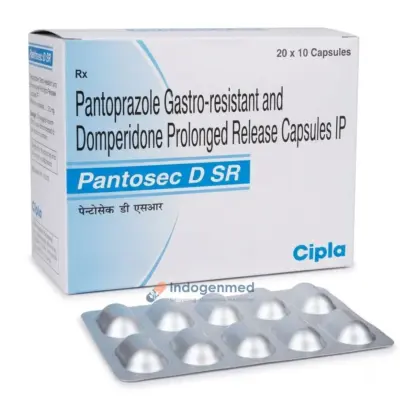
- Pantosec D SR Capsule — Pantoprazole + Domperidone, for GORD with associated motility symptoms
- Naprosyn 250 Mg Tablet — Naproxen 250 mg, NSAID (famotidine co-prescription may be used for gastroprotection)
- Fexopen 120 Mg Tablet — Fexofenadine 120 mg, for allergic conditions (H2 blockade may complement H1 blockade in urticaria)
References
- U.S. Food and Drug Administration. Pepcid (famotidine) Tablets — Prescribing Information. Merck & Co. Available at: https://www.accessdata.fda.gov/drugsatfda_docs/label/2004/019462s040lbl.pdf
- MedlinePlus (U.S. National Library of Medicine). Famotidine. Available at: https://medlineplus.gov/druginfo/meds/a687011.html
- Mayo Clinic. Famotidine (Oral Route) — Description and Brand Names. Available at: https://www.mayoclinic.org/drugs-supplements/famotidine-oral-route/description/drg-20068062
- Electronic Medicines Compendium (UK EMC). Famotidine 20 mg Tablets — Summary of Product Characteristics. Available at: https://www.medicines.org.uk/emc/search?q=famotidine+20
- National Center for Biotechnology Information (NCBI). Famotidine — PubChem Compound Summary (CID 3325). Available at: https://pubchem.ncbi.nlm.nih.gov/compound/Famotidine
- StatPearls (NCBI Bookshelf). Famotidine. Available at: https://www.ncbi.nlm.nih.gov/books/NBK539786/
Reviews
There are no reviews yet.