Description
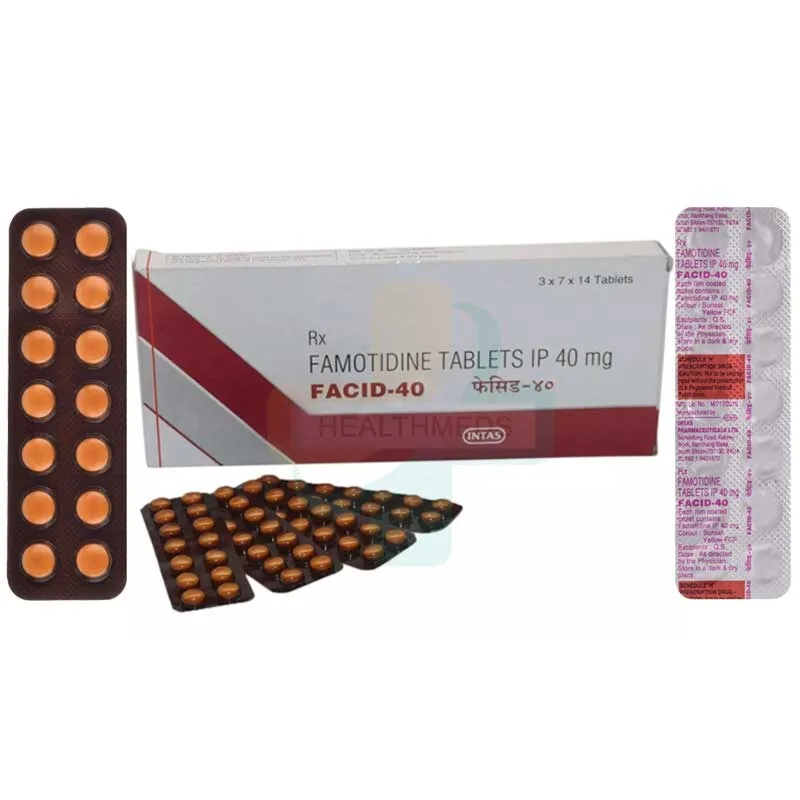
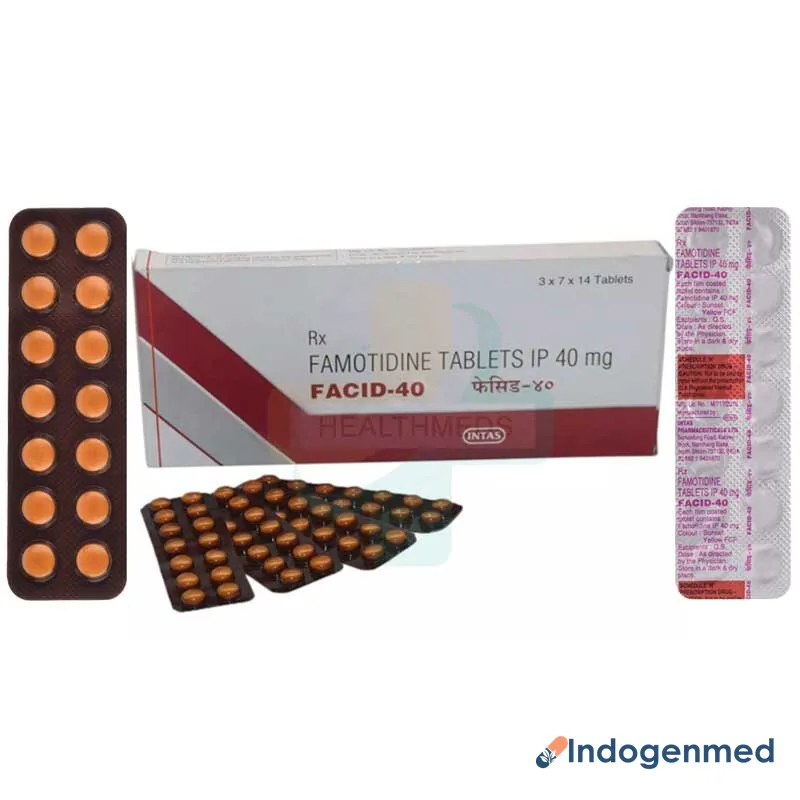
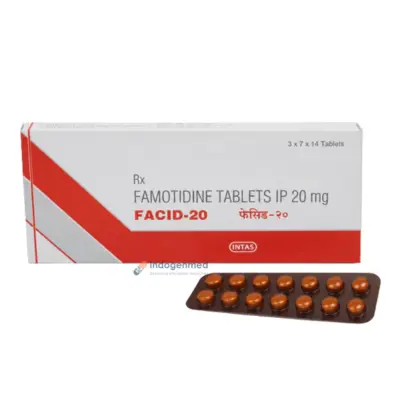
Facid 40 Tablet — Famotidine 40 mg
Facid 40 Tablet contains famotidine 40 mg as the active ingredient. Famotidine is a potent, selective histamine H2-receptor antagonist (H2 blocker) that significantly suppresses gastric acid secretion by blocking H2 receptors on parietal cells of the stomach lining. The 40 mg strength is the standard dosage for the treatment of active duodenal and gastric ulcers, moderate-to-severe gastro-oesophageal reflux disease (GORD/GERD), and erosive oesophagitis. Famotidine is a third-generation H2 blocker — significantly more potent than both cimetidine and ranitidine — and free from the anti-androgenic effects and drug interaction profile of cimetidine.
Composition of Facid 40 Tablet
Each tablet of Facid 40 contains:
- Famotidine — 40 mg (active ingredient)
- Typical inactive ingredients: microcrystalline cellulose, hydroxypropyl cellulose, croscarmellose sodium, magnesium stearate, talc; film coat: hydroxypropyl methylcellulose, polyethylene glycol, titanium dioxide
Famotidine is a thiazole-based compound with the chemical name 3-[[[2-[(diaminomethylene)amino]-4-thiazolyl]methyl]thio]-N-(aminosulfonyl)propanimidamide. Its molecular formula is C8H15N7O2S3, molecular weight 337.43 g/mol. It appears as a white to pale yellow crystalline powder.
How Famotidine Works — Mechanism of Action
Famotidine suppresses gastric acid secretion through selective, competitive antagonism at histamine H2 receptors on the basolateral membrane of gastric parietal cells.
The Role of Histamine in Acid Secretion
Parietal cells in the gastric mucosa are stimulated to secrete hydrochloric acid (HCl) by three main signals: histamine (via H2 receptors), acetylcholine (via M3 muscarinic receptors), and gastrin (via CCK-B/gastrin receptors). Histamine is the dominant amplifying signal — it activates parietal cell adenylyl cyclase, raising intracellular cyclic AMP (cAMP), which in turn activates protein kinase A and ultimately drives the H+/K+-ATPase proton pump to secrete H+ ions into the gastric lumen.
Mechanism of H2 Blockade
Famotidine occupies H2 receptors on parietal cells, preventing histamine from binding and thereby blocking the cascade that drives proton pump activity. Because histamine amplifies the secretory response to gastrin and acetylcholine, H2 blockade broadly reduces acid output in response to multiple stimuli, not just histamine alone. The result is a marked reduction in:
- Basal acid secretion (fasting state)
- Nocturnal acid secretion — particularly important, as night-time acidity drives significant oesophageal and gastric mucosal damage
- Meal-stimulated acid secretion
- Pentagastrin-stimulated acid secretion
Potency and Selectivity
Famotidine is approximately 20–50 times more potent than cimetidine and 7–10 times more potent than ranitidine on a molar basis. Unlike cimetidine, famotidine does not bind to androgen receptors and does not inhibit cytochrome P450 enzymes (CYP1A2, CYP2C9, CYP3A4), making it free from the hormonal effects (gynaecomastia, impotence) and wide-ranging drug interactions associated with cimetidine. Famotidine also does not cross the blood-brain barrier significantly, minimising CNS side effects at therapeutic doses in patients with normal renal function.
Pharmacokinetics
Absorption
Following oral administration of famotidine 40 mg, peak plasma concentrations (Cmax) are achieved within 1 to 3 hours. Oral bioavailability is approximately 40 to 45%, reflecting incomplete gastrointestinal absorption rather than significant first-pass hepatic metabolism. Food does not significantly affect famotidine absorption or bioavailability.
Distribution
The volume of distribution of famotidine is approximately 1.1 to 1.4 L/kg, indicating moderate tissue distribution. Plasma protein binding is low at 15 to 20%, primarily to albumin. Famotidine distributes to gastric tissue at concentrations higher than plasma, consistent with its targeted pharmacological site of action.
Metabolism
Famotidine undergoes only limited hepatic metabolism. The principal metabolite is famotidine S-oxide (pharmacologically inactive). Approximately 30 to 35% of an absorbed dose is metabolised; the remainder is eliminated as unchanged drug. Because famotidine does not inhibit CYP450 enzymes, hepatic metabolism-based drug interactions are minimal — a major clinical advantage over cimetidine.
Elimination
The primary elimination route is renal excretion of unchanged drug (65 to 70% of absorbed dose). The plasma elimination half-life is 2.5 to 3.5 hours under normal renal function, extending to 10 to 20+ hours in severe renal impairment. The duration of antisecretory effect after a single 40 mg dose is approximately 10 to 12 hours, underpinning the once-daily at-night dosing regimen for ulcer treatment.
Uses of Facid 40 Tablet
Facid 40 Tablet is indicated for:
- Active duodenal ulcer: The standard treatment dose is 40 mg once daily at night for 4 to 8 weeks. This regimen heals the majority of duodenal ulcers within 4 weeks and virtually all within 8 weeks. Maintenance therapy at 20 mg nightly may follow to prevent recurrence.
- Active benign gastric ulcer: 40 mg at night for 6 to 8 weeks. Healing of gastric ulcers typically takes longer than duodenal ulcers.
- Gastro-oesophageal reflux disease (GORD/GERD): The 40 mg dose is used for moderate-to-severe GORD, particularly when 20 mg twice daily has not achieved adequate symptom control, or when erosive or ulcerative oesophagitis is present. The 40 mg twice-daily regimen is used for severe or erosive oesophagitis.
- Erosive oesophagitis: 40 mg twice daily for up to 12 weeks, healing inflamed and ulcerated oesophageal mucosa caused by chronic acid reflux.
- Zollinger-Ellison syndrome and other hypersecretory conditions: Starting dose 20 mg every 6 hours; doses are titrated based on response. Very high doses (up to 160 mg every 6 hours) may be required for severe pathological hypersecretion.
- Prevention of NSAID-associated gastroduodenal ulcers: Co-prescription with NSAIDs in high-risk patients (elderly, prior ulcer history, concurrent anticoagulants/corticosteroids). The 40 mg dose provides stronger gastroprotection than 20 mg for high-risk patients.
- Pre-anaesthetic prophylaxis: Famotidine 40 mg the evening before and again on the morning of surgery, to reduce the risk of aspiration pneumonitis (Mendelson’s syndrome).
Dosage and Administration
Duodenal Ulcer
- Acute treatment: 40 mg once daily at bedtime for 4 to 8 weeks
- Maintenance: 20 mg once daily at bedtime (switch to lower-strength Facid 20)
Gastric Ulcer
- Acute treatment: 40 mg once daily at bedtime for 6 to 8 weeks
GORD / Erosive Oesophagitis
- Moderate GORD: 20 mg twice daily for 6 weeks
- Erosive oesophagitis: 40 mg twice daily for up to 12 weeks
Zollinger-Ellison Syndrome
- Starting dose: 20 mg every 6 hours; titrate as required
Renal Impairment — Critical Dosing Consideration
Famotidine is primarily renally excreted and accumulates in renal impairment. Dose reduction is mandatory:
- Creatinine clearance 30–50 mL/min: consider 20 mg once daily at night
- Creatinine clearance below 30 mL/min: use 20 mg every 36 to 48 hours
- Haemodialysis: minimal removal; dose after dialysis
Failure to adjust the dose in renal impairment increases the risk of CNS adverse effects (confusion, agitation, hallucinations).
Administration Notes
Facid 40 Tablets may be taken with or without food. For peptic ulcer treatment, bedtime dosing is preferred to suppress the prolonged nocturnal acid secretion that is most damaging to ulcer healing. Swallow whole with a glass of water.
Side Effects of Facid 40 Tablet
Famotidine is generally well tolerated at the 40 mg dose. The side effect profile is similar to that of the 20 mg formulation.
Common Side Effects (1–10% of patients)
- Headache — most common adverse effect
- Dizziness
- Constipation
- Diarrhoea
- Nausea
- Flatulence and abdominal discomfort
- Dry mouth
Uncommon Side Effects
- Fatigue and malaise
- Rash or pruritus
- Elevated liver enzymes (usually transient and asymptomatic)
- Thrombocytopenia (rare)
Rare and Serious Side Effects
- CNS toxicity: Confusion, agitation, hallucinations — primarily in patients with renal impairment or the elderly; rare at standard doses in patients with normal renal function
- Hypersensitivity reactions: Anaphylaxis, angioedema, urticaria, bronchospasm — rare
- QT prolongation: Rare; most significant at high doses or in patients with existing cardiac disease or electrolyte disturbances
- Hepatitis: Rare cholestatic or hepatocellular hepatitis; reversible
- Interstitial nephritis: Very rare; reversible on discontinuation
Precautions and Warnings
Renal Impairment
Renal impairment is the most critical safety consideration with famotidine 40 mg. Accumulation in patients with reduced renal function is well-documented and can cause CNS toxicity. The dose must be reduced based on creatinine clearance. Renal function should be checked before starting treatment, particularly in elderly patients, diabetic patients, and those with hypertension or cardiovascular disease.
Ruling Out Gastric Malignancy
Symptomatic relief with Facid 40 must not be assumed to exclude gastric malignancy. Patients with gastric ulcers should be evaluated at the end of treatment to confirm healing and exclude carcinoma. Alarm symptoms (significant unintentional weight loss, progressive dysphagia, persistent vomiting, haematemesis, melaena, or palpable abdominal mass) mandate urgent endoscopic investigation.
Pregnancy
Famotidine is Pregnancy Category B. It crosses the placenta. Use only if clearly necessary; discuss risk-benefit with a physician. Famotidine is present in breast milk; consider alternative feeding during treatment or switch to an alternative acid suppressant.
Elderly Patients
Elderly patients have reduced renal clearance and are at increased risk of famotidine-related CNS effects. Dose adjustment based on estimated GFR is particularly important in this group.
Prolonged Suppression of Acid
Long-term acid suppression may theoretically promote achlorhydria, with minor implications including potential alteration of gut flora and reduced absorption of certain nutrients (B12, iron, magnesium) over extended periods. These are more relevant with proton pump inhibitors used for years, but awareness is warranted for extended H2 blocker use as well.
Drug Interactions
- Antacids: Stagger doses by at least 1 hour; simultaneous use slightly reduces famotidine bioavailability
- Ketoconazole and itraconazole: Famotidine raises gastric pH and reduces azole antifungal absorption. Take the antifungal at least 2 hours before famotidine, or use an alternative
- Atazanavir: Famotidine substantially reduces atazanavir exposure by raising gastric pH; co-administration requires careful dose adjustment of atazanavir and monitoring
- Delavirdine: Avoid simultaneous administration; similar mechanism to ketoconazole/atazanavir interaction
- Sucralfate: Take famotidine at least 30 minutes before sucralfate to avoid compromising sucralfate activity
- QT-prolonging agents: Exercise caution when combining with amiodarone, sotalol, Class IA antiarrhythmics, or antipsychotics with QT-prolonging potential
- Warfarin: Unlike cimetidine, famotidine does not inhibit CYP2C9, so it does not significantly alter warfarin anticoagulant effect. However, any new medication should prompt INR monitoring in anticoagulated patients
Contraindications
- Known hypersensitivity to famotidine, other H2-receptor antagonists, or any excipients
Famotidine should not be used without dose adjustment in significant renal impairment. Use with caution in patients with pre-existing cardiac arrhythmia or QT prolongation risk. It is not approved for children under 12 years except under specialist direction.
Storage Instructions
Store Facid 40 Tablets below 30°C. Protect from light and moisture. Store in original packaging. Keep out of reach and sight of children. Do not use after the expiry date stated on the carton or blister pack.
Related Products
Patients managing acid-related gastrointestinal conditions may also find the following products at IndoGenMed useful:
- Facid 20 Tablet — Famotidine 20 mg, the lower-strength formulation for maintenance therapy or milder GORD
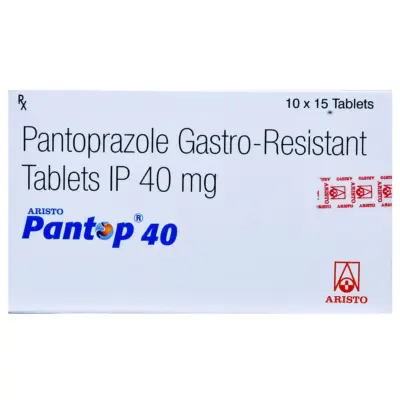
- Pantop 40 Tablet — Pantoprazole 40 mg proton pump inhibitor, for more complete acid suppression in severe GORD
- Pantosec D SR Capsule — Pantoprazole + Domperidone, addressing both acid suppression and gastroparesis/motility
- Naprosyn 250 Mg Tablet — Naproxen 250 mg NSAID (Facid 40 may be co-prescribed for NSAID gastroprotection)
- Depin 5 Mg Capsule — Nifedipine 5 mg, calcium channel blocker (sometimes implicated in GORD worsening via oesophageal smooth muscle relaxation)
References
- U.S. Food and Drug Administration. Pepcid (famotidine) Tablets 20 mg and 40 mg — Prescribing Information. Merck & Co., Inc. Available at: https://www.accessdata.fda.gov/drugsatfda_docs/label/2004/019462s040lbl.pdf
- MedlinePlus (U.S. National Library of Medicine). Famotidine. Available at: https://medlineplus.gov/druginfo/meds/a687011.html
- Mayo Clinic. Famotidine (Oral Route) — Proper Use. Available at: https://www.mayoclinic.org/drugs-supplements/famotidine-oral-route/proper-use/drg-20068062
- Electronic Medicines Compendium (UK EMC). Famotidine 40 mg Tablets — Summary of Product Characteristics. Available at: https://www.medicines.org.uk/emc/search?q=famotidine+40
- National Center for Biotechnology Information (NCBI). Famotidine — PubChem Compound Summary (CID 3325). Available at: https://pubchem.ncbi.nlm.nih.gov/compound/Famotidine
- StatPearls (NCBI Bookshelf). Famotidine. Available at: https://www.ncbi.nlm.nih.gov/books/NBK539786/
Reviews
There are no reviews yet.