Description
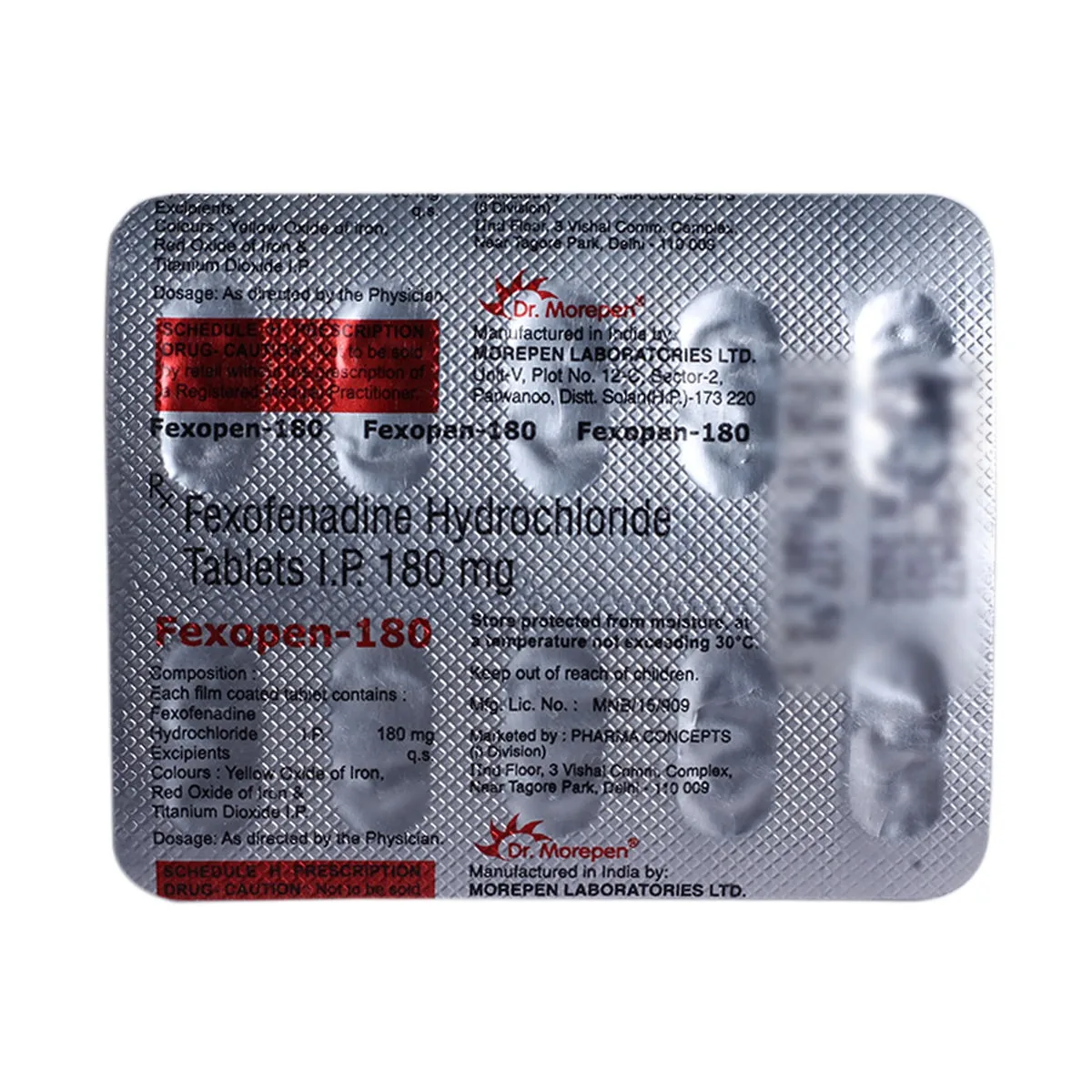
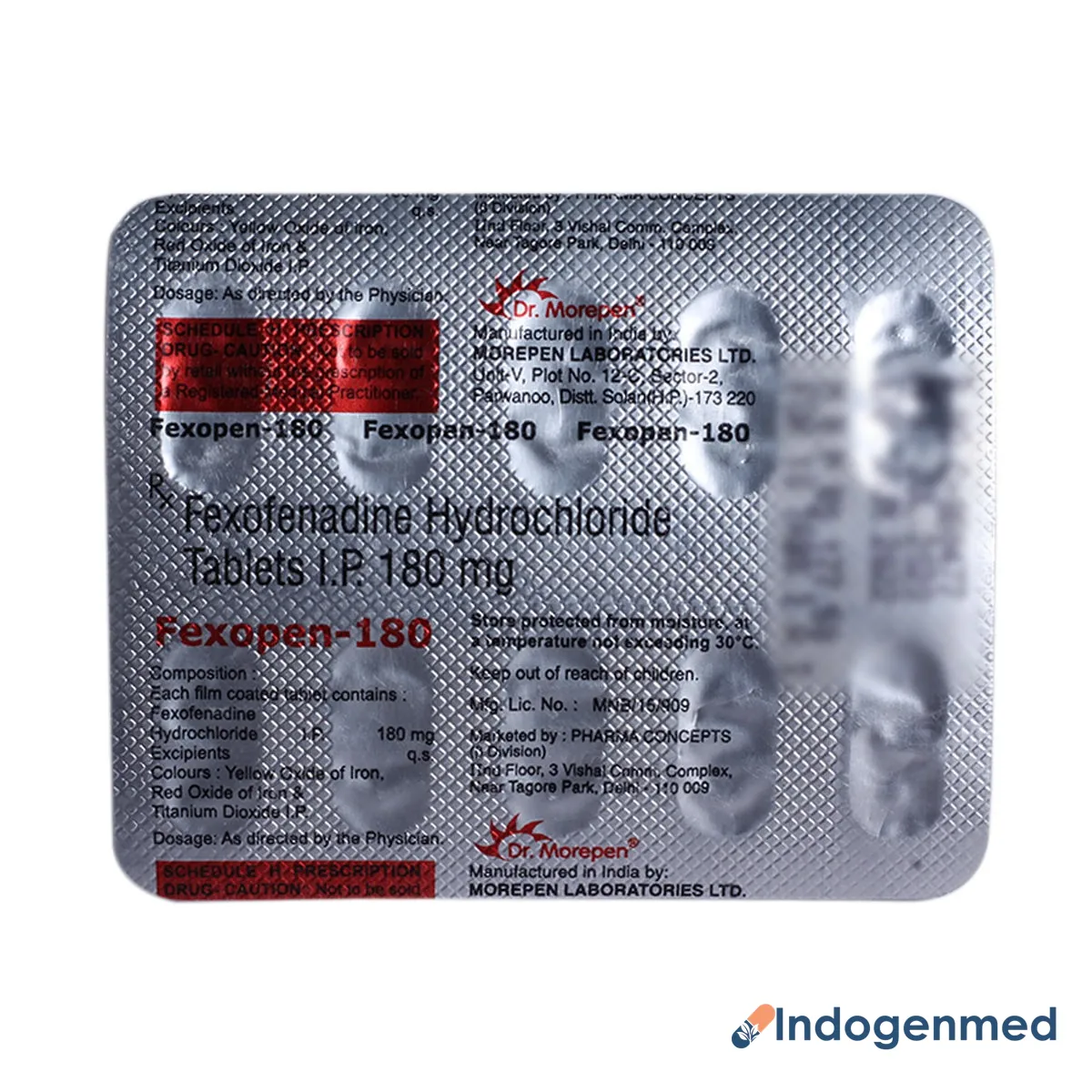
Fexopen 180 Mg Tablets
Fexopen 180 Mg Tablets contain fexofenadine hydrochloride 180 mg, a second-generation, non-sedating antihistamine used for the relief of symptoms associated with allergic rhinitis and chronic idiopathic urticaria. Unlike first-generation antihistamines, fexofenadine does not cross the blood-brain barrier to any clinically significant degree, meaning it causes minimal drowsiness or sedation and does not impair cognitive performance or psychomotor function at recommended doses. It is therefore suitable for people who need to remain alert during the day, including those who drive or operate machinery.
Composition
| Active Ingredient | Strength |
|---|---|
| Fexofenadine Hydrochloride | 180 mg per tablet |
About the Manufacturer
Fexopen is manufactured by Sun Pharmaceutical Industries Limited, a global specialty pharmaceutical company headquartered in Mumbai, India. Sun Pharma is one of the largest pharmaceutical companies in India and among the largest globally by prescription revenues, with a broad portfolio spanning dermatology, oncology, psychiatry, and allergy medicines.
Mechanism of Action
Fexofenadine is a selective, peripherally acting H1-receptor antagonist. It competitively and reversibly blocks the H1 histamine receptor, thereby inhibiting the physiological actions of histamine at these receptor sites. By blocking H1 receptors on smooth muscle, blood vessels, and secretory cells, fexofenadine prevents histamine-mediated vasodilation, increased vascular permeability, pruritus (itch), mucus secretion, and bronchoconstriction that characterise allergic responses. Fexofenadine is an active metabolite of terfenadine and was developed to retain its antihistaminic efficacy while eliminating cardiac safety concerns associated with the parent compound.
Indications
- Seasonal allergic rhinitis (hay fever) — relief of nasal symptoms (sneezing, rhinorrhoea, itchy nose) and eye symptoms (itchy, watery, red eyes)
- Chronic idiopathic urticaria (CIU/CSU) — relief of itching, wheal size, and number of hives
Dosage & Administration
- Adults and adolescents (12 years and over): 180 mg once daily with water
- Can be taken with or without food
- Do not take with fruit juice (grapefruit, orange, or apple juice) — fruit juices significantly reduce absorption of fexofenadine
- For allergic rhinitis: take as needed for symptom relief, or regularly during pollen season
- For chronic urticaria: take once daily as long as symptoms persist
Special Populations
- Children under 12 years: The 180 mg dose is not recommended for children under 12 — a lower-strength formulation should be used
- Renal impairment: Fexofenadine is substantially excreted renally; starting dose of 60 mg once daily is recommended in patients with significant renal impairment
- Hepatic impairment: No dose adjustment is generally required
- Elderly: No specific dose adjustment needed; use with standard caution
- Pregnancy: Fexofenadine is not recommended during pregnancy unless clearly necessary; consult a physician
- Breastfeeding: It is unknown whether fexofenadine passes into human breast milk; use with caution
Precautions
- Avoid taking with fruit juices (grapefruit, orange, apple) — they can reduce fexofenadine bioavailability by up to 36%
- Antacids containing aluminium or magnesium hydroxide can also reduce fexofenadine absorption if taken within 15 minutes
- Although non-sedating at recommended doses, individual responses may vary; assess personal response before driving
- Patients with known QT prolongation or on QT-prolonging drugs should consult a physician, though fexofenadine itself does not prolong the QT interval
Contraindications
- Known hypersensitivity to fexofenadine or any excipient in the formulation
- Children under 12 years for the 180 mg strength
Side Effects
- Common: Headache, dizziness, nausea, drowsiness (less frequent than first-generation antihistamines)
- Less common: Fatigue, dry mouth, dyspepsia, back pain
- Rare: Hypersensitivity reactions (rash, urticaria, pruritus, angioedema, dyspnoea, anaphylaxis), tachycardia, palpitations, insomnia
Drug Interactions
- Erythromycin and ketoconazole: Co-administration increases fexofenadine plasma levels (approximately 2-fold) but has not been associated with QT prolongation or increased adverse events
- Antacids (aluminium- or magnesium-containing): Reduce fexofenadine absorption if taken simultaneously; allow at least 2 hours between antacid and fexofenadine
- Fruit juices (grapefruit, orange, apple): Reduce bioavailability significantly — take fexofenadine with water only
- Rifampicin: Reduces fexofenadine plasma levels; may reduce efficacy
Storage
Store below 30°C in a dry place, away from light and moisture. Keep in the original packaging. Keep out of reach of children. Do not use after the expiry date printed on the pack.
Related Products
- Sebifin 1% W/W 10 Gm Cream – antifungal cream for skin infections
- Senzclor H 5 Gm – topical antifungal and anti-inflammatory
- Flixonase Nasal 50 Mcg Spray – fluticasone nasal spray for allergic rhinitis
Frequently Asked Questions
- What is Fexopen 180 Mg used for?
- Fexopen 180 Mg is used to treat symptoms of seasonal allergic rhinitis (hay fever), including sneezing, runny nose, and itchy, watery eyes. It is also used for chronic idiopathic urticaria (long-lasting hives of unknown cause), helping to reduce itching and the number and size of hives.
- Will Fexopen 180 Mg make me drowsy?
- Fexofenadine is a non-sedating antihistamine, meaning it does not cross the blood-brain barrier to a clinically significant extent at recommended doses. Most people can take it without feeling drowsy, and it is generally considered safe for use while driving or operating machinery. However, individual responses can vary, and some people may still feel mild drowsiness, so it is worth assessing your own response initially.
- Can I take Fexopen 180 Mg with orange juice?
- No. Grapefruit, orange, and apple juices significantly reduce the absorption of fexofenadine, potentially by up to 36%. This is because these juices inhibit organic anion-transporting polypeptide (OATP) transporters in the gut wall that the drug relies on for absorption. Always take fexofenadine with plain water.
- How long does it take for fexofenadine to work?
- Fexofenadine is absorbed fairly quickly, with peak plasma levels reached within 1–3 hours of a dose. Many patients notice improvement in allergy symptoms within 1 hour of taking a dose. The once-daily 180 mg formulation provides symptom relief throughout the day.
- Can I take Fexopen 180 Mg every day during allergy season?
- Yes. Fexopen 180 Mg is suitable for regular daily use throughout the allergy season or as long as symptoms persist. It does not cause the tolerance or rebound effects sometimes seen with decongestants, and there is no evidence of reduced effectiveness with continuous use.
References
- NHS – Fexofenadine
- MedlinePlus – Fexofenadine
- FDA – Allegra (Fexofenadine) Prescribing Information
- EMA – Fexofenadine Information
Disclaimer: This page is for informational purposes only and does not constitute medical advice. Fexopen 180 Mg Tablets should be used under the guidance of a qualified healthcare professional. If you experience a severe allergic reaction (difficulty breathing, severe rash, swelling of face or throat), seek emergency medical attention immediately.
Reviews
There are no reviews yet.