Description
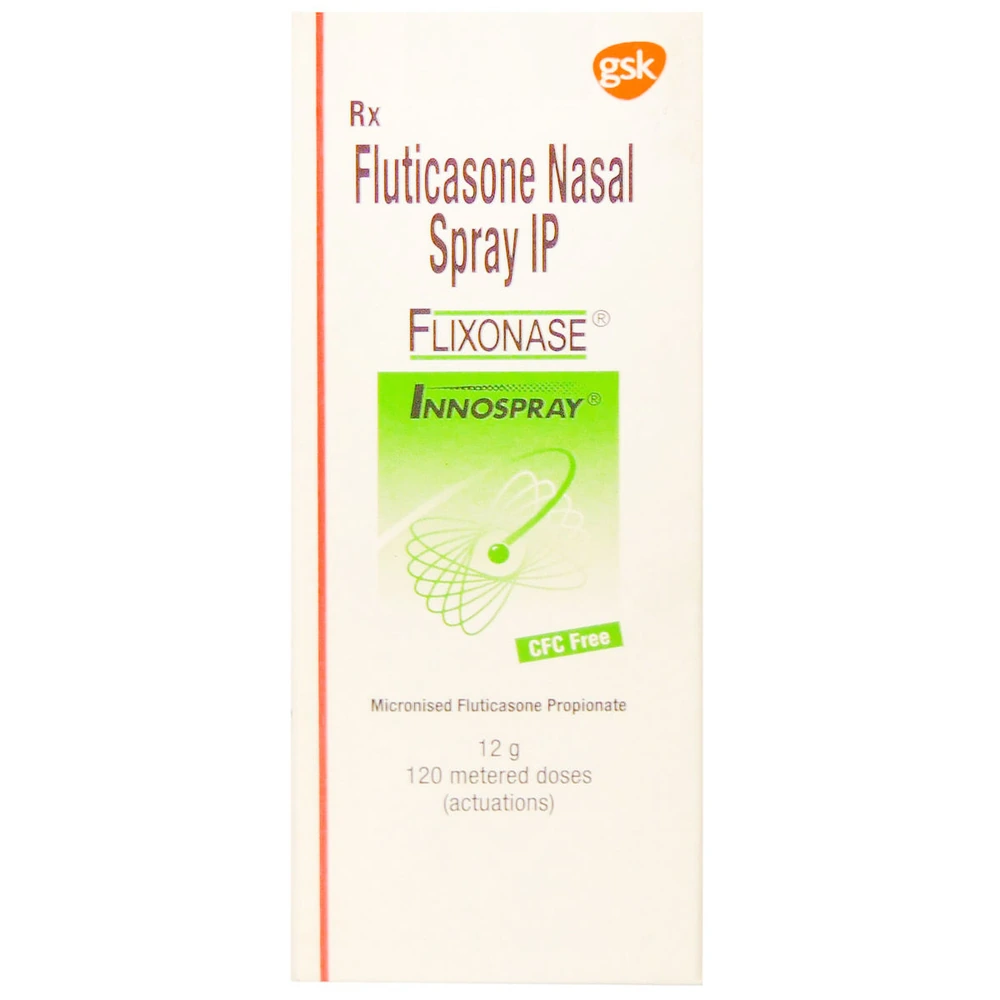
Flixonase Nasal 50 Mcg Spray
Flixonase Nasal 50 Mcg Spray contains fluticasone propionate 50 mcg per actuation in an aqueous nasal spray formulation. Fluticasone is a potent synthetic corticosteroid with high topical anti-inflammatory activity and minimal systemic bioavailability when administered intranasally. Flixonase is used for the prevention and treatment of seasonal and perennial allergic rhinitis and non-allergic rhinitis, reducing nasal congestion, rhinorrhoea, sneezing, and nasal itching. Its high receptor binding affinity, rapid first-pass hepatic inactivation after any absorbed drug, and low oral bioavailability make it one of the safest intranasal corticosteroids available, with negligible systemic effects at recommended doses.
Composition
| Active Ingredient | Strength per actuation |
|---|---|
| Fluticasone Propionate | 50 mcg per spray |
About the Manufacturer
Flixonase is manufactured by GlaxoSmithKline (GSK), a leading global biopharmaceutical company headquartered in Brentford, UK. GSK has a long-standing expertise in respiratory medicines and has developed fluticasone across multiple formulations (nasal spray, inhaled, and topical) for the management of inflammatory conditions of the respiratory tract and skin. Flixonase is widely distributed globally and is recognised by regulatory authorities including the MHRA, FDA, and EMA.
Mechanism of Action
Fluticasone propionate is a glucocorticoid receptor agonist with very high receptor binding affinity (approximately 500 times that of dexamethasone). When applied intranasally, it binds to glucocorticoid receptors in nasal mucosal cells, suppressing the transcription of pro-inflammatory cytokines, chemokines, and cell adhesion molecules (including IL-4, IL-5, IL-13, TNF-α, RANTES, eotaxin). This reduces recruitment and activation of eosinophils, mast cells, basophils, and T-lymphocytes in the nasal mucosa — the cellular mediators of the allergic cascade. The result is reduced mucosal oedema, decreased mucus secretion, suppressed sneezing reflex, and resolution of nasal airflow obstruction. Fluticasone’s lipophilicity also allows prolonged retention in the mucosal tissue, supporting a once-daily dosing regimen. Its systemic bioavailability is approximately 2% via the intranasal route, ensuring minimal suppression of the hypothalamic-pituitary-adrenal (HPA) axis at recommended doses.
Indications
- Seasonal allergic rhinitis (hay fever) — prevention and treatment of nasal symptoms
- Perennial (year-round) allergic rhinitis — ongoing symptom control
- Non-allergic rhinitis (vasomotor rhinitis) — reduction of nasal symptoms
- Nasal polyp reduction — reduction of nasal polyp size under specialist guidance
Dosage & Administration
- Adults and adolescents (12 years and over): 2 sprays (100 mcg) into each nostril once daily in the morning; total daily dose: 200 mcg. Once symptoms are controlled, reduce to 1 spray (50 mcg) per nostril once daily as a maintenance dose
- Children aged 4–11 years: 1 spray (50 mcg) into each nostril once daily; total daily dose: 100 mcg. Use under adult supervision
- Shake the bottle gently before use. Prime the pump before first use or after a prolonged period of non-use by actuating into the air until a fine mist appears
- Tilt the head slightly forward; insert the nozzle gently into one nostril and spray while breathing in gently through the nose
- Optimal benefit may take 1–2 weeks of regular use; use consistently for best results
- If using for hay fever, start treatment 1–2 weeks before the expected start of the pollen season
Special Populations
- Children under 4 years: Not recommended
- Elderly: No dose adjustment required; use standard doses
- Hepatic impairment: Fluticasone is extensively metabolised by the liver. Systemic exposure may be increased in severe hepatic impairment; use with caution and monitor for systemic corticosteroid effects
- Pregnancy: Intranasal fluticasone is considered low-risk during pregnancy; systemic absorption is minimal. Use only when clearly needed; discuss with a physician
- Breastfeeding: Any absorbed drug is likely excreted in breast milk at very low levels; considered low-risk with intranasal dosing
Precautions
- Recent nasal trauma or surgery: avoid use until the nasal passages have healed
- Nasal infections: treat active nasal bacterial, fungal, or viral infections before starting fluticasone; do not use to mask signs of infection
- Systemic corticosteroid effects (HPA axis suppression, reduced bone density, cataract, glaucoma): extremely unlikely at recommended intranasal doses; however, additional systemic steroid exposure from other routes (inhaled, oral, topical) may be additive; monitor for signs in patients using corticosteroids by multiple routes
- Growth in children: at recommended doses, fluticasone nasal spray does not suppress growth in children; however, monitor height in children on prolonged nasal and inhaled steroid therapy
- Epistaxis (nosebleeds): a known local side effect; allow the spray to work in alternate nostrils if bleeding occurs; avoid blowing the nose forcefully immediately after application
Contraindications
- Known hypersensitivity to fluticasone propionate or any excipient in the formulation
- Untreated nasal infections
- Recent nasal surgery or trauma (until healing is complete)
Side Effects
- Very common: Epistaxis (nosebleeds, blood-stained mucus)
- Common: Nasal dryness, nasal irritation, unpleasant taste or smell
- Rare: Nasal septum perforation (with long-term use, particularly at high doses or with intranasal cocaine use), hypersensitivity reactions (rash, angioedema, anaphylaxis)
- Very rare: Glaucoma, cataracts, raised intraocular pressure (with long-term nasal and/or ophthalmic corticosteroid use)
Drug Interactions
- Strong CYP3A4 inhibitors (ritonavir, ketoconazole, itraconazole): Significantly increase plasma levels of fluticasone, increasing the risk of systemic corticosteroid effects including adrenal suppression and Cushing’s syndrome; avoid concurrent use where possible
- Other corticosteroids (inhaled, topical, oral): Combined systemic steroid exposure adds up; monitor for HPA axis suppression
Storage
Store below 30°C. Do not refrigerate or freeze. Keep upright. Keep the protective cap on when not in use. Keep out of reach of children. Do not use after the expiry date printed on the bottle.
Related Products
- Fexopen 180 Mg Tablets – fexofenadine antihistamine for allergic rhinitis
- Terol LA 4 Mg Tablets – tolterodine for urinary symptoms
- Indocap SR 75 Mg Capsules – indomethacin slow-release anti-inflammatory
Frequently Asked Questions
- What is Flixonase Nasal Spray used for?
- Flixonase Nasal 50 Mcg Spray is used to prevent and treat the nasal symptoms of allergic rhinitis (hay fever and perennial allergy), including nasal congestion, runny nose, sneezing, and nasal itching. It is also used for non-allergic (vasomotor) rhinitis and can help reduce the size of nasal polyps under specialist guidance.
- How long does it take for Flixonase to work?
- Unlike antihistamine sprays which act within minutes, corticosteroid nasal sprays like Flixonase build up their anti-inflammatory effect over time. Most patients notice meaningful improvement within 1–2 weeks of regular daily use. Full benefit may take 3–4 weeks. It is therefore important to use Flixonase consistently — ideally starting 1–2 weeks before pollen season if used for hay fever — rather than only when symptoms are severe.
- Can I use Flixonase every day long-term?
- Yes. Flixonase is designed for regular daily use and is safe for long-term use at recommended doses. Its systemic bioavailability is very low (approximately 2%), meaning HPA axis suppression, osteoporosis, and other systemic steroid effects seen with prolonged oral steroids are not a concern with intranasal fluticasone at recommended doses. Periodic review by your doctor is advisable to confirm that the nasal spray is still needed and to assess for any local side effects.
- Can I use Flixonase and an antihistamine tablet together?
- Yes. Combining a topical intranasal corticosteroid (such as Flixonase) with an oral antihistamine (such as fexofenadine) is a recommended strategy for moderate-to-severe allergic rhinitis that does not respond to either treatment alone. The two treatments work by different mechanisms and have complementary effects — the nasal spray reduces nasal inflammation and congestion, while the antihistamine controls sneezing, eye symptoms, and itch.
- Why am I getting nosebleeds from Flixonase?
- Nosebleeds (epistaxis) are the most common side effect of intranasal corticosteroid sprays, affecting a significant proportion of users. They are caused by mild drying and thinning of the nasal mucosal blood vessels over time. To minimise this: aim the spray towards the outer wall of the nostril rather than directly at the nasal septum, avoid sniffing or blowing the nose vigorously for 15–20 minutes after using the spray, and keep the nasal passages moisturised with a saline rinse. Persistent or severe nosebleeds should be discussed with your doctor.
References
- NHS – Fluticasone Nasal Spray
- MedlinePlus – Fluticasone Nasal Spray
- FDA – Flonase (Fluticasone Propionate) Prescribing Information
- EMA – Fluticasone Propionate Nasal Spray
Disclaimer: This page is for informational purposes only and does not constitute medical advice. Flixonase Nasal 50 Mcg Spray should be used as directed by a qualified healthcare professional. If you experience a severe nosebleed, vision changes, or signs of an allergic reaction, seek medical attention promptly.
Reviews
There are no reviews yet.