Description
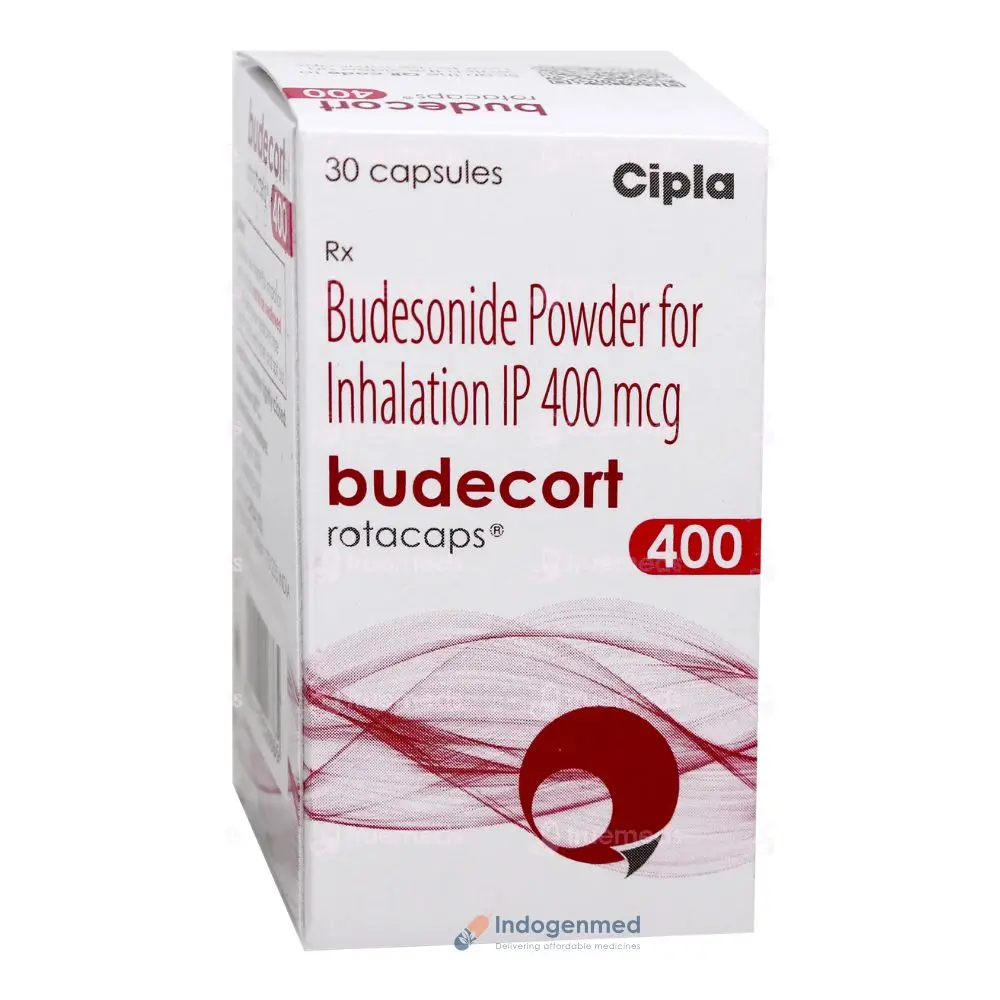
What are Budecort 400 Mcg Capsules?
Budecort 400 Mcg Capsules are dry powder inhalation capsules manufactured by Cipla Ltd., one of India’s leading pharmaceutical companies. Each capsule contains 400 micrograms (mcg) of Budesonide, an inhaled corticosteroid (ICS) used in the long-term management of asthma and chronic obstructive pulmonary disease (COPD).
Important: These capsules are for inhalation only. They must be used with a compatible dry powder inhaler (DPI) device and must never be swallowed. The capsule is placed into the inhaler device, pierced, and the powder is inhaled through the mouth into the lungs.
Budecort 400 is a maintenance therapy — it reduces airway inflammation and prevents asthma symptoms over time. It is not intended for the relief of acute bronchospasm or sudden asthma attacks. Each pack contains 10 capsules for inhalation.
Composition and Product Details
| Brand Name | Budecort 400 |
|---|---|
| Generic Name | Budesonide |
| Strength | 400 mcg per capsule |
| Dosage Form | Dry powder capsule for inhalation (NOT for oral use) |
| Pack Size | 10 capsules |
| Manufacturer | Cipla Ltd., India |
| Therapeutic Class | Inhaled Corticosteroid (ICS) / Anti-asthmatic |
| Prescription Required | Yes |
About Cipla Ltd. and the Budecort Brand
Cipla Ltd. is a globally recognised Indian pharmaceutical company established in 1935. Headquartered in Mumbai, Cipla has a strong presence in over 80 countries and is particularly well regarded for its respiratory medicine portfolio, which includes inhalers, nebuliser solutions, and dry powder formulations.
The Budecort brand is Cipla’s proprietary range of budesonide-based respiratory products. Budecort capsules are widely prescribed in India and exported to international markets as a cost-effective, quality-assured inhaled corticosteroid for asthma and COPD management. Cipla manufactures its products to WHO-GMP standards and is approved by multiple international regulatory bodies.
How Budecort 400 Mcg Works
Budesonide is a potent glucocorticoid that exerts its primary therapeutic effect by reducing inflammation in the airways. Airway inflammation is the underlying cause of the symptoms associated with asthma — including recurrent wheeze, breathlessness, chest tightness, and cough.
When inhaled, budesonide is deposited directly in the bronchial mucosa. It binds to intracellular glucocorticoid receptors, which modulates the transcription of anti-inflammatory proteins and reduces the expression of pro-inflammatory cytokines including interleukin-4 (IL-4), IL-5, and IL-13. The result is a sustained reduction in airway eosinophilia, mast cell activity, and mucosal oedema — the key pathological processes in asthmatic airways.
Budesonide also reduces mucus hypersecretion and decreases airway hyper-responsiveness to triggers such as allergens, cold air, and exercise. Because it acts locally in the lung with a high first-pass hepatic metabolism, the systemic corticosteroid effects associated with oral or injected steroids are substantially reduced at therapeutic doses.
Budecort 400 does not produce immediate bronchodilation. Its full anti-inflammatory benefit develops over days to weeks of regular use, which is why it must be taken consistently every day, even when symptoms are not present.
Indications and Uses
Budecort 400 Mcg Capsules are indicated for:
- Asthma (maintenance therapy): Long-term prophylactic treatment of persistent asthma in adults and adolescents. Reduces the frequency and severity of asthma attacks and the need for rescue bronchodilators.
- Chronic Obstructive Pulmonary Disease (COPD): As part of combination therapy in patients with moderate-to-severe COPD who have a history of exacerbations. Budesonide is typically used alongside a long-acting bronchodilator (LABA) in this indication.
Budecort 400 is not a bronchodilator and does not relieve acute breathlessness. A short-acting bronchodilator (such as salbutamol) should always be available as a reliever inhaler for sudden symptom relief.
Dosage and Administration
The dose of budesonide must be determined by the prescribing physician and individualised to each patient’s severity of disease, previous corticosteroid therapy, and clinical response. General dosing guidelines for budesonide dry powder inhalation capsules in adults are:
- Mild to moderate asthma: 200–400 mcg twice daily (one Budecort 400 capsule once daily, or one capsule of a lower strength twice daily)
- Severe asthma: 400–1,600 mcg daily in divided doses, as directed by a physician
- COPD: Typically 400 mcg twice daily, in combination with a LABA
How to use:
- Remove one capsule from the blister pack immediately before use.
- Insert the capsule into the compatible inhaler device as per the device’s instructions.
- Pierce the capsule using the device’s piercing mechanism.
- Hold the inhaler horizontally, exhale fully (away from the inhaler), then place the mouthpiece in your mouth and inhale deeply and forcefully.
- Hold your breath for 5–10 seconds, then breathe out slowly.
- Check whether the capsule is empty; repeat inhalation if powder remains.
- Rinse your mouth with water and spit after each use to reduce the risk of oral candidiasis.
Never swallow the capsule. The inhaler device is not included in the pack and must be obtained separately.
Special Populations
Elderly (≥65 years)
No specific dose adjustment is required in elderly patients. However, older patients with COPD may require closer monitoring for adverse effects including bone density changes with long-term high-dose ICS therapy.
Renal Impairment
No dose adjustment is considered necessary in renal impairment, as budesonide undergoes primarily hepatic metabolism.
Hepatic Impairment
Budesonide is extensively metabolised by the liver (CYP3A4). In severe hepatic impairment, systemic budesonide exposure may be increased. Use with caution and under close medical supervision.
Paediatric Use
Budesonide dry powder inhalation is used in children; however, the 400 mcg capsule dose is generally for adults and adolescents. Children typically require lower doses and appropriate child-friendly inhaler devices. Consult a paediatric respiratory specialist for guidance on dose and technique in children.
Precautions and Warnings
- Not for acute attacks: Budecort 400 does not relieve acute bronchospasm. Always have a short-acting bronchodilator available for acute symptoms.
- Oral candidiasis: Inhaled corticosteroids can cause oral and pharyngeal candidiasis (thrush). Rinse your mouth and gargle with water after every dose to reduce this risk.
- Systemic corticosteroid effects: At high doses or with prolonged use, inhaled corticosteroids may cause systemic effects including adrenal suppression, reduced bone mineral density, and growth retardation in children. Use the lowest effective dose.
- Switching from oral steroids: When transferring from oral systemic corticosteroids to inhaled budesonide, adrenal insufficiency may occur. Transfer must be gradual and medically supervised.
- Infections: Inhaled corticosteroids may increase susceptibility to respiratory infections, including pneumonia in COPD patients. Report worsening respiratory symptoms promptly.
- Eye effects: Long-term high-dose inhaled corticosteroids have been associated with cataract formation and raised intraocular pressure. Inform your ophthalmologist if you use ICS long term.
- Pregnancy and breastfeeding: Consult your doctor before using Budecort if you are pregnant or breastfeeding. Budesonide is considered relatively safe in pregnancy at therapeutic doses but should only be used when the benefit outweighs any risk.
Contraindications
- Hypersensitivity to budesonide or any excipient in the formulation
- Acute asthma attacks or rapidly deteriorating asthma (budesonide does not provide immediate bronchodilation)
- Use in children under the age specified by the prescribing physician for the 400 mcg strength
Possible Side Effects
Common (may affect up to 1 in 10 users)
- Oral and pharyngeal candidiasis (thrush) — rinsing mouth after use greatly reduces this risk
- Hoarseness or dysphonia (altered voice)
- Mild irritation of the throat or cough immediately after inhalation
Uncommon
- Headache
- Nausea
- Mild skin bruising
- Palpitations (usually at higher doses)
Rare but Serious
- Adrenal insufficiency, particularly in patients switching from oral corticosteroids or using high doses long-term
- Paradoxical bronchospasm (wheezing that worsens immediately after inhalation) — discontinue immediately and use a reliever bronchodilator
- Hypersensitivity reactions including rash, urticaria, or angioedema
- Growth retardation in children with prolonged high-dose therapy
Report any unexpected or concerning side effects to your doctor or pharmacist promptly.
Drug Interactions
- CYP3A4 inhibitors (e.g., ketoconazole, itraconazole, ritonavir, clarithromycin): These drugs inhibit the hepatic enzyme responsible for budesonide metabolism, leading to significantly increased systemic budesonide exposure. Avoid concurrent use where possible; if unavoidable, monitor for signs of increased corticosteroid effects.
- Other inhaled corticosteroids: Avoid concurrent use of multiple inhaled corticosteroid preparations unless specifically directed by a physician.
- Systemic corticosteroids: Additive systemic effects if used alongside oral or injectable steroids.
- QTc-prolonging drugs: Some beta-2 agonists used alongside ICS may have additive cardiac effects in susceptible patients.
Related Respiratory Products on IndoGenMed
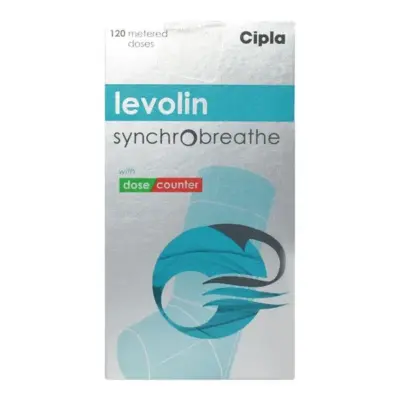
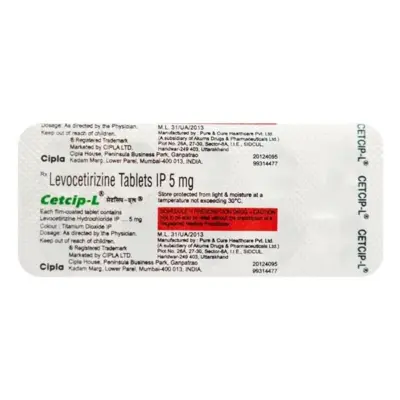
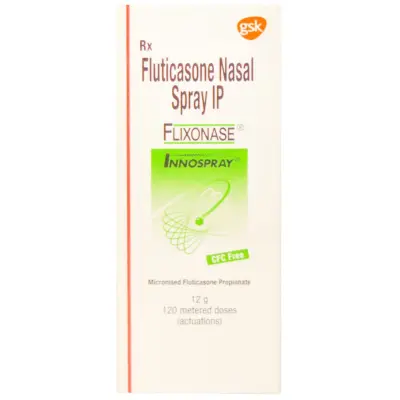
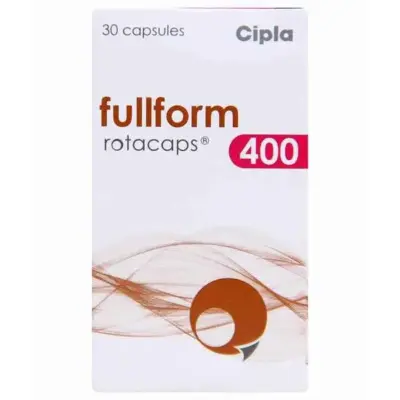
IndoGenMed offers a range of inhaled corticosteroid and respiratory products for asthma and COPD management:
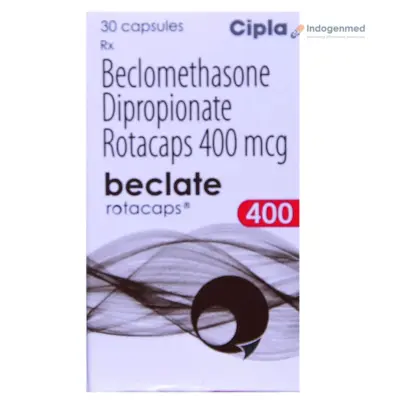
- Beclate 400 Mcg Capsules — Beclomethasone dipropionate 400 mcg inhalation capsules, an alternative inhaled corticosteroid for asthma maintenance.
- Beclate 200 Mcg Inhaler — Beclomethasone 200 mcg pressurised metered-dose inhaler (pMDI) for asthma control.
- Beclate 200 Mcg Capsules — Beclomethasone 200 mcg dry powder inhalation capsules for step-down asthma therapy.
Storage Instructions
- Store below 30°C in a cool, dry place away from direct sunlight, heat, and humidity
- Keep capsules in the original blister packaging until immediately before use
- Do not refrigerate or freeze the capsules
- Store out of reach of children
- Do not use capsules after the printed expiry date
- Discard the inhaler device as directed by the device manufacturer
Frequently Asked Questions
Q: Can I swallow Budecort 400 capsules if I do not have an inhaler device?
A: No. Budecort 400 capsules are strictly for inhalation only and must never be swallowed. They contain budesonide dry powder in a formulation designed to be delivered directly to the lungs via a compatible inhaler device. Swallowing the capsule will not provide therapeutic benefit and could result in unnecessary systemic corticosteroid exposure. If you do not have a compatible inhaler device, consult your doctor or pharmacist before use.
Q: How long does Budecort 400 take to work?
A: Budecort 400 is a preventer inhaler; it works by reducing airway inflammation over time. Some improvement in symptoms may be noticed within a few days of starting treatment, but the full benefit typically develops after 2–4 weeks of consistent daily use. It is important to continue taking it every day even when you feel well, as stopping suddenly may lead to a return of symptoms.
Q: Can I use Budecort 400 during an asthma attack?
A: No. Budecort 400 is a maintenance (preventer) inhaler and does not provide rapid bronchodilation. During an acute asthma attack or sudden worsening of breathlessness, you should use your prescribed short-acting bronchodilator reliever inhaler (such as salbutamol). If symptoms are severe or do not respond to your reliever inhaler, seek emergency medical attention immediately.
Q: How do I reduce the risk of oral thrush when using Budecort 400?
A: Oral candidiasis (thrush) is the most common local side effect of inhaled corticosteroids. The NHS recommends rinsing your mouth thoroughly with water and spitting out after every dose of your inhaled corticosteroid. Using a spacer device with pressurised inhalers can also reduce oropharyngeal deposition, but for dry powder inhalers, rinsing is the primary preventive measure.
Q: Can Budecort 400 be used in pregnancy?
A: Poorly controlled asthma during pregnancy poses greater risks to both the mother and the unborn child than does treatment with inhaled budesonide at therapeutic doses. Current guidelines from bodies including the NHS and EMA indicate that budesonide inhalation can generally be continued during pregnancy when prescribed by a physician. Always inform your doctor if you are pregnant or planning to become pregnant so that the best treatment plan can be confirmed for your individual situation.
References
- NHS. Budesonide inhalers. NHS.uk. Available at: https://www.nhs.uk/medicines/budesonide-inhalers/
- MedlinePlus. Budesonide Oral Inhalation. U.S. National Library of Medicine. Available at: https://medlineplus.gov/druginfo/meds/a699056.html
- European Medicines Agency (EMA). Pulmicort (budesonide) — Summary of Product Characteristics. Available at: https://www.ema.europa.eu
- Global Initiative for Asthma (GINA). Global Strategy for Asthma Management and Prevention. 2023. Available at: https://ginasthma.org
- Rabe KF, et al. “Global strategy for the diagnosis, management, and prevention of chronic obstructive pulmonary disease: GOLD executive summary.” American Journal of Respiratory and Critical Care Medicine. 2007;176(6):532–555.
Reviews
There are no reviews yet.