Description
What Is Foracort 6/400 mcg Inhaler?
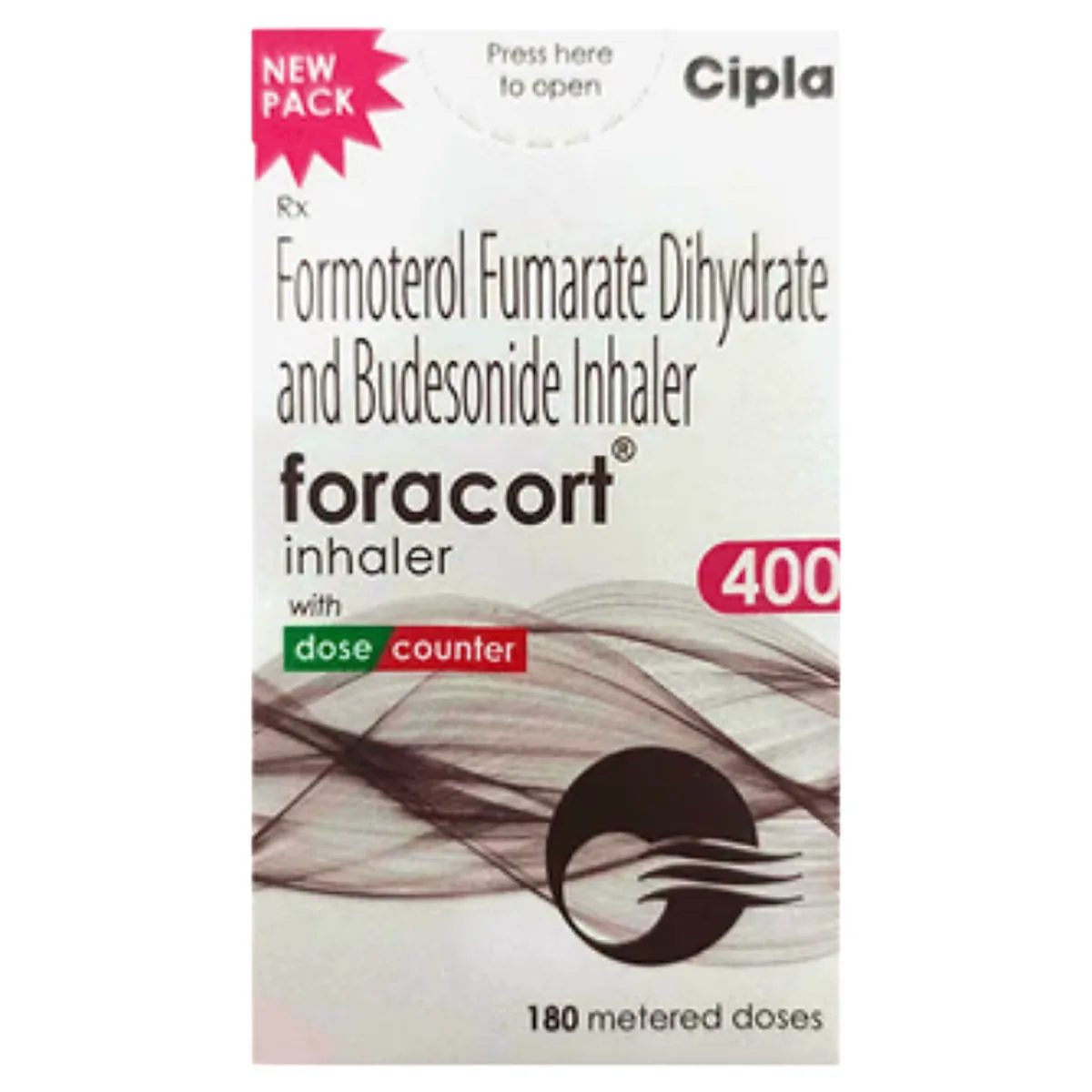
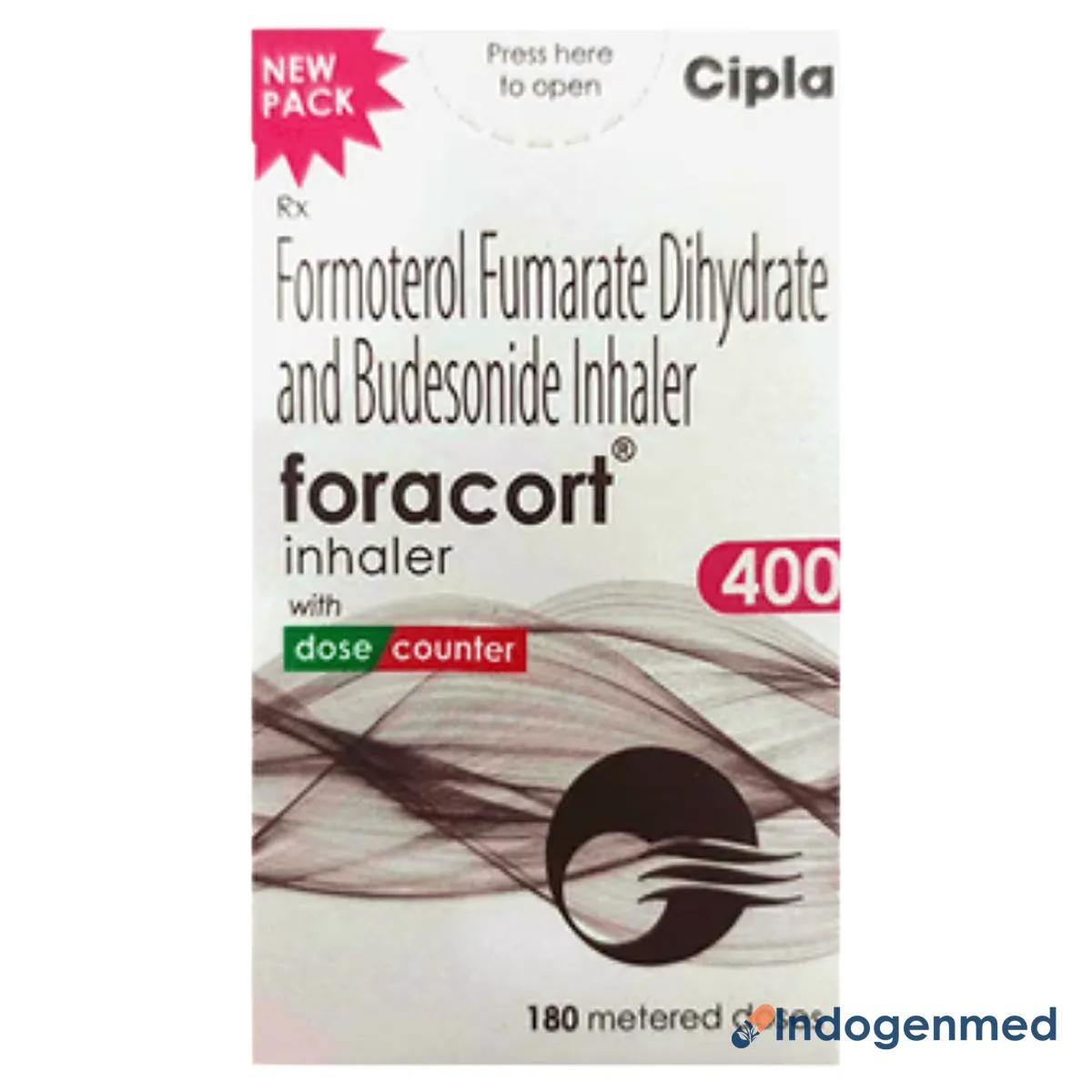
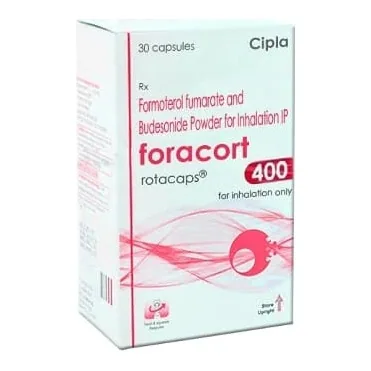
Foracort 6/400 mcg Inhaler is a pressurised metered-dose inhaler (pMDI) containing budesonide 400 mcg and formoterol fumarate 6 mcg per actuation, manufactured by Cipla Ltd. It is a fixed-dose combination of an inhaled corticosteroid (ICS) with a long-acting beta-2 agonist (LABA) — the therapeutic class that forms the foundation of maintenance treatment for persistent asthma and chronic obstructive pulmonary disease (COPD) in adults and adolescents.
Budesonide is a non-halogenated glucocorticoid with high topical anti-inflammatory potency and low systemic bioavailability due to extensive first-pass hepatic metabolism (approximately 90% of swallowed drug is inactivated). Formoterol fumarate is a selective long-acting beta-2 agonist characterised by a rapid onset of bronchodilation (within 1–3 minutes) combined with a prolonged 12-hour duration of action — a pharmacokinetic profile that distinguishes it from salmeterol (slow onset, 12h duration) and makes formoterol the LABA of choice in regimens requiring both scheduled maintenance and reliever use from the same device (the SMART/MART strategy). The ICS + LABA combination addresses the two principal pathophysiological abnormalities in asthma — airway inflammation (ICS component) and bronchoconstriction with airway hyperresponsiveness (LABA component) — in a single device.
Mechanism of Action
Budesonide: Inhaled Corticosteroid
Budesonide binds intracellular glucocorticoid receptors (GR) in airway epithelial cells, mast cells, eosinophils, macrophages, and T lymphocytes. The drug–GR complex translocates to the nucleus and modifies transcription of inflammatory genes via transactivation (up-regulating anti-inflammatory genes such as lipocortin-1/annexin A1) and transrepression (down-regulating NF-κB- and AP-1-driven expression of pro-inflammatory cytokines including IL-4, IL-5, IL-13, and TNF-α, as well as chemokines, adhesion molecules, and inflammatory enzymes such as cyclooxygenase-2). The net result is a reduction in eosinophilic and mast cell infiltration of the airway mucosa, decreased goblet cell mucus secretion, reduced subepithelial fibrosis and airway remodelling, and a decrease in bronchial hyperresponsiveness. Budesonide undergoes extensive fatty acid esterification within airway tissue, forming a lipophilic depot that prolongs its local residence time beyond its plasma half-life.
Formoterol: Long-Acting Beta-2 Agonist
Formoterol is a full agonist at beta-2 adrenoceptors in airway smooth muscle, activating adenylate cyclase via Gs protein coupling to generate cyclic AMP (cAMP). Elevated cAMP activates protein kinase A (PKA), which phosphorylates myosin light chain kinase (reducing its activity) and opens large-conductance calcium-activated potassium channels (BKCa), leading to smooth muscle relaxation and bronchodilation. Formoterol’s rapid onset (1–3 min) is attributed to its moderate lipophilicity allowing faster membrane access than the more lipophilic salmeterol. Its sustained 12-hour effect relates to both receptor persistence and an airway tissue reservoir. Formoterol also inhibits mast cell mediator release (histamine, leukotrienes, prostaglandins) and reduces microvascular leakage, adding a minor anti-inflammatory component to its predominantly bronchodilatory role.
Synergism of ICS + LABA
The combination of budesonide and formoterol produces greater clinical benefit than either component alone due to molecular and cellular interactions. Corticosteroids up-regulate beta-2 receptor expression and prevent LABA-induced receptor desensitisation; LABAs facilitate GR nuclear translocation and potentiate the anti-inflammatory effects of corticosteroids. These synergistic interactions contribute to the superior symptom control, lung function, and exacerbation reduction demonstrated with ICS+LABA combinations over their individual components.
Indications
Asthma
Foracort 6/400 mcg Inhaler is indicated for the maintenance treatment of persistent asthma in adults and adolescents (≥12 years) where use of a combination ICS and LABA is appropriate — patients not adequately controlled on ICS alone, or already established on both an ICS and a LABA. The 400 mcg budesonide dose positions this product at the medium-to-high ICS dose category per GINA (Global Initiative for Asthma) guidelines.
Chronic Obstructive Pulmonary Disease (COPD)
Foracort 6/400 mcg Inhaler is indicated for maintenance treatment of COPD in patients with FEV1 <60% predicted and a history of exacerbations, as an add-on to bronchodilator therapy (long-acting muscarinic antagonists, LAMA).
Dosage and Administration
Adults and adolescents (≥12 years):
- Asthma maintenance: 1–2 inhalations twice daily. Maximum 4 inhalations per day.
- COPD maintenance: 2 inhalations twice daily.
Inhaler technique (pMDI): Remove the cap. Shake the inhaler well before each use (budesonide is a suspension formulation and settles). Exhale fully, away from the inhaler. Place the mouthpiece in the mouth, sealing the lips around it. Begin to inhale slowly and deeply through the mouth simultaneously pressing the canister down once. Continue to inhale slowly after actuation. Hold breath for up to 10 seconds. Exhale slowly through the nose. If a second dose is needed, wait 30–60 seconds and repeat. Rinse the mouth with water and spit after each use — this is essential to reduce the risk of oral candidiasis and minimise swallowing of deposited budesonide.
Contraindications
- Hypersensitivity to budesonide, formoterol, or any excipient (including lactose in some formulations).
- Not indicated for children under 12 years.
- As an acute reliever inhaler only — it has a maintenance + reliever role, not acute-only use.
Warnings and Precautions
Not for acute exacerbations: While formoterol has a rapid onset, Foracort 6/400 pMDI is a maintenance therapy. Acute severe asthma attacks require a short-acting bronchodilator (salbutamol pMDI or nebuliser) as first-line reliever, with systemic corticosteroids for severe exacerbations. Do not substitute the rescue inhaler entirely with this product unless following a formal SMART protocol prescribed by a specialist.
Oral candidiasis: Deposition of budesonide in the oropharynx can cause oropharyngeal candidiasis (thrush). Rinsing the mouth with water after each use and use of a spacer device (which reduces oropharyngeal deposition) minimise this risk.
Systemic corticosteroid effects: At high doses used long-term, inhaled budesonide can cause HPA axis suppression, reduced bone mineral density, cataract, and growth retardation in children. The risk increases with dose and duration; use the lowest effective dose.
Paradoxical bronchospasm: Rarely, inhalation triggers immediate bronchospasm — discontinue immediately, assess, and use an alternative inhaled bronchodilator.
Cardiovascular effects (formoterol): Beta-2 agonists can cause tachycardia, palpitations, QTc prolongation (at high doses), and hypovolaemia-associated hypokalaemia. Use with caution in patients with known cardiovascular disease, QTc-prolonging conditions, or severe hypokalaemia.
Adverse Effects
- Common (≥1/100): Oropharyngeal candidiasis (thrush), hoarseness/dysphonia (from local budesonide deposition on vocal cords), mild throat irritation, headache, tremor (formoterol), palpitations.
- Uncommon (≥1/1000): Tachycardia, hypokalaemia (particularly at high doses or combined with diuretics and xanthines), mild hyperglycaemia, nausea, dizziness.
- Rare: Paradoxical bronchospasm, hypersensitivity reactions (urticaria, angioedema), adrenal suppression, pneumonia (more of a risk in COPD patients).
Drug Interactions
- Strong CYP3A4 inhibitors (ketoconazole, itraconazole, ritonavir, cobicistat): Substantially increase systemic budesonide exposure through inhibition of first-pass metabolism, increasing the risk of systemic corticosteroid adverse effects including HPA suppression and Cushing’s syndrome; co-administration should be avoided.
- Beta-blockers (including ophthalmic preparations): Antagonise formoterol’s bronchodilatory effect; non-selective beta-blockers (propranolol, carvedilol, timolol eye drops) are particularly problematic and should be avoided in asthma patients.
- Diuretics and xanthines (theophylline): Combined with high-dose beta-2 agonists, increase the risk of hypokalaemia and cardiac arrhythmias; monitor potassium levels in patients on these agents.
- MAO inhibitors and tricyclic antidepressants: Potentiate cardiovascular effects of formoterol; concurrent use requires caution.
- Other long-acting beta-2 agonists: Do not use with other LABA-containing preparations — additive cardiovascular risk without additional bronchodilatory benefit.
Storage
Store at or below 30°C. Do not freeze — freezing can damage the valve and alter dose delivery. Keep away from direct sunlight and heat. Do not puncture, incinerate, or expose the pressurised container to temperatures above 50°C. Keep the cap in place when not in use. Shake well before each use. Keep out of reach of children. Do not use after the expiry date printed on the pack.
Related Products
For patients who prefer or require a dry powder inhaler (DPI) format rather than pMDI for the same ICS+LABA therapy, Foracort 400+6 mcg Capsules (budesonide + formoterol DPI Turbuhaler capsules) offers the same active combination in a breath-actuated device. For patients with COPD requiring concurrent bronchodilator coverage with anticholinergic and LABA therapy, Duova 18+12 mcg Capsules (tiotropium + formoterol DPI) adds long-acting muscarinic antagonist action. For acute or rescue nebulisation needs, Duolin Respules (levosalbutamol + ipratropium) provides short-acting combination bronchodilation.
References
- U.S. Food and Drug Administration / DailyMed. Budesonide/Formoterol Fumarate Inhalation Aerosol — Prescribing Information (Symbicort). National Library of Medicine. Available at: https://dailymed.nlm.nih.gov
- National Library of Medicine MedlinePlus. Budesonide and Formoterol Oral Inhalation. Available at: https://medlineplus.gov/druginfo/meds/a607070.html
- Mayo Clinic. Budesonide and Formoterol (Inhalation Route) — Before Using. Available at: https://www.mayoclinic.org
- Electronic Medicines Compendium (EMC). Symbicort 400/12 Turbohaler — Summary of Product Characteristics. Available at: https://www.medicines.org.uk/emc
- Rabe KF, et al. Budesonide/formoterol in a single inhaler for maintenance and relief in mild-to-moderate asthma: a randomised, double-blind trial. Lancet. 2006;368(9537):744–753. PubMed PMID: 16934579
Reviews
There are no reviews yet.