Description
What Is Fullform 400 mcg+6 mcg Capsules?
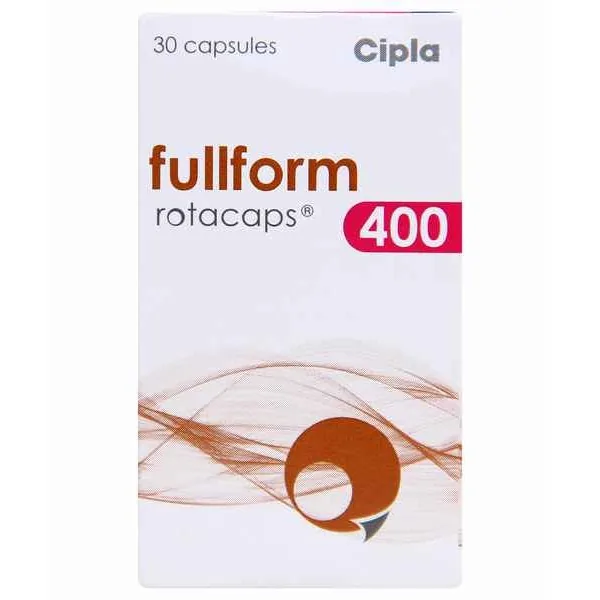
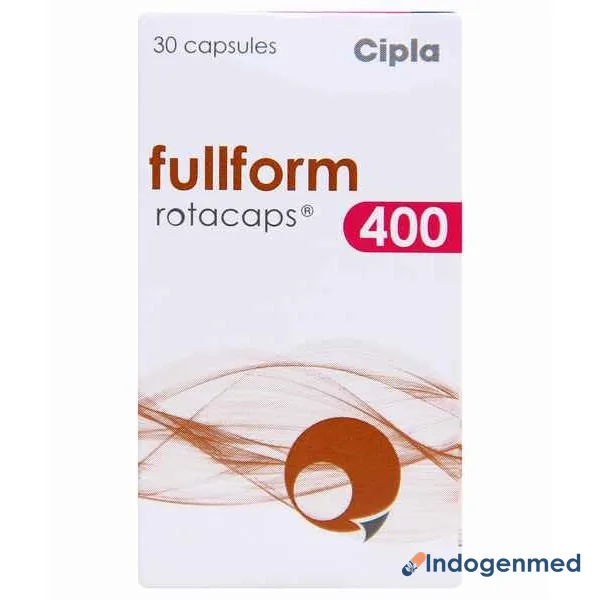
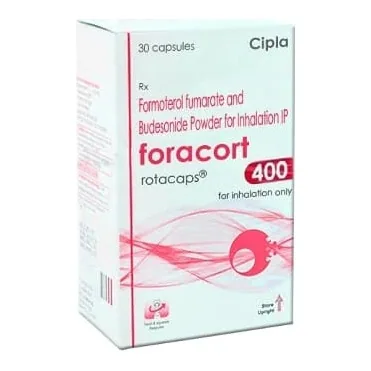
Fullform 400 mcg+6 mcg Capsules is a dry powder inhaler (DPI) formulation containing budesonide 400 mcg and formoterol fumarate 6 mcg per inhalation capsule, manufactured by Cipla Ltd. Each gelatin capsule is loaded into a breath-actuated DPI device immediately before inhalation — the capsule is pierced by the device mechanism, and the powder is drawn into the lower airways by the patient’s own inspiratory effort. The capsule is never swallowed. Fullform 400+6 mcg Capsules represents the medium-to-high budesonide dose in Cipla’s DPI capsule range of fixed-dose inhaled corticosteroid (ICS) + long-acting beta-2 agonist (LABA) combinations, offering more intensive corticosteroid dosing than the 200 mcg strength for patients with moderate-to-severe persistent asthma.
Budesonide is a non-halogenated glucocorticoid with high topical anti-inflammatory potency and rapid hepatic first-pass metabolism — approximately 90% of swallowed drug is cleared pre-systemically, limiting systemic exposure from oropharyngeal deposition. The 400 mcg dose falls in the medium inhaled corticosteroid dose range per GINA (Global Initiative for Asthma) guidelines and delivers meaningfully greater airway anti-inflammatory suppression than the 200 mcg strength without substantially increasing the risk of systemic adverse effects at this dose level. Formoterol fumarate is a selective LABA with a distinctive rapid-onset (1–3 minutes) and long-duration (12 hours) pharmacokinetic profile, enabling it to serve both as a scheduled maintenance bronchodilator and, within the SMART (Single inhaler Maintenance And Reliever Therapy) strategy under specialist supervision, as an as-needed reliever — a property not shared by salmeterol (onset 15–30 minutes). The 400+6 combination targets patients in GINA Step 3–4 who require a step-up from low-dose ICS+LABA or who have failed ICS monotherapy at medium doses.
Mechanism of Action
Budesonide: Inhaled Corticosteroid
Budesonide enters airway epithelial cells, mast cells, eosinophils, and T lymphocytes and binds the cytosolic glucocorticoid receptor (GR) with high affinity. The activated budesonide–GR complex undergoes nuclear translocation where it modulates inflammatory gene transcription through two primary mechanisms. Through transactivation, it increases expression of anti-inflammatory proteins including annexin A1 (lipocortin-1), which inhibits phospholipase A2 and suppresses the generation of arachidonic acid-derived mediators — prostaglandins, leukotrienes, and thromboxanes — responsible for airway inflammation, oedema, and bronchoconstriction. Through transrepression, the GR complex inhibits the transcription factors NF-κB and AP-1, suppressing expression of pro-inflammatory cytokines (IL-4, IL-5, IL-13, TNF-α), eosinophil-activating chemokines, and vascular adhesion molecules (ICAM-1, VCAM-1). Over weeks to months of treatment this results in reduced airway eosinophilia, mast cell infiltration, mucus hypersecretion, and airway oedema, and attenuation of airway remodelling (subepithelial fibrosis, smooth muscle hypertrophy). Budesonide undergoes intracellular fatty acid esterification within airway tissue, forming a lipophilic conjugate depot that prolongs local anti-inflammatory activity beyond its plasma half-life (approximately 2–3 hours).
Formoterol: Long-Acting Beta-2 Agonist
Formoterol fumarate binds beta-2 adrenoceptors in bronchial smooth muscle cells with high selectivity, acting as a full agonist to activate adenylate cyclase via Gs protein coupling. The resulting rise in intracellular cyclic AMP (cAMP) activates protein kinase A (PKA), which phosphorylates myosin light chain kinase (reducing its contractile activity) and opens large-conductance calcium-activated potassium (BKCa) channels, causing membrane hyperpolarisation and smooth muscle relaxation. Relaxation of bronchial smooth muscle increases airway lumen diameter, reduces airway resistance, and improves maximal expiratory flow. Formoterol’s moderate lipophilicity enables rapid cell membrane penetration explaining its 1–3 minute bronchodilator onset, while high receptor affinity sustains relaxation for approximately 12 hours. At concentrations achievable by inhalation, formoterol also inhibits mast cell mediator release and reduces airway microvascular leakage, contributing minor anti-inflammatory activity.
ICS + LABA Synergism at the Molecular Level
Budesonide and formoterol interact synergistically through complementary molecular mechanisms. Corticosteroids up-regulate airway beta-2 receptor gene expression and prevent LABA-induced receptor desensitisation via GRE-mediated transcription. LABAs in turn facilitate GR nuclear translocation (via PKA-dependent GR phosphorylation), potentiate ICS anti-inflammatory gene transcription, and independently reduce airway hyperresponsiveness through smooth muscle stabilisation. This bidirectional molecular potentiation explains the consistently superior clinical outcomes of ICS+LABA combinations over either component alone in head-to-head trials of exacerbation reduction, symptom control, and lung function preservation.
Indications
Moderate-to-Severe Persistent Asthma
Fullform 400+6 mcg Capsules is indicated for maintenance treatment of persistent asthma in adults and adolescents (≥12 years) whose asthma is not adequately controlled on low-to-medium dose ICS monotherapy, or who have previously been stabilised on combined ICS and LABA therapy at a medium-dose ICS level. The 400 mcg budesonide dose is appropriate for patients in the medium inhaled corticosteroid dose range, particularly where the GINA-preferred approach of adding a LABA before escalating to high-dose ICS is clinically indicated (Step 3–4). Under specialist supervision, Fullform 400+6 may be used within the SMART protocol as both maintenance and reliever inhaler.
COPD with Frequent Exacerbations
May be used as an adjunct to bronchodilator therapy in COPD patients with FEV1 <60% predicted normal and a history of repeated exacerbations despite optimised bronchodilator therapy, where the addition of an ICS to LABA therapy is clinically indicated.
Dosage and Administration
Adults and adolescents (≥12 years):
- Asthma maintenance: 1 capsule inhaled twice daily (total: budesonide 800 mcg + formoterol 12 mcg daily). Under SMART protocol with specialist supervision, the same capsule formulation may be used as reliever, up to a maximum total prescribed daily dose.
- COPD maintenance: 1 capsule inhaled twice daily.
DPI capsule technique — critical points:
- Remove one capsule from the blister immediately before use — do not store opened or pierced capsules.
- Load the capsule into the DPI device following the device insert; pierce the capsule with the device mechanism.
- Hold the inhaler horizontally. Exhale fully away from the mouthpiece.
- Seal lips firmly around the mouthpiece and inhale forcefully and deeply to draw the entire powder dose into the lungs.
- Hold breath for approximately 5–10 seconds then exhale slowly. Check the capsule is empty; if any powder remains, repeat the inhalation step.
- Discard used capsule — never swallow. Rinse mouth with water and spit immediately after use.
Insufficient inspiratory flow warning: DPI delivery requires a minimum inspiratory flow rate (approximately ≥30 L/min). Severely compromised patients may not reliably empty the capsule — verify technique at each clinical review.
Contraindications
- Known hypersensitivity to budesonide, formoterol fumarate, lactose (DPI carrier excipient), milk proteins, or any other component.
- Children under 12 years of age.
- Use as the sole treatment for acute severe asthma attacks.
Warnings and Precautions
Capsule for inhalation only — do not swallow: Swallowing the capsule delivers a large unintended oral dose without airway benefit and substantially increases systemic corticosteroid exposure, with associated risks of HPA suppression, hyperglycaemia, and Cushingoid features. This warning must be clearly communicated to every patient.
Not for acute exacerbations (unless under SMART protocol): Patients must keep a separate short-acting beta-2 agonist (salbutamol/albuterol) accessible for breakthrough symptoms. Failure to respond to reliever therapy requires urgent medical assessment.
Oropharyngeal candidiasis and dysphonia: Local deposition of inhaled budesonide predisposes to oral thrush and hoarseness. Rinsing the mouth with water and spitting after every inhalation significantly reduces incidence; persistent symptoms warrant antifungal treatment and clinical review.
HPA axis suppression: Prolonged use of medium-to-high inhaled corticosteroid doses can suppress adrenal function, particularly in patients also receiving systemic corticosteroids or strong CYP3A4 inhibitors. Consider HPA axis assessment in patients on long-term high-dose ICS.
Bone mineral density: Long-term ICS use, particularly at higher doses, is associated with reduced bone mineral density. Patients at risk of osteoporosis should be assessed and managed appropriately.
Paradoxical bronchospasm: Rarely, inhalation triggers immediate bronchospasm — discontinue, use a short-acting bronchodilator, and assess for alternative therapy.
Adverse Effects
- Common (≥1/100): Oropharyngeal candidiasis (thrush), hoarseness and dysphonia, throat irritation, mild tremor, palpitations, headache.
- Uncommon (≥1/1000): Tachycardia, hypokalaemia (at high doses, especially combined with diuretics or xanthines), mild hyperglycaemia, nausea, dizziness, muscle cramps, agitation.
- Rare: Paradoxical bronchospasm, hypersensitivity reactions (urticaria, angioedema, rash, bronchospasm), HPA axis suppression, reduced bone mineral density with prolonged high-dose use, cataract with long-term ICS use.
Drug Interactions
- Strong CYP3A4 inhibitors (ketoconazole, itraconazole, ritonavir, cobicistat, clarithromycin): Markedly increase systemic budesonide concentrations by inhibiting first-pass hepatic CYP3A4 metabolism — risk of systemic corticosteroid effects, Cushingoid features, and HPA suppression; avoid concurrent use where possible.
- Non-selective beta-blockers (propranolol, carvedilol, nadolol; including ophthalmic timolol preparations): Antagonise the bronchodilatory and potentially life-saving bronchospasm-reversal effect of formoterol; non-selective beta-blockers are absolutely contraindicated in asthma and should be avoided in COPD when alternatives exist.
- Diuretics and xanthines (theophylline, aminophylline): Additive hypokalaemia risk with high-dose beta-2 agonist use; monitor serum potassium, particularly in acutely unwell patients.
- Concurrent LABA-containing products: Do not use alongside other LABA-containing inhalers — additive cardiovascular risk without added bronchodilatory benefit.
- MAO inhibitors and tricyclic antidepressants: Potentiate cardiovascular effects of formoterol; use with caution and monitor heart rate and blood pressure.
- L-DOPA and thyroid hormones: May potentiate sympathomimetic effects of formoterol.
Storage
Store below 30°C in a cool, dry place away from direct sunlight and moisture. Keep all capsules in the original blister packaging until the moment of use — DPI powder is highly moisture-sensitive and capsules removed from the blister rapidly absorb atmospheric water, losing inhalable potency and potentially clumping in the device. Do not store opened or pierced capsules. Do not leave capsules inside the DPI device between doses. Keep out of reach of children. Do not use after the expiry date printed on the outer carton or blister foil.
Related Products
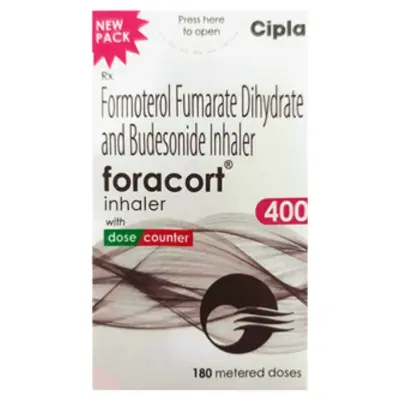
For patients who require a lower budesonide dose in the same DPI capsule format, Fullform 200 mcg+6 mcg Capsules (budesonide 200 mcg + formoterol 6 mcg) provides less intensive ICS dosing suitable for mild-to-moderate persistent asthma. For patients who prefer a pressurised metered-dose aerosol (pMDI) for the same budesonide+formoterol combination, Foracort 6/400 mcg Inhaler offers an aerosol format for patients who cannot coordinate breath with actuation. For COPD patients requiring a LAMA+LABA combination without ICS, Duova 18+12 mcg Capsules (tiotropium + formoterol DPI) is an alternative that avoids the ICS-associated risk of pneumonia in COPD.
References
- U.S. Food and Drug Administration / DailyMed. Budesonide/Formoterol Fumarate Dihydrate Inhalation Powder — Prescribing Information. National Library of Medicine. Available at: https://dailymed.nlm.nih.gov
- National Library of Medicine MedlinePlus. Budesonide and Formoterol Oral Inhalation. Available at: https://medlineplus.gov/druginfo/meds/a607070.html
- Mayo Clinic. Budesonide and Formoterol (Inhalation Route) — Precautions. Available at: https://www.mayoclinic.org
- Electronic Medicines Compendium (EMC). Symbicort 400/12 Turbohaler — Summary of Product Characteristics. Available at: https://www.medicines.org.uk/emc
- Calverley PM, et al. Salmeterol and Fluticasone Propionate and Survival in Chronic Obstructive Pulmonary Disease (TORCH trial). N Engl J Med. 2007;356(8):775–789. PubMed PMID: 17314337
Reviews
There are no reviews yet.