Description
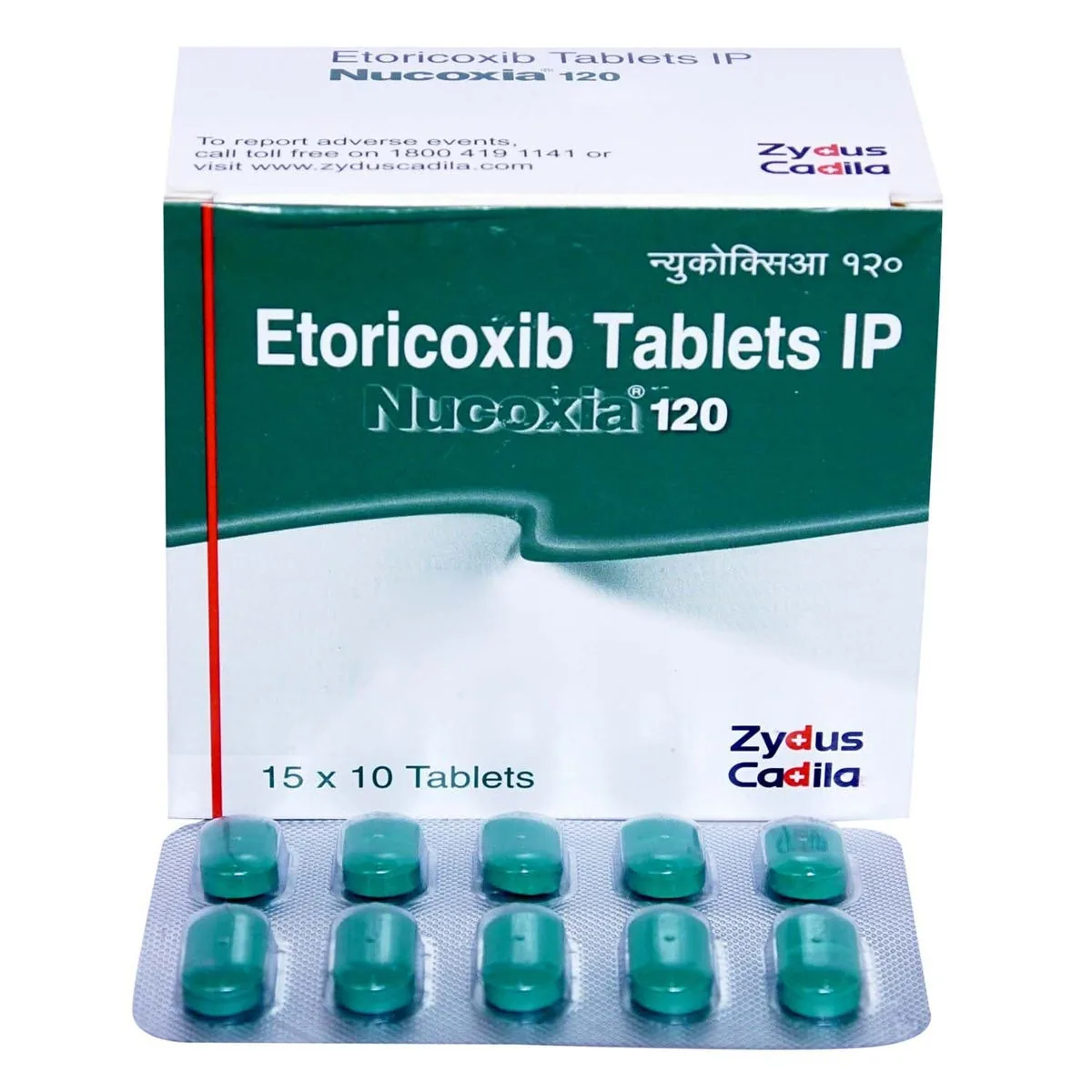
What Is Nucoxia 120 mg Tablets?
Nucoxia 120 mg Tablets contains etoricoxib 120 mg, the highest approved dose of this selective cyclooxygenase-2 (COX-2) inhibitor. At the 120 mg strength, etoricoxib is specifically approved for the short-term treatment of acute gouty arthritis and for acute musculoskeletal pain. It is the most potent oral dose of etoricoxib available and delivers rapid, sustained analgesia and anti-inflammatory effect in conditions characterised by severe, acute pain and intense synovial or periarticular inflammation.
Etoricoxib belongs to the coxib class of NSAIDs, which selectively inhibit the inducible isoform COX-2 responsible for prostaglandin synthesis at sites of tissue injury and inflammation, while sparing the constitutive COX-1 isoform that maintains gastric mucosal integrity and platelet function. This selectivity confers a significantly lower risk of upper gastrointestinal ulceration, perforation, and haemorrhage compared with non-selective NSAIDs (such as naproxen, indomethacin, or diclofenac). The 120 mg dose is used only short-term — typically 8 days for acute musculoskeletal pain and up to 8 days for acute gout — given the dose-dependent cardiovascular and blood pressure risks associated with higher doses used for longer periods.
Mechanism of Action
Selective COX-2 Inhibition
Prostaglandins — particularly prostaglandin E2 (PGE2) and prostacyclin (PGI2) — are the principal lipid mediators of pain, fever, and inflammation. They are synthesised by the cyclooxygenase enzyme system in two isoforms: COX-1 (constitutive) and COX-2 (inducible). Non-selective NSAIDs inhibit both isoforms, which explains their gastroprotective prostaglandin suppression and consequent GI mucosal injury risk. Etoricoxib achieves very high COX-2/COX-1 selectivity (~106:1 in whole-blood assay), far exceeding celecoxib or meloxicam, by fitting into the larger COX-2 active site through a selective side-pocket not accessible to COX-1.
Acute Gout Mechanism
Acute gouty arthritis is triggered by monosodium urate (MSU) crystal deposition in joints, activating the NLRP3 inflammasome and generating a massive burst of IL-1β, IL-6, and TNF-α, alongside prostaglandin E2. COX-2 is strongly upregulated in synoviocytes and macrophages during crystal-induced inflammation. By blocking COX-2-derived PGE2, etoricoxib reduces vasodilation, vascular permeability, oedema, and central/peripheral sensitisation of pain receptors — producing rapid relief of the characteristic severe podagra (joint pain and swelling) of acute gout.
Analgesic Mechanism
Etoricoxib has both peripheral and central analgesic actions. Peripherally, reduced PGE2 at the site of injury lowers activation thresholds of nociceptors. Centrally, COX-2 expressed in the spinal cord and brain contributes to central sensitisation; etoricoxib reduces spinal prostaglandin levels, contributing to central analgesia independent of its peripheral effect.
Indications
Acute Gouty Arthritis
Etoricoxib 120 mg once daily for up to 8 days is a licensed, guideline-supported first-line option for acute gout in adults without contraindications. Clinical trials comparing etoricoxib 120 mg with indomethacin 150 mg/day showed equivalent efficacy with significantly fewer GI adverse events, making it preferred over indomethacin (which is associated with high rates of nausea, dyspepsia, and ulceration). It is as effective as colchicine or prednisolone for many patients and is preferred when those agents are contraindicated or poorly tolerated. Per EULAR and ACR gout guidelines, COX-2 inhibitors are a first-line treatment option for acute gout flares.
Acute Musculoskeletal Pain
Etoricoxib 120 mg once daily (maximum 8 days) is approved for the short-term treatment of acute musculoskeletal pain, including post-traumatic pain from soft tissue injuries, sprains, strains, and periarticular conditions. The 120 mg dose provides potent analgesia in the acute phase when pain is most severe, and once-daily dosing supports consistent plasma levels and improved adherence.
Dosage and Administration
Acute gouty arthritis: 120 mg orally once daily for up to 8 days. Do not continue beyond 8 days.
Acute musculoskeletal pain: 120 mg orally once daily for up to 8 days. Do not continue beyond 8 days.
Important: The 120 mg dose is not approved for chronic conditions (rheumatoid arthritis, osteoarthritis, ankylosing spondylitis) — use 60–90 mg for those indications. Using 120 mg long-term is not endorsed and increases cardiovascular risk.
Administration: May be taken with or without food. The tablets should be swallowed whole with water. Take at a consistent time each day.
Renal impairment: Use with caution in mild-to-moderate renal impairment; not recommended when eGFR <30 ml/min/1.73m².
Hepatic impairment: Maximum 60 mg/day in moderate hepatic impairment; not recommended in severe hepatic impairment.
Elderly: No dose adjustment required, but careful cardiovascular and renal risk assessment is essential — start only after clearly weighing benefit-risk in elderly patients who frequently have comorbidities.
Children under 16: Not recommended.
Contraindications
- Known hypersensitivity to etoricoxib or any excipient.
- Active peptic ulcer or GI bleeding.
- NSAID- or aspirin-induced asthma, urticaria, or allergic reactions (aspirin-sensitive respiratory disease/Samter’s triad).
- Established ischaemic heart disease, peripheral arterial disease, cerebrovascular disease, or congestive heart failure (NYHA II–IV).
- Uncontrolled hypertension (persistently >140/90 mmHg).
- Severe hepatic impairment (Child-Pugh >9).
- Severe renal impairment (eGFR <30 ml/min/1.73m²) not on dialysis.
- Inflammatory bowel disease.
- Third trimester of pregnancy — NSAIDs can cause premature ductal closure and foetal renal dysfunction.
Warnings and Precautions
Cardiovascular risk: All COX-2 inhibitors increase the risk of serious cardiovascular thrombotic events including myocardial infarction and stroke, particularly with long-term use and in patients with cardiovascular risk factors or disease. Etoricoxib raises blood pressure more prominently than comparator NSAIDs in clinical trials — blood pressure must be monitored at the start of treatment and during the course. Avoid in patients with significant cardiovascular risk factors unless benefits clearly outweigh risks.
Duration of use: The 120 mg dose must not be used beyond 8 days. Its approval is specifically for acute, time-limited conditions. Prescribers should ensure patients understand the duration limit.
Gastrointestinal risk: Although lower than non-selective NSAIDs, GI events (ulcers, bleeding, perforation) can still occur. Use with caution in patients with prior GI disease, helicobacter pylori infection, or concurrent use of aspirin or corticosteroids.
Fluid retention/oedema: NSAIDs including COX-2 inhibitors cause fluid retention and can worsen heart failure, hypertension, and oedema. Monitor closely in patients with pre-existing cardiac, renal, or hepatic dysfunction.
Severe skin reactions: Serious skin reactions (SJS, TEN, DRESS) have been reported rarely. Discontinue immediately at the first sign of a skin reaction.
Adverse Effects
- Common (≥1%): Headache, dizziness, oedema/fluid retention, hypertension, nausea, dyspepsia, diarrhoea, upper abdominal pain, elevated liver enzymes, fatigue.
- Uncommon: Palpitations, chest discomfort, blurred vision, constipation, vomiting, flatulence, skin rash, oral ulcers.
- Rare: Serious cardiovascular events (MI, stroke), serious GI events (haemorrhage, perforation), severe cutaneous reactions (SJS, TEN), angioedema, bronchospasm, hepatitis, anaemia, thrombocytopenia.
Drug Interactions
- Warfarin/anticoagulants: Etoricoxib increases INR significantly in patients on warfarin — monitor INR closely, especially within the first few days of initiation of etoricoxib.
- ACE inhibitors, ARBs, diuretics: NSAIDs can attenuate the antihypertensive and natriuretic effects of these agents, and increase the risk of acute kidney injury particularly in elderly, volume-depleted, or renal-impaired patients.
- Methotrexate: NSAIDs reduce renal clearance of methotrexate; use cautiously and monitor for methotrexate toxicity.
- Lithium: NSAIDs reduce renal clearance of lithium — monitor lithium levels if starting or stopping etoricoxib.
- Ciclosporin/tacrolimus: Potential enhancement of nephrotoxicity of calcineurin inhibitors.
- Low-dose aspirin: Does not negate the cardiovascular risk increase associated with etoricoxib. GI risk may be partially increased when both are used together.
- Rifampicin: Co-administration of rifampicin (a potent CYP3A4 inducer) reduces etoricoxib AUC by approximately 65% — clinical significance uncertain, but efficacy may be reduced.
Storage
Store below 30°C in a cool, dry place away from direct sunlight and moisture. Keep in the original packaging. Keep out of reach and sight of children. Do not use after the expiry date printed on the carton.
Related Products
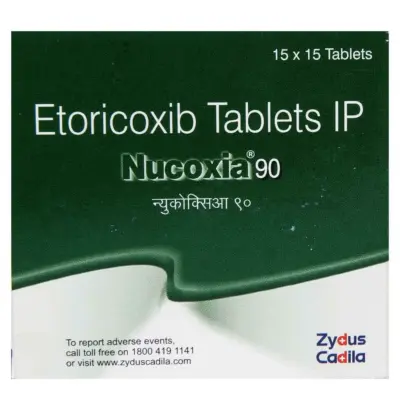
For patients who require ongoing treatment of inflammatory arthritis or chronic musculoskeletal pain beyond the 8-day limit appropriate for 120 mg, Nucoxia 90 mg Tablets provides the approved dose for rheumatoid arthritis, ankylosing spondylitis, and ongoing osteoarthritis management. Patients with acute gout who are not suitable for NSAIDs due to cardiovascular or renal contraindications may need colchicine-based alternatives — explore related anti-inflammatory products in our Anti-Inflammatory category.
References
- Electronic Medicines Compendium (EMC). Arcoxia 120 mg Film-coated Tablets — Summary of Product Characteristics. Available at: https://www.medicines.org.uk/emc
- National Library of Medicine MedlinePlus. Etoricoxib. Available at: https://medlineplus.gov
- Mayo Clinic. Etoricoxib (Oral Route). Available at: https://www.mayoclinic.org
- Schumacher HR Jr, et al. Etoricoxib in the treatment of acute gouty arthritis: a randomized, double-blind, active- and placebo-controlled study. J Rheumatol. 2002;29(9):1927–1934. PubMed PMID: 12213224
- FitzGerald GA, Patrono C. The coxibs, selective inhibitors of cyclooxygenase-2. N Engl J Med. 2001;345(6):433–442. PubMed PMID: 11496855
Reviews
There are no reviews yet.