Description
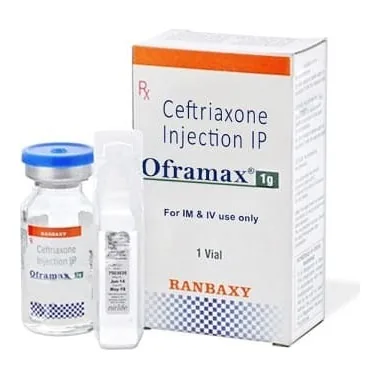
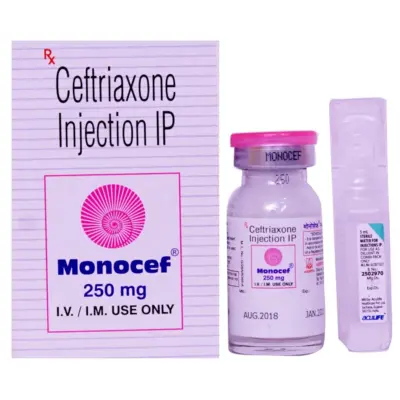
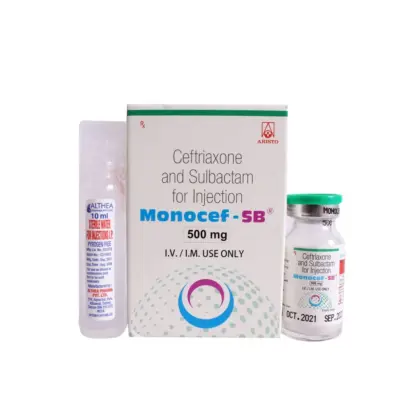
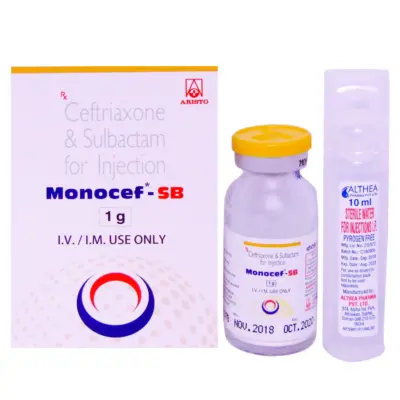
Oframax 1 Gm Injection – Ceftriaxone 1 g
Oframax 1 Gm Injection contains ceftriaxone sodium equivalent to ceftriaxone 1 g, a third-generation cephalosporin antibiotic for parenteral administration. Ceftriaxone is one of the most widely used injectable antibiotics in hospital medicine worldwide, valued for its broad-spectrum bactericidal activity, excellent tissue penetration including the central nervous system, and convenient once-daily dosing made possible by its long plasma half-life of 6–9 hours.
Oframax 1 Gm is administered intravenously (IV) or intramuscularly (IM) for serious bacterial infections including community-acquired pneumonia, meningitis, septicaemia, complicated urinary tract infections, intra-abdominal infections, gonorrhoea, Lyme disease, and surgical prophylaxis.
Mechanism of Action
Ceftriaxone, like all β-lactam antibiotics, kills bacteria by inhibiting bacterial cell wall synthesis. The bacterial cell wall is maintained under high turgor pressure and is essential for bacterial survival. The final step in cell wall synthesis involves the crosslinking of peptidoglycan chains by penicillin-binding proteins (PBPs) — transpeptidase enzymes located on the bacterial cell membrane.
Ceftriaxone binds irreversibly to PBPs, preventing peptidoglycan crosslinking and leaving the bacterial cell wall structurally incomplete. The resulting defective cell wall cannot withstand internal osmotic pressure, leading to cell lysis and death. The bactericidal effect is concentration-dependent (up to a threshold) and time-dependent, with the duration that the drug concentration exceeds the minimum inhibitory concentration (MIC) being the primary pharmacodynamic driver of efficacy.
Compared with earlier cephalosporins, ceftriaxone has enhanced stability against hydrolysis by many β-lactamase enzymes, particularly AmpC-type β-lactamases, extending its activity to a broader range of gram-negative organisms. However, it is hydrolysed by extended-spectrum β-lactamases (ESBLs) produced by some gram-negative rods, limiting its efficacy in ESBL-producing infections.
Antibacterial Spectrum
- Gram-positive: Streptococcus pneumoniae (including penicillin-intermediate strains), Streptococcus pyogenes, Streptococcus agalactiae, viridans streptococci; limited activity against MSSA (less reliable than antistaphylococcal penicillins)
- Gram-negative: Haemophilus influenzae (including β-lactamase-producing strains), Moraxella catarrhalis, Neisseria gonorrhoeae, Neisseria meningitidis, Escherichia coli, Klebsiella pneumoniae, Proteus mirabilis, Enterobacter spp. (variable), Salmonella spp., Shigella spp., Serratia marcescens
- Spirochaetes: Borrelia burgdorferi (Lyme disease), Treponema pallidum (neurosyphilis)
- Not covered: MRSA, Enterococcus spp., ESBL-producing organisms, Pseudomonas aeruginosa (largely resistant), anaerobes (limited activity)
Indications
- Community-acquired pneumonia (CAP): Including pneumococcal pneumonia; often used in combination with a macrolide for atypical organisms
- Bacterial meningitis: First-line empirical therapy (with or without adjunctive dexamethasone); penetrates the blood–brain barrier effectively, particularly when meninges are inflamed
- Septicaemia (bacteraemia): Empirical and definitive treatment
- Complicated urinary tract infections: Pyelonephritis, urosepsis
- Intra-abdominal infections: Used in combination with metronidazole for anaerobic coverage
- Gonorrhoea: Single-dose IM ceftriaxone 500 mg–1 g is the standard of care for uncomplicated gonorrhoea due to increasing fluoroquinolone resistance
- Pelvic inflammatory disease: Combined with doxycycline and metronidazole
- Bone and joint infections: Septic arthritis, osteomyelitis due to susceptible organisms
- Lyme disease (disseminated/neurological): IV ceftriaxone for Lyme arthritis, Lyme carditis, and neuroborreliosis
- Surgical prophylaxis: Single preoperative dose for prevention of surgical site infections
- Typhoid fever (enteric fever): Severe or complicated cases
Dosage and Administration
- Standard adult dose: 1–2 g once daily IV or IM
- Severe infections / meningitis: 2 g once daily or 100 mg/kg/day (not exceeding 4 g/day) IV
- Uncomplicated gonorrhoea: 500 mg–1 g IM as a single dose
- Surgical prophylaxis: 1–2 g IV as a single preoperative dose
- Paediatric dose: 50–75 mg/kg/day IV/IM once daily (up to 100 mg/kg/day for meningitis); not to exceed adult doses
- Renal impairment: No dose adjustment required unless severe combined hepatic and renal impairment
- IV administration: Reconstitute and dilute in compatible solution (0.9% NaCl, 5% dextrose); infuse over 30 minutes
- IM administration: Reconstitute with 1% lidocaine (lignocaine) solution (not for IV use) to reduce injection-site pain; inject into a large muscle mass
- Incompatibility: Never mix ceftriaxone with calcium-containing IV solutions (including Ringer’s lactate or Hartmann’s), or with aminoglycosides in the same line — precipitate formation can occur
Pharmacokinetics
Ceftriaxone is not absorbed orally and must be administered parenterally. Following IV administration, peak plasma concentrations are achieved immediately; following IM injection, Cmax occurs within 2–3 hours with bioavailability approaching 100%.
Ceftriaxone is highly protein-bound (85–95%), predominantly to albumin — a unique characteristic among cephalosporins. This high protein binding prolongs its half-life to 6–9 hours in adults with normal renal and hepatic function, enabling once-daily dosing. Ceftriaxone distributes extensively into tissues, achieving therapeutic concentrations in lungs, bile, synovial fluid, bone, and — during meningeal inflammation — cerebrospinal fluid. Approximately 50% of the administered dose is excreted unchanged in the urine and 40–50% via biliary elimination into the faeces — the dual elimination pathway is clinically relevant because dose adjustment is not needed in isolated renal impairment.
Contraindications
- Known hypersensitivity to ceftriaxone, any cephalosporin, or severe hypersensitivity reaction to any other β-lactam antibiotic (penicillins, carbapenems, monobactams)
- Neonates (premature and full-term) requiring or expected to require calcium-containing IV solutions: Ceftriaxone can displace bilirubin from albumin (risk of kernicterus) and forms precipitates with calcium in neonatal blood vessels and tissues; it is contraindicated with calcium-containing solutions in all ages
- Hyperbilirubinaemia in neonates (ceftriaxone displaces bilirubin from albumin)
Precautions and Warnings
- Hypersensitivity and cross-reactivity: Patients with penicillin allergy have a low but non-negligible cross-reactivity risk (approximately 1–2%). A history of severe immediate penicillin hypersensitivity (anaphylaxis) is a relative contraindication; weigh risk versus benefit
- C. difficile-associated diarrhoea: As with all broad-spectrum antibiotics, can disrupt the normal colonic flora and facilitate C. difficile overgrowth
- Biliary sludging (pseudolithiasis): Ceftriaxone is highly concentrated in bile and can precipitate as a calcium salt in the gallbladder, forming biliary sludge or stones. This is usually reversible on stopping treatment
- Haematological effects: Prolonged use may cause eosinophilia, leucopenia, haemolytic anaemia, or thrombocytopenia; monitor full blood count in prolonged courses
- Superinfection: Prolonged use can lead to overgrowth of non-susceptible organisms (fungi, resistant bacteria)
Adverse Effects
- Common: Injection-site reactions (pain, induration at IM site), elevated liver enzymes, diarrhoea, nausea, rash
- Uncommon: Headache, dizziness, biliary sludging, eosinophilia, leucopenia, thrombocytopenia
- Rare/Serious: Anaphylaxis, haemolytic anaemia, C. difficile colitis, severe skin reactions (Stevens–Johnson syndrome, toxic epidermal necrolysis)
Storage Instructions
- Store the unreconstituted vial below 25°C, away from light and moisture
- Once reconstituted, use immediately or within the time specified in the product literature (typically within 6–12 hours at room temperature or 24 hours refrigerated at 2–8°C, depending on diluent and concentration)
- Keep out of reach of children
- Do not freeze the reconstituted solution
Frequently Asked Questions
Can Oframax 1g be given once daily?
Yes. Ceftriaxone’s long half-life (6–9 hours) allows once-daily IV or IM administration for most indications in adults. This is a major clinical advantage, simplifying outpatient parenteral antibiotic therapy (OPAT) and inpatient regimens.
Why is ceftriaxone mixed with lidocaine for IM injections?
Ceftriaxone IM injections are painful due to the high drug concentration and osmolarity of the solution. Reconstituting with 1% lidocaine (a local anaesthetic) significantly reduces injection-site pain. Lidocaine-reconstituted ceftriaxone must never be given intravenously.
Can I use ceftriaxone in patients with penicillin allergy?
Cross-reactivity between penicillins and cephalosporins is estimated at approximately 1–2% in patients with penicillin allergy. Patients with a history of a mild, non-immediate penicillin reaction (rash) can usually receive ceftriaxone with monitoring. Patients with a history of severe immediate reactions (anaphylaxis, angioedema) warrant extra caution and consideration of alternative antibiotics.
References
- U.S. Food and Drug Administration. Ceftriaxone sodium for injection – prescribing information. Available at: https://www.accessdata.fda.gov/drugsatfda_docs/label/2007/050796s019lbl.pdf
- National Library of Medicine – DailyMed. Ceftriaxone sodium injection. Available at: https://dailymed.nlm.nih.gov/dailymed/search.cfm?labeltype=all&query=ceftriaxone
- MedlinePlus (U.S. National Library of Medicine). Ceftriaxone injection. Available at: https://medlineplus.gov/druginfo/meds/a685032.html
- Bradley JS, et al. The management of community-acquired pneumonia in infants and children: Clinical Infectious Diseases. Pediatr Infect Dis J. 2011;30(7 Suppl):S1–S72.
Reviews
There are no reviews yet.