Description
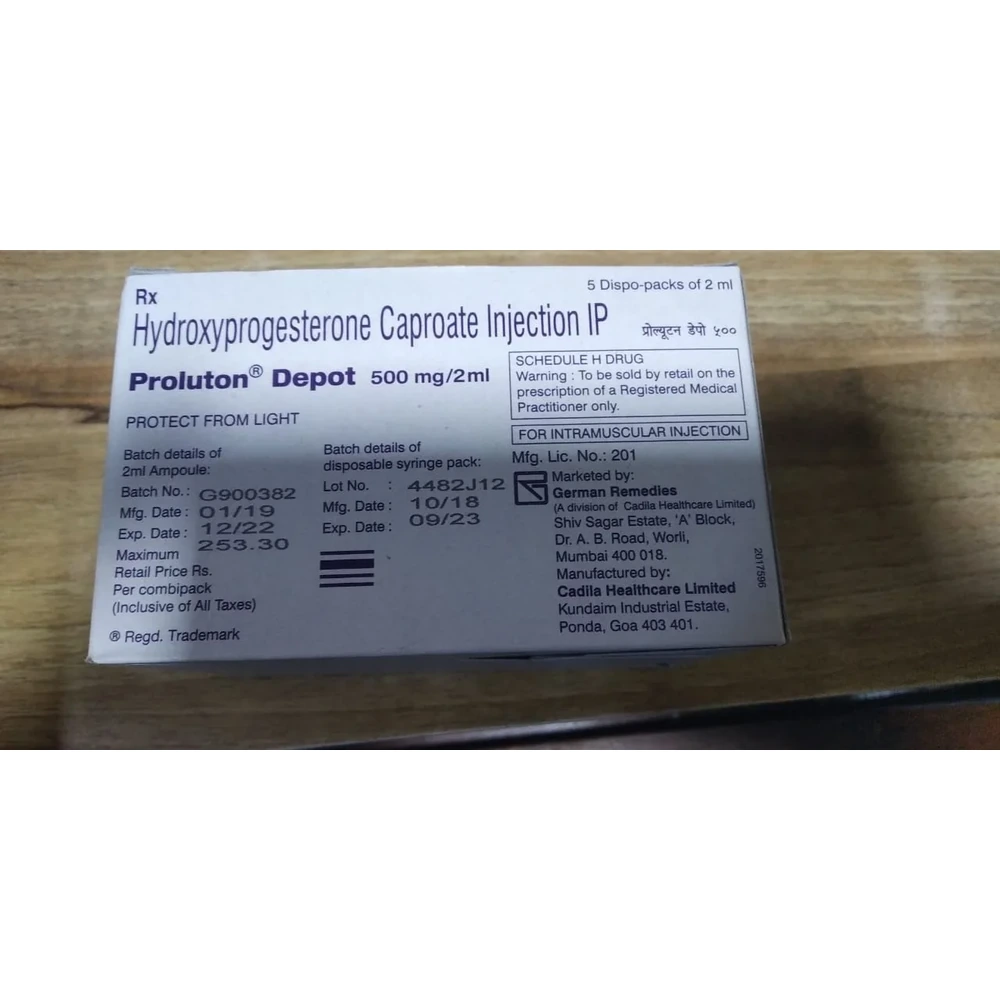
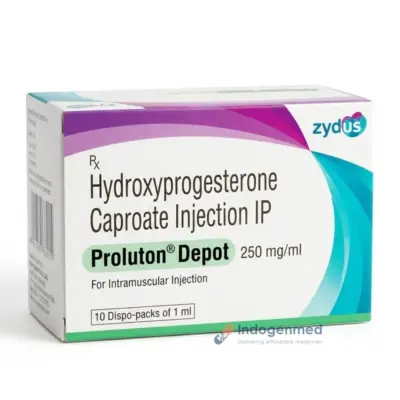
Proluton Depot 500 Mg Injection – Hydroxyprogesterone Caproate 500 mg
Proluton Depot 500 Mg Injection contains hydroxyprogesterone caproate 500 mg/mL, a long-acting synthetic progestogen (progesterone derivative) formulated in an oily vehicle for deep intramuscular injection. Hydroxyprogesterone caproate (17-OHPC) is an esterified form of progesterone with a prolonged duration of action compared to natural progesterone — a single intramuscular dose provides effective progestogenic activity for 1–2 weeks.
Proluton Depot is used in obstetric and gynaecological practice for the prevention of preterm birth in women with a history of spontaneous preterm birth, and for the management of conditions related to progesterone deficiency including threatened and recurrent abortion, dysfunctional uterine bleeding, and endometriosis.
Mechanism of Action
Hydroxyprogesterone caproate exerts its effects through progesterone receptors (PR-A and PR-B) expressed in target tissues including the uterus, cervix, vagina, and breast. After hydrolysis by serum esterases to the active hormone hydroxyprogesterone, it binds to progesterone receptors and exerts the following effects relevant to its clinical indications:
- Uterine quiescence: Progesterone maintains uterine muscle relaxation (tocolytic effect) by reducing the expression of contraction-associated proteins including connexin-43 (gap junctions mediating synchronised uterine contractions), oxytocin receptors, and prostaglandin receptors. This keeps the myometrium in a quiescent state and suppresses coordinated uterine contractions that would lead to preterm labour
- Cervical remodelling suppression: Progesterone inhibits cervical ripening by reducing the inflammatory cytokines and matrix metalloproteinases that promote cervical collagen degradation and cervical shortening in preterm labour
- Endometrial effects: Progesterone induces secretory transformation of the oestrogen-primed endometrium, stabilising the endometrial lining and reducing irregular shedding and bleeding (relevant to dysfunctional uterine bleeding)
- Immunomodulation: Progesterone modulates maternal immune tolerance at the fetomaternal interface, suppressing rejection-type responses and supporting embryonic implantation
Indications
- Prevention of preterm birth: Proluton Depot is recommended for women with a singleton pregnancy and a documented prior history of spontaneous preterm birth (delivery before 37 weeks); initiated typically at 16–20 weeks gestation and continued weekly until 36 weeks
- Threatened and recurrent abortion: Adjunctive progestogen support in women with a history of recurrent miscarriage or in whom threatened abortion is suspected to be progesterone-related
- Dysfunctional uterine bleeding: To arrest and control irregular, excessive, or prolonged uterine bleeding by inducing endometrial secretory transformation
- Endometriosis: As a hormonal suppressive therapy to reduce endometrial implant activity and pain
- Premenstrual syndrome (PMS): Adjunctive support in selected cases related to luteal-phase progesterone deficiency
- Secondary amenorrhoea: To induce a withdrawal bleed and assess endometrial integrity
Dosage and Administration
- Prevention of preterm birth: 250–500 mg (1 mL of 250 mg/mL or 0.5–1 mL of 500 mg/mL) IM once weekly, starting at 16–20 weeks of gestation and continuing until 36 weeks of gestation or delivery
- Threatened and recurrent abortion: 250–500 mg IM once or twice weekly, as directed; often combined with bed rest and other supportive measures
- Dysfunctional uterine bleeding: 250–500 mg IM every 1–2 weeks; adjust to response
- Endometriosis: 500 mg IM every 1–2 weeks; long-term management
Administration notes:
- For deep intramuscular injection only — not for IV or subcutaneous administration
- Inject into a large muscle (gluteus maximus, upper outer quadrant of the buttock); rotate injection sites weekly
- Use an oil-compatible syringe and needle of adequate gauge to draw and inject the viscous oily vehicle
- Allow the product to reach room temperature before injection if stored refrigerated
- Injection-site pain, induration, and nodule formation are common with oily depot injections; warm compresses after injection may help
Pharmacokinetics
After deep intramuscular injection in an oily vehicle, hydroxyprogesterone caproate forms a depot at the injection site from which it is slowly released over 1–2 weeks. The oily vehicle (castor oil or benzyl benzoate-based) delays absorption, providing a sustained-release pharmacokinetic profile.
Circulating hydroxyprogesterone caproate is hydrolysed by serum esterases to hydroxyprogesterone, which exerts progestogenic activity. It is further metabolised in the liver to polar metabolites, which are excreted primarily in the bile and subsequently in the faeces (approximately 50%) and in the urine (approximately 30%). The effective half-life following a single IM dose is approximately 7–10 days, consistent with weekly dosing for maintained serum levels.
Proluton Depot in the Prevention of Preterm Birth — Clinical Evidence
The landmark ACOG-cited Meis et al. trial (NICHD MFMU Network, 2003) demonstrated that weekly IM hydroxyprogesterone caproate 250 mg significantly reduced the rate of recurrent preterm birth before 37 weeks (36.3% vs 54.9% placebo; p<0.001) and before 32 and 35 weeks, with concurrent reductions in neonatal morbidity outcomes. These findings formed the basis for FDA approval of 17-OHPC for preterm birth prevention in the United States and for international guideline recommendations.
Subsequently, the PROLONG trial (2020) did not confirm a significant reduction in preterm birth with 17-OHPC 250 mg versus placebo in a larger, more diverse population, leading the FDA to reassess the indication. The European and other international guidelines continue to recommend 17-OHPC for women with singleton pregnancies and a previous spontaneous preterm birth, with the understanding that the clinical benefit may be most pronounced in populations similar to the original Meis trial cohort.
Contraindications
- Known hypersensitivity to hydroxyprogesterone caproate, progesterone, any other progestogen, castor oil, benzyl benzoate, or any excipient
- Current or history of thrombophlebitis, thromboembolic disorders, or cerebrovascular disease
- Known or suspected oestrogen- or progestogen-dependent malignancies (breast cancer, uterine cancer)
- Undiagnosed abnormal vaginal bleeding
- Severe hepatic disease (impaired hepatic function)
- Missed abortion (use in a non-viable pregnancy should be avoided)
- Patients with current or history of depression (use with caution)
Precautions and Warnings
- Depression: Progestogens may worsen depression in susceptible patients; monitor mood during treatment
- Fluid retention: As with all progestogens, fluid retention can occur; use with caution in cardiac or renal disease, epilepsy, migraine, and diabetes
- Glucose tolerance: May alter glucose tolerance; monitor blood glucose in patients with diabetes mellitus
- Lipid effects: Progestogens may affect lipid profiles; monitor in patients with dyslipidaemia
- Injection-site reactions: Pain, induration, pruritus, swelling, bruising, and rarely nodule formation are common at IM injection sites; rotation of sites is essential
- Allergic reactions: Due to the castor oil/benzyl benzoate vehicle, hypersensitivity reactions including urticaria and anaphylaxis can occur; have emergency equipment available
Adverse Effects
- Common: Injection-site pain, swelling, pruritus, and nodule formation; nausea; urticaria; breakthrough bleeding or spotting; breast tenderness
- Uncommon: Depression, mood changes, oedema, weight gain, dizziness, headache, fatigue, changes in libido
- Rare/Serious: Thromboembolic events, allergic reactions (anaphylaxis), jaundice, serious depression, glucose intolerance
Storage Instructions
- Store between 15–30°C; some formulations require refrigeration (2–8°C) — check individual product labelling
- Protect from light; store in the outer carton
- Do not freeze
- Keep out of reach of children
- Discard any unused solution from opened vials
Frequently Asked Questions
When is Proluton Depot typically started in pregnancy?
For preterm birth prevention, Proluton Depot injections are typically initiated between 16 and 20 weeks of gestation and continued weekly until 36 weeks of gestation or delivery, whichever comes first. Early initiation is important to maintain uterine quiescence before the period of maximum preterm birth risk.
Is weekly IM injection the only delivery method for hydroxyprogesterone caproate?
Proluton Depot is an IM depot formulation designed for weekly injection. Alternative progestogen formulations for preterm birth prevention include vaginal progesterone pessaries or gel (used primarily in women with short cervical length rather than prior preterm birth history). Your obstetrician will select the formulation appropriate to your clinical situation.
Can the injection-site pain from Proluton Depot be reduced?
Yes. Warming the vial to room temperature before injection, using a slow injection technique, and applying a warm compress after injection all help reduce pain. Rotating injection sites each week also prevents localised tissue reactions and fibrosis.
References
- Meis PJ, et al. Prevention of recurrent preterm delivery by 17 alpha-hydroxyprogesterone caproate. N Engl J Med. 2003;348(24):2379–2385.
- Electronic Medicines Compendium (eMC). Proluton Depot 500 mg/mL solution for injection – summary of product characteristics. Available at: https://www.medicines.org.uk/emc/
- National Library of Medicine – DailyMed. Hydroxyprogesterone caproate injection. Available at: https://dailymed.nlm.nih.gov/dailymed/search.cfm?labeltype=all&query=hydroxyprogesterone+caproate
- MedlinePlus (U.S. National Library of Medicine). Hydroxyprogesterone injection. Available at: https://medlineplus.gov/druginfo/meds/a612006.html
Reviews
There are no reviews yet.