Description
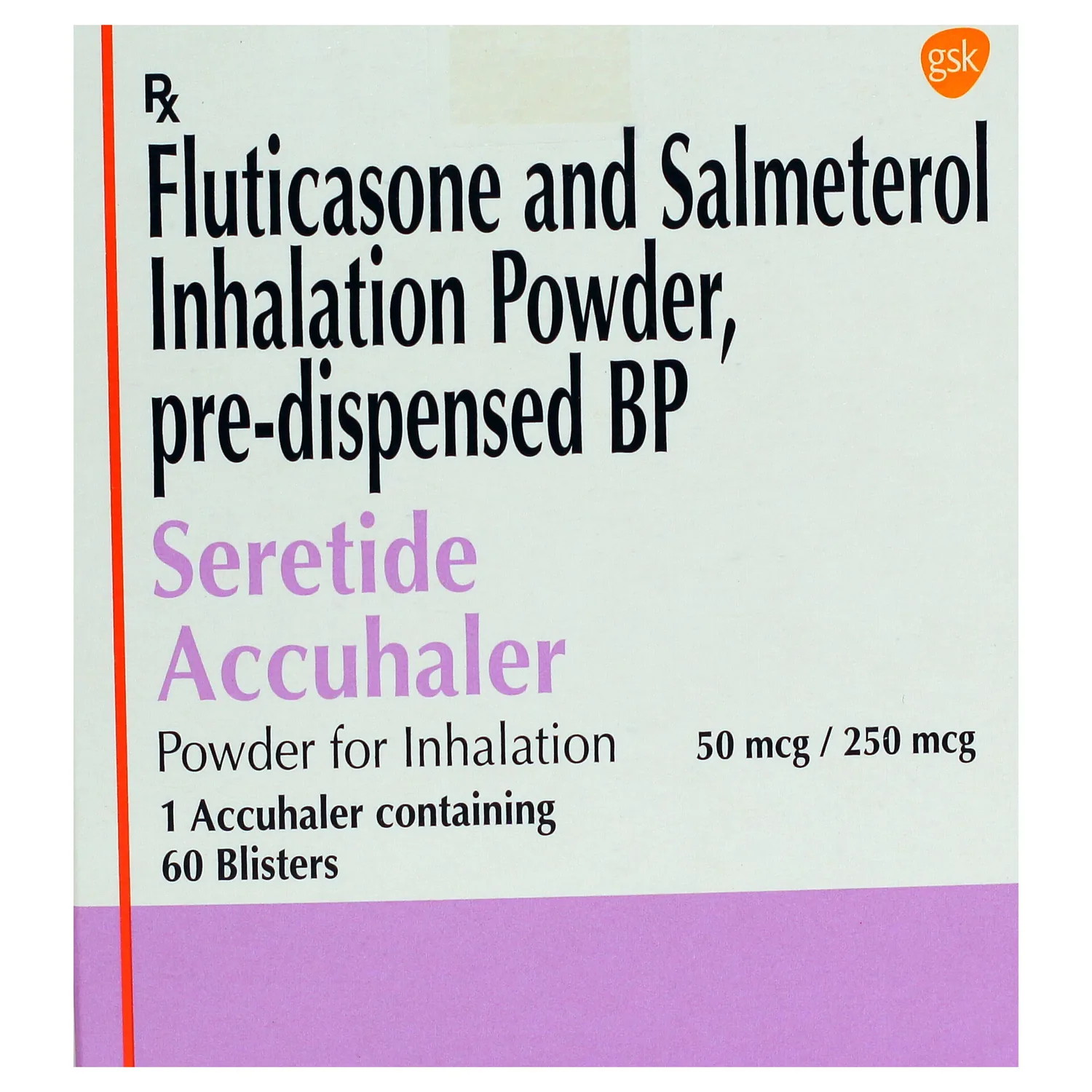
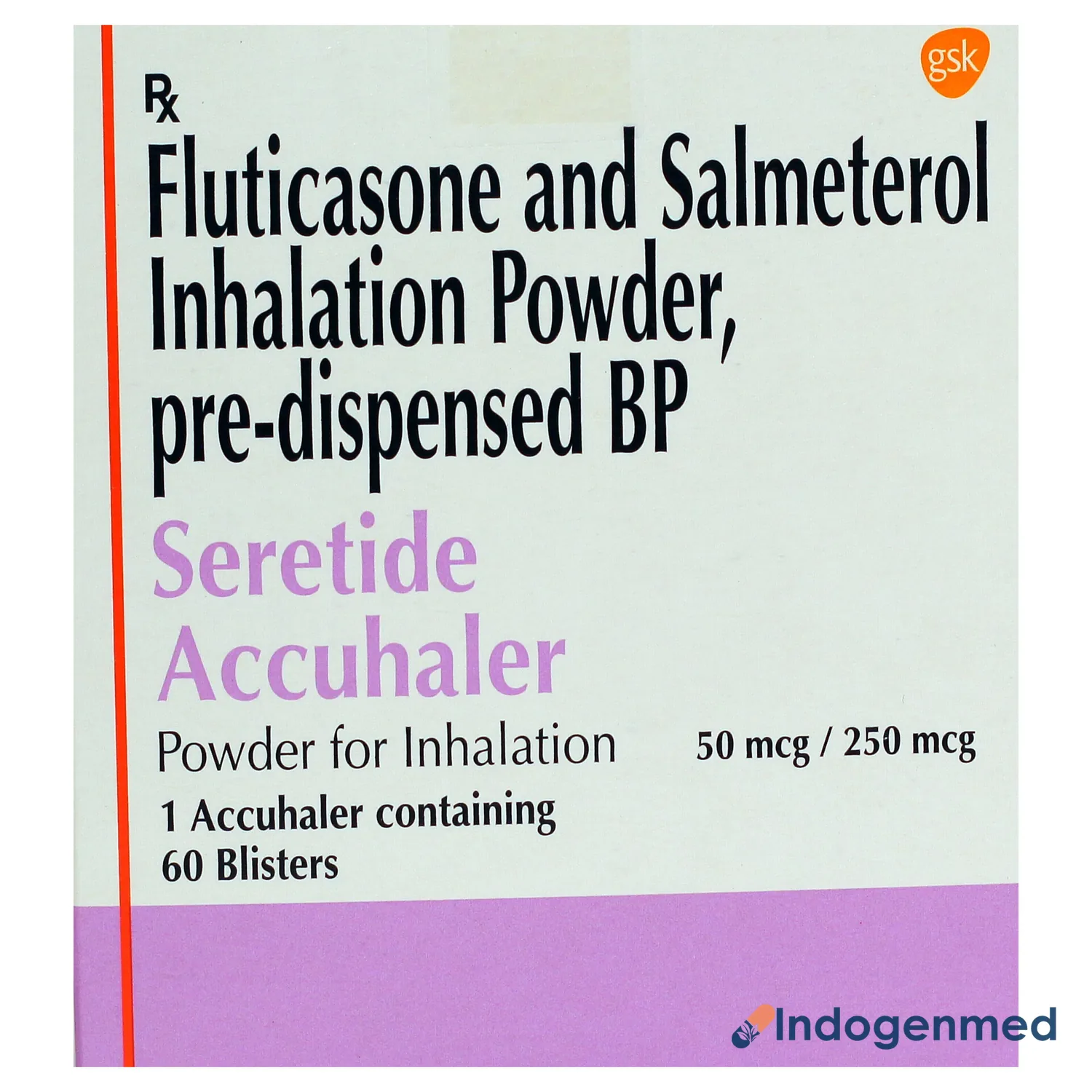
Seretide 50/250 Mcg Inhaler — Salmeterol 50 mcg and Fluticasone Propionate 250 mcg for Asthma and COPD
Seretide 50/250 Mcg Inhaler is a fixed-dose combination pressurised metered-dose inhaler (pMDI) containing two active ingredients: salmeterol 50 mcg and fluticasone propionate 250 mcg per actuation. Each inhalation delivers both a long-acting beta₂-adrenoceptor agonist (LABA) bronchodilator and an inhaled corticosteroid (ICS) simultaneously, addressing the two principal pathophysiological abnormalities in obstructive airway disease — reversible bronchoconstriction and airway inflammation — with a single device.
Seretide is manufactured by GlaxoSmithKline (GSK), one of the world’s leading research-based pharmaceutical companies. The brand has been available globally since the late 1990s and is among the most extensively studied inhaler combinations in respiratory medicine. Seretide is available in several inhaler types (pMDI Evohaler and Accuhaler dry powder inhaler) and multiple strength combinations. The 50/250 mcg strength (salmeterol 50 mcg + fluticasone propionate 250 mcg) is the medium ICS dose strength, positioned between the 50/100 mcg and 50/500 mcg formulations, and is widely used in both asthma and chronic obstructive pulmonary disease (COPD) management.
The rationale for combining a LABA with an ICS in a single inhaler is both pharmacological and practical. Clinically, LABAs and ICS have complementary and synergistic mechanisms in obstructive airway disease: salmeterol produces sustained bronchodilation while fluticasone propionate reduces underlying eosinophilic and neutrophilic airway inflammation. The two drugs interact at the molecular level — corticosteroids upregulate beta₂-receptor expression and prevent LABA-induced receptor downregulation, while LABAs facilitate glucocorticoid receptor nuclear translocation, enhancing anti-inflammatory gene transcription. Practically, a single combination inhaler improves adherence compared with two separate devices and eliminates the risk that a patient uses a LABA without concurrent ICS protection.
Composition of Seretide 50/250 Mcg Inhaler
Each actuation (metered dose) of Seretide 50/250 Mcg pMDI delivers:
- Salmeterol xinafoate equivalent to salmeterol 50 mcg — long-acting beta₂-adrenoceptor agonist (LABA), bronchodilator component
- Fluticasone propionate 250 mcg — inhaled corticosteroid (ICS), anti-inflammatory component
- Propellant: HFA 134a (norflurane) — hydrofluoroalkane propellant, chlorofluorocarbon-free formulation
- Excipients: anhydrous ethanol, lecithin (soya) — suspension stabilisers
Salmeterol: Molecular formula C₂₅H₃₇NO₄, molecular weight 415.6 g/mol (as free base). A racemic mixture; the R-enantiomer is the pharmacologically active component. Supplied as salmeterol xinafoate salt for stability.
Fluticasone propionate: Molecular formula C₂₅H₃₁F₃O₅S, molecular weight 500.6 g/mol. A synthetic trifluorinated glucocorticoid with a thioester at C-17, conferring high lipophilicity and prolonged lung tissue retention. Negligible oral bioavailability (<1%) due to extensive first-pass hepatic metabolism, making inhaled delivery the only clinically meaningful route.
How Seretide 50/250 Works — Mechanism of Action
Salmeterol — Long-Acting Beta₂-Adrenoceptor Agonist
Salmeterol is a highly selective, full agonist at beta₂-adrenoceptors expressed in bronchial smooth muscle, mast cells, and airway epithelium. Its molecular structure comprises a saligenin head group that occupies the agonist binding pocket of the receptor and an extended lipophilic side chain (the phenylbutylaminoethyl moiety) that anchors the molecule within the lipid bilayer of the cell membrane adjacent to the receptor. This exosite interaction accounts for salmeterol’s prolonged duration of action (up to 12 hours) compared with short-acting beta₂ agonists (SABAs) such as salbutamol, which dissociate rapidly from the receptor.
Beta₂-receptor activation by salmeterol stimulates adenylyl cyclase through the Gₛ-protein second messenger pathway, increasing intracellular cyclic adenosine monophosphate (cAMP). Elevated cAMP activates protein kinase A (PKA), which phosphorylates myosin light chain kinase (MLCK), reducing its activity and preventing actin-myosin cross-bridge formation. The net result is relaxation of airway smooth muscle, bronchial lumen widening, and reduced airflow resistance. Additional beta₂-mediated effects include stabilisation of mast cell membranes (reducing immediate bronchospasm trigger response), stimulation of mucociliary clearance, and inhibition of microvascular permeability.
Unlike short-acting bronchodilators used for relief of acute symptoms, salmeterol is classified as a controller medication. Its onset of bronchodilation is slower than salbutamol (approximately 10–20 minutes versus 1–5 minutes), but it provides sustained 12-hour bronchodilation suitable for twice-daily maintenance dosing. Salmeterol should not be used as a rescue medication for acute bronchospasm — salbutamol or another SABA is required for that purpose.
Fluticasone Propionate — Inhaled Corticosteroid
Fluticasone propionate exerts anti-inflammatory effects by binding to the intracellular glucocorticoid receptor (GR), a member of the nuclear receptor superfamily. The drug-receptor complex undergoes a conformational change that enables nuclear translocation and binding to glucocorticoid response elements (GREs) in the promoter regions of target genes. This transactivation activity upregulates the expression of anti-inflammatory proteins including annexin-1 (lipocortin-1), secretory leukocyte protease inhibitor, and beta₂-adrenoceptors. The receptor complex also binds to negative GREs and interacts with pro-inflammatory transcription factors (NF-κB, AP-1) through transrepression, reducing the expression of cytokines (IL-4, IL-5, IL-13, TNF-α), chemokines, adhesion molecules, and inflammatory enzymes (COX-2, phospholipase A₂).
In asthmatic airways, the downstream effects of fluticasone propionate include reduced eosinophil recruitment and survival (via decreased IL-5 and eotaxin production), reduced mast cell mediator release, decreased goblet cell hyperplasia and mucus hypersecretion, suppression of subepithelial fibrosis and airway remodelling, and restoration of impaired epithelial barrier function. These anti-inflammatory effects accumulate over weeks of regular use — the full clinical benefit of ICS therapy is typically not achieved until 1–2 weeks after initiation, though measurable improvements in airway hyperresponsiveness can be detected within days.
Fluticasone propionate is highly lipophilic, enabling deep penetration into airway tissue and prolonged local retention (pulmonary half-life of approximately 7–8 hours). Its very high receptor binding affinity (relative receptor affinity approximately 1800 compared to 100 for dexamethasone) allows clinical efficacy at low inhaled doses. After inhalation, the fraction deposited in the lung (approximately 10–15% of the metered dose, depending on inhaler technique) is absorbed into the systemic circulation; the swallowed fraction undergoes near-complete first-pass hepatic inactivation (<1% oral bioavailability), markedly limiting systemic corticosteroid exposure compared with oral or parenteral corticosteroids.
Pharmacological Synergy of the Combination
The ICS/LABA combination in Seretide provides effects that exceed the sum of each component alone. At the molecular level, fluticasone propionate increases beta₂-receptor gene expression (a GRE-mediated transactivation effect), increasing the density of functional beta₂-receptors on airway smooth muscle cells and thereby augmenting salmeterol’s bronchodilatory efficacy. Conversely, salmeterol phosphorylates the GR at serine-211 through cAMP/PKA-mediated signalling, increasing GR affinity for GREs and enhancing the anti-inflammatory transcriptional activity of fluticasone propionate. These molecular cross-talk mechanisms translate into clinical synergy: randomised trials have consistently demonstrated greater improvements in lung function (FEV₁), symptom scores, rescue inhaler use, and exacerbation rates with ICS/LABA combination therapy compared with either component alone at equivalent doses.
Pharmacokinetics
Salmeterol
- Pulmonary deposition: Approximately 10–15% of the metered dose reaches the lower respiratory tract
- Systemic absorption: From both pulmonary deposition and swallowed fraction absorbed via the GI tract; total systemic exposure low
- Protein binding: Approximately 96% bound to plasma proteins
- Metabolism: Extensive hepatic hydroxylation via CYP3A4; active metabolite α-hydroxysalmeterol also formed
- Elimination half-life: Approximately 5–6 hours for salmeterol; duration of bronchodilatory effect 12 hours due to exosite anchorage
- Excretion: Approximately 60% in faeces, approximately 25% in urine as metabolites over 7 days
Fluticasone Propionate
- Pulmonary deposition: Approximately 10–15% of metered dose; the remainder is deposited in the oropharynx and swallowed
- Oral bioavailability: Less than 1% (extensive first-pass hepatic inactivation via CYP3A4); swallowed fraction makes negligible contribution to systemic exposure
- Systemic bioavailability (inhaled): Approximately 10–30% of the inhaled (pulmonary) fraction enters the systemic circulation
- Volume of distribution: Approximately 318 litres; extensive tissue distribution due to high lipophilicity
- Protein binding: Approximately 91%
- Metabolism: CYP3A4-mediated hepatic metabolism to 17β-carboxylic acid (pharmacologically inactive)
- Elimination half-life: Approximately 8 hours (systemic)
- Excretion: Primarily faecal
Uses and Indications
Asthma
Seretide 50/250 Mcg Inhaler is indicated as regular maintenance treatment for asthma in adults and adolescents aged 12 years and over who are not adequately controlled on ICS alone, or in patients already receiving both a LABA and an ICS. The 250 mcg fluticasone propionate dose per actuation (500 mcg daily with twice-daily dosing) corresponds to a medium-to-high ICS dose in standard treatment guidelines (GINA). It is appropriate for patients with persistent asthma who require more than low-dose ICS to maintain control, including those with frequent daytime symptoms, nocturnal waking, activity limitation, or frequent exacerbations on lower ICS doses.
Seretide is a maintenance (controller) medication only and must not be used to relieve acute asthma symptoms. All patients using Seretide should carry a short-acting beta₂ agonist (SABA) rescue inhaler for acute symptom relief.
Chronic Obstructive Pulmonary Disease (COPD)
Seretide 50/250 Mcg Inhaler is also indicated for the symptomatic treatment of COPD (including chronic bronchitis and emphysema) in adults with an FEV₁ less than 60% predicted post-bronchodilator (prior to treatment) and a history of repeated COPD exacerbations in patients who have significant symptoms despite regular bronchodilator therapy. In COPD, the fluticasone propionate component reduces exacerbation frequency by suppressing neutrophilic and eosinophilic airway inflammation, while salmeterol provides sustained bronchodilation and improvement in exercise tolerance.
Dosage and Administration
How to Use the pMDI Inhaler
- Shake the inhaler well for 5 seconds before each use
- Remove the mouthpiece cap
- Breathe out slowly and fully (but not into the inhaler)
- Place the mouthpiece between the lips, forming a good seal
- Begin to breathe in slowly and steadily through the mouth, and simultaneously press down on the canister once to release one actuation
- Continue breathing in slowly and steadily after firing the inhaler
- Remove the inhaler from the mouth and hold the breath for approximately 10 seconds (or as long as comfortable) to maximise drug deposition in the lower airways
- Breathe out slowly through the nose
- Wait at least 30 seconds before taking the second actuation if two puffs are required
- Replace the mouthpiece cap after use
- Rinse the mouth with water (do not swallow) after each use to minimise the risk of oropharyngeal candidiasis and dysphonia from local corticosteroid deposition
- Use a spacer device (valved holding chamber) where available — a spacer improves lower airway delivery and reduces oropharyngeal deposition, particularly useful for patients who struggle with inhaler coordination
Recommended Doses
- Asthma — Adults and adolescents ≥12 years: Two inhalations (100 mcg salmeterol + 500 mcg fluticasone propionate total daily) twice daily, morning and evening — this is the standard twice-daily maintenance dosing
- COPD — Adults: Two inhalations twice daily
- Children under 12 years: Lower-strength formulations of Seretide or other appropriate inhaled combinations should be used as directed by a physician. The 250 mcg fluticasone strength in this product is not standard for young children.
- Do not use more frequently than twice daily
- Do not stop Seretide abruptly — dose should be stepped down gradually under medical supervision if discontinuation is planned
Side Effects
Common Side Effects
- Oropharyngeal candidiasis (oral thrush): Deposition of fluticasone propionate in the mouth and throat can suppress local immune defences and allow overgrowth of Candida albicans. Presents as white patches on the tongue, inner cheeks, or palate, with soreness or difficulty swallowing. Prevention: rinse the mouth with water and spit after every use; use a spacer device. Treatment: antifungal lozenges or suspension (nystatin, clotrimazole, or fluconazole) prescribed by a physician.
- Dysphonia (hoarseness): Corticosteroid-induced myopathy of laryngeal muscles, or candidal involvement of the larynx. Usually mild and reversible. Rinsing the mouth after use and using a spacer reduces incidence.
- Headache: Common with beta₂ agonist bronchodilators; usually mild and transient.
- Tremor: Fine hand tremor from systemic beta₂ receptor stimulation by salmeterol. More pronounced at higher doses; usually mild.
- Palpitations: Increased heart rate from beta₂ receptor stimulation. Typically mild with inhaled salmeterol at standard doses.
- Throat irritation and coughing: From inhalation of propellant and particles. Using a spacer reduces this significantly.
- Upper respiratory tract infections: Slightly increased susceptibility from local immunosuppressive effect of ICS.
Less Common Side Effects
- Muscle cramps (salmeterol, via skeletal muscle beta₂ receptors)
- Hypokalaemia (salmeterol-mediated intracellular potassium shift; additive with concomitant methylxanthines or loop/thiazide diuretics)
- Tachycardia, arrhythmias (beta₂ agonist class effect at higher systemic exposures)
- Paradoxical bronchospasm — if inhalation causes immediate worsening of wheeze or breathlessness, stop the inhaler and use a SABA; seek medical review before continuing Seretide
- Skin bruising, skin thinning (systemic corticosteroid effect with higher ICS doses, especially in elderly)
- Cataract formation (long-term ICS use)
Serious Adverse Effects — Medical Review Required
- Adrenal suppression: Prolonged use of high-dose ICS can suppress the hypothalamic-pituitary-adrenal (HPA) axis. Clinically significant adrenal insufficiency is uncommon at standard doses of fluticasone propionate but may occur in patients on prolonged high-dose ICS, those receiving systemic corticosteroids concurrently, or those exposed to potent CYP3A4 inhibitors such as ritonavir or ketoconazole that substantially increase systemic fluticasone exposure. Patients should carry a steroid emergency card if at risk. Advise patients not to abruptly discontinue Seretide during stressful illness without medical guidance.
- Decreased bone mineral density: Long-term high-dose ICS therapy, particularly in post-menopausal women, men over 65, smokers, and patients with other osteoporosis risk factors, can reduce bone mineral density. Bone density monitoring and calcium/vitamin D supplementation should be considered in high-risk patients on long-term high-dose ICS.
- Growth retardation in children: ICS at high doses can slow linear growth velocity in children. Use the lowest effective ICS dose and monitor growth in paediatric patients. The 250 mcg strength is generally not recommended for children under 12.
- Cardiovascular effects: Although salmeterol at standard inhaled doses has a good cardiovascular safety profile in stable patients, it should be used with caution in patients with pre-existing cardiovascular disease (ischaemic heart disease, arrhythmias, hypertension), as systemic beta₂ stimulation can exacerbate these conditions. The SMART trial raised concerns about increased asthma-related deaths with salmeterol monotherapy (without ICS); this risk is considered absent when salmeterol is used in fixed combination with ICS (as in Seretide).
- Hyperglycaemia: Corticosteroids can raise blood glucose. Monitor blood glucose in patients with diabetes mellitus using long-term ICS.
- Glaucoma and increased intraocular pressure: Rare with ICS at standard doses; monitor in patients with a history of glaucoma or raised intraocular pressure.
- Paradoxical bronchospasm: Immediate worsening of airflow obstruction on inhalation. Treat with a SABA and discontinue Seretide if this occurs.
Precautions and Warnings
- Not for acute relief: Seretide is a maintenance inhaler, not a rescue inhaler. All patients must have a short-acting beta₂ agonist (SABA — salbutamol, albuterol, or equivalent) for relief of acute symptoms. Increasing frequency of SABA use indicates worsening asthma control and should trigger medical review, not an increase in Seretide frequency.
- Rinse mouth after every use: To minimise oropharyngeal candidiasis and dysphonia, rinse the mouth with water and spit out after each use. This should be explained to patients at initiation.
- Cardiovascular disease: Use with caution in patients with known or suspected cardiovascular disease, particularly ischaemic heart disease, hypertrophic obstructive cardiomyopathy, arrhythmias, or QTc prolongation.
- Diabetes: Systemic corticosteroid effects from ICS can raise blood glucose, particularly at higher doses. Monitor glucose control in diabetic patients.
- Hypokalaemia risk: Beta₂ agonists cause intracellular potassium shift. This effect is additive with methylxanthines (theophylline, aminophylline), loop diuretics, and thiazide diuretics. Monitor potassium in patients at risk, particularly during acute severe asthma, where hypoxia further worsens hypokalaemia.
- Thyrotoxicosis: Beta₂ agonist tachycardia and other cardiovascular effects can be exacerbated in patients with hyperthyroidism. Assess thyroid function before initiating salmeterol in suspected thyrotoxicosis.
- Phaeochromocytoma: Salmeterol should be used with caution in patients with known or suspected phaeochromocytoma due to cardiovascular stimulatory risk.
- Stepping down ICS dose: Do not abruptly stop Seretide or reduce the ICS dose without medical supervision. In asthma, rapid ICS withdrawal can precipitate exacerbation. In patients who have been on high-dose ICS for prolonged periods, there is a risk of adrenal insufficiency if the dose is reduced too rapidly.
- Spacer device: Use of a spacer (valved holding chamber) is strongly recommended with the pMDI inhaler. It improves inhaler technique efficiency, increases pulmonary drug deposition, and reduces oropharyngeal steroid deposition and associated local side effects.
- Pregnancy and breastfeeding: Inhaled ICS/LABA combinations are generally considered acceptable for use during pregnancy in women with asthma requiring controller therapy — poorly controlled asthma poses greater risks to the mother and foetus than inhaled therapy at standard doses. Use the lowest effective dose and ensure regular obstetric and respiratory follow-up. Consult a physician before use in pregnancy.
Drug Interactions
- Potent CYP3A4 inhibitors (ritonavir, ketoconazole, itraconazole, voriconazole, cobicistat, clarithromycin): These agents substantially inhibit the hepatic metabolism of fluticasone propionate, markedly increasing systemic fluticasone exposure. This can lead to clinically significant adrenal suppression, Cushingoid features, and hypothalamic-pituitary-adrenal (HPA) axis suppression. Avoid co-administration of ritonavir or ritonavir-containing HIV regimens with Seretide where possible. If unavoidable, use the lowest effective fluticasone dose and monitor for signs of systemic corticosteroid excess.
- Beta-blockers (including eye drops for glaucoma — timolol, betaxolol): Non-selective beta-blockers (propranolol, atenolol, metoprolol, nadolol, sotalol, carvedilol) antagonise the bronchodilator effects of salmeterol and may precipitate severe bronchospasm in patients with asthma or COPD. Even cardioselective beta-blockers carry some risk in patients with significant obstructive airway disease. Avoid if possible; if a beta-blocker is clinically essential, use the most cardioselective agent and monitor respiratory function closely.
- Sympathomimetics and other beta₂ agonists: Additive adrenergic cardiovascular effects (tachycardia, hypertension, arrhythmias). Avoid concurrent use of other LABAs. Use SABA rescue inhalers only as needed, not on a scheduled basis alongside Seretide.
- Methylxanthines (theophylline, aminophylline): Additive hypokalaemic effect with salmeterol. Monitor potassium levels. Also additive cardiovascular stimulation.
- Loop and thiazide diuretics: Additive hypokalaemic effect. Monitor potassium.
- MAO inhibitors and tricyclic antidepressants: Potentiate vascular effects of beta₂ agonists. Use salmeterol with caution within 2 weeks of stopping an MAOI.
- Oral, inhaled, or systemic corticosteroids: Additive systemic corticosteroid effects, increasing risk of HPA axis suppression and systemic side effects. Minimise concurrent systemic corticosteroid exposure where possible.
- Digoxin: Salmeterol-induced hypokalaemia may increase digoxin toxicity risk. Monitor potassium and digoxin levels in patients on both drugs.
Contraindications
- Hypersensitivity to salmeterol, fluticasone propionate, or any excipient in the formulation (including soya-derived lecithin — patients with soya or peanut allergy should inform their physician before use)
- Seretide is not licensed as a first-line treatment for mild asthma where low-dose ICS alone would provide adequate control
- Not for use as rescue bronchodilator — do not use for acute bronchospasm or acute asthma attacks
- Children under 4 years for the pMDI formulation; appropriate age restrictions apply depending on specific indication and national prescribing guidelines
- Active or quiescent pulmonary tuberculosis — high-dose ICS can suppress local immune defences and reactivate TB; Seretide should be used with caution (not necessarily absolutely contraindicated) in patients with TB history and only under specialist supervision
Storage Instructions
- Store below 30°C; do not refrigerate or freeze — cold temperatures can affect HFA propellant and reduce dose delivery
- Keep away from direct sunlight and heat — do not expose to temperatures above 50°C, including direct sunlight through glass
- The pressurised canister is under pressure — do not pierce, break, or incinerate even when empty
- Store with the mouthpiece cap in place and in an upright position when not in use
- Keep out of reach of children
- Do not use after the expiry date printed on the inhaler and outer packaging
- The inhaler has a dose counter — replace when the counter reads 0 (empty)
- Prime the inhaler before first use and after periods of non-use: shake well and release two test sprays away from the face
Related Products
- Seretide DC 50 Mcg/250 Mcg Inhaler — the Diskus/Accuhaler dry powder inhaler (DPI) format of the same salmeterol 50 mcg + fluticasone propionate 250 mcg combination; preferred by patients who find coordination with pMDI difficult
- Malegra 25 Mg Tablets — sildenafil 25 mg for erectile dysfunction; starting dose for sensitive patients
- Duratia 30 Mg Tablets — dapoxetine 30 mg for premature ejaculation
References
- U.S. National Library of Medicine. DailyMed — Fluticasone propionate and salmeterol inhalation aerosol (Advair HFA). Available at: https://dailymed.nlm.nih.gov/dailymed/search.cfm?labeltype=all&query=fluticasone+salmeterol+inhalation
- MedlinePlus (U.S. National Library of Medicine). Fluticasone and Salmeterol Oral Inhalation. Available at: https://medlineplus.gov/druginfo/meds/a601063.html
- Mayo Clinic. Fluticasone and Salmeterol (Inhalation Route) — Proper Use, Side Effects, Precautions. Available at: https://www.mayoclinic.org/drugs-supplements/fluticasone-and-salmeterol-inhalation-route/proper-use/drg-20068251
- Electronic Medicines Compendium (EMC). Seretide 50 Evohaler — Summary of Product Characteristics (SmPC). Available at: https://www.medicines.org.uk/emc/search?q=seretide+evohaler
- U.S. Food and Drug Administration. Advair HFA (fluticasone propionate 115 mcg/salmeterol 21 mcg) inhalation aerosol full prescribing information. Available at: https://www.accessdata.fda.gov/drugsatfda_docs/label/2012/021077s064lbl.pdf
- Calverley PM, Anderson JA, Celli B, et al. Salmeterol and fluticasone propionate and survival in chronic obstructive pulmonary disease. New England Journal of Medicine. 2007;356(8):775–789. Available at: https://pubmed.ncbi.nlm.nih.gov/17314337/
- Global Initiative for Asthma (GINA). Global Strategy for Asthma Management and Prevention — 2024 Update. Available at: https://ginasthma.org/reports/
Reviews
There are no reviews yet.