Description
What Is Serobid 25 mcg Inhaler?
Serobid 25 mcg Inhaler contains salmeterol 25 mcg per actuation as a metered-dose inhaler (MDI). Salmeterol is a long-acting beta-2 adrenoceptor agonist (LABA) — one of the two foundational bronchodilator classes in modern asthma and chronic obstructive pulmonary disease (COPD) management. Each actuation delivers salmeterol xinafoate equivalent to 25 mcg salmeterol base, the standard MDI dose established in landmark clinical trials. Serobid is a widely used Indian brand of salmeterol MDI manufactured for IndoGenMed’s target markets. Salmeterol was introduced in 1990 and remains a cornerstone of step-up therapy in asthma management guidelines including GINA (Global Initiative for Asthma) and GOLD (Global Initiative for Chronic Obstructive Lung Disease), and is listed on the WHO Essential Medicines List. The 25 mcg MDI formulation is used both as monotherapy bronchodilator maintenance and, more commonly, as the salmeterol component in fixed-dose combination inhalers (see Seroflo range below).
Mechanism of Action
Salmeterol is a highly selective, full agonist at beta-2 adrenergic receptors in bronchial smooth muscle. Its molecular structure includes a long lipophilic side chain that anchors it to an exosite on the beta-2 receptor adjacent to the active binding site, conferring a prolonged duration of action of approximately 12 hours — fundamentally different from the short-acting beta-2 agonists (SABAs) such as salbutamol (albuterol), which dissociate rapidly and produce bronchodilation for only 4–6 hours.
Beta-2 receptor activation by salmeterol stimulates adenylate cyclase via Gs protein coupling, increasing intracellular cyclic AMP (cAMP). Elevated cAMP activates protein kinase A (PKA), which phosphorylates myosin light-chain kinase (MLCK) and other targets, reducing myosin–actin cross-bridge formation and causing smooth muscle relaxation and bronchodilation. Additional effects include:
- Stabilisation of mast cells and reduced mediator release (anti-inflammatory adjunct effect)
- Enhancement of mucociliary clearance
- Reduced microvascular permeability in bronchial mucosa
- Inhibition of cholinergic neurotransmission (indirect bronchoprotective effect)
The onset of bronchodilation with salmeterol is approximately 10–20 minutes after inhalation — slower than SABAs (which act within 1–5 minutes) — which is the pharmacological basis for the fundamental rule: salmeterol must never be used as a rescue bronchodilator. It is a maintenance agent only.
Indications
- Asthma (maintenance therapy — Step 3 and above): Addition of a LABA to inhaled corticosteroid (ICS) therapy (ICS+LABA combination) is the recommended step-up from low-dose ICS monotherapy in adults and adolescents whose asthma is not controlled on ICS alone. GINA guidelines recommend using salmeterol in a fixed-dose ICS/LABA combination rather than as separate inhalers. The Serobid 25 mcg MDI provides salmeterol alone for use alongside a separate ICS inhaler
- COPD maintenance therapy: LABA bronchodilators are first-line pharmacological treatment for COPD. Salmeterol reduces breathlessness, improves exercise tolerance, reduces exacerbation frequency, and improves health-related quality of life in COPD patients
- Exercise-induced bronchospasm (EIB) prevention: A single dose of salmeterol 50 mcg (two actuations of the 25 mcg MDI) taken 30–60 minutes before exercise provides protection for up to 12 hours. However, as with all LABAs, tolerance to the bronchoprotective effect against EIB develops with regular use; for intermittent EIB prevention in patients not already on regular LABA therapy, a SABA is preferred
- Nocturnal asthma: The 12-hour duration of salmeterol is particularly useful for controlling overnight bronchoconstriction when taken at bedtime
Dosage and Administration
Standard Dosing
- Asthma (adults and children ≥12 years): 2 actuations (50 mcg salmeterol) twice daily — morning and evening, approximately 12 hours apart
- COPD (adults): 2 actuations (50 mcg salmeterol) twice daily
- Exercise-induced bronchospasm prevention: 2 actuations (50 mcg) taken 30–60 minutes before exercise
- Children 4–11 years: 1 actuation (25 mcg) twice daily (under specialist supervision, usually in fixed combination with ICS)
Inhaler Technique for MDI
- Shake the inhaler well before each use (5–10 shakes)
- Remove the mouthpiece cap and check for loose objects
- Breathe out fully (not into the inhaler)
- Place the mouthpiece between the lips and seal tightly
- Begin to breathe in slowly and deeply; simultaneously press down the canister
- Continue to inhale slowly and deeply after firing
- Remove the inhaler and hold breath for 10 seconds (or as long as comfortable)
- Breathe out slowly; wait 30 seconds before the second actuation
- Use a spacer device (valved holding chamber) for patients who have difficulty coordinating inhalation and actuation — spacers substantially improve lung deposition
- Rinse mouth with water after use (reduces oropharyngeal deposition; important when used together with an ICS)
- Clean the mouthpiece weekly with a dry cloth or tissue
Critical Safety Warning: LABA Monotherapy in Asthma
Regulatory agencies including the FDA (United States), MHRA (UK), and EMA (Europe) have issued important safety warnings regarding the use of LABAs including salmeterol as monotherapy in asthma:
- LABAs used without an ICS in asthma are associated with an increased risk of asthma-related death and serious asthma exacerbations (including hospitalisation)
- The FDA requires that in asthma, LABAs must only be used in combination with an ICS — either as a fixed-dose combination product or as a concurrent separate ICS inhaler
- Once asthma is well controlled, an attempt to step down and discontinue the LABA (while maintaining the ICS) should be made at regular review
- The Serobid 25 mcg MDI should therefore only be used in asthma patients who are concurrently using an adequate dose of an ICS. This warning does NOT apply to COPD, where LABA monotherapy is an established first-line option
Contraindications
- Hypersensitivity to salmeterol, lactose (some formulations contain lactose), or any excipient
- Asthma as monotherapy without concurrent ICS (see safety warning above)
- Acute bronchospasm or acute severe asthma attack (salmeterol’s slow onset makes it unsuitable for rescue; use a SABA)
Warnings and Precautions
- Not for acute relief: Salmeterol must NOT be used to treat acute bronchospasm. Patients must always have a short-acting beta-2 agonist rescue inhaler available
- Paradoxical bronchospasm: LABAs can occasionally cause paradoxical bronchospasm (immediate worsening of breathing after inhalation). Stop use and use a rescue SABA if this occurs
- Cardiovascular effects: May cause tachycardia, palpitations, QTc prolongation, and hypokalaemia at higher doses; use with caution in patients with arrhythmias, ischaemic heart disease, hypertension, or hypertrophic cardiomyopathy
- Hypokalaemia: Beta-2 agonists drive potassium intracellularly; at high doses this may cause clinically significant hypokalaemia, particularly in patients also taking diuretics, corticosteroids, or xanthines. Monitor potassium in severe asthma or COPD
- Diabetes: Beta-2 agonists can cause hyperglycaemia through glycogenolysis; monitor blood glucose in diabetic patients
- Hyperthyroidism: Use with caution; beta-2 agonists can exacerbate symptoms of thyrotoxicosis
Adverse Effects
- Very common (>10%): Headache; tremor (fine skeletal muscle tremor — dose-dependent, reduces with continued use)
- Common (1–10%): Palpitations, tachycardia, muscle cramps; nasopharyngitis, upper respiratory tract infections; throat irritation
- Uncommon: QTc prolongation, hypokalaemia; hyperglycaemia; hypersensitivity reactions (rash, urticaria, angioedema)
- Rare: Paradoxical bronchospasm; atrial fibrillation; serious hypersensitivity reactions
Drug Interactions
- Non-selective beta-blockers (propranolol, carvedilol, atenolol): Antagonise bronchodilatory and cardiovascular effects of salmeterol; can precipitate severe bronchospasm in asthma/COPD patients — use cardioselective beta-blockers if beta-blockade is essential; consider alternatives
- MAO inhibitors and tricyclic antidepressants: Can potentiate the cardiovascular effects (tachycardia, QTc prolongation) of salmeterol; avoid concomitant use or use with extreme caution
- Diuretics, corticosteroids, xanthines: Additive hypokalaemic effect; monitor potassium levels
- QTc-prolonging drugs (antiarrhythmics, macrolides, antifungals, antipsychotics): Additive QTc prolongation risk; use with caution
- Other sympathomimetics: Additive cardiovascular and metabolic effects
Use in Special Populations
Pregnancy: Animal studies at very high doses have shown fetotoxicity. Limited human data. Use only if the benefit outweighs the risk; poorly controlled asthma or COPD in pregnancy carries greater risk to the mother and fetus than appropriate use of inhaled therapy. Inhaled route minimises systemic exposure.
Breastfeeding: It is unknown whether salmeterol is excreted in human breast milk; likely in small amounts given low systemic exposure via inhalation. Benefit of breastfeeding and maternal treatment generally outweighs theoretical risk; use with caution.
Elderly: No dose adjustment required. Elderly patients with COPD may have greater cardiovascular comorbidity; monitor for cardiovascular effects.
Renal/hepatic impairment: No dose adjustments established; salmeterol is predominantly cleared hepatically via CYP3A4; use with caution in severe hepatic impairment.
Children: Approved from age 4 years at reduced doses under specialist supervision, usually only in ICS/LABA fixed combinations.
Storage
Store below 25°C. Do not refrigerate or freeze — cold temperatures reduce aerosol output. Protect from direct sunlight and heat. The canister is under pressure; do not puncture or incinerate even when empty. Keep out of reach of children. Do not use after the expiry date printed on the label. The number of remaining doses can be tracked by keeping count of actuations used.
Related Products
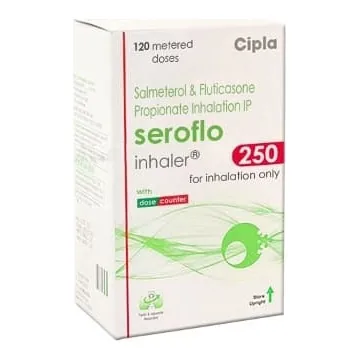
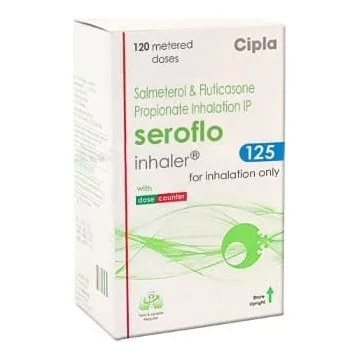
- Seroflo 125 Inhaler (salmeterol 25 mcg + fluticasone 125 mcg MDI — the standard fixed ICS/LABA combination recommended for use with this salmeterol component in asthma)
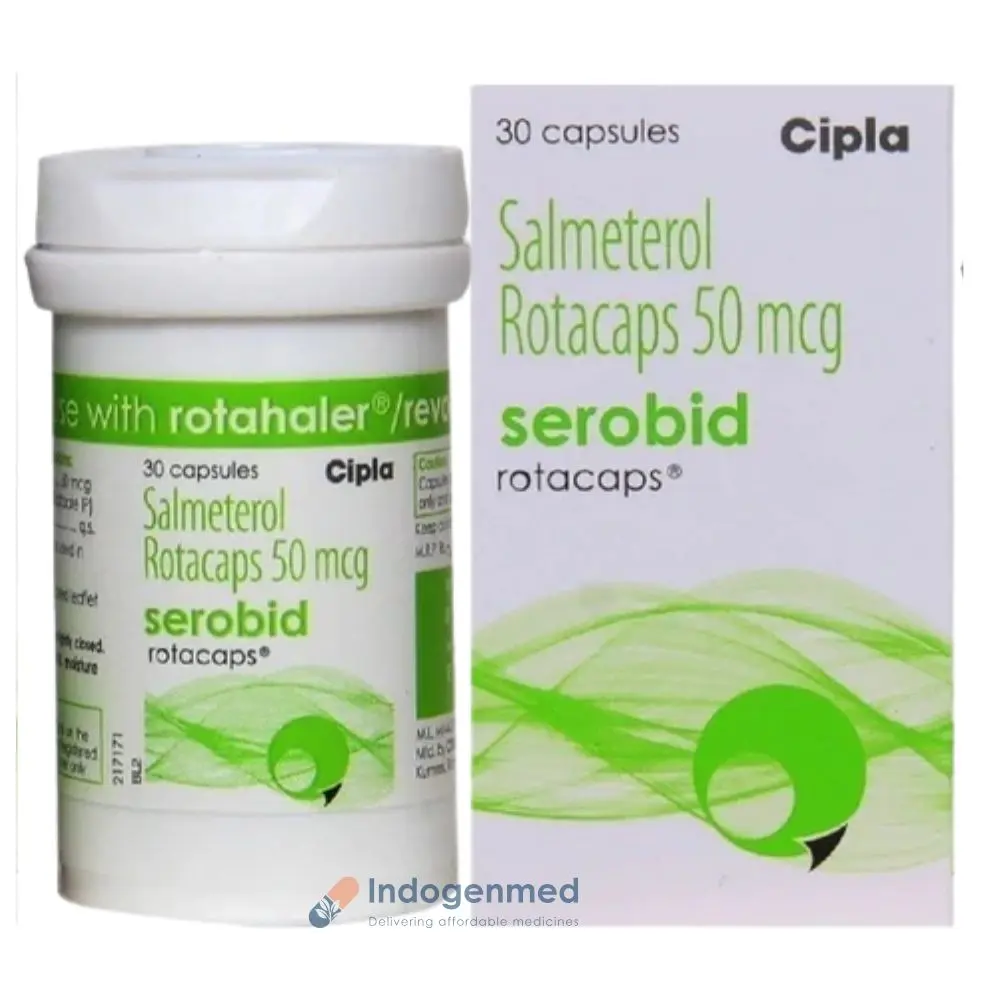
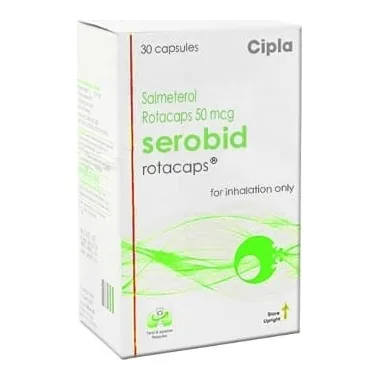
- Serobid 50 mcg Capsules (salmeterol 50 mcg Rotacap — same active ingredient in dry powder inhalation form for Rotahaler device)
- Seroflo 50+100 mcg Capsules (salmeterol 50 mcg + fluticasone 100 mcg Rotacap — ICS/LABA combination in dry powder form)
References
- DailyMed. Salmeterol inhalation aerosol — prescribing information. U.S. National Library of Medicine. Available at: https://dailymed.nlm.nih.gov/dailymed/
- Electronic Medicines Compendium (EMC). Serevent 25 micrograms/actuation inhaler (salmeterol xinafoate) — Summary of Product Characteristics. Available at: https://www.medicines.org.uk/emc/
- MedlinePlus. Salmeterol Oral Inhalation. U.S. National Library of Medicine. Available at: https://medlineplus.gov/druginfo/meds/a695001.html
- Global Initiative for Asthma (GINA). Global Strategy for Asthma Management and Prevention. 2024 Report. Available at: https://ginasthma.org/gina-reports/
- Global Initiative for Chronic Obstructive Lung Disease (GOLD). Global Strategy for Prevention, Diagnosis and Management of COPD. 2024 Report. Available at: https://goldcopd.org/2024-gold-report/
Reviews
There are no reviews yet.