Description
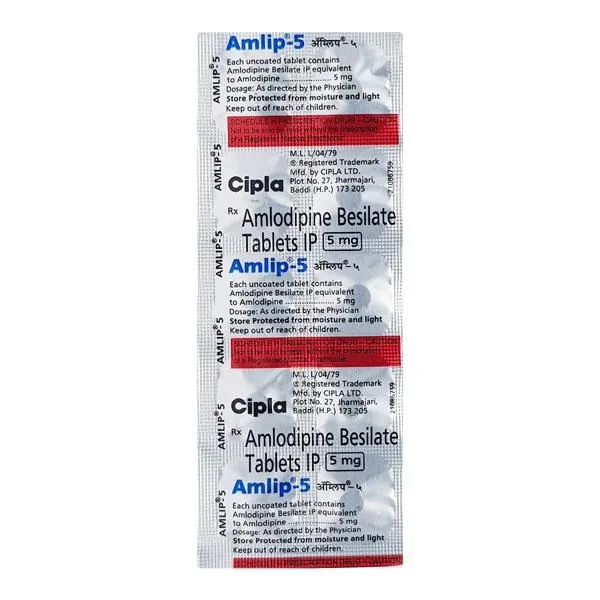
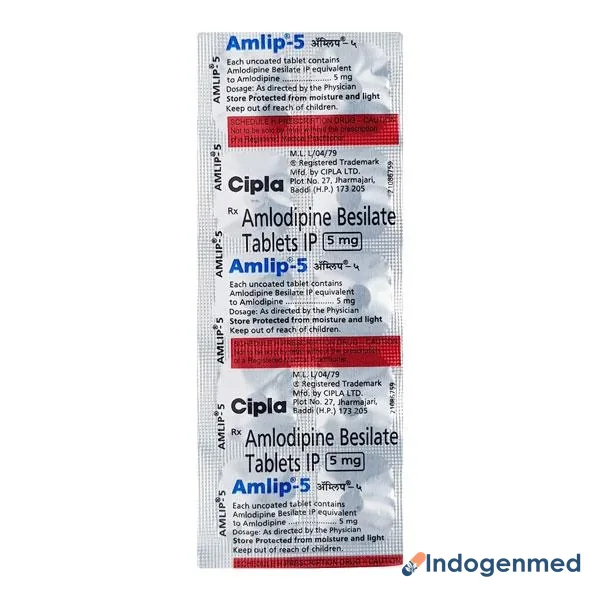
Amlip 5 Mg Tablets
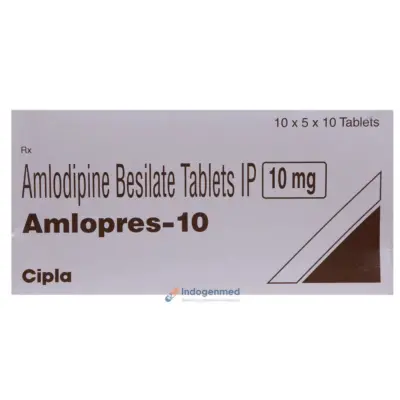
Amlip 5 Mg Tablets contain amlodipine besylate, a long-acting calcium channel blocker used to treat high blood pressure (hypertension) and stable angina pectoris. By relaxing the walls of blood vessels, amlodipine reduces the workload on the heart and improves blood flow. Its once-daily dosing and prolonged action make it one of the most widely prescribed antihypertensive medicines worldwide.
Composition
| Active Ingredient | Strength |
|---|---|
| Amlodipine Besylate (equivalent to Amlodipine 5 mg) | 5 mg per tablet |
About the Manufacturer
Amlip is manufactured by Cipla Limited, one of India’s largest pharmaceutical companies with a global presence. Cipla specialises in affordable cardiovascular, respiratory, and anti-infective medicines and exports to over 80 countries.
Mechanism of Action
Amlodipine blocks L-type voltage-gated calcium channels in cardiac and vascular smooth muscle. This reduces calcium influx during membrane depolarisation, causing vasodilation of peripheral arteries and coronary vessels. The result is a reduction in peripheral vascular resistance (lowering blood pressure) and an increase in myocardial oxygen supply (relieving angina).
Indications
- Hypertension (high blood pressure), alone or in combination with other antihypertensives
- Stable angina pectoris
- Vasospastic (Prinzmetal’s) angina
Dosage & Administration
- Adults – hypertension and angina: 5 mg once daily; may be increased to 10 mg once daily if needed
- Elderly: Start at 2.5 mg once daily and titrate slowly
- Can be taken with or without food
- Swallow whole with water; do not crush or chew
Special Populations
- Elderly: Start at 2.5 mg; reduced clearance increases exposure
- Hepatic impairment: Start at 2.5 mg; titrate carefully as elimination is slower
- Renal impairment: No dose adjustment required; amlodipine is not significantly removed by haemodialysis
- Children (>6 years): 2.5–5 mg once daily for hypertension under specialist guidance
- Pregnancy: Not recommended; use only if no safer alternative is available
Precautions
- Monitor blood pressure regularly, especially during dose titration
- Use with caution in severe aortic stenosis or acute myocardial infarction
- Peripheral oedema (ankle swelling) is common and dose-dependent; not indicative of fluid retention or heart failure
- Do not stop abruptly if used for angina; this can precipitate rebound angina
- Grapefruit juice may increase amlodipine plasma levels; patients should be advised to avoid it
Contraindications
- Hypersensitivity to amlodipine, dihydropyridine derivatives, or any excipient
- Severe hypotension (systolic BP <90 mmHg)
- Cardiogenic shock
- Obstructive hypertrophic cardiomyopathy
- Unstable angina (except vasospastic)
Side Effects
- Very common: Peripheral oedema (ankle and foot swelling), flushing
- Common: Headache, dizziness, palpitations, fatigue, nausea, abdominal pain
- Less common: Hypotension, visual disturbances, dyspnoea, skin rash
- Rare: Gingival hyperplasia, hepatitis, myalgia
Drug Interactions
- CYP3A4 inhibitors (e.g. ketoconazole, clarithromycin, diltiazem): May increase amlodipine plasma levels; monitor for hypotension
- CYP3A4 inducers (e.g. rifampicin, carbamazepine): May reduce amlodipine levels and antihypertensive effect
- Sildenafil and other antihypertensives: Additive blood pressure lowering effect
- Ciclosporin and tacrolimus: Amlodipine may increase their plasma levels; monitor drug levels
Storage
Store below 30°C in a dry place, protected from light and moisture. Keep out of the reach of children. Do not use after the expiry date printed on the pack.
Related Products
- Calaptin 80 Mg Tablets – verapamil, another calcium channel blocker
- Corbis 5 Mg Tablets – bisoprolol for hypertension and angina
- Valzaar 160 Mg Tablets – valsartan ARB for hypertension
Frequently Asked Questions
- What is Amlip 5 Mg used for?
- Amlip 5 Mg is used to treat high blood pressure (hypertension) and angina pectoris (chest pain due to reduced blood flow to the heart).
- When is the best time to take Amlip?
- Amlip can be taken at any time of day, with or without food. Taking it at the same time each day helps maintain consistent blood levels.
- Why do my ankles swell when taking amlodipine?
- Peripheral oedema is a common side effect caused by fluid accumulating in lower extremities due to vasodilation. It is usually more cosmetic than dangerous; consult your doctor if severe.
- Can I take Amlip with other blood pressure medicines?
- Yes. Amlodipine is frequently combined with other antihypertensives such as ACE inhibitors, ARBs, or beta-blockers, but always under medical supervision.
- What happens if I miss a dose?
- Take it as soon as you remember unless your next dose is due. Never double up doses. Missing occasional doses does not cause rebound hypertension, but consistent adherence is important for blood pressure control.
References
- NHS – Amlodipine
- MedlinePlus – Amlodipine
- FDA – Amlodipine Besylate Prescribing Information
- EMA – Amlodipine-containing Medicines
Disclaimer: This page is for informational purposes only and does not replace medical advice. Amlip 5 Mg Tablets should be taken as prescribed by your doctor. Do not adjust your dose or stop treatment without consulting a healthcare professional. If you experience symptoms of low blood pressure (dizziness, fainting), seek medical advice promptly.



Reviews
There are no reviews yet.