Description
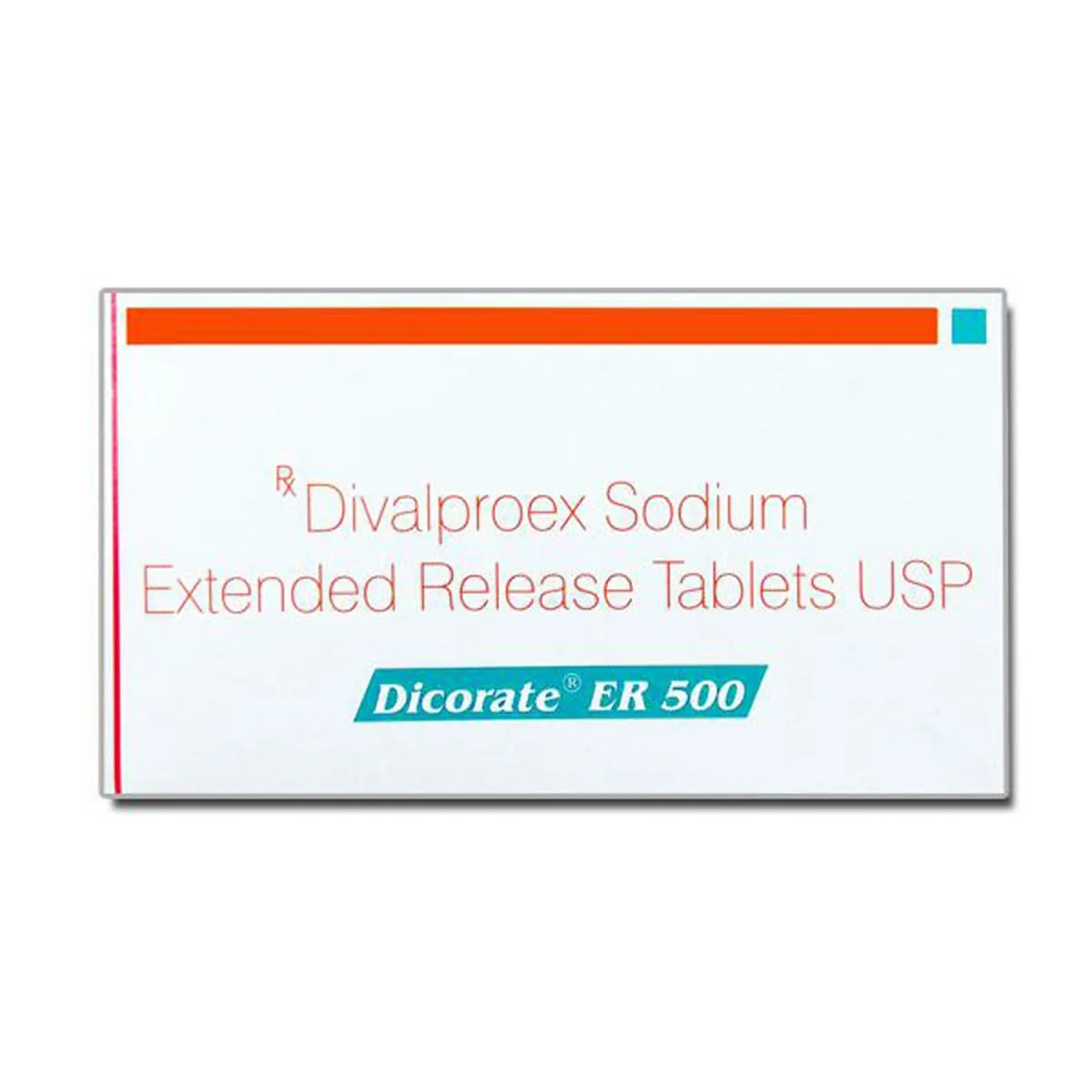
What Is Dicorate ER 500 mg Tablets?
Dicorate ER 500 mg Tablets contain sodium valproate 500 mg in an extended-release (ER) formulation. Sodium valproate is a broad-spectrum antiepileptic drug (AED) belonging to the valproate class, used as a first-line agent in idiopathic generalised epilepsies, as a mood stabiliser in bipolar disorder, and for migraine prophylaxis. The 500 mg ER tablet is the standard adult maintenance dose unit — two tablets (1000 mg/day) represent the typical initial adult maintenance dose, and three to four tablets (1500–2000 mg/day) are commonly required for seizure control in adults.
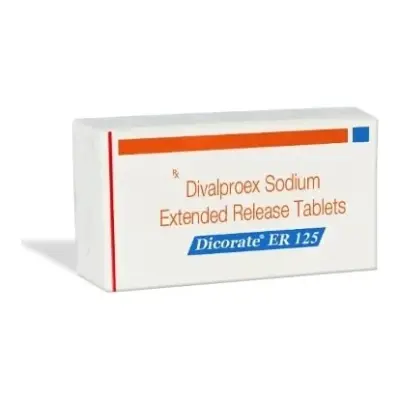
Dicorate is a leading brand of sodium valproate in South and Southeast Asia. The ER formulation delivers sustained drug release over approximately 18–24 hours, reducing the peak-to-trough fluctuations of immediate-release preparations, which translates to improved tolerability (particularly fewer gastrointestinal adverse effects) and allows once-daily or twice-daily dosing. The 500 mg strength is the most commonly prescribed tablet in the Dicorate ER range for adult epilepsy and bipolar disorder management.
Mechanism of Action
Sodium Channel Modulation
Sodium valproate inhibits voltage-gated sodium channels in a use-dependent manner, stabilising their inactivated state and thereby reducing the frequency of rapid, repetitive neuronal firing. This action is particularly important in suppressing the high-frequency discharges characteristic of tonic-clonic and focal seizure activity, while preserving lower-frequency physiological neuronal activity.
GABA Enhancement
Valproate increases brain concentrations of gamma-aminobutyric acid (GABA), the principal inhibitory neurotransmitter in the CNS, through two mechanisms: inhibition of GABA transaminase (preventing GABA breakdown) and inhibition of succinic semialdehyde dehydrogenase. It also potentiates postsynaptic GABA receptor responses. The cumulative increase in GABAergic inhibition suppresses neuronal excitability across multiple brain regions implicated in seizure generation and propagation.
T-type Calcium Channel Blockade
Valproate inhibits thalamic T-type (low-threshold) calcium channels, which are responsible for the oscillatory rhythms that underlie absence (petit mal) seizures. This mechanism accounts for valproate’s distinctive efficacy in absence epilepsy, differentiating it from many other AEDs with no anti-absence activity.
Histone Deacetylase (HDAC) Inhibition
Valproate inhibits class I and II HDAC enzymes, promoting histone acetylation and altering gene expression patterns in neuronal tissue. This epigenetic mechanism contributes to its neuroprotective and mood-stabilising effects, though it is also implicated in the teratogenic risks associated with in utero valproate exposure. Ongoing research explores HDAC inhibition as a potential mechanism in neuroprotection and oncology.
Indications
- Generalised epilepsies (first-line): Sodium valproate 500 mg ER is a first-choice agent for idiopathic generalised epilepsies including tonic-clonic (grand mal), absence (petit mal), myoclonic, and atonic seizures. The 500 mg tablet is the standard building block for adult maintenance dosing.
- Juvenile myoclonic epilepsy (JME): Sodium valproate is the preferred first-line treatment for JME, the most common generalised epilepsy syndrome in young adults; it reliably controls the triad of myoclonic jerks, generalised tonic-clonic seizures, and absence seizures.
- Focal (partial) seizures: Effective as monotherapy or add-on therapy for focal seizures with or without secondary generalisation, though it is not typically the first-line choice specifically for focal epilepsy syndromes.
- Bipolar disorder (manic and mixed episodes): Sodium valproate at therapeutic plasma concentrations (50–125 mcg/mL) is an established first-line mood stabiliser for acute mania and mixed episodes in bipolar I disorder, and for long-term maintenance therapy to reduce recurrence of manic, mixed, and depressive episodes.
- Migraine prophylaxis: Valproate 500–1000 mg/day reduces migraine attack frequency by approximately 50% in clinical trials; it is a guideline-recommended preventive treatment for frequent or disabling migraine.
Dosage and Administration
Epilepsy in adults — initiation: Start at 500–600 mg/day in one or two divided doses; increase by 200–500 mg every 3–7 days based on response and tolerability. Typical maintenance: 1000–2000 mg/day; some patients require up to 2500 mg/day. For the ER 500 mg tablet, 2 tablets once daily (1000 mg/day) is a common starting maintenance dose.
Epilepsy — target serum levels: Therapeutic reference range: 50–100 mcg/mL (trough). Levels above 100 mcg/mL increase toxicity risk. Levels should be checked 2–4 days after a dose change, always at trough (immediately before the next dose).
Bipolar disorder (acute mania): Loading strategy (inpatient): 20–30 mg/kg/day for rapid mania control; standard outpatient initiation: 500–750 mg/day, increasing to target serum levels of 50–125 mcg/mL. The 500 mg ER tablet allows once-daily initiation at 500 mg, with upward titration.
Bipolar disorder (maintenance): Continue at the dose that achieved response in the acute episode; usual maintenance 1000–2000 mg/day. Serum levels should be monitored every 3–6 months.
Migraine prophylaxis: 500–1000 mg/day; the 500 mg ER tablet is convenient for once-daily prophylaxis dosing. Allow 2–3 months before assessing efficacy.
Renal impairment: Free fraction of valproate is increased due to reduced protein binding; total serum levels may underestimate drug effect. No mandatory dose adjustment, but monitor for signs of toxicity.
Hepatic impairment: Contraindicated in significant hepatic impairment; use with extreme caution in mild hepatic disease with LFT monitoring.
Elderly: Increased sensitivity to CNS effects; start at a lower dose (consider 125 mg or 250 mg ER) and titrate more slowly. Reduce maintenance dose if signs of toxicity appear.
Administration: Swallow ER tablets whole — do not crush, break, chew, or split; this would destroy the extended-release matrix and cause dose-dumping with risk of acute toxicity. Take with food to minimise GI side effects. Take at the same time(s) each day.
Contraindications
- Hepatic disease or significant hepatic dysfunction — including personal or family history of severe hepatic dysfunction, particularly drug-related
- Known urea cycle disorders (UCDs) — risk of fatal hyperammonaemic encephalopathy; screen for UCDs if clinically suspected before initiating
- Mitochondrial disorders caused by POLG mutations (Alpers-Huttenlocher syndrome and related POLG-related disorders) — high risk of acute liver failure and death; contraindicated in confirmed POLG carriers and in children under 2 years with suspected POLG disorders
- Porphyria
- Pregnancy — highest teratogenic risk of any licensed AED; causes neural tube defects, congenital malformations, and neurodevelopmental delay; must not be used in women of childbearing potential without a Pregnancy Prevention Programme (PPP) including effective contraception
- Hypersensitivity to sodium valproate, valproic acid, or any excipient
Warnings and Precautions
Teratogenicity — Critical Reproductive Risk
Sodium valproate carries a 10–11% risk of major congenital malformations in infants exposed in utero (compared to 2–3% background rate), including neural tube defects (spina bifida ~2–3%), cardiac malformations, cleft palate, and limb defects. Additionally, 30–40% of children exposed in utero develop neurodevelopmental problems, including autism spectrum disorder, intellectual disability, ADHD, and language delay — risks not fully captured by malformation rates alone. These effects are dose-dependent and irreversible. Valproate must not be used in women of childbearing potential without strict adherence to a Pregnancy Prevention Programme involving annual specialist review and effective contraception. Women who become pregnant while on valproate require urgent specialist review; decisions about continuation must be made on an individual risk-benefit basis by a specialist.
Hepatotoxicity
Fatal hepatic failure has occurred, most frequently in the first 6 months of treatment. Children under 3 years receiving polypharmacy AED regimens with underlying metabolic or neurological disorders carry the highest risk. Baseline LFTs should be performed and repeated at regular intervals during the first 6 months. Warn patients and carers to report malaise, weakness, anorexia, jaundice, or oedema immediately.
Pancreatitis
Acute pancreatitis, including fatal cases, has been reported; risk is not confined to high doses. Patients reporting severe abdominal pain, particularly when accompanied by nausea and vomiting, should be evaluated urgently for pancreatitis.
Hyperammonaemia
Symptomatic hyperammonaemia (encephalopathy: lethargy, confusion, altered consciousness) may occur without evidence of hepatic dysfunction, particularly when valproate is combined with topiramate. Measure serum ammonia if neurological status deteriorates unexpectedly.
Adverse Effects
- Very common (≥10%): Tremor (fine postural tremor, dose-related), nausea/vomiting (especially at initiation — the ER formulation significantly reduces this), weight gain (mean 4–6 kg), alopecia (reversible, may be related to zinc deficiency; zinc supplementation may help)
- Common (1–10%): Drowsiness, dizziness, headache, ataxia, thrombocytopenia, prolonged bleeding time, elevated liver enzymes (usually transient), hyperammonaemia (usually asymptomatic)
- Less common (0.1–1%): Peripheral oedema, cognitive impairment/memory difficulties, confusion, rash, Parkinsonism (reversible), Fanconi-type syndrome in children
- Rare (<0.1%): Fatal hepatic failure, pancreatitis, agranulocytosis, aplastic anaemia, encephalopathy (without liver disease), Stevens-Johnson syndrome
Drug Interactions
Lamotrigine — Critical Interaction
Valproate inhibits the glucuronidation of lamotrigine (UGT1A4), approximately doubling its half-life and plasma levels. When lamotrigine is added to valproate, the starting dose and titration schedule for lamotrigine must be halved from standard protocols to avoid serious rash, including Stevens-Johnson syndrome and toxic epidermal necrolysis. The lamotrigine prescribing information contains specific dose tables for the valproate combination.
Enzyme-Inducing AEDs
Carbamazepine, phenytoin, phenobarbitone, and primidone induce hepatic enzymes (primarily CYP2C9), increasing valproate metabolism and reducing plasma levels by 25–50%. Seizure breakthrough may occur; valproate doses may need to be increased when these drugs are added, and reduced when they are withdrawn.
Carbapenem Antibiotics
Carbapenems (meropenem, imipenem, ertapenem, doripenem) dramatically reduce serum valproate levels (commonly by 60–100%) within hours of administration. The mechanism is multifactorial (reduced absorption + enhanced clearance). This combination can precipitate life-threatening seizures in epilepsy patients. Alternative antibiotics should be used wherever clinically feasible; if carbapenems are essential, intensive valproate level monitoring and potentially parenteral valproate supplementation should be considered.
Aspirin
High-dose aspirin displaces valproate from plasma proteins and inhibits its hepatic metabolism, increasing free drug concentrations significantly. Avoid high-dose aspirin in patients on valproate.
Topiramate
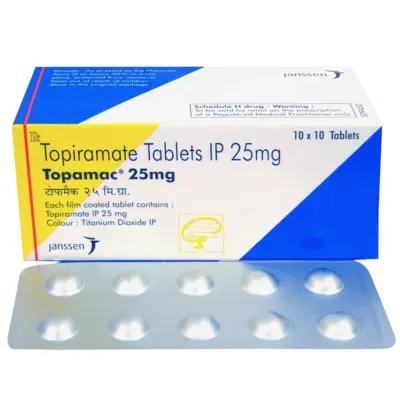
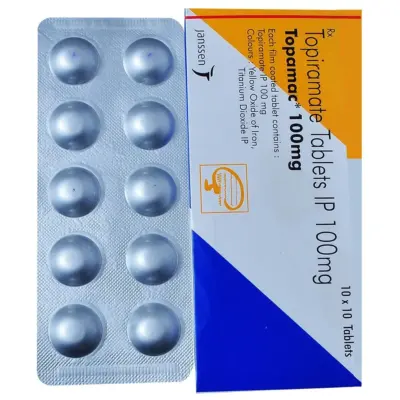
The valproate–topiramate combination increases the risk of hyperammonaemia and encephalopathy. Monitor for encephalopathic features; measure ammonia if neurological status deteriorates.
Storage
Store Dicorate ER 500 mg Tablets below 30°C in a dry place, protected from moisture and light. Keep in the original blister pack until use. Store out of reach of children. Do not use after the expiry date printed on the pack.
Related Products
- Dicorate ER 125 mg Tablets (Sodium Valproate 125 mg ER — low-dose for paediatric use and dose titration)
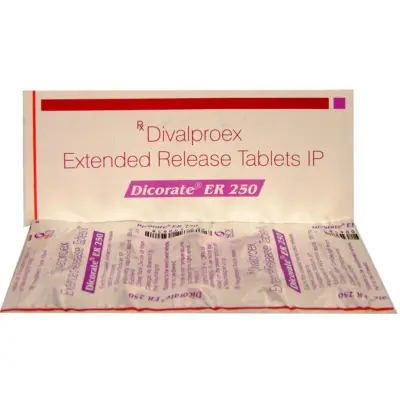
- Dicorate ER 250 mg Tablets (Sodium Valproate 250 mg ER — intermediate dose for epilepsy and mood stabilisation)
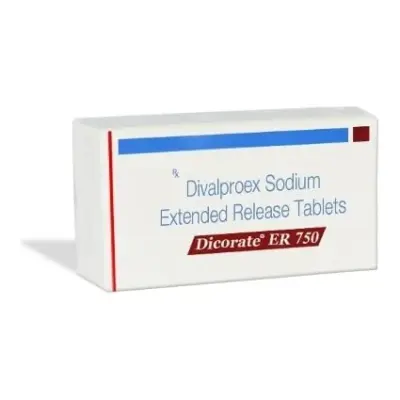
- Dicorate ER 750 mg Tablets (Sodium Valproate 750 mg ER — higher dose for epilepsy and bipolar maintenance)
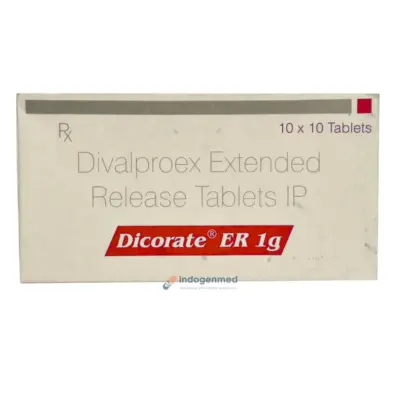
- Dicorate ER 1000 mg Tablets (Sodium Valproate 1000 mg ER — high-dose once-daily option for adult epilepsy)
References
- DailyMed. Valproic acid/sodium valproate — prescribing information. U.S. National Library of Medicine. Available at: https://dailymed.nlm.nih.gov/dailymed/
- MedlinePlus. Valproic Acid. U.S. National Library of Medicine. Available at: https://medlineplus.gov/druginfo/meds/a682412.html
- Mayo Clinic. Valproic Acid (Oral Route). Available at: https://www.mayoclinic.org/
- Perucca E. Pharmacological and therapeutic properties of valproate: a summary after 35 years of clinical experience. CNS Drugs. 2002;16(10):695–714. PMID: 12269861
- Electronic Medicines Compendium (EMC). Sodium Valproate 500 mg prolonged-release tablets — Summary of Product Characteristics. Available at: https://www.medicines.org.uk/emc/

Reviews
There are no reviews yet.