Description
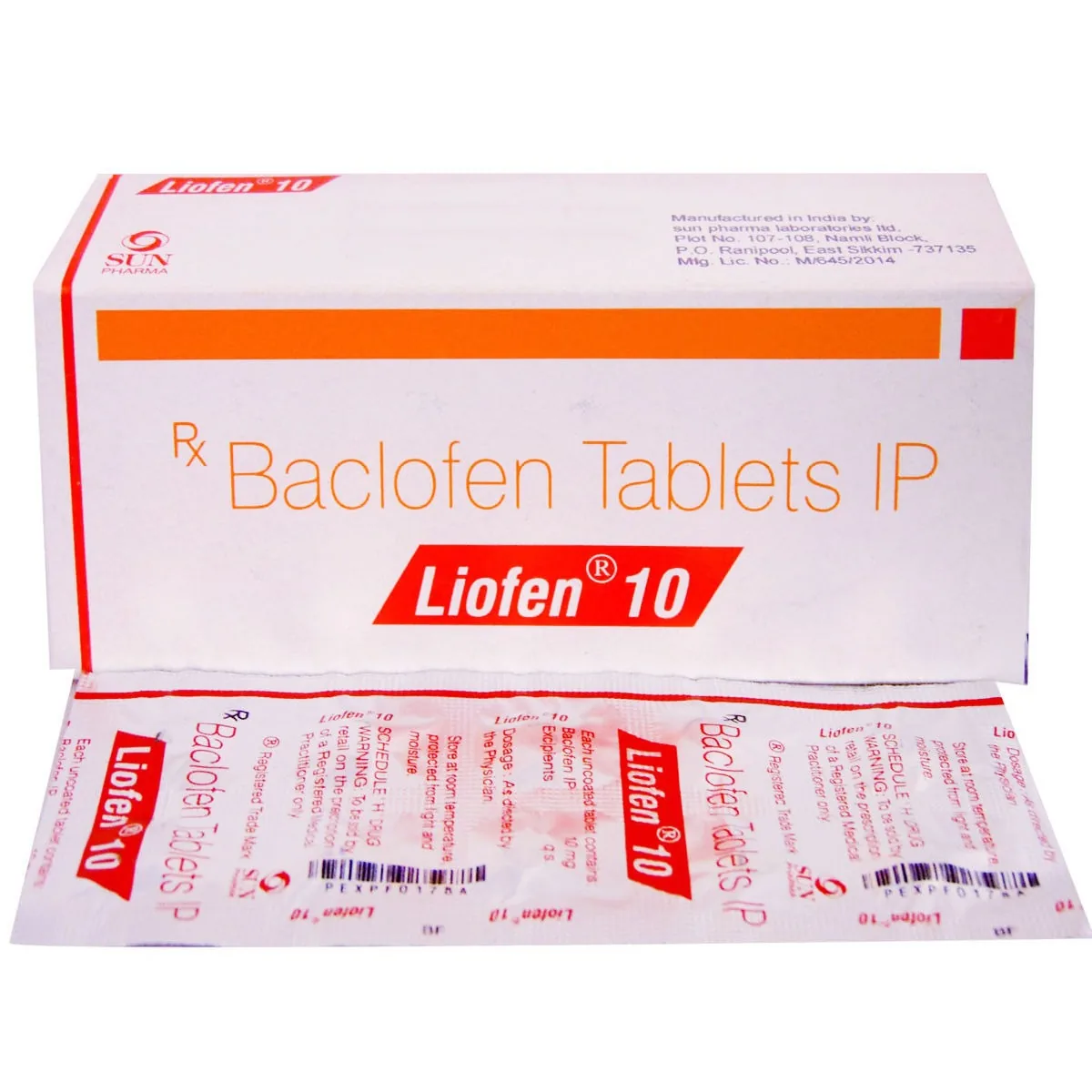
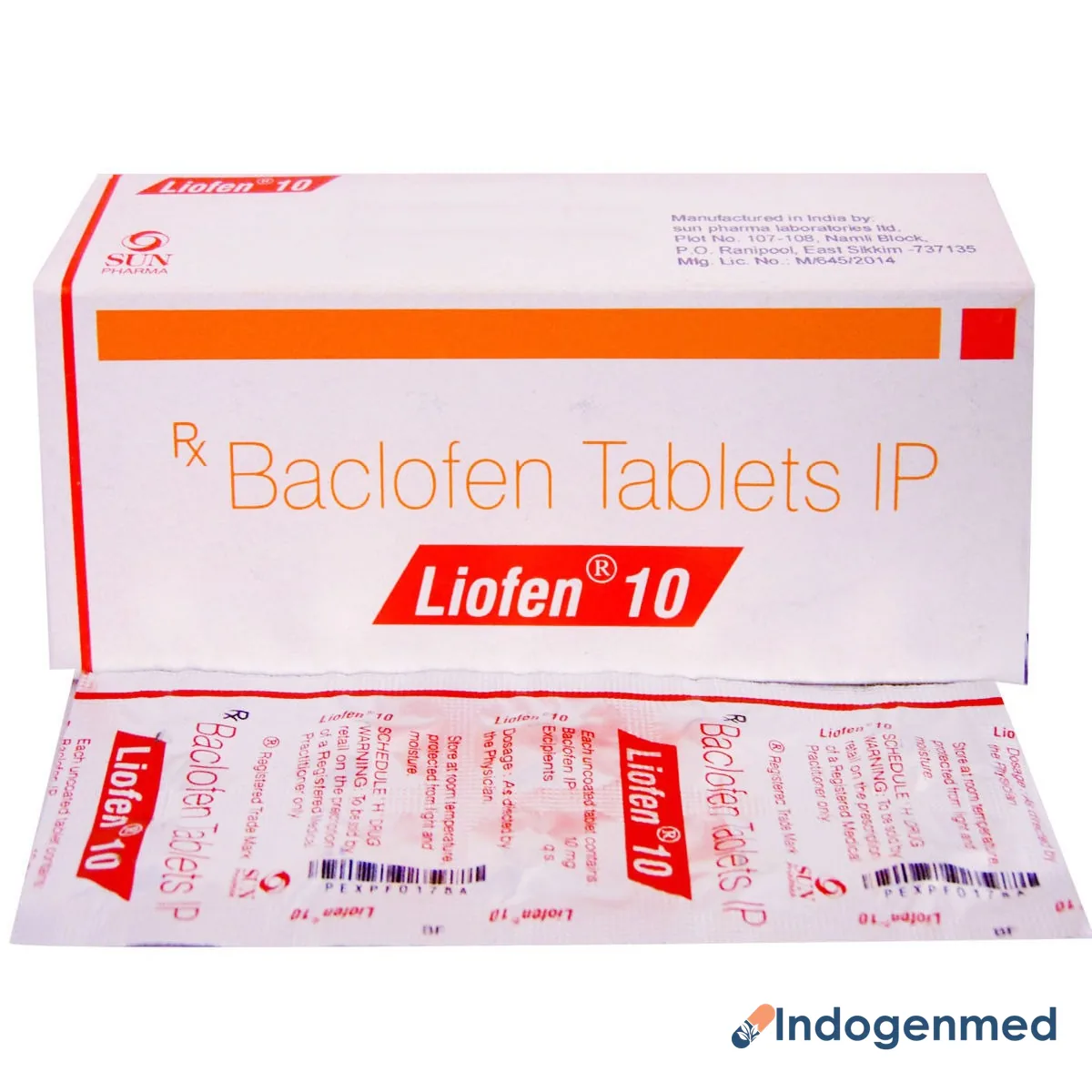
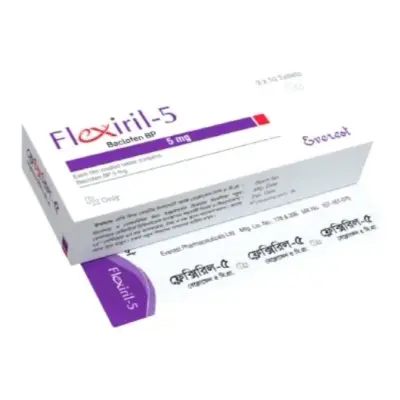
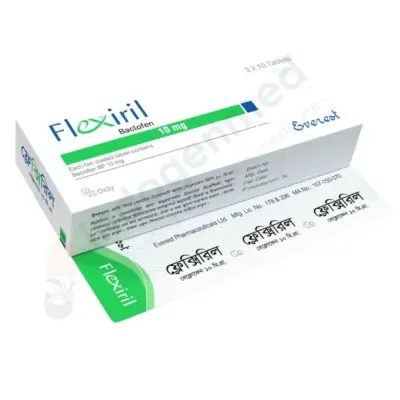
Liofen 10 Tablet — Baclofen 10 mg
Liofen 10 Tablet contains baclofen 10 mg, a centrally acting skeletal muscle relaxant and antispasticity agent. Baclofen is a gamma-aminobutyric acid (GABA) derivative — specifically a para-chlorophenyl analogue of GABA — that acts selectively on GABA-B receptors in the spinal cord and brain to reduce muscle spasticity. It is the first-line oral pharmacological treatment for spasticity associated with multiple sclerosis (MS), spinal cord injury (SCI), cerebral palsy, and other upper motor neuron disorders. Baclofen reduces painful muscle spasms, involuntary contractions, clonus, and hyperreflexia, thereby improving mobility, function, and quality of life in patients with spasticity. Liofen 10 Tablet is manufactured by Sun Pharma. The 10 mg tablet allows flexible initial dosing with gradual titration, as baclofen requires careful dose escalation to achieve optimal effect while minimising sedation and weakness.
Composition
- Baclofen 10 mg per tablet
- Excipients: lactose monohydrate, microcrystalline cellulose, pregelatinised starch, magnesium stearate, colloidal silicon dioxide
Baclofen (chemical name: β-(4-chlorophenyl)-γ-aminobutyric acid) has a molecular weight of 213.66 Da. It is chemically distinct from GABA in its para-chlorophenyl substitution, which allows it to penetrate the blood-brain barrier and act centrally, unlike GABA itself.
Mechanism of Action
- GABA-B receptor agonism: Baclofen is a selective GABA-B receptor agonist. GABA-B receptors are metabotropic (G-protein coupled) receptors located on both presynaptic and postsynaptic terminals in the spinal cord and supraspinal centres. Activation of presynaptic GABA-B receptors reduces calcium influx at nerve terminals, thereby inhibiting the release of excitatory neurotransmitters (glutamate, aspartate, substance P) from primary afferent fibres entering the dorsal horn. Activation of postsynaptic GABA-B receptors increases potassium conductance, hyperpolarising the postsynaptic membrane and reducing neuronal excitability
- Spinal cord action (primary site): Baclofen acts at both pre- and postsynaptic GABA-B receptors in the dorsal horn and ventral horn of the spinal cord, suppressing monosynaptic and polysynaptic reflex pathways. This reduces the stretch reflex hyperactivity that underlies spasticity in upper motor neuron lesions, decreasing muscle tone, spasms, and clonus
- Supraspinal action: At higher doses or with intrathecal administration, baclofen also acts on supraspinal GABA-B receptors in the brainstem, thalamus, and cortex, contributing to sedation and other CNS effects
- No effect on neuromuscular junction: Unlike dantrolene (which acts at the muscle level) or neuromuscular blocking agents, baclofen does not affect neuromuscular transmission or directly reduce muscle contractility; its antispastic effect is entirely via central modulation of reflex arcs
Pharmacokinetics
| Parameter | Detail |
|---|---|
| Oral bioavailability | ~70–85%; well absorbed from the GI tract; absorption may decrease at higher doses due to saturation of transport mechanism |
| Time to peak (Tmax) | 1.5–4 hours after oral administration |
| Plasma protein binding | ~30% |
| Volume of distribution | ~0.7 L/kg; passes blood-brain barrier; achieves therapeutic CNS concentrations |
| Metabolism | ~15% hepatic (deamination); no clinically significant CYP involvement; no active metabolites |
| Renal excretion | ~85% excreted unchanged in urine; renal impairment requires significant dose reduction |
| Half-life | 3–4 hours; clinical effects last 6–8 hours, requiring 3–4 times daily dosing |
| Renal impairment | Accumulation occurs; reduce dose in proportion to reduction in GFR; use with particular caution in elderly patients |
Uses of Liofen 10 Tablet
- Spasticity in multiple sclerosis (MS): Baclofen is a first-line oral treatment for spasticity associated with MS. It reduces muscle stiffness, spasms, and clonus, improving mobility, comfort, and participation in physiotherapy. Regular dosing often allows patients to tolerate lower doses of other antispastic agents
- Spinal cord injury (SCI) spasticity: Baclofen is widely used in complete and incomplete spinal cord injuries to manage spasticity below the level of the lesion. It reduces flexor and extensor spasms, aids nursing care, prevents contractures, and improves bladder function in some patients
- Cerebral palsy: Used in children and adults with cerebral palsy to reduce limb spasticity, though oral doses are limited by systemic side effects; intrathecal baclofen (via pump) is often preferred for severe spasticity in this group
- Other upper motor neuron disorders: Stroke-related spasticity, stiff-person syndrome (high-dose baclofen is effective), hereditary spastic paraplegia, and traumatic brain injury-related spasticity
- Trigeminal neuralgia (adjunctive): Baclofen is sometimes used as an adjunct to carbamazepine in trigeminal neuralgia, particularly in patients with MS
Dosage and Administration
| Indication | Dose | Notes |
|---|---|---|
| Starting dose (adults) | 5 mg three times daily; increase by 5 mg per dose every 3 days | Start low; rapid titration increases side effects |
| Usual effective dose | 30–75 mg per day in 3–4 divided doses (10–25 mg three or four times daily) | Most patients respond at 30–60 mg/day |
| Maximum dose | 80 mg per day (some guidelines allow up to 100 mg/day under specialist supervision) | Higher doses increase sedation and weakness risk |
| Elderly patients | Start with 5 mg at night; titrate very slowly | Confusion and falls risk is markedly increased in elderly |
| Children (cerebral palsy) | 0.75–2 mg/kg/day in divided doses; titrate under specialist guidance | Maximum 40 mg/day (<8 years) or 60 mg/day (<12 years) |
| Renal impairment | Reduce dose in proportion to reduction in GFR; monitor for toxicity | Severe renal impairment: may need once-daily low-dose or avoid |
Administration: Take with food or milk to reduce gastric irritation. Never stop abruptly — dose must be tapered gradually (over at least 1–2 weeks) to avoid withdrawal syndrome.
Side Effects
- Sedation and drowsiness: Most common side effect, especially at initiation or with dose increases; usually improves with time or dose reduction; warn patients about driving and machinery
- Muscle weakness: Excessive reduction in muscle tone can impair mobility in patients who rely on some spasticity for weight-bearing or transfers; tone must be titrated to functional benefit, not complete elimination
- Nausea and vomiting: Common at initiation; improved by taking with food
- Dizziness and ataxia: Balance impairment increases fall risk, particularly in elderly patients
- Confusion and cognitive impairment: More common in elderly and at higher doses
- Hypotension: Mild blood pressure lowering; caution in patients on antihypertensives
- Urinary disturbance: Urinary frequency, retention, or incontinence; can help or worsen bladder symptoms in neurological patients
- Seizure threshold lowering: Baclofen may lower the seizure threshold and should be used cautiously in patients with epilepsy
Critical Warning — Abrupt Withdrawal
Never stop baclofen abruptly. Sudden cessation, particularly at higher doses or following long-term therapy, can cause a severe withdrawal syndrome including:
- Rebound spasticity (often worse than baseline)
- High fever (hyperthermia)
- Altered mental status, hallucinations, confusion
- Seizures
- Rhabdomyolysis
- Multi-organ failure (in severe cases)
Always taper the dose gradually over a minimum of 1–2 weeks (longer for patients on higher doses). If withdrawal is suspected, re-establish baclofen therapy at the last effective dose as an emergency measure.
Precautions and Warnings
- Renal impairment: Baclofen is primarily renally excreted; accumulation leads to severe toxicity (coma, seizures) in patients with reduced GFR; monitor renal function and reduce dose accordingly
- Epilepsy: Use cautiously; baclofen may lower seizure threshold and alter anticonvulsant requirements; monitor seizure control
- Elderly patients: High risk of confusion, sedation, and falls; use the lowest effective dose with slow titration
- Psychiatric disorders: Baclofen can worsen depression and rarely causes hallucinations or psychosis, particularly at high doses or in withdrawal
- Pregnancy: Limited human data; animal studies show fetotoxicity at high doses; use only if clearly necessary
- Stroke: Patients who have had a stroke may be particularly sensitive to baclofen’s CNS effects; excessive weakness may impair rehabilitation
Drug Interactions
| Drug / Class | Interaction | Clinical Action |
|---|---|---|
| CNS depressants (opioids, benzodiazepines, alcohol) | Additive CNS depression — increased sedation, respiratory depression, hypotension | Avoid combination or reduce doses; warn patients about alcohol |
| Antihypertensives | Enhanced hypotensive effect | Monitor blood pressure; may need antihypertensive dose reduction |
| Tricyclic antidepressants (amitriptyline, imipramine) | Additive muscle hypotonia; enhanced baclofen effect reported | Use with caution; monitor for excessive weakness |
| Levodopa / dopaminergic drugs | Rare reports of confusion, hallucinations, and increased rigidity when combined with baclofen in Parkinson’s disease | Monitor; combination generally avoided in PD |
| Lithium | Rare case reports of worsening hyperkinesia | Monitor for movement abnormalities |
Contraindications
- Hypersensitivity to baclofen or any excipient
- Peptic ulcer disease (active): Relative contraindication; use with caution if GI history
- Severe renal failure (eGFR <15 mL/min) — marked accumulation risk
- Epilepsy (poorly controlled): Use only under specialist guidance if seizures are not well controlled
Storage Instructions
- Store below 30°C, in a dry place, away from direct sunlight and moisture
- Keep in original packaging
- Keep out of reach of children
- Do not use after the expiry date printed on the label
Related Products
The following products on IndoGenMed are frequently used alongside or in related clinical contexts to Liofen 10 Tablet in managing spasticity, neurological conditions, and associated symptoms:
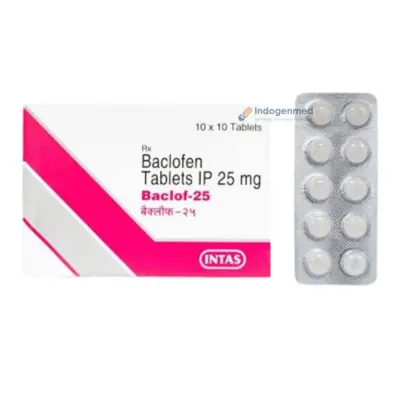
- Liofen 25 Tablet (Baclofen 25 mg) — the higher-strength tablet of the same drug, used when the maintenance dose exceeds the range conveniently achieved with 10 mg tablets; reduces tablet burden at higher daily doses
- Perinorm Tablet (Metoclopramide 10 mg) — metoclopramide is useful for managing nausea that frequently occurs at baclofen initiation or dose escalation
- Omesec 20 Capsule (Omeprazole 20 mg) — gastroprotection relevant to neurological patients on multiple medications; can help manage GI symptoms associated with baclofen
- Modula 5 mg Tablet (Tadalafil 5 mg) — erectile dysfunction is common in men with MS, SCI, and other upper motor neuron conditions treated with baclofen; tadalafil 5 mg once daily is relevant in this clinical context
- Licab 300 mg Tablet (Lithium Carbonate) — mood stabiliser relevant in patients with spastic neurological conditions who also have mood or psychiatric comorbidities; lithium-baclofen interaction monitoring is recommended
References
- DailyMed (FDA). Baclofen Tablets — Full Prescribing Information. Available at: https://dailymed.nlm.nih.gov/dailymed/search.cfm?labeltype=all&query=baclofen+tablet
- MedlinePlus (U.S. National Library of Medicine). Baclofen. Available at: https://medlineplus.gov/druginfo/meds/a682530.html
- Dario A, Tomei G. A benefit-risk assessment of baclofen in severe spinal spasticity. Drug Saf. 2004;27(11):799–818. PubMed PMID: 15350154. Available via: https://pubmed.ncbi.nlm.nih.gov/15350154/
- Mayo Clinic. Baclofen (Oral Route) — Description and Brand Names. Available at: https://www.mayoclinic.org/drugs-supplements/baclofen-oral-route/description/drg-20062807
- MedlinePlus (U.S. NLM). Spasticity. Available at: https://medlineplus.gov/ency/article/003297.htm


Reviews
There are no reviews yet.