Description
<![CDATA[
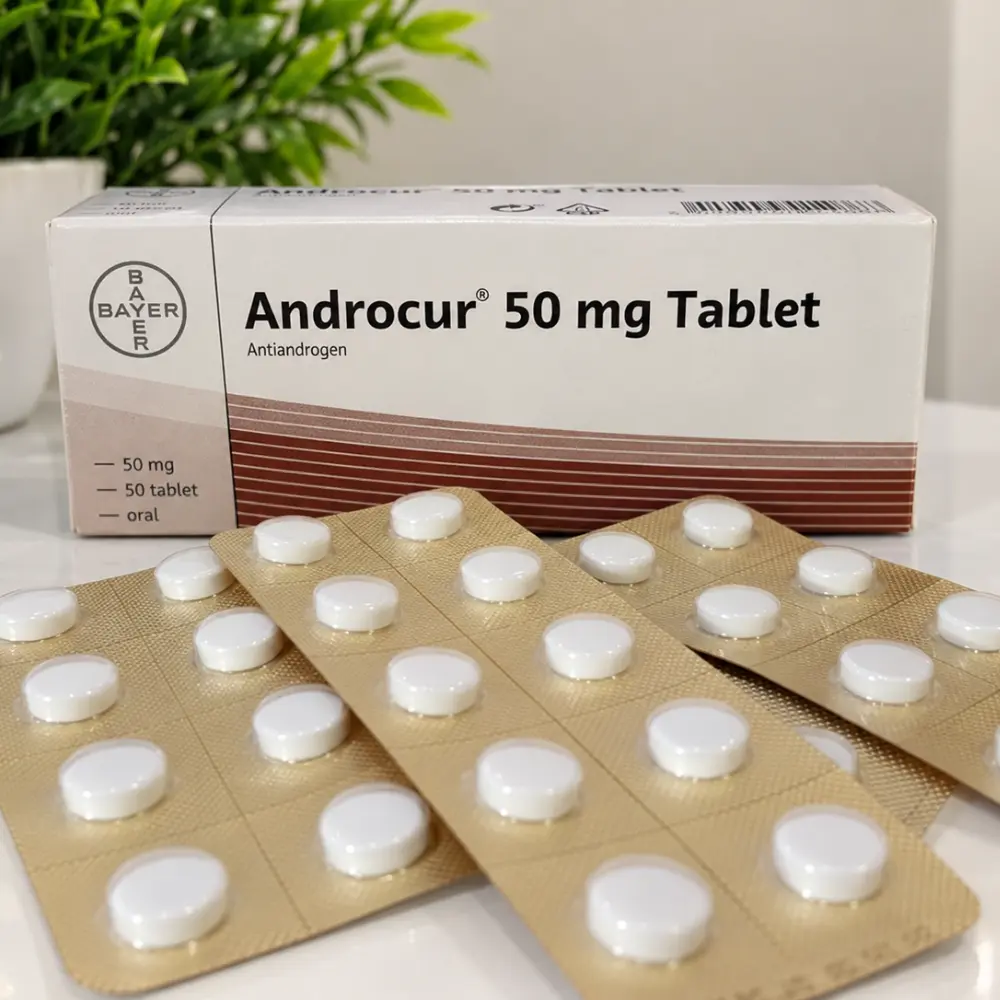
Androcur 50 Mg Tablets
Androcur 50 Mg Tablets contain cyproterone acetate, a synthetic anti-androgen and progestogen. It is used in the management of prostate cancer, hypersexuality in men, and certain androgen-dependent conditions such as severe acne or hirsutism in women. Androcur reduces the action of testosterone and other male hormones by blocking androgen receptors, thereby reducing androgen-driven symptoms and tumour growth.
Composition
| Active Ingredient | Strength |
|---|---|
| Cyproterone Acetate | 50 mg per tablet |
About the Manufacturer
Androcur is manufactured by Bayer AG, a multinational pharmaceutical and life sciences company headquartered in Leverkusen, Germany. Bayer has extensive expertise in hormonal therapies and oncology medicines and supplies to regulated markets worldwide.
Mechanism of Action
Cyproterone acetate competitively inhibits the binding of testosterone and dihydrotestosterone (DHT) to androgen receptors in target tissues. This anti-androgenic action suppresses androgen-dependent processes including prostate tumour growth and sexual drive. The drug also exerts a central anti-gonadotrophic effect, suppressing LH secretion and thereby reducing testosterone production.
Indications
- Palliative treatment of prostate carcinoma
- Management of hypersexuality and sexual deviation in adult men
- Severe hirsutism and androgen-dependent alopecia in women (usually in combination with an oestrogen)
- Adjunct in the treatment of severe acne unresponsive to other therapies in women
Dosage & Administration
- Prostate cancer (antiandrogen flare cover): 100 mg two to three times daily
- Long-term prostate cancer monotherapy: 200–300 mg daily in two to three divided doses
- Hypersexuality in men: 50–100 mg twice daily
- Women – hirsutism/acne: 50–100 mg daily on days 1–10 of the menstrual cycle combined with an oestrogen
- Tablets should be taken with meals with a small amount of liquid
Special Populations
- Elderly: No specific dose adjustment is required; standard adult dosing applies
- Hepatic impairment: Contraindicated in severe liver disease; monitoring required in mild-to-moderate impairment
- Renal impairment: Use with caution; no formal dose modification established
- Children: Not indicated in prepubertal children
- Pregnancy: Contraindicated; may feminise a male foetus
Precautions
- Liver function tests should be performed before starting treatment and at regular intervals; discontinue if hepatotoxicity develops
- Monitor for thromboembolic events, particularly in patients with a history of blood clots
- Use of cyproterone acetate has been associated with rare cases of meningioma at high cumulative doses; monitor and discontinue if diagnosed
- Patients with diabetes require more frequent monitoring of blood glucose
- Cyproterone may cause fatigue and reduce ability to drive; patients should be advised accordingly
Contraindications
- Hypersensitivity to cyproterone acetate or any excipient
- Hepatic disease (including history of jaundice or persistent raised transaminases)
- Dubin-Johnson syndrome or Rotor syndrome
- Wasting diseases (other than prostate carcinoma)
- Severe chronic depression
- History of or current thromboembolic processes
- Meningioma or history of meningioma
- Pregnancy and breastfeeding
Side Effects
- Common: Fatigue, weight gain, reduced libido, erectile dysfunction, gynaecomastia in men, hot flushes
- Less common: Dyspnoea, osteoporosis with long-term use, depression, mood changes
- Rare: Hepatotoxicity, thromboembolic events, meningioma (with high cumulative dose), benign adrenal adenoma
Drug Interactions
- Alcohol: Cyproterone may reduce tolerance to alcohol in some patients
- Antidiabetics: May alter insulin requirements; blood glucose monitoring recommended
- Statins: Increased risk of myopathy reported with concomitant use
- CYP3A4 inducers (e.g. rifampicin, phenytoin): May reduce cyproterone plasma levels
Storage
Store below 30°C in a dry place, away from direct light. Keep out of the reach of children. Do not use after the expiry date printed on the pack.
Related Products
- Finpecia 1 Mg Tablets – finasteride for androgen-related hair loss
- Folvite 5 Mg Tablets – folic acid supplement
- Corbis 5 Mg Tablets – bisoprolol for cardiovascular support
Frequently Asked Questions
- What is Androcur 50 Mg used for?
- Androcur 50 Mg is used to treat prostate cancer, hypersexuality in men, and androgen-related conditions such as severe hirsutism and acne in women.
- How does cyproterone acetate work?
- It blocks androgen receptors, preventing testosterone and DHT from binding and exerting their effects on target tissues, and also reduces gonadotrophin-driven testosterone production.
- Can Androcur cause liver problems?
- Yes. Hepatotoxicity is a known risk, particularly at higher doses. Liver function should be monitored before treatment and periodically throughout therapy.
- Is Androcur associated with meningioma?
- High cumulative doses of cyproterone acetate have been linked to an increased risk of meningioma. If a meningioma is diagnosed, the medication must be discontinued.
- Can women take Androcur?
- Yes, in lower doses combined with an oestrogen, it is used for androgen-dependent conditions in women such as hirsutism and acne. It is contraindicated in pregnancy.
References
- Electronic Medicines Compendium – Androcur 50 Mg Tablets SPC
- MedlinePlus – Cyproterone Acetate
- EMA – Cyproterone-containing Medicines Review
- NHS – Cyproterone Acetate
Disclaimer: This page is intended for informational purposes only and does not constitute medical advice. Androcur 50 Mg Tablets should only be used under the supervision of a qualified healthcare professional. Always read the patient information leaflet supplied with your medication. If you have questions about your treatment, consult your doctor or pharmacist.
]]>
Reviews
There are no reviews yet.